









Introduction: A Global Stage for Robotics
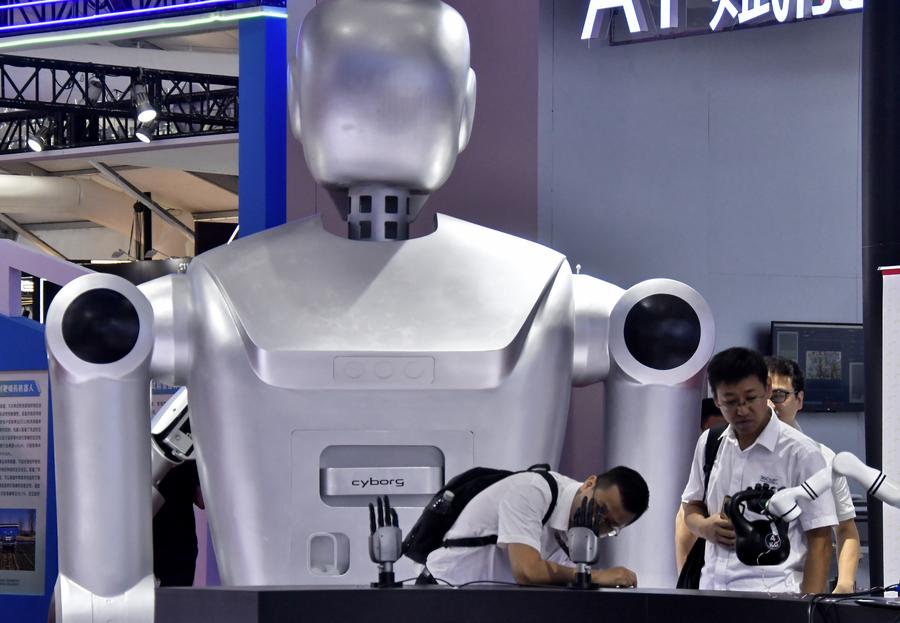
The 2025 World Robot Conference (WRC), held in Beijing, has emerged as a flagship international event for robotics innovation, attracting global attention from researchers, industry leaders, and policymakers. This year’s edition presented over 1,500 exhibits spanning industrial, service, humanoid, collaborative, and autonomous robotics, highlighting the rapid evolution of robotics from mere automation toward intelligent, adaptive, and collaborative systems.
The WRC is not just an exhibition; it is a convergence of science, technology, and industry, reflecting the broader trajectory of robotics across manufacturing, logistics, healthcare, urban services, and artificial intelligence. The event underscores China’s ambition to position itself at the forefront of robotics innovation, aligning technological advancement with industrial transformation and societal needs.
This article provides a comprehensive overview of the 2025 WRC, detailing technological highlights, industry trends, applications across sectors, challenges, and future directions in robotics.
1. Event Overview
1.1 Scope and Participation
- Hosted in Beijing, the 2025 WRC featured 1,500+ exhibits from global companies, startups, and research institutions
- Participating robots included humanoids, industrial arms, autonomous mobile robots (AMRs), surgical robots, drones, and robotic exoskeletons
- More than 30,000 attendees, including engineers, investors, policymakers, and media, experienced hands-on demonstrations
1.2 Exhibition Zones
The conference was divided into specialized zones, each highlighting unique aspects of robotics:
- Industrial Robotics Zone: Advanced manufacturing arms, collaborative robots, automated production lines
- Service Robotics Zone: Humanoids, delivery robots, hospital and hospitality service robots
- AI & Autonomous Systems Zone: AI-driven perception, motion planning, autonomous vehicles, and drones
- Innovation & Startups Zone: Emerging technologies and novel prototypes pushing the boundaries of current robotics capabilities
- Education & Research Zone: Academic institutions showcasing cutting-edge research, simulation technologies, and robotic software frameworks
2. Technological Highlights
2.1 Industrial Robotics
- Collaborative Robots (Cobots): Equipped with force-sensing, AI-driven perception, and adaptive control, enabling safe cooperation with human operators
- High-Precision Assembly Systems: Robotics capable of sub-millimeter accuracy for electronics, automotive, and aerospace manufacturing
- Flexible Production Lines: Modular robots adaptable to different products without extensive reconfiguration
2.2 Humanoid and Service Robotics
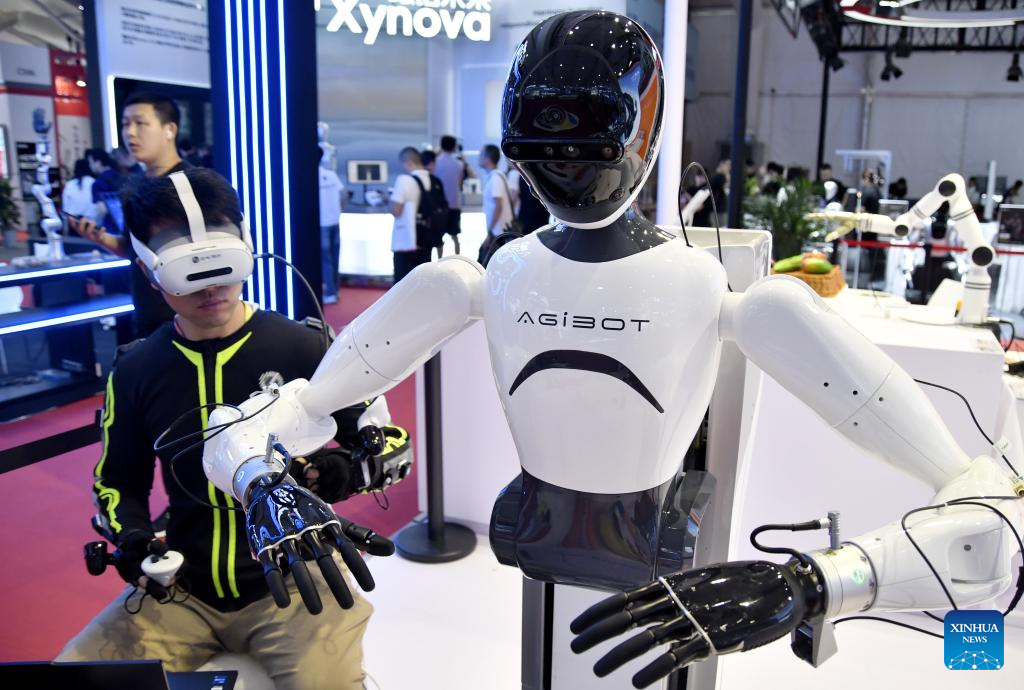
- Humanoids: Demonstrated dexterity, bipedal mobility, object manipulation, and human-like interaction in industrial and service scenarios
- Healthcare and Elderly Assistance Robots: Provided rehabilitation exercises, medication delivery, and patient monitoring
- Hospitality Robots: Guided visitors, delivered items, and performed customer engagement tasks, using AI perception and natural language processing
2.3 Autonomous Mobile Robots (AMRs)
- AMRs were demonstrated in warehouse logistics, factory transport, and last-mile delivery
- Equipped with LiDAR, vision-based SLAM, and AI-driven path planning, enabling navigation in dynamic, cluttered environments
- Fleet coordination systems allowed multi-robot cooperation, optimizing task allocation and route efficiency
2.4 AI Integration and Edge Robotics
- Edge AI processors allowed real-time decision-making on robots, enabling autonomy without full cloud dependency
- AI-enhanced perception included semantic mapping, object recognition, gesture detection, and anomaly identification
- Robots demonstrated adaptive learning capabilities, such as adjusting grip force for delicate items or optimizing navigation strategies over time
2.5 Innovative Exoskeletons and Wearable Robotics
- Industrial exoskeletons reduced human fatigue in repetitive or heavy-lifting tasks
- Rehabilitation exoskeletons provided motor function assistance, integrated with AI for adaptive support
- Collaborative wearable robots enhanced productivity and workplace ergonomics
3. Global and Domestic Robotics Trends Highlighted
3.1 Shift from Automation to Intelligence
- Robots at the WRC increasingly incorporate cognitive capabilities: perception, decision-making, and learning
- Traditional pre-programmed automation is giving way to adaptive, self-optimizing systems capable of handling dynamic and unstructured environments
3.2 Human-Robot Collaboration
- Demonstrations highlighted robots working alongside humans safely and efficiently
- Cobots with soft actuation, predictive motion control, and gesture recognition enable ergonomic and intuitive cooperation
3.3 Multi-Modal Sensing and AI Fusion
- Integration of vision, LiDAR, tactile, auditory, and proprioceptive sensors allows robots to perceive complex environments
- AI fusion algorithms improve decision-making, navigation, and manipulation, enabling more sophisticated operations
3.4 Robotics as a Service (RaaS)
- Increasing adoption of subscription-based or modular robotic services for manufacturing, logistics, and healthcare
- Flexibility and scalability reduce capital investment barriers and facilitate rapid deployment
3.5 Sustainability and Green Robotics
- Energy-efficient actuators and intelligent power management systems featured prominently
- Robots designed for recycling, waste management, and precision agriculture were showcased, reflecting sustainability goals
4. Sector-Specific Applications
4.1 Manufacturing
- Robots enable flexible, small-batch production
- AI-driven quality inspection enhances defect detection and reduces waste
- Human-robot teams accelerate production while maintaining safety standards
4.2 Warehousing and Logistics
- Autonomous picking, sorting, and transport
- Collaborative multi-robot fleets optimize throughput in dynamic warehouse environments
- Integration with IoT and digital twins provides real-time inventory tracking and predictive logistics
4.3 Healthcare
- Surgery-assist robots improve precision and reduce surgeon fatigue
- Patient monitoring, eldercare, and rehabilitation robots enhance quality of care
- AI perception allows robots to adapt to patient behavior and environmental changes
4.4 Service and Hospitality
- Humanoid and autonomous service robots improve customer engagement and operational efficiency
- Applications include concierge services, guided tours, and item delivery
- AI-enabled social interaction enhances user experience and personalization
4.5 Research and Education
- Universities showcased robotic simulators, AI algorithms, and swarm robotics
- Robotics competitions and educational demonstrations foster innovation and talent development
- WRC serves as a platform for cross-disciplinary collaboration and knowledge exchange
5. Challenges and Considerations
5.1 Technical Challenges
- Real-time perception and decision-making in dynamic environments
- Energy consumption and power efficiency for mobile and humanoid robots
- Dexterous manipulation of irregular or fragile objects
5.2 Operational and Economic Considerations
- Integration with legacy systems in manufacturing and logistics
- Upfront capital investment and long-term maintenance costs
- Workforce adaptation and skills development
5.3 Ethical, Regulatory, and Social Factors
- Safety standards for human-robot interaction
- Data privacy, AI explainability, and cybersecurity concerns
- Public acceptance and trust in autonomous and humanoid robots
6. Highlights of Innovation
6.1 Cutting-Edge Demonstrations
- Humanoid robots performing complex assembly tasks and multi-step warehouse operations
- AMRs executing cooperative logistics tasks with real-time route optimization
- AI-powered service robots demonstrating natural language conversation, facial recognition, and social engagement
6.2 Breakthrough Technologies
- Soft robotics and tendon-driven actuators for enhanced dexterity
- Edge AI and federated learning for distributed intelligence and adaptive operation
- Digital twin integration for simulation, monitoring, and predictive maintenance
6.3 Global Collaborations
- International companies and research institutions shared breakthroughs in AI, robotics hardware, and software
- Collaborative projects between Chinese and foreign entities demonstrated knowledge transfer and global innovation synergy
7. Implications for the Future of Robotics
7.1 Industry Transformation
- Robotics will increasingly augment human labor, improving efficiency and safety
- Smart factories and warehouses will rely on adaptive, AI-driven robots to meet fluctuating demand and operational complexity
7.2 Integration with AI and IoT
- Robots will be part of connected ecosystems, sharing data, optimizing workflows, and learning from collective experience
- Edge computing ensures real-time operation, while cloud integration enables large-scale coordination
7.3 Societal and Economic Impact
- Humanoid and service robots improve quality of life in healthcare, retail, and public services
- Workforce upskilling and human-robot collaboration will redefine employment paradigms
- Adoption of robotics accelerates innovation, productivity, and industrial competitiveness
7.4 Future WRC Trends
- Increasing focus on human-centric AI, social robotics, and multi-robot collaboration
- Emphasis on sustainable, energy-efficient, and socially responsible robotics
- Growing role of startups and cross-industry partnerships in shaping robotics innovation
8. Conclusion
The 2025 World Robot Conference in Beijing has demonstrated that robotics is entering a new era of intelligent, collaborative, and adaptive technologies. With over 1,500 exhibits spanning industrial, service, autonomous, and humanoid robotics, the event highlighted the convergence of AI, advanced sensors, edge computing, and human-robot collaboration.