









Introduction
Humanoid robots and intelligent physical robots have historically existed in the realm of research labs and prototype demonstrations, captivating public imagination but limited in real-world utility. Early demonstrations highlighted motion, dexterity, and human-like interaction, but practical deployment remained challenging due to high cost, fragility, limited autonomy, and lack of integration with operational systems.
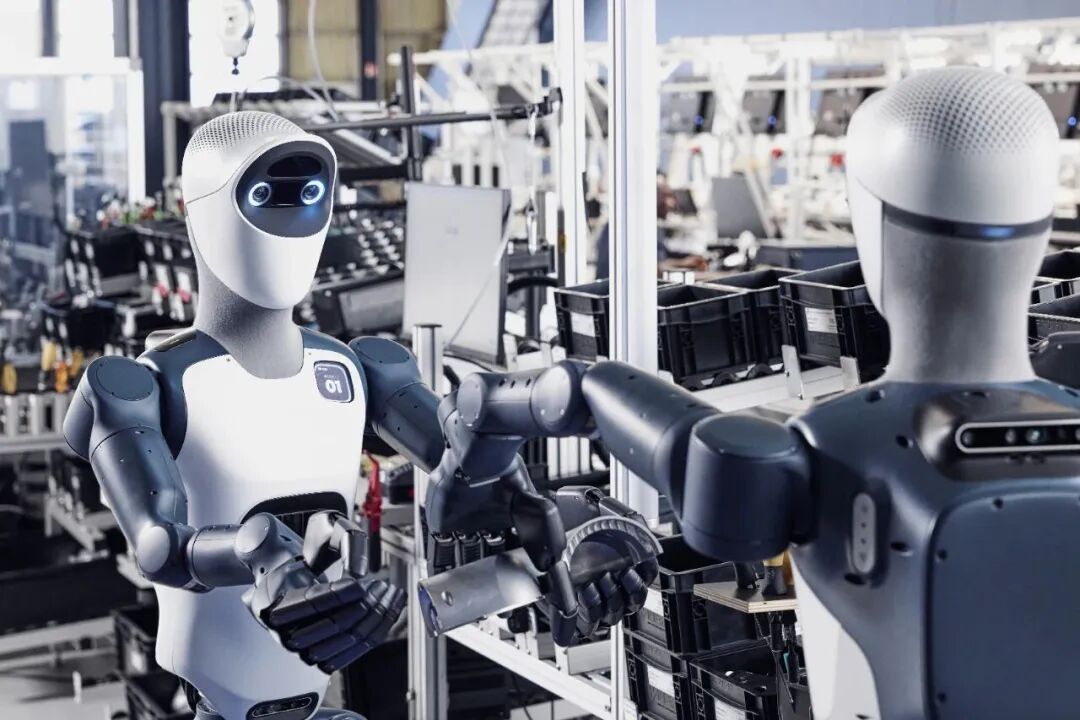
Today, a significant shift is occurring. With advances in artificial intelligence, sensor fusion, cloud-edge architectures, and industrial-grade robotics hardware, humanoid and intelligent robots are transitioning from experimental prototypes to industrial-scale products capable of sustained deployment in diverse sectors. This trend promises not only service automation in retail, healthcare, and hospitality but also enhanced operational efficiency and new human-machine collaboration paradigms.
This article examines the technological, operational, and market dynamics driving this transition, explores strategies for scaling deployments, and discusses challenges and future directions for humanoid and intelligent physical robots.
1. The Evolution from Prototype to Industrial Product
1.1 Early Humanoid Prototypes
The first generation of humanoid robots primarily focused on:
- Demonstrating bipedal locomotion (e.g., Honda’s ASIMO)
- Performing simple manipulation tasks
- Showcasing human-robot interaction capabilities through speech and gestures
Limitations included:
- Limited autonomy: Robots required human supervision or teleoperation.
- Mechanical fragility: Small motors and joints could not sustain continuous operation.
- High production cost: Individual prototypes cost hundreds of thousands of dollars.
1.2 Transition to Industrial-Scale Design
Industrial-grade humanoid and intelligent robots today emphasize:
- Durable hardware: High-torque actuators, modular joints, and robust frames
- Autonomous perception: Integration of cameras, LIDAR, and IMU sensors for navigation and environment understanding
- AI-powered decision-making: Natural language processing, vision-based manipulation, and task planning
- Maintainability: Modular components and standardized interfaces for repair and upgrades
This evolution transforms robots from one-off research prototypes to deployable assets capable of continuous operation in commercial environments.
2. Core Technologies Enabling Scaled Deployment
2.1 Advanced Actuation and Mechanics
Humanoid robots require precise, powerful, and energy-efficient actuation:
- Series Elastic Actuators (SEAs): Provide safe human-robot interaction by absorbing impact and offering compliance.
- High-torque brushless motors: Enable durable, repetitive motion in joints.
- Lightweight composite materials: Reduce overall mass while maintaining structural strength.
2.2 Perception and Sensing
- Computer Vision: RGB-D cameras, stereoscopic vision, and object detection for task execution.
- LIDAR and Radar: Enables navigation in dynamic environments with obstacle detection.
- IMU and Force Sensors: Ensure balance, gait stability, and adaptive manipulation.
2.3 Artificial Intelligence
- Reinforcement Learning (RL): Teaches robots robust locomotion, grasping, and adaptive behaviors.
- Natural Language Processing (NLP): Enables interaction with humans through voice and dialogue.
- Multi-Modal Sensor Fusion: Combines vision, tactile, and auditory input for context-aware decision-making.
2.4 Software Architecture
- Robot Operating System (ROS2): Provides modular, real-time control and communication.
- Edge Computing Integration: Real-time data processing without cloud latency.
- Autonomous Task Planning: Allows robots to prioritize, schedule, and execute complex workflows independently.
3. Deployment Scenarios and Use Cases
3.1 Healthcare
Humanoid and intelligent robots are increasingly deployed in healthcare settings for:
- Patient Assistance: Guiding patients, delivering medications, or supporting rehabilitation exercises.
- Hospital Logistics: Transporting linens, meals, and equipment autonomously.
- Telepresence: Facilitating remote consultation and monitoring in infectious or high-risk areas.
Example: Robots equipped with autonomous navigation and voice-based interfaces can interact with patients while delivering medicine, reducing nurse workload and improving operational efficiency.
3.2 Retail and Hospitality
- Customer Guidance: Robots direct customers to products, provide promotional information, or answer questions.
- Inventory Management: Autonomous scanning and reporting of stock levels.
- Service Automation: Food and beverage delivery, cleaning, and concierge services.
Example: Hotel robots can autonomously transport luggage, guide guests, and interact with multiple customers simultaneously.
3.3 Manufacturing and Logistics
- Collaborative Robotics (Cobots): Humanoids can work alongside humans on assembly lines or in warehouses.
- Flexible Material Handling: Robots pick, sort, and transport items without rigid automation lines.
- Inspection and Quality Control: Vision-based anomaly detection ensures consistent product quality.

4. Strategies for Scaling Humanoid and Intelligent Robot Deployments
4.1 Standardization and Modular Design
- Interchangeable Modules: Actuators, sensors, and controllers can be replaced or upgraded.
- Software Abstraction: Unified interfaces allow rapid integration with existing enterprise systems.
- Maintenance Protocols: Industrial-scale service schedules reduce downtime and extend robot life.
4.2 Pilot Programs and Iterative Deployment
- Initial Pilot Sites: Test robots in controlled environments to gather operational data.
- Performance Metrics: Evaluate uptime, task completion, user interaction quality, and safety incidents.
- Iterative Improvement: Refine robot behavior, navigation algorithms, and user interface based on real-world feedback.
4.3 Human-Robot Collaboration and Training
- Staff Training: Educate human operators on safe interaction, troubleshooting, and supervision.
- Behavior Transparency: Robots provide status updates, alerts, and progress tracking to staff.
- Adaptability: Robots adjust tasks and pace to complement human workflows.
4.4 Cost Management and ROI Evaluation
- CapEx and OpEx Planning: Balance initial investment with expected efficiency gains.
- Productivity Analysis: Quantify labor savings, task automation, and customer satisfaction improvements.
- Scaling Strategy: Deploy robots gradually to multiple sites based on proven KPIs.
5. Operational Considerations
5.1 Fleet Management
- Centralized Monitoring: Track status, battery life, task queues, and location of multiple robots.
- Predictive Maintenance: Use sensor data to anticipate mechanical failures and schedule repairs.
- Task Scheduling Algorithms: Optimize robot assignments to reduce idle time and avoid collisions.
5.2 Safety and Compliance
- Human Interaction Safety: Compliant actuation, obstacle detection, and emergency stop mechanisms.
- Regulatory Compliance: Adherence to occupational safety standards, healthcare regulations, and local robotics laws.
5.3 User Acceptance
- Design for Social Acceptance: Friendly appearance, clear communication, and non-threatening movements.
- Feedback Loops: Incorporate user and staff feedback to improve interaction quality and service performance.
6. Challenges in Large-Scale Deployment
| Challenge | Mitigation Strategies |
|---|---|
| High hardware cost | Modular design, mass production, and leasing models |
| Complex maintenance | Predictive maintenance, remote diagnostics, and standardized components |
| Navigation in dynamic environments | SLAM, LIDAR-based obstacle avoidance, and AI-driven adaptive planning |
| Human acceptance | Transparent communication, intuitive interfaces, and ergonomic design |
| Multi-task adaptability | Reinforcement learning and task prioritization algorithms |
7. Case Studies
7.1 Humanoid Robots in Healthcare
- Hospitals deploying robots for logistics and telepresence have observed 30–40% reduction in routine staff workload.
- Patient satisfaction improved through consistent, responsive interactions.
7.2 Retail Robotics
- Major retail chains using humanoid assistants for customer service report faster in-store navigation and higher engagement metrics.
- Autonomous inventory scanning reduced stock discrepancies by over 90%.
7.3 Industrial Cobots
- Manufacturing facilities integrating humanoid cobots alongside human workers achieve flexible task allocation, minimizing downtime caused by rigid automation lines.
- Visual inspection robots reduce defect rates while freeing human workers for complex decision-making tasks.
8. Future Directions
8.1 Integration with AI and Edge Computing
- Localized AI allows real-time decision-making without constant cloud reliance.
- Edge computing reduces latency, enabling responsive interactions and autonomous task execution.
8.2 Multi-Robot Coordination
- Fleets of humanoid robots coordinating tasks autonomously will enhance operational throughput in logistics, retail, and healthcare.
8.3 Adaptive Human-Robot Interaction
- Context-aware AI enables robots to adjust behavior based on environment, user preferences, and social norms.
8.4 Cost Reduction Through Mass Production
- Economies of scale, standardized components, and open-source platforms will lower barriers to adoption.
Conclusion
The deployment of humanoid and intelligent physical robots is transitioning from laboratory prototypes to industrial-grade solutions capable of continuous, reliable, and autonomous operation. Critical enablers include:
- Advanced mechanics and actuation for durability and precise motion.
- Integrated AI and perception systems for adaptive autonomy and human-like interaction.
- Edge and cloud-edge hybrid architectures for real-time decision-making.
- Operational strategies including pilot programs, modular design, staff training, and fleet management.
As these robots scale across healthcare, retail, hospitality, and manufacturing, enterprises can expect significant productivity gains, improved service quality, and new forms of human-robot collaboration, marking a transformative phase in the robotics industry.