









Introduction
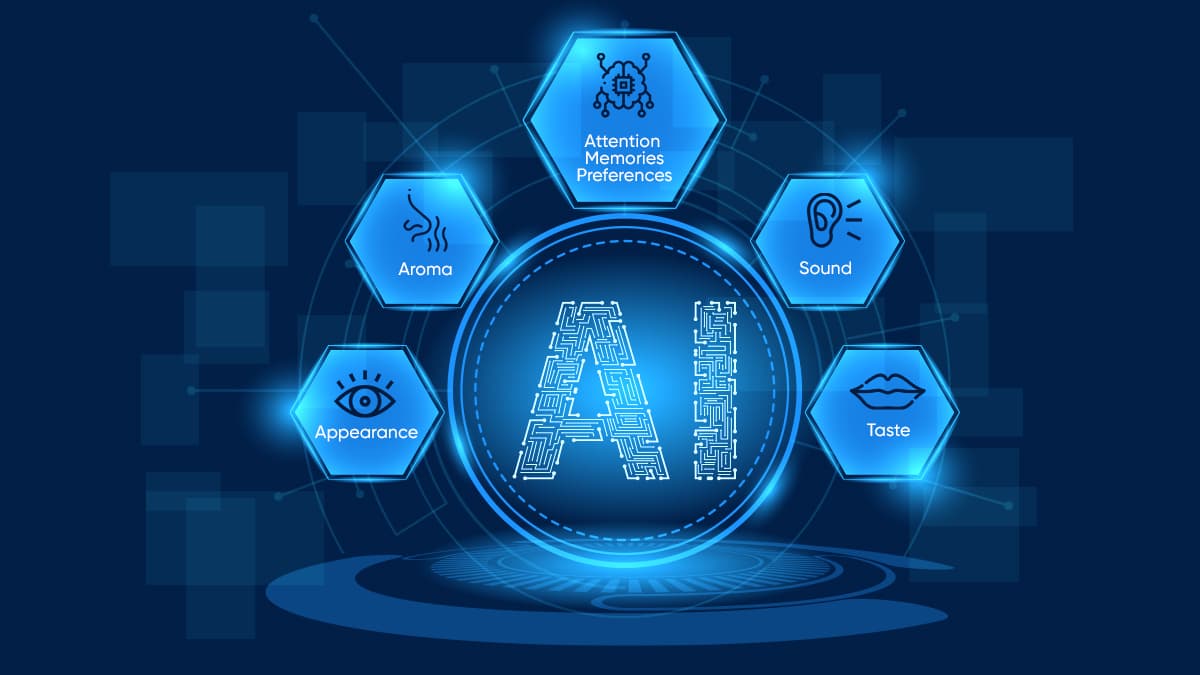
The evolution of robotics increasingly depends on intelligent perception, the capability of machines to sense, interpret, and act upon environmental stimuli. Unlike traditional robots with rigid, task-specific sensors, modern robots integrate multimodal sensory data—vision, tactile, and auditory inputs—into deep learning frameworks to achieve higher autonomy, adaptability, and reliability.
This intelligent perception enables robots to understand complex environments, interact safely with humans, and perform tasks previously thought exclusive to human dexterity. Sensor fusion combined with deep learning techniques allows the extraction of rich features, improving decision-making, predictive control, and context awareness.
This article explores the principles, technologies, and applications of intelligent multimodal perception, detailing sensor types, fusion strategies, deep learning models, hardware considerations, and challenges in deploying these systems in real-world robotics.
1. Fundamentals of Intelligent Robotic Perception
1.1 Definition and Scope
Intelligent perception in robotics refers to the integration of multiple sensory modalities to create a coherent representation of the environment, enabling decision-making and adaptive behavior. Core objectives include:
- Accurate object recognition and scene understanding
- Safe human-robot interaction
- Adaptive manipulation and locomotion in unstructured environments
- Context-aware autonomous decision-making
1.2 Sensory Modalities
- Vision: Cameras, depth sensors, and stereo vision capture spatial and visual features.
- Tactile: Force, pressure, vibration, and texture sensors provide contact-based feedback.
- Auditory: Microphones and acoustic sensors detect environmental sounds, speech, and mechanical events.
1.3 Role of Deep Learning
- Feature Extraction: CNNs and transformers extract hierarchical visual and auditory features.
- Sensor Fusion: Deep learning models integrate multimodal inputs to form robust environmental representations.
- Decision Making: Learned models map sensory inputs to actions for navigation, manipulation, and interaction.
2. Vision-Based Perception
2.1 Visual Sensors
- RGB Cameras: Capture color and texture information; low cost and widely available
- Depth Cameras (RGB-D): Provide spatial depth information essential for 3D reconstruction
- Stereo Vision Systems: Use dual cameras to estimate depth from disparities
- LiDAR: Measures distance using laser reflections; high accuracy for mapping and obstacle detection
2.2 Visual Perception Tasks
- Object Detection and Recognition: Identifying objects and classifying them in real time
- Scene Segmentation: Understanding the environment layout and identifying surfaces
- SLAM (Simultaneous Localization and Mapping): Constructing maps while tracking the robot’s position
- Motion Prediction: Estimating trajectories of dynamic objects
2.3 Deep Learning in Vision
- Convolutional Neural Networks (CNNs): Core method for image recognition
- Transformers: Capture global context in scenes for high-level perception
- Depth-Aware Networks: Combine RGB and depth data for enhanced 3D understanding
3. Tactile Perception
3.1 Tactile Sensor Types
- Force Sensors: Measure normal and shear forces for grip and interaction
- Pressure Arrays: Capture spatial distribution of contact forces
- Vibration Sensors: Detect slip and surface texture
- Soft Sensors: Embedded in flexible skins to measure deformation and contact
3.2 Applications
- Robotic Manipulation: Adjusting grip force to handle delicate objects
- Texture Recognition: Identifying material properties via touch
- Haptic Feedback: Enhancing teleoperation and VR control for precise handling
3.3 Deep Learning for Tactile Data
- CNNs for Pressure Maps: Process spatial force distributions
- RNNs/LSTMs for Temporal Data: Capture dynamic tactile interactions over time
- Multimodal Fusion: Combine tactile input with vision to enhance grasping precision
4. Auditory Perception
4.1 Audio Sensors
- Microphone Arrays: Enable directional sound detection and noise suppression
- Contact Microphones: Detect vibrations and mechanical events on surfaces
- Acoustic Cameras: Combine spatial microphones with imaging to localize sounds
4.2 Applications
- Speech Recognition: Voice commands for human-robot interaction
- Environmental Awareness: Detect alarms, machinery noise, or collisions
- Event Detection: Recognize operational errors or abnormal sounds in industrial robots
4.3 Deep Learning for Auditory Data
- Spectrogram-Based CNNs: Convert audio signals to 2D images for feature extraction
- Transformer Models: Capture long-range temporal dependencies for continuous audio streams
- Cross-Modal Learning: Combine audio with vision to enhance situational awareness
5. Multimodal Sensor Fusion
5.1 Fusion Strategies
- Early Fusion: Raw sensor data combined at input level
- Pros: Rich feature interactions
- Cons: Sensitive to noise and misalignment
- Intermediate Fusion: Features extracted from individual modalities fused at hidden layers
- Pros: Balances robustness and cross-modal learning
- Widely used in deep multimodal networks
- Late Fusion: Decisions or predictions from individual modalities combined
- Pros: Modular, tolerant to sensor failure
- Cons: Limited cross-modal interaction
5.2 Advantages of Multimodal Perception
- Increased robustness in noisy or occluded environments
- Reduces ambiguity from single-modal sensors
- Enables context-aware decision-making in complex tasks
5.3 Deep Learning Approaches
- Multimodal CNNs: Combine visual, tactile, and auditory features
- Graph Neural Networks: Model relationships between sensory nodes for scene understanding
- Attention Mechanisms: Dynamically weigh modality contributions based on task relevance
6. Applications of Intelligent Perception
6.1 Robotic Manipulation
- Vision identifies object geometry and location
- Tactile feedback ensures appropriate grip force
- Audio detects successful placement or slippage
- Example: Humanoid hands picking delicate fruits
6.2 Autonomous Vehicles
- LiDAR and cameras for mapping
- Audio detects emergency vehicles and traffic sounds
- Tactile sensors on wheels monitor terrain interaction
- Deep learning fuses all inputs for safe navigation
6.3 Human-Robot Interaction
- Vision detects human gestures
- Audio interprets commands
- Tactile sensors allow safe physical contact
- Robots respond naturally to environmental and human cues
6.4 Industrial Robotics
- Multimodal perception identifies defective products via vision and tactile inspection
- Audio detects abnormal machine sounds for preventive maintenance
7. Hardware and System Design Considerations
7.1 Sensor Selection
- Trade-offs between accuracy, latency, robustness, and cost
- Example: RGB-D cameras for 3D perception, pressure arrays for robotic hands
7.2 Computing Platforms
- Edge computing vs. cloud processing
- GPUs, TPUs, or dedicated AI accelerators for real-time inference
7.3 Data Synchronization
- Timestamp alignment critical for effective sensor fusion
- Calibration required for cross-modal accuracy
7.4 Energy and Weight Constraints
- Mobile robots require low-power sensors and efficient computation
- Compact sensor arrays reduce payload while maintaining perception fidelity
8. Challenges in Intelligent Perception
- Data Heterogeneity: Visual, tactile, and auditory data differ in dimensionality, sampling rates, and noise characteristics
- Real-Time Processing: Deep learning models must run efficiently to avoid latency
- Sensor Calibration: Misalignment reduces fusion accuracy
- Domain Adaptation: Models trained in lab conditions may fail in dynamic real-world environments
- Interpretability: Understanding decisions made by multimodal networks remains complex
9. Future Directions
9.1 Advanced Sensor Technologies
- Flexible tactile skins, event-based cameras, and directional microphone arrays
- Higher resolution, lower latency, and improved robustness
9.2 Self-Supervised and Few-Shot Learning
- Reduce dependency on large labeled datasets
- Allow robots to learn new objects, textures, and sounds autonomously
9.3 End-to-End Multimodal Learning
- Unified architectures processing vision, tactile, and audio streams for task-specific outputs
- Attention and transformer-based models optimize cross-modal integration
9.4 Human-Like Perception
- Robots capable of context-aware reasoning and predictive understanding
- Natural interaction and adaptive behavior in complex environments
Conclusion
Intelligent robotic perception is transforming autonomous and collaborative robotics by enabling systems to perceive and understand the world through vision, tactile, and auditory sensors. The integration of deep learning for sensor fusion empowers robots to:
- Interpret complex environments
- Interact safely with humans
- Adapt to dynamic and uncertain conditions
Key takeaways:
- Multimodal sensor fusion improves robustness, accuracy, and task performance
- Deep learning models extract rich features and handle heterogeneity across modalities
- Hardware and system design critically influence perception quality and efficiency
- Applications span manipulation, autonomous navigation, HRI, and industrial inspection
As sensors and AI algorithms advance, robots will approach human-level perception, achieving greater autonomy, adaptability, and reliability across diverse applications.