









Introduction
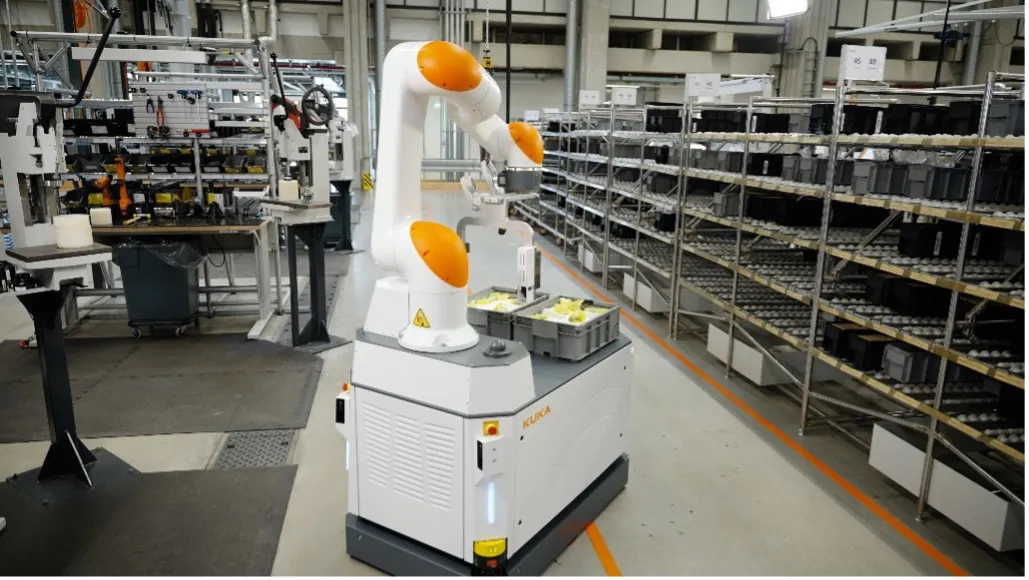
The robotics industry is witnessing a paradigm shift from cloud-reliant systems toward onboard intelligence, where autonomous control chips play a pivotal role. These specialized processors empower robots to perceive, plan, and act independently, significantly reducing reliance on cloud servers for computation and decision-making.
As robots are increasingly deployed in dynamic, unpredictable, or connectivity-limited environments—from industrial warehouses and autonomous vehicles to service robots and field exploration—the demand for high-performance, low-latency, energy-efficient hardware has intensified. Autonomous control chips, combined with edge computing and advanced AI algorithms, are becoming the core drivers of robotic autonomy, enabling faster decision cycles, enhanced safety, and operational resilience.
This article provides a comprehensive analysis of autonomous control chips, their architectures, capabilities, and impact on robot autonomy. It also examines applications, integration strategies, challenges, and future trends shaping the industry.
1. The Rise of Autonomous Control Chips in Robotics
1.1 Limitations of Cloud-Dependent Robots
Traditionally, many robotic systems relied heavily on cloud-based computation for AI tasks such as perception, path planning, and control. While cloud computing offers enormous processing power and centralized learning, it presents significant challenges:
- High latency: Data transmission delays can compromise real-time control and safety
- Bandwidth dependency: High-resolution sensor data strains network capacity
- Operational vulnerability: Network outages or connectivity issues can halt robot operation
- Privacy and security concerns: Sensitive data transmitted over the internet increases risk
1.2 The Concept of Autonomous Control Chips
Autonomous control chips are dedicated processors integrated onboard the robot, designed to handle:
- Sensor data processing in real-time
- AI inference for perception, prediction, and decision-making
- Motion planning and control with minimal latency
- Energy-efficient computation for extended autonomous operation
By localizing intelligence, these chips enable robots to operate independently of cloud infrastructure, a crucial capability for applications in remote areas, industrial settings, and safety-critical environments.
2. Architecture and Capabilities of Autonomous Control Chips
2.1 Core Architecture
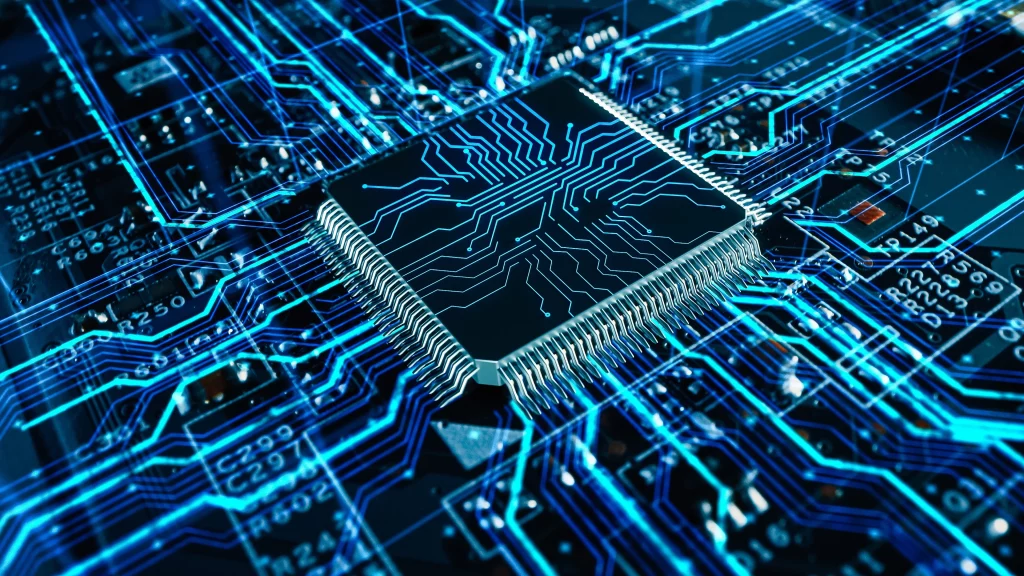
Autonomous control chips are often built on heterogeneous computing architectures, combining multiple processing units to handle diverse workloads:
- CPU cores: General-purpose processing for control logic, task scheduling, and communication
- GPU cores: Parallel processing for deep learning inference, computer vision, and sensor fusion
- AI accelerators / NPUs (Neural Processing Units): Optimized for neural network computation with minimal power consumption
- DSPs (Digital Signal Processors): High-speed processing of sensor signals, LiDAR, and radar data
- FPGA modules (optional): Customizable processing for task-specific acceleration
This heterogeneous design ensures real-time responsiveness, high throughput, and flexibility, critical for autonomous operation.
2.2 Key Features
- Low-latency decision-making: Essential for obstacle avoidance, adaptive manipulation, and safety-critical tasks
- High-throughput AI inference: Enables advanced perception, scene understanding, and predictive modeling
- Energy efficiency: Extends battery life for mobile and aerial robots
- Modular and scalable: Can support multiple sensors, actuators, and robot configurations
2.3 Emerging Chip Technologies
- Neuromorphic processors: Event-driven computation mimics human brain efficiency
- Multi-chip AI platforms: Combine specialized AI cores for vision, motion, and planning tasks
- On-chip edge AI: Supports incremental learning and adaptive control without cloud dependency
3. Edge Computing and Onboard Autonomy
3.1 Edge vs. Cloud Computing in Robotics
Autonomous control chips enable edge computing directly onboard the robot, complementing or replacing cloud computation. Edge computing offers:
- Real-time operation: Millisecond-level response for dynamic environments
- Bandwidth efficiency: Local processing reduces the need to transmit raw sensor data
- Operational resilience: Robots remain functional even without network connectivity
3.2 Integration Strategies
- Fully Onboard AI
- All perception, planning, and control are processed locally
- Ideal for mobile robots, drones, and autonomous vehicles in connectivity-limited areas
- Hybrid Edge-Cloud Systems
- Time-critical tasks handled by autonomous control chips
- Long-term learning, fleet coordination, and analytics offloaded to the cloud
- Collaborative Edge
- Shared intelligence across multiple robots via local edge nodes
- Enhances collective decision-making and multi-robot coordination
4. Applications Across Industries
4.1 Industrial Automation
- Robots execute adaptive tasks in assembly, packaging, and inspection
- Autonomous chips process visual and tactile data for real-time adjustment
- Minimal reliance on cloud ensures uninterrupted operation in production lines
4.2 Autonomous Vehicles
- Onboard chips handle sensor fusion, navigation, and collision avoidance
- Predictive control algorithms respond instantly to dynamic obstacles
- Edge computing reduces reliance on 5G/6G networks for safety-critical decisions
4.3 Service and Healthcare Robotics
- Delivery robots, eldercare assistants, and surgical robots operate with local intelligence
- Real-time environment mapping and human interaction processed on-chip
- Privacy-sensitive data remains on the device, enhancing security
4.4 Field Exploration Robotics
- Agricultural robots, planetary rovers, and disaster-response units rely on autonomous chips
- Enable navigation in unstructured terrain and adverse environments without continuous connectivity
- On-device learning allows adaptation to new conditions in real time
5. Enhancing Perception and Control with Autonomous Chips
5.1 Real-Time Sensor Fusion
- Integrates data from cameras, LiDAR, radar, and tactile sensors
- Produces accurate 3D environmental maps for navigation and manipulation
- Supports predictive control by anticipating object motion and human behavior
5.2 Predictive Motion Control
- Chips run high-frequency control loops for locomotion and manipulation
- Adaptive control algorithms adjust to environmental changes and load variations
- Enables dexterous, stable, and safe operation in complex scenarios
5.3 On-Device Learning and Adaptation
- Robots continuously refine their models based on local experience
- Reinforcement learning, imitation learning, and incremental updates executed onboard
- Reduces cloud dependency while enhancing adaptability
6. Challenges and Considerations
6.1 Power Consumption and Thermal Management
- High-performance chips generate heat, requiring advanced cooling solutions
- Low-power architectures and dynamic frequency scaling are critical for mobile robots
6.2 Real-Time Reliability
- Autonomous chips must guarantee deterministic performance under variable workloads
- Hardware-software co-design and redundancy enhance reliability
6.3 Cost and Scalability
- Advanced chips increase upfront costs
- Standardized, modular architectures enable scaling across robot fleets
6.4 Software-Hardware Co-Optimization
- Algorithms must be optimized for onboard processors
- Hardware must support evolving AI workloads, sensor integrations, and edge AI frameworks
7. Emerging Trends
7.1 Neuromorphic and Brain-Inspired Chips
- Event-driven, low-power computation mimics biological neural networks
- Accelerates perception, decision-making, and adaptive behavior
7.2 Federated Learning on Robots
- Onboard learning across a fleet without sharing raw data
- Supports collaborative intelligence and model generalization
7.3 AI-Optimized Robotic Platforms
- Chip designs tailored for perception, planning, and control tasks
- End-to-end hardware-software optimization for performance and energy efficiency
7.4 Human-Robot Collaboration
- On-device intelligence interprets human intent via gestures, speech, or proximity
- Adaptive control ensures safety and smooth collaboration
8. Future Outlook
- Fully autonomous robots capable of operating in remote, dynamic, and human-populated environments
- Core chips and edge AI reduce cloud reliance while enabling real-time intelligence
- Modular, scalable architectures support fleet coordination, collaborative learning, and continuous adaptation
- Energy-efficient, high-performance chips ensure sustained, reliable autonomous operation
Autonomous control chips represent the next frontier in robotic hardware, enabling robots to act as truly independent, intelligent agents in complex real-world scenarios.
Conclusion
Autonomous control chips are redefining robot autonomy by moving intelligence from the cloud to the edge. Key insights include:
- Onboard AI processing enables real-time decision-making, perception, and control
- Edge computing frameworks complement core chips for fleet coordination and scalable intelligence
- Autonomous chips support on-device learning, adaptability, and operational resilience
- Hardware intelligence reduces dependency on network infrastructure, improves safety, and expands deployment scenarios
As the robotics industry continues to evolve, autonomous control chips will remain a focal point, powering a new generation of robots that are adaptive, resilient, and capable of functioning independently in diverse environments.