









Introduction
CES 2026—held in Las Vegas from January 6 to 9—once again underscored the rapid convergence of robotics and artificial intelligence. The global technology event, renowned as a bellwether for cutting-edge innovation, placed “Physical AI” and embodied intelligence at the center of its narrative, signaling a shift from conceptual AI to machines capable of perceiving, reasoning, and acting within the physical world.
This year’s exhibition brought together international robotics companies, from industry giants to ambitious startups, unveiling key products with significant implications for industrial automation, service robotics, human augmentation, and everyday life. Robots equipped with advanced AI, dexterous manipulation, intuitive interaction, and real-world utility demonstrated how far the field has advanced in both capability and commercial maturity.
In this comprehensive article, we examine:
- Major global robotics debuts and product announcements
- Trends shaping robotics R&D and commercialization
- Technological breakthroughs highlighted at CES
- Industry collaboration and ecosystem dynamics
- Strategic implications for future robotics markets
1. CES 2026: A New Era for Physical AI and Robotics
CES 2026 marked the mainstream arrival of “Physical AI”—a term extensively referenced across keynote speeches and exhibitor presentations. Unlike traditional AI confined to software or simulations, Physical AI emphasizes real-world perception, environmental reasoning, and autonomous action in robots and machines.
This shift was evident beneath the exhibition halls, where robots were not merely showcased as creative demos but as practical, deployable platforms poised to enter both commercial and consumer spaces.
2. Strategic Industry Presentations
2.1 Hyundai Motor Group: Partnering Human Progress
A standout presentation came from Hyundai Motor Group, which unveiled its comprehensive AI Robotics strategy under the theme “Partnering Human Progress.”
Key aspects included:
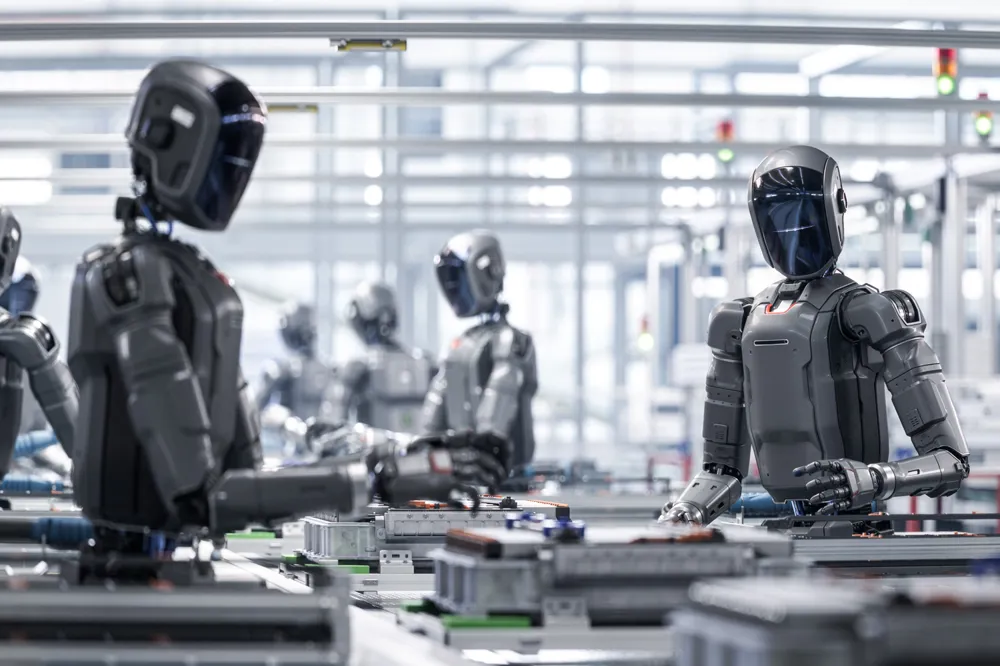
- First public showing of Boston Dynamics’ latest Atlas humanoid, indicating a tangible step toward industrial deployment.
- Expansion of AI robotics strategies integrated across the Hyundai Group Value Network and Software-Defined Factory (SDF) initiatives, aligning robotics with manufacturing innovation.
- Emphasis on human-robot collaboration, where robots augment rather than replace human workers.
In addition, the Hyundai-backed Atlas robot garnered significant attention for its autonomy and real-world capability, with some industry outlets noting it won the Best Robot award at CES 2026 for its advanced balance, manipulation, and adaptive AI-driven control.
2.2 A Broader Narrative: Physical AI and Robot Autonomy
Across CES 2026 discussions and demos, AI that interacts with the physical world was a dominant theme. From factory robots capable of nuanced tasks to humanoids interacting in human environments, Physical AI emerged not just as a marketing phrase but as a strategic consensus on the future of automation.
This narrative reflects a maturation in robotics: AI is no longer limited to data centers or analytic tasks but is being embedded into embodied agents that behave intelligently in diverse environments.
3. Key Product Launches and Robotics Highlights
3.1 Service and Domestic Robots
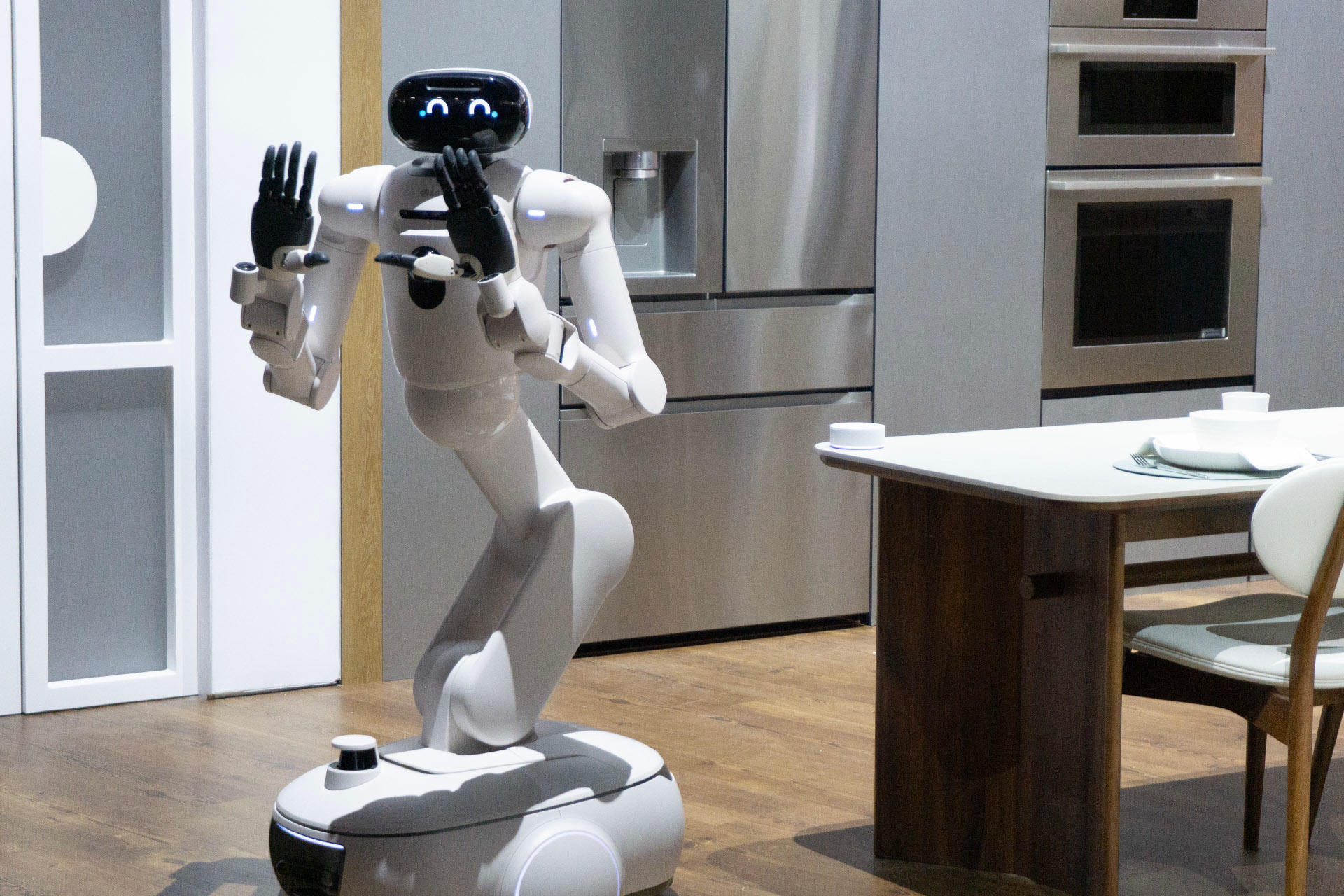
LG CLOiD: The Next Generation Home Robot
LG Electronics showcased its home assistant robot, LG CLOiD, marking a maturation in household robotics that bridges convenience, perception, and integrated task execution.
Features included:
- Multitask capabilities for everyday household chores
- A form factor optimized for living spaces
- AI-based interactions aimed at reducing routine labor
This launch represents a growing trend where mass-market consumer robotics shifts from toys and single-purpose appliances to multifunctional home companions with real utility.
3.2 Service & Companion Robots
Tombot’s Jennie Puppy
Among the most talked-about exhibits was the robotic companion Jennie from Tombot, a realistic robot puppy that demonstrated advanced AI interaction and emotional engagement.
Jennie captivated attendees by showcasing how robotics can blend affective computing with everyday interaction, signaling the rising potential of emotional companion robots in both consumer and therapeutic sectors.
3.3 Innovative Robotic Platforms
Robotin R2 Pro Modular Cleaning Robot
Robotin INC introduced the R2 Pro, a modular robot that combines vacuuming, wet mopping, and carpet cleaning into a single, AI-navigated platform—a first of its kind.
Technical highlights:
- Modular design allowing flexible functionality
- AI perception for efficient navigation
- Integration of deep cleaning with routine vacuuming
This product exemplifies how AI-driven robotics can elevate everyday tasks through modular design and intelligent operation.
3.4 Wearable and Assistive Robotics
WIRobotics WIM S and ALLEX
WIRobotics brought both wearable walking-assist systems and advanced humanoid technology to CES 2026.
Key product insights:
- WIM S: Enhanced wearable walker support with multiple walking modes tailored for seniors, rehabilitation, and physical augmentation.
- ALLEX: A humanoid form shown for the first time in live demonstrations during the main CES event.
WIRobotics’ presence illustrated the intersection between assistive robotics and full humanoid systems, indicating a broader ecosystem where robots support both independence and industrial utility.
3.5 AI-Powered Humanoid Robotics
Realbotix Expanded Lineup
Realbotix Corp. returned to CES with an expanded lineup of AI-powered humanoid robots, building on its previous successes.
Highlights included:
- Multiple robots emphasizing lifelike interaction, expressive behavior, and conversational AI
- Integration of emotional recognition and gesture responsiveness
- Demonstrations of AI systems designed for social interaction and human-robot collaboration
Realbotix’s showcase emphasized how humanoid robotics is evolving not only in mechanics but in embodied artificial intelligence that feels intuitive and relational.
4. Industrial and Collaborative Robotics Trends
4.1 Doosan Robotics: Autonomous Robotic Systems
Doosan Robotics presented autonomous robotic systems focused on industrial automation and complex structure handling tools.
Key aspects:
- AI-based Scan & Go solution that generates tool paths from 3D vision data without traditional CAD models or manual programming
- Autonomous capability for tasks such as sanding, grinding, inspection, and composite repairs on drivers like aircraft or wind turbines.
This announcement highlights how robotics is breaking free from repetitive programming to adaptive, vision-led automation in manufacturing environments—blurring the line between industrial robots and intelligent agents.
4.2 Bosch Sensortec: Enabling Human-Machine Interaction
Sensor technologies were also prominently featured. Bosch Sensortec exhibited AI-powered MEMS sensing solutions tailored for robotics and extended reality devices.
This underscores a key insight from CES 2026: robotics is increasingly built upon high-performance perception hardware, enabling richer environmental understanding and safer interaction between humans and machines.
5. Themes and Industry Dynamics from CES Robotics
5.1 Convergence of AI and Robotics
Across booth demonstrations, press announcements, and keynote commentary, CES 2026 emphasized AI and robotics not as separate domains but as inseparable technological pillars. From household robots to industrial automation, AI perception and physical action were central to product utility and vision.
5.2 Maturing Commercial Trajectories
Products unveiled at CES highlighted a maturing robotics market:
- Robotics moving from pure demos to deployable prototypes
- Wearables and assistive robots targeting real market needs
- Collaborative and industrial systems focusing on practical ROI
This shift suggests that robotics is entering an era where commercial scalability and market viability drive innovation more strongly than pure novelty.
6. Strategic Implications
6.1 Consumer Acceptance and Market Expansion
With robots designed for homes, companion roles, and wearable augmentation, consumer robotics is moving closer to mainstream adoption. As products gain real-world robustness and intuitive interfaces, demand beyond tech hobbyists is expected to rise.
6.2 Industrial Transformation and Workforce Integration
Advanced industrial robotics platforms showcased at CES reflect how automation is expanding beyond traditional manufacturing lines into:
- Complex structural tasks
- Vision-driven adaptation
- Autonomous orchestration without manual programming
This capability directly influences workforce strategies and competitiveness in high-value industries.
6.3 Ecosystem Expansion and Collaboration
The breadth of robotics participation—from sensor manufacturers to AI specialists, industrial integrators to humanoid innovators—points to a diverse ecosystem where collaboration across domains accelerates progress.
Conclusion
CES 2026 demonstrated that robotics is no longer a peripheral curiosity at tech expos—it is a central pillar of innovation shaping how machines interact with the physical world. From household assistants and wearable mobility supports to advanced industrial systems and humanoid robots with expressive, adaptive AI, the breadth of robotics at the event reflected a dynamic and rapidly maturing global market.
The convergence of robotics with advanced AI, high-performance sensing, and adaptive control systems signals a new phase where robots are expected to extend human ability, automate complex tasks, and interact seamlessly with people and environments. As these technologies continue to progress from vision to real-world deployment, CES will remain a key stage for unveiling the next generation of intelligent machines.
CES 2026 affirmed that robotics and Physical AI are not future ideals—they are today’s engineering reality, poised to redefine industries and everyday life.