









Introduction
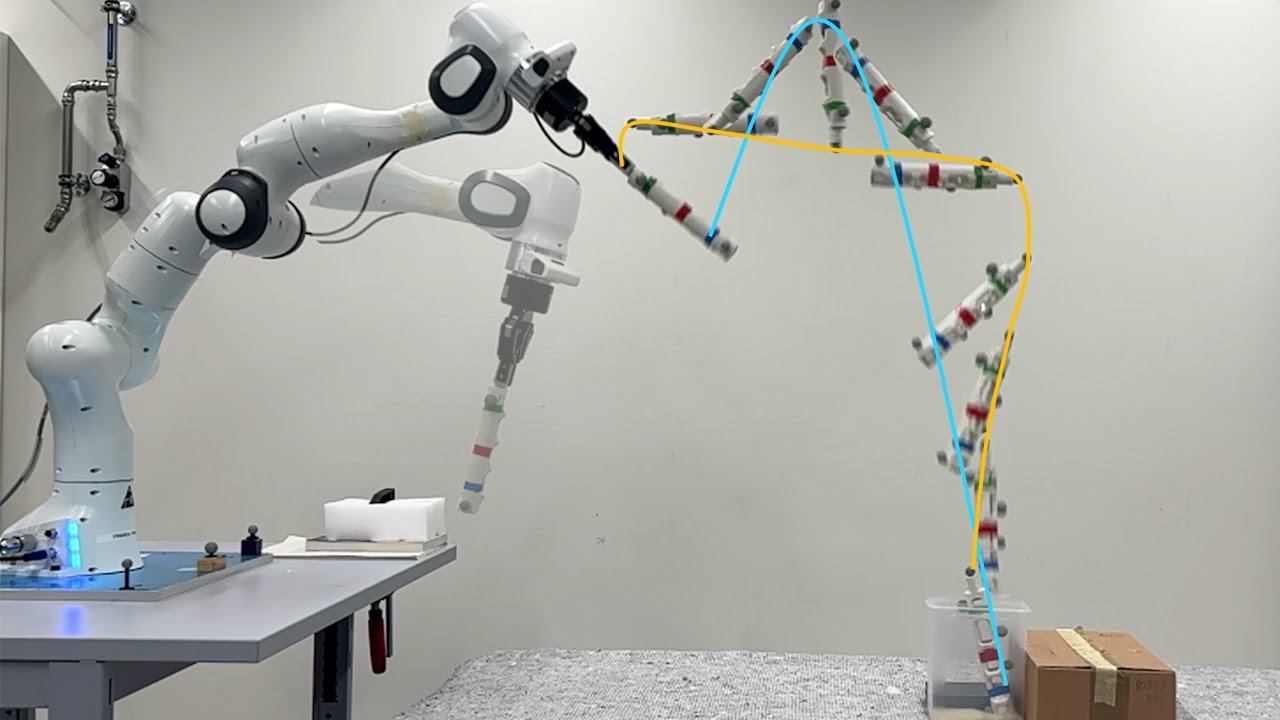
In recent years, the field of robotics has undergone a profound transformation. Advances in sensing, machine learning, and computational power have shifted research priorities toward multimodal perception control and efficient learning systems—domains that promise to overcome long‑standing limitations in robot autonomy, adaptability, and scalability. As these research frontiers accelerate, the global robotics community has responded with a surge of academic events, conferences, and workshops dedicated to exploring these themes collaboratively.
Robotics conferences and academic activities serve as critical hubs where practitioners—from Ph.D. students to industry leaders—converge to share insights, benchmark progress, disseminate breakthroughs, and chart future research directions. Over the past few years, a notable trend has emerged: these gatherings are increasingly centered on the imperatives of integrated sensing and action, multimodal sensor fusion, control frameworks for complex environments, and learning paradigms that scale with data and task complexity.
This article provides a comprehensive and professional overview of how robotics conferences and academic activities around the world are prioritizing multimodal perception and efficient learning systems, the motivations driving this focus, the technical challenges these areas address, representative research directions, and the broader implications for robotics research and deployment.
1. Why Robotics Conferences Reflect Research Priorities
Academic conferences and workshops are more than venues for presentation—they are mirrors of where a field’s intellectual energy is concentrated. The topics selected for keynote talks, paper tracks, panel discussions, and poster sessions are strong indicators of collective research interest and industry relevance.
In robotics, there has been a clear shift away from isolated discussions of motion planning, end‑effector design, or classical control theory toward integrated systems thinking. This shift arises because real‑world autonomy demands that robots not only move accurately but also understand complex, unstructured environments and adapt through learning.
Conferences focused on robotics now routinely prioritize topics such as:
- Multimodal perception and sensor fusion
- Reinforcement and self‑supervised learning
- Sim‑to‑real transfer and domain adaptation
- Human–robot interaction with contextual understanding
- Active perception and task‑driven control synthesis
This realignment reflects a broader paradigm shift in robotics: from task‑specific automation to generalizable autonomy capable of robust operation in dynamic environments.
2. Core Theme: Multimodal Perception in Robotics
2.1 What Is Multimodal Perception and Why Does It Matter?
Multimodal perception refers to the integration of multiple sensory streams—such as vision, depth, tactile sensing, proprioception, audio, and inertial measurement—into unified representations that a robot can use to form situational awareness and guide action.
Human perception is inherently multimodal; we interpret our environment through simultaneous inputs from our eyes, ears, skin, and body. Emulating this capability is essential for robots to:
- Disambiguate noisy sensory inputs
- Interpret complex scenes
- Understand affordances (action possibilities)
- Anticipate and react to dynamic changes
Robotics conference programs now include substantial tracks on multimodal perception, often tagged under sensor fusion, semantic mapping, scene understanding, and cross‑modal learning.
2.2 Multimodal Sensor Fusion: Technical Foundations
Sensor fusion combines information from heterogeneous sensors to produce more reliable and informative representations than those available from any individual sensor. Techniques include:
- Kalman filtering and Bayesian fusion for probabilistic integration
- Deep learning–based feature fusion—where neural networks learn correlated representations from vision, lidar, and proprioceptive data
- Attention mechanisms that weight sensory input based on task relevance
- Graph‑based semantic fusion for aligning spatial and temporal modalities
At robotics conferences, tutorials and workshops on sensor fusion teach emerging standards, benchmarks, and architectures that improve both perception fidelity and computational efficiency.
2.3 Highlighted Research Directions
Representative topics in multimodal perception research presented at recent events include:
- Cross‑modal consistency learning where visual and tactile signals reinforce each other
- Multimodal generative models that can interpolate across missing modalities
- Active perception—where a robot chooses actions that improve perceptual certainty
- Uncertainty quantification in multimodal representations for robust decision‑making
These research directions address the practical need for robots to perceive comprehensively and act reliably in environments where sensory noise and ambiguity are the norm.
3. Efficient Learning Systems: Scaling Robot Intelligence
3.1 The Learning Imperative in Modern Robotics
Learning systems enable robots to improve performance over time and generalize to new situations without exhaustive manual programming. Traditional robotics focused on analytical modeling and handcrafted rules—methods that struggle with complex, noisy, or unstructured environments.
Modern robotics research emphasizes data‑driven learning as a key to scalability. This trend includes:
- Reinforcement Learning (RL) for sequential decision‑making
- Imitation and behavior cloning for leveraging expert demonstrations
- Self‑supervised learning where robots generate their own training signals
- Meta‑learning that enables rapid adaptation to new tasks
Conferences now allocate entire tracks to these learning paradigms, with experts discussing algorithmic advances, benchmarks, and practical deployments.
3.2 Sim‑to‑Real Transfer and Domain Adaptation
One persistent challenge in learning systems is the simulation‑to‑reality gap: algorithms trained in simulation often perform poorly in the real world due to unmodeled dynamics and sensory noise.
Increasingly, conference research focuses on:
- Domain randomization techniques to expose models to a wide range of simulated conditions
- Contrastive learning that reduces reliance on perfect simulation fidelity
- Real‑world data augmentation methods
These methods aim to make learning systems more robust and efficient, reducing the costly need for extensive real‑world data collection.
3.3 Reinforcement Learning and Control Synthesis
Reinforcement learning now plays a central role in robotics conferences, particularly in sessions that merge RL with control theory:
- Hierarchical RL that decomposes tasks into reusable skills
- Model‑based RL for improved sample efficiency
- Safe RL to ensure compliance with safety constraints
Efficient learning systems are viewed not just as AI curiosities but as practical enablers for adaptive and autonomous robots.
4. Key Conferences and Workshops Emphasizing These Themes
Several global and regional events have elevated multimodal perception and efficient learning systems to core pillars of their programs:
4.1 International Conference on Robotics and Automation (ICRA)
ICRA regularly features:
- Workshops on multimodal perception challenges
- Invited talks on learning‑based control
- Special sessions dedicated to data‑efficient robot learning
These components signal the field’s unified push toward integrative capabilities.
4.2 Robotics: Science and Systems (RSS)
RSS emphasizes:
- Rigorous analytical foundations for perception and learning
- Benchmark challenges in sensor fusion and adaptive control
- Emerging theoretical frameworks that link learning with stability and safety
RSS’s selective program often drives research agendas in subsequent years.
4.3 Conference on Computer Vision and Pattern Recognition (CVPR)
Although fundamentally a vision conference, CVPR now includes:
- Cross‑modal perception papers applied to robotics
- Workshops on embodied AI and autonomous agents
- Benchmark challenges linked to robotic perception tasks
Robotics researchers increasingly engage with CVPR due to the overlap in multimodal learning techniques.
4.4 International Conference on Machine Learning (ICML) & NeurIPS
These AI‑centric venues have sections and workshops focused on:
- Deep reinforcement learning for control
- Multimodal representation learning
- Unsupervised and self‑supervised learning in robotics
Machine learning communities and robotics researchers now interact closely, reflecting a convergence of interests.
5. Representative Research Topics and Breakthroughs
5.1 Multimodal Deep Learning Architectures
Deep learning has shifted from single‑modality models to architectures that jointly process multiple inputs. Key innovations include:
- Transformer‑based multimodal encoders that scale to vision, language, and sensor data
- Graph neural networks that model spatial–temporal correlations
- Contrastive learning for aligning features across modalities
These models improve robustness and contextual understanding in robotic systems.
5.2 Cross‑Task and Self‑Supervised Robotics Learning
Self‑supervised learning (SSL) enables robots to bootstrap learning from their own experiences:
- Predictive coding models that forecast sensor outcomes
- Auxiliary tasks that shape representations
- Simulation‑augmented SSL for real‑world data efficiency
Conferences highlight SSL as a key technique for reducing reliance on labeled data.
5.3 Learning‑Enhanced Control Policies
Integrating learning with classical control yields hybrid algorithms that leverage both model knowledge and data adaptation:
- Model‑based RL with safety guarantees
- Adaptive control policies tuned via reinforcement signals
- Learning stabilizing controllers for dynamic tasks
Workshops and tutorials often focus on merging learning with control theory in practical systems.
6. Challenges Discussed in Academic Forums
Despite rapid progress, researchers acknowledge persistent challenges:
6.1 Real‑Time Multimodal Fusion
Robust fusion demands:
- Low latency
- Scalable architectures
- Synchronization across asynchronous sensors
Discussion centers on how to achieve efficient fusion on resource‑constrained hardware.
6.2 Safety, Interpretability, and Trustworthiness
Learning systems that drive robot behavior must be:
- Interpretable
- Verifiably safe
- Reliable under distribution shifts
These concerns appear frequently in panel discussions and standards‑oriented workshops.
6.3 Data Efficiency and Generalization
Generalization remains a bottleneck. Solutions being explored include:
- Meta‑learning for rapid adaptation
- Data augmentation techniques
- Transfer learning across tasks and domains
Public datasets and benchmarks are expanding to support comparative evaluation.
7. Collaborative and Cross‑Disciplinary Activities
The complexity of multimodal perception and efficient learning systems has led to cross–domain collaborations:
- AI and robotics labs working with cognitive scientists
- Neuroscientists advising on perception architectures
- Industry–academic partnerships for real‑world validation
Funding agencies and academic institutions are increasingly fostering multidisciplinary research clusters emphasizing embodied AI.
8. The Role of Industry in Academic Ecosystems
Industry labs (Google, Meta, NVIDIA, Amazon, Toyota Research Institute, etc.) participate actively in academic ecosystems by:
- Hosting workshops and challenges at major conferences
- Publishing open‑source frameworks and datasets
- Sponsoring student travel and research awards
Industry engagement accelerates the translation of academic insights into deployable robotic systems.
9. Benchmarks, Competitions, and Shared Datasets
Competitions and benchmarks are instrumental in advancing the state of the art:
9.1 Multimodal Robotics Datasets
Datasets that combine vision, depth, audio, and proprioception support unified evaluation:
- Embodied agent benchmarks
- Human–robot interaction corpora
- Cross‑modal representation benchmarks
Common datasets enable reproducibility and comparability.
9.2 Competitions and Challenges
Annual competitions at premier conferences test:
- Zero‑shot policy generalization
- Task adaptability in changing environments
- Multimodal task completion under uncertainty
These challenges push research teams toward practical, scalable solutions.
10. Educational Workshops and Tutorials
Beyond paper presentations, conferences increasingly offer:
- Short courses on multimodal deep learning in robotics
- Tutorials on reinforcement learning for control
- Hands‑on workshops integrating hardware and learning simulations
These academic activities help disseminate foundational and emerging techniques to broader audiences.
11. Emerging Trends and Future Directions
11.1 Foundation Models for Robotic Perception and Control
Large multimodal models, pretrained on vast corpora, are now being adapted for robotics:
- Vision–language–action models
- Task‑agnostic perception backbones
- Cross‑modal representation learners
These models promise zero‑shot and few‑shot generalization for robotics.
11.2 Sim‑to‑Real Learning at Scale
Advances in simulation (digital twins, domain randomization) are increasingly integrated with learning systems to improve real‑world transfer.
11.3 Lifelong and Continual Learning
Robots capable of continual adaptation—learning incrementally from new experiences—are a central research aspiration.
Conclusion
Robotics conferences and academic activities are no longer scattered forums focused on narrow subfields. They have become strategic centers of innovation driving the development of integrated perception and learning systems that define the next generation of autonomous robots.
By focusing on:
- Multimodal perception
- Efficient and adaptive learning systems
- Robust control and real‑world validation
these academic platforms are shaping the research agendas, educational priorities, and industrial roadmaps that will determine how robots are built, deployed, and trusted in the coming decades.
The convergence of disciplines, the growth of shared benchmarks, and the deepening dialogue between academic theory and industrial practice ensure that robotics research continues to tackle the toughest challenges—so that robots can better see, learn, adapt, and collaborate with the world they are designed to operate in.