








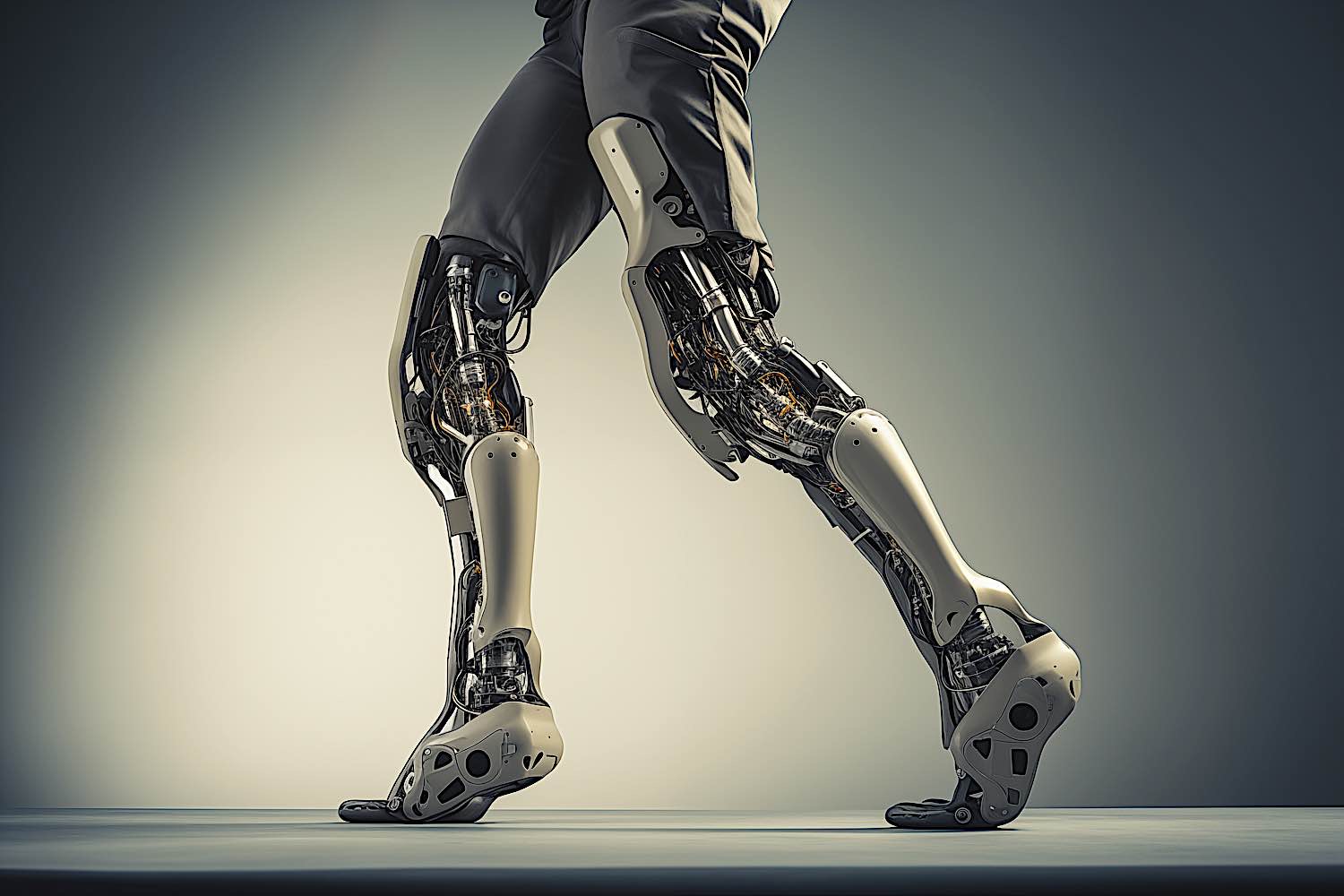

Introduction: The Evolution of Robotic Joint Design
The quest to create robots that replicate the agility, efficiency, and adaptability of biological organisms has led to a rapidly growing field: bionic joint technology. Unlike conventional rigid robotics joints, bionic joints are designed to mimic the mechanical, sensory, and control characteristics of biological articulations, such as the human shoulder, elbow, or knee. By integrating tendon-driven actuation, flexible materials, and bio-inspired dynamic modeling, engineers aim to achieve:
- Enhanced range of motion
- Energy efficiency
- Impact resilience
- Safe human–robot interaction
These innovations are transforming robotics across applications, from humanoid robots and prosthetics to exoskeletons, rehabilitation devices, and industrial manipulators.
This article provides a detailed exploration of bionic joint technology, emphasizing tendon-based actuation, flexible material integration, and bio-inspired dynamics and control methods. It examines the state-of-the-art in design, manufacturing, and control strategies while highlighting current challenges, future research directions, and potential applications.
1. Fundamentals of Bionic Joints
1.1 Biological Inspiration
Biological joints exhibit features that conventional robotics often fail to replicate:
- Tendon–muscle systems for energy storage and smooth motion
- Compliant structures for impact absorption and adaptability
- Sensor-rich control loops through proprioception and reflexes
By mimicking these features, bionic joints aim to achieve human-like performance while maintaining robustness under uncertainty.
1.2 Core Principles
Bionic joint design focuses on three foundational principles:
- Compliance: Integrating flexibility into structures or actuation to accommodate external forces safely.
- Energy Efficiency: Leveraging elastic elements such as tendons or springs to reduce motor load.
- Coordination: Using bio-inspired control strategies to regulate motion in multi-degree-of-freedom systems.
2. Tendon-Driven Actuation
2.1 Overview of Tendon-Driven Mechanisms
Tendon-driven actuation uses cable or tendon-like elements to transmit force from actuators to joints, inspired by human musculature. These systems replace direct rigid linkages with flexible transmission paths, offering:
- Remote actuator placement
- Reduced joint inertia
- Enhanced flexibility and shock tolerance
Common configurations include:
- Single-tendon linear drives
- Multi-tendon antagonistic systems
- Coupled tendon networks for multi-DoF joints
2.2 Advantages of Tendon-Driven Systems
- Lightweight Joints: Actuators can be located off-board or proximal, minimizing distal mass.
- Backlash Reduction: Tendons reduce mechanical play compared to gear trains.
- Compliance and Safety: Tendon elasticity provides passive adaptation to external forces.
2.3 Design Considerations
Key factors in tendon-driven joints include:
- Tendon routing: Smooth paths to minimize friction and wear.
- Tendon stiffness: Balancing energy storage and control responsiveness.
- Actuator selection: Optimizing torque-speed characteristics for intended motions.
- Anchoring mechanisms: Ensuring secure attachment without slippage.
2.4 Examples in Robotics
- Humanoid arms using antagonistic tendon pairs for elbow articulation
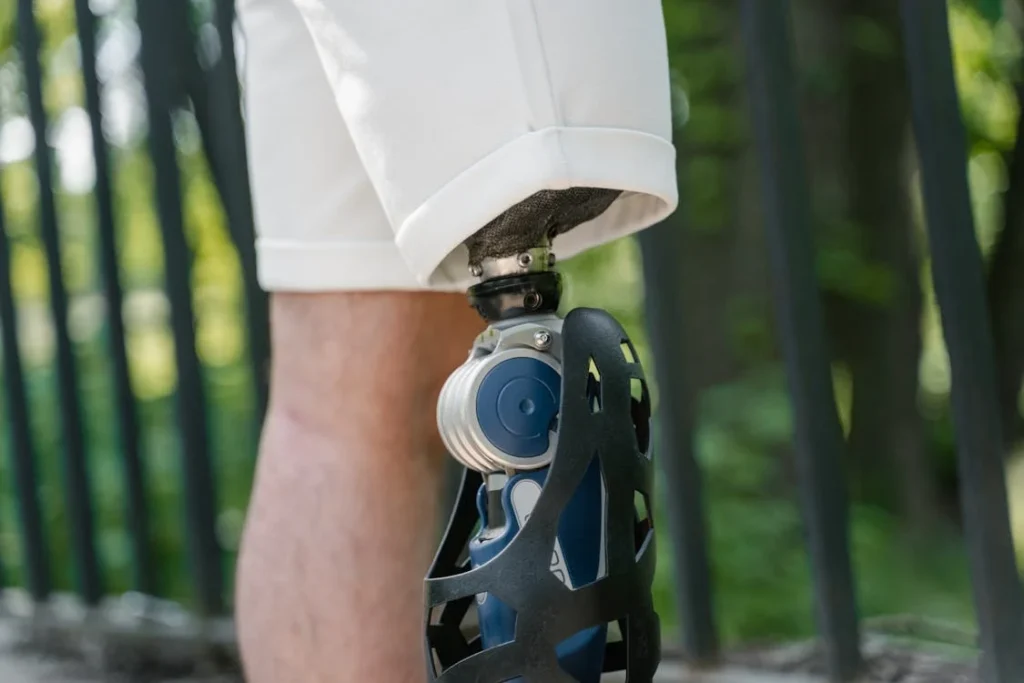
- Prosthetic knees with tendon-like springs for natural gait
- Robotic fingers employing multi-tendon arrangements for dexterous manipulation
3. Flexible Materials in Joint Design
3.1 Role of Flexibility
Flexible materials provide passive compliance, energy storage, and improved safety. They can be incorporated in:
- Joint structures (elastomers, soft composites)
- Tendon sheaths and routing channels
- Elastic coupling between actuators and linkages
3.2 Material Categories
- Elastomers and Silicone-Based Polymers: Provide high elasticity and damping, useful for impact absorption.
- Shape-Memory Alloys (SMA): Offer adaptive stiffness and actuation potential.
- Carbon Fiber Composites with Flexible Interfaces: Combine high strength with targeted compliance.
- Soft Robotics Materials: Hydrogels or soft polymer blends for lightweight, compliant joints.
3.3 Integration Challenges
- Maintaining precision while allowing compliance
- Fatigue resistance under repeated cycles
- Environmental durability (temperature, humidity, wear)
- Nonlinear stress-strain behavior complicating control
4. Bio-Inspired Dynamic Modeling
4.1 Modeling Joint Dynamics
Accurate dynamic models are essential for controlling bionic joints. Bio-inspired modeling approaches include:
- Muscle–Tendon Models: Hill-type or nonlinear viscoelastic representations
- Antagonistic Joint Models: Capturing co-contraction and energy storage
- Multi-DoF Articulations: Incorporating coupled motions for natural movement patterns
4.2 Energy Storage and Release
Tendon elasticity allows passive energy recycling, reducing motor energy consumption. Examples include:
- Human-like knee joint storing energy in tendons during stance phase
- Robotic ankle joints with spring-loaded tendons for hopping and running
4.3 Nonlinear Dynamics and Control Implications
The nonlinear behavior of tendon-driven, flexible-joint systems introduces challenges:
- Hysteresis and damping effects
- Time-varying stiffness
- Coupled multi-joint interactions
Control strategies must account for these dynamics to achieve smooth, accurate motion.
5. Control Methods for Bionic Joints
5.1 Position and Torque Control
Traditional robotics control methods must be adapted for compliance:
- Hybrid Position–Torque Control: Combines desired trajectory tracking with force compliance.
- Impedance Control: Regulates dynamic interaction with the environment by controlling virtual stiffness and damping.
- Admittance Control: Responds to external forces by modulating motion, suitable for tendon-based systems.
5.2 Bio-Inspired Control Strategies
- Reflex-Based Control: Rapid local responses to unexpected perturbations, mimicking human reflexes.
- Central Pattern Generators (CPG): Rhythmic motion generation for walking, running, and repetitive tasks.
- Learning-Based Control: Reinforcement learning or model predictive control for adaptation in complex environments.
5.3 Sensing Integration
Tendon-driven and flexible joints require rich sensor data:
- Force/Torque Sensors: At tendon anchor points to measure actuation forces
- Encoders: Measuring joint position and tendon displacement
- Strain Sensors: For distributed sensing along tendons or flexible structures
- IMUs: For dynamic feedback in multi-joint systems
Integration of these sensors allows for closed-loop compliance control and real-time adaptation.
6. Multi-Joint Coordination
6.1 Coupled Actuation
Many bionic systems rely on tendon networks spanning multiple joints, enabling coordinated motion similar to biological limbs. This reduces actuator count and mass but complicates control.
6.2 Motion Synergies
Bio-inspired design leverages kinematic and dynamic synergies:
- Coordinated movement patterns reduce control complexity
- Antagonistic tendon pairs stabilize joints across a wide range of motions
- Energy-efficient movement arises naturally from coupled dynamics
6.3 Applications in Robotic Limbs
- Humanoid arms with tendon-driven shoulder-elbow coordination
- Robotic hands using multiple tendons for dexterous grasping
- Quadruped legs employing compliant tendons for agile locomotion
7. Case Studies
7.1 Tendon-Driven Humanoid Elbow
- Design: Dual antagonistic tendons routed over a lightweight joint
- Materials: Carbon-fiber arm link, silicone tendon sheaths
- Control: Impedance-based torque control with reflexive feedback
- Outcome: Human-like smooth flexion, safe interaction with objects
7.2 Prosthetic Knee with Elastic Tendons
- Design: Single-degree-of-freedom hinge with integrated elastic tendons
- Materials: Composite housing, high-strength polymer tendons
- Control: Hybrid position–torque control adapting to walking phases
- Outcome: Energy-efficient gait with reduced user fatigue
7.3 Soft Robotic Finger
- Design: Tendon-actuated silicone finger
- Materials: Elastomeric body with SMA tendon for actuation
- Control: Sensor feedback for compliant grasping
- Outcome: Gentle and adaptive manipulation of fragile objects
8. Advantages of Bionic Joint Technology
- Enhanced Safety: Compliance reduces risk of injury in human–robot interaction.
- Energy Efficiency: Tendon elasticity recycles energy during repetitive motion.
- Lightweight Design: Remote actuator placement lowers distal inertia.
- Adaptive Motion: Flexible materials and control strategies allow naturalistic movement.
- Versatility: Applicable in humanoids, prosthetics, exoskeletons, and industrial robots.
9. Challenges and Future Directions
9.1 Design and Manufacturing
- Precision fabrication of tendon routing channels
- Reliable anchoring and material fatigue mitigation
- Integration of multiple tendon and joint networks
9.2 Modeling Complexity
- Nonlinear dynamics and hysteresis
- Multi-joint interactions and energy transfer
- Model generalization for different motions
9.3 Control and Sensing
- High-bandwidth sensor integration
- Adaptive and learning-based control methods
- Robust performance under unpredictable loads
9.4 Emerging Research Directions
- Soft robotic hybrid joints: Combining tendon-driven rigid links with soft materials
- Advanced materials: Smart polymers with variable stiffness
- AI-enhanced control: Reinforcement learning for complex multi-joint coordination
- Human-robot synergy: Exoskeletons and prosthetics that mimic natural biomechanics
10. Applications Across Domains
- Humanoid Robots: Replicating natural human motion and agility
- Prosthetics: Energy-efficient, adaptive artificial limbs
- Exoskeletons: Rehabilitation and mobility assistance
- Industrial Manipulators: Safe and compliant handling of objects
- Bio-Robotics Research: Studying human movement and biomechanics
Conclusion: The Future of Bio-Inspired Joints
Bionic joint technology represents a convergence of tendon-driven actuation, flexible materials, and bio-inspired control. By emulating the principles of biological joints, engineers are developing robots and prosthetics that move naturally, adapt safely to their environment, and operate with unprecedented energy efficiency.
The field continues to evolve rapidly, with innovations in materials science, actuation methods, sensor integration, and AI-driven control poised to overcome current limitations. In the coming decade, bionic joints will likely define the next generation of high-performance, human-centric robotic systems, bridging the gap between artificial machines and biological motion.