









Introduction
The ability for a robot to “move” in the physical world is fundamental yet profoundly complex. At a superficial level, movement might simply imply that a robot’s motors spin and its wheels turn. However, in the context of advanced robotics, especially those intended for dynamic, unstructured, or human‑centric environments, meaningful mobility is measured not by motion alone but by how effectively and adaptively a robot moves.
In robotics research and development, engineers and scientists often return to three core performance dimensions that determine whether a robot can truly move with competence and resilience:
- Joint Flexibility (Articulation) – how well a robot can position and orient its limbs or effectors.
- Gait Stability – how consistently and robustly a robot can execute locomotion without falling.
- Complex Terrain Adaptation – how effectively a robot can adjust its movement patterns to cope with irregular, unpredictable, and challenging surfaces.
Together, these capabilities form the backbone of physical mobility. They determine whether a system is merely animating in controlled settings or if it is capable of navigating real‑world environments safely, efficiently, and reliably.
This article provides a comprehensive and technical exploration of these three pillars of robot mobility. We will examine the underlying principles, measurement methodologies, design considerations, technological enablers, evaluation frameworks, and implications for real‑world applications. Across industrial, service, and exploratory robotics, mobility remains the most consequential differentiator between experimental prototypes and effective autonomous systems.
1. Defining Core Mobility Metrics in Robotics
Before exploring each dimension in depth, it is crucial to frame what mobility means in robotics and why these metrics are central.
1.1 Why Movement Matters
While computation and perception dominate headlines in artificial intelligence, embodied autonomy — the use of AI in physical agents — hinges on movement. Robots that cannot navigate their environment safely, consistently, and adaptively are fundamentally limited in usefulness.
Mobility enables:
- Autonomy — the ability to complete tasks without human intervention.
- Access — reaching locations where services or inspection is needed.
- Interaction — engaging with people or objects within an environment.
- Adaptation — adjusting to unanticipated events or conditions.
Thus, mobility is not only about motion but about purposeful, resilient locomotion and manipulation.
1.2 Core Performance Pillars
Three metrics repeatedly arise in both academic literature and industrial evaluation as essential to assessing robot mobility:
- Joint Flexibility (Range of Motion and Control)
- Gait Stability (Dynamic and Static Balance)
- Terrain Adaptation (Environmental Resilience and Manipulation)
Other considerations (energy efficiency, speed, endurance, perception integration) are critical as well but generally build upon these foundational capabilities.
2. Joint Flexibility: The Foundation of Robotic Movement
At its essence, joint flexibility refers to the range and control of motion permitted at the robot’s joints, whether in legged frames, manipulators, or even wheeled actuators.
2.1 Degrees of Freedom and Articulation
A robot’s degrees of freedom (DoF) define its capacity for articulation. A higher number of DoF translates to:
- Greater postural variety
- Improved maneuverability
- Increased adaptability to tasks or terrain
For example:
- A simple wheeled robot might have 2–3 DoF (forward/back, turn).
- A humanoid leg might have 6–7 DoF per limb (hip pitch/roll/yaw, knee pitch, ankle pitch/roll).
But more DoF is not always better — complexity increases mechanical and control challenges.
2.2 Range of Motion (RoM)
Range of motion defines the angular span that a joint can achieve. A broad RoM enables:
- Larger stride lengths
- More effective posture adjustment
- Better obstacle clearance
However, joint RoM must be balanced with structural integrity, power requirements, and control precision.
2.3 Actuation and Joint Design
The hardware that brings joints to life is equally important:
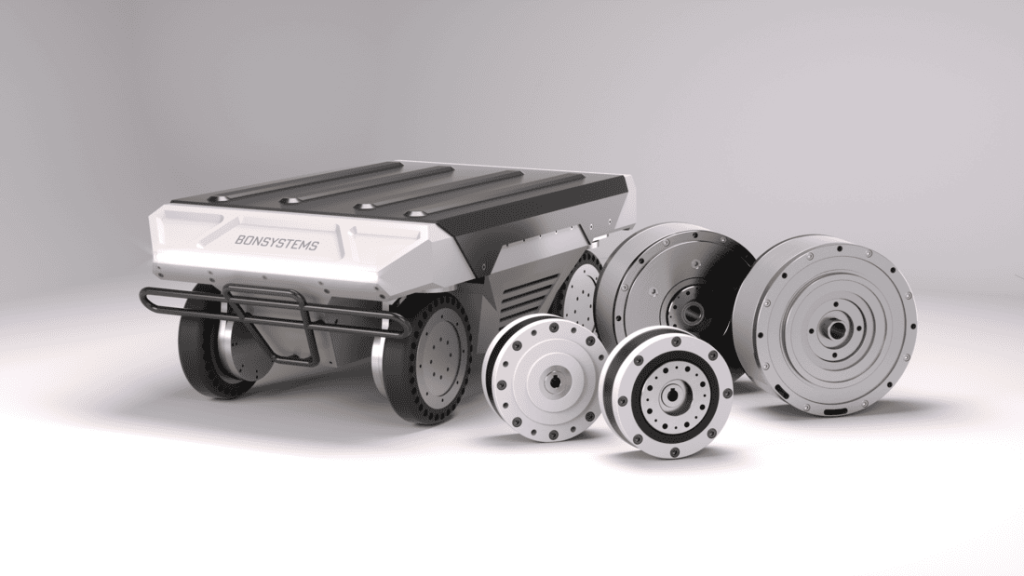
- Motor Technology — brushless DC, direct‑drive, harmonic drives
- Series Elastic Components — elements that absorb shock and enable compliant motion
- Integrated Sensing — encoders, force/torque sensors, and tactile feedback
Effective actuation enables robots to precisely position limbs with repeatability and responsiveness.
3. Gait Stability: Balancing Movement and Control
Even with rich articulation, a robot must coordinate its movements in a way that maintains balance. This is especially critical for legged robots (bipeds, quadrupeds) but also relevant for wheeled systems on uneven terrain.
3.1 Static vs. Dynamic Stability
Robotics literature commonly delineates two types of stability:
- Static Stability — the robot’s center of mass remains within its base of support while stationary.
- Dynamic Stability — the robot maintains equilibrium during motion, including acceleration and deceleration.
For legged robots, dynamic stability is essential for walking, trotting, or running.
3.2 Center of Mass and Zero‑Moment Point (ZMP)
Engineers use concepts like the Center of Mass (CoM) and Zero‑Moment Point (ZMP) to evaluate if gait dynamics are stable:
- CoM represents the average position of the robot’s mass.
- ZMP is the point on the ground where the moments of inertia balance; keeping the ZMP within the support polygon reduces fall risk.
These metrics drive control algorithms for posture and gait planning.
3.3 Feedback Control and Sensor Integration
Sensors — IMUs, joint encoders, force sensors — feed real‑time data into stabilization controllers. Sophisticated feedback models adjust:
- Joint torques
- Step timing
- Foot placement
- Body posture
Even minor delays or inaccuracies in feedback can significantly compromise stability.
4. Complex Terrain Adaptation: Beyond Flat Surfaces
Real‑world environments are irregular and unpredictable. Hence, robots must adapt their locomotion to surfaces like stairs, gravel, slopes, debris, and transitions between indoor/outdoor settings.
4.1 Perception Coupled with Motion Planning
Terrain adaptation is not purely mechanical — it requires:
- Perception systems (LiDAR, depth cameras, stereo vision)
- Terrain classification algorithms
- Real‑time gait modification
Robots must sense surfaces before and during contact, and then adjust style of movement.
4.2 Footfall Planning and Contact Modeling
For legged robots, contact planning is crucial. Algorithms decide:
- Which part of the foot contacts the ground
- When to lift or plant the next step
- How much force to apply
Contact uncertainty — like slippery surfaces or uneven stones — requires robust decision strategies.
4.3 Compliance and Passive Adaptation
Mechanical compliance can absorb shocks and adapt to terrain contours. Techniques include:
- Series elastic actuators
- Passive spring elements
- Active compliance through control loops
Compliance reduces impact forces and improves traction.
5. Quantitative Evaluation Metrics
To assess whether a robot is genuinely mobile across these dimensions, researchers and developers use quantitative benchmarks.
5.1 Joint Flexibility Metrics
- Range of Motion (degrees) per joint
- Joint torque bandwidth
- Position and velocity resolution
These metrics inform how finely a robot can control limb positions and respond to commands.
5.2 Stability Metrics
- Maximum sustainable acceleration before instability
- ZMP margin
- Recovery time after perturbation
Researchers often test with push disturbance tests or uneven surface perturbations to evaluate stability algorithms.
5.3 Terrain Adaptation Metrics
- Step success rate on variable surfaces
- Energy efficiency (Joules per meter)
- Slip rate or recovery attempts
These metrics quantify adaptability and resilience.
6. Design Considerations and Trade‑offs
Every robot design involves trade‑offs:
- Weight vs. mobility: Heavier robots may carry more sensors but struggle with agility.
- Complexity vs. reliability: More DoF improves motion but increases control complexity.
- Speed vs. stability: Faster gaits risk reduced equilibrium margins.
Optimal design depends on mission requirements — exploration rovers, industrial assistants, home companions, or disaster responders.
7. Tools and Simulation in Development
Modern robotics leverages simulation to test mobility before hardware deployment.
7.1 Physics Simulators
Tools like:
- Gazebo
- MuJoCo
- NVIDIA Isaac Sim
allow iterative testing of gait strategies and terrain adaptation in virtual environments.
Simulation accelerates development and reduces hardware risk.
7.2 Digital Twins and Reinforcement Learning
Digital twins mirror real robots, enabling:
- Training of control policies via reinforcement learning
- Transfer learning from simulation to physical robots
These approaches improve performance safely and cost‑effectively.
8. Case Studies: Mobility in State‑of‑the‑Art Robots
8.1 Boston Dynamics’ Atlas
Atlas exemplifies advanced mobility with:
- High DoF joints for human‑like motion
- Dynamic balance in parkour‑like maneuvers
- Terrain‑aware planning through vision integration
Its performance illustrates the pinnacle of research integration.
8.2 ANYbotics ANYmal
A quadruped that:
- Adapts gait for rocks, steps, and slopes
- Uses compliance and terrain mapping
- Inspects industrial environments autonomously
ANYmal demonstrates all‑terrain adaptation in commercial settings.
9. Challenges and Future Directions
Despite advances, challenges remain:
- Energy efficiency — mobility is power‑intensive.
- Real‑world unpredictability — novel surfaces and conditions.
- Computation constraints — real‑time control at scale.
Future trends include:
- Learning‑based gait adaptation
- Bio‑inspired mobility mechanisms
- Integrated sensor–control co‑design
Advances in AI and materials science will push mobility capabilities further.
Conclusion
Joint flexibility, gait stability, and complex terrain adaptation are undoubtedly the most essential metrics for determining whether a robot can truly move in meaningful ways. These capabilities distinguish experimental robots from those capable of real‑world autonomy.
- Joint flexibility ensures that a robot has the mechanical range and control necessary for purposeful movement.
- Gait stability enables dynamic, reliable locomotion even in the presence of disturbances.
- Terrain adaptation empowers robots to traverse environments that are irregular, unpredictable, and unstructured.
Collectively, these metrics define a robot’s ability to function outside controlled laboratory environments and bring autonomous capabilities to practical domains like inspection, logistics, disaster response, and service robotics.
As robotics continues to advance, the pursuit of robust mobility—grounded in these core principles—will remain a central challenge and a critical frontier driving real‑world impact.