









Introduction
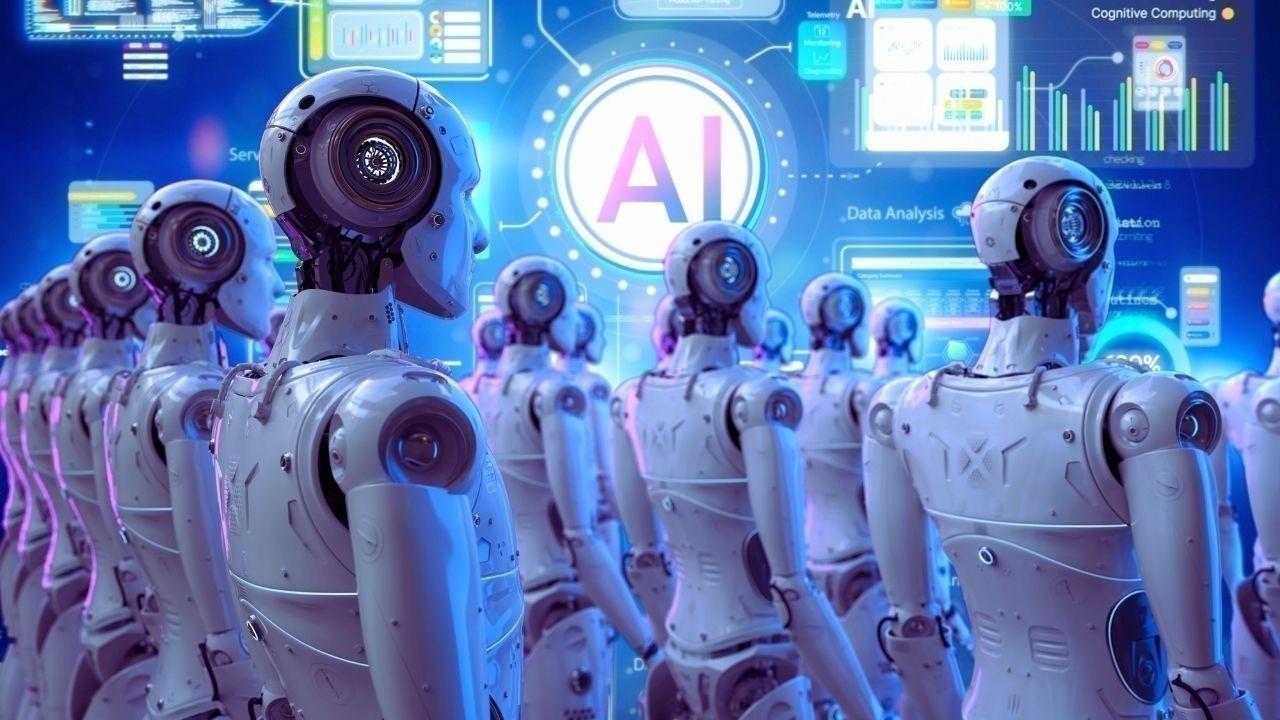
Robotics is undergoing a profound transformation as artificial intelligence (AI) propels autonomous capabilities to new heights. Where robots were once confined to executing pre-programmed sequences under controlled conditions, AI now enables robots to perceive, reason, learn, and adapt in complex, unstructured environments. This shift toward autonomy is not merely a technological evolution—it represents a paradigm shift in industrial operations, healthcare, service industries, and human-robot interaction.
Autonomous robotics, powered by AI, has far-reaching implications. By integrating perception, decision-making, and adaptive control, robots can operate with minimal human intervention, optimize processes in real time, and expand into domains previously inaccessible due to environmental uncertainty or task complexity. This article provides a comprehensive exploration of AI-driven robotic autonomy, examining technological foundations, real-world applications, market implications, challenges, and future prospects.
1. Historical Evolution: From Pre-Programmed Automation to AI-Driven Autonomy
1.1 Early Industrial Robotics
The first industrial robots, such as the Unimate arm, emerged in the 1960s. They were designed for repetitive manufacturing tasks, primarily welding and material handling, and operated in highly structured environments. These robots excelled at precision but lacked adaptability or decision-making capabilities.
Key characteristics of early robots:
- Deterministic operation sequences.
- Minimal sensing and environment awareness.
- High reliability under controlled conditions but poor performance in dynamic scenarios.
1.2 Emergence of Intelligent Robotics
During the 1980s and 1990s, researchers began integrating AI concepts into robotics. This included:
- Computer vision systems for object recognition.
- Force feedback and adaptive control in robotic manipulators.
- Mobile robots capable of navigating controlled indoor environments.
Although these robots demonstrated early autonomy, their operational scope remained limited to predictable environments, highlighting the need for more sophisticated AI-driven decision-making.
1.3 Integration of AI for Full Autonomy
The rise of machine learning, deep learning, and reinforcement learning has enabled robots to move beyond reactive behavior toward proactive, autonomous decision-making:
- Robots can now learn from environmental data and improve performance over time.
- Autonomous navigation and manipulation in unstructured spaces became feasible.
- Human-robot collaboration emerged, allowing robots to adapt to human behavior and intentions.
This integration marked the transition from semi-autonomous to fully autonomous robotic systems, capable of operating with minimal human supervision.
2. Technological Foundations of AI-Driven Robotic Autonomy
Autonomous robotics relies on the seamless integration of perception, cognition, learning, and actuation. Key technological components include:
2.1 Advanced Perception Systems
Perception is critical for autonomy, enabling robots to sense and interpret their environment:
- Computer Vision: AI-driven cameras detect and classify objects, faces, and environmental patterns.
- LiDAR and Radar: 3D mapping and obstacle detection support navigation in dynamic or unknown terrains.
- Tactile and Force Sensors: Allow delicate manipulation of fragile objects and adaptive response to physical contact.
- Multimodal Sensor Fusion: Combining vision, audio, and haptic feedback enhances situational awareness and safety.
These systems allow robots to operate in environments ranging from factories and warehouses to hospitals and public spaces.
2.2 AI-Based Decision-Making
AI equips robots with the capacity for perception-driven cognition:
- Machine Learning (ML) enables pattern recognition and predictive behavior.
- Deep Reinforcement Learning (DRL) supports adaptive task execution and optimization in dynamic scenarios.
- Natural Language Processing (NLP) facilitates human-robot communication for collaborative tasks.
This cognitive layer allows autonomous robots to make informed decisions in real time, anticipate challenges, and execute complex tasks independently.
2.3 Robotic Actuation and Mobility
Advanced actuation is essential for translating AI decisions into precise physical action:
- Robotic arms with adaptive control perform complex assembly, surgery, or delicate handling tasks.
- Mobile platforms and legged robots navigate uneven terrains and crowded spaces.
- Soft robotics ensures safe human interaction and adaptable manipulation of irregular objects.
Mobility combined with intelligent control expands autonomous deployment beyond structured industrial environments.
2.4 Cloud and Edge Computing
AI-driven autonomy is further enhanced by cloud and edge technologies:
- Cloud robotics allows large-scale data processing, algorithm updates, and fleet coordination.
- Edge AI provides low-latency, local decision-making for real-time operation.
- Data sharing and collaborative learning enable robots to learn from collective experiences across locations and applications.
These technologies provide scalability, adaptability, and continuous learning, which are critical for fully autonomous operation.
3. Applications of AI-Driven Autonomous Robotics
Autonomous robotics powered by AI has found applications across multiple sectors:
3.1 Industrial Automation
AI-driven robots optimize manufacturing by:
- Performing predictive maintenance using sensor data and AI analytics.
- Adapting assembly processes dynamically to variability in parts or workflows.
- Collaborating safely with human operators, enhancing flexibility and productivity.
Cobots (collaborative robots) exemplify AI-driven autonomy, bridging the gap between rigid automation and adaptive, human-centric processes.
3.2 Healthcare and Medical Robotics
Autonomous robotics has transformed healthcare delivery:
- Surgical robots can operate with AI-guided precision, adapting in real time to patient anatomy.
- Rehabilitation robots personalize therapy using AI-based monitoring and adaptive algorithms.
- Service robots assist patients, provide companionship, and deliver medications autonomously.
AI autonomy improves patient outcomes while reducing human workload and operational errors.
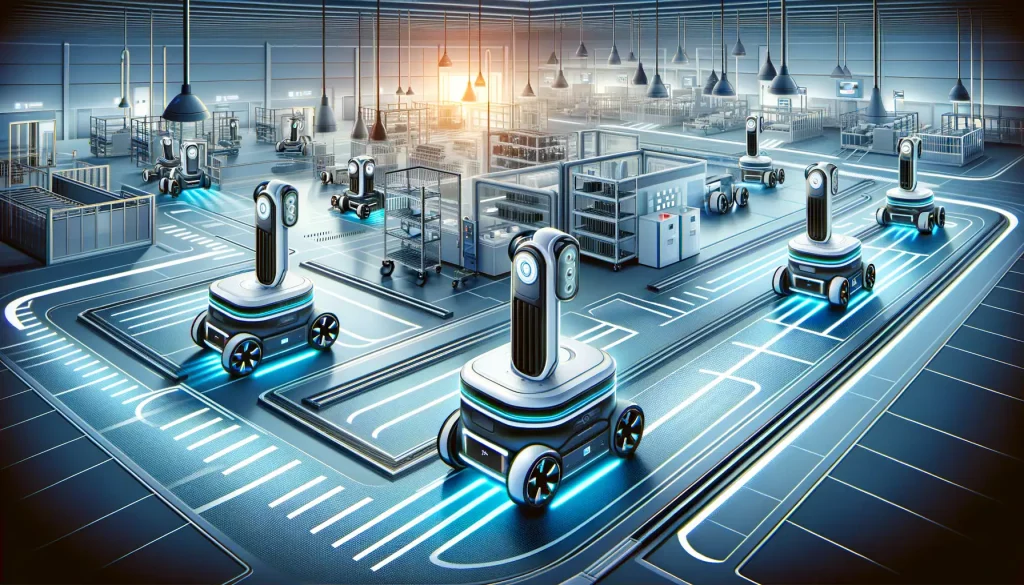
3.3 Logistics and Warehouse Automation
Autonomous robots are reshaping logistics and warehousing:
- AI-driven navigation allows mobile robots to operate in dynamic warehouse environments.
- Automated guided vehicles (AGVs) and autonomous mobile robots (AMRs) optimize inventory management and order fulfillment.
- Fleet coordination through cloud platforms enhances throughput, efficiency, and predictive planning.
These innovations reduce labor costs, minimize errors, and accelerate supply chain responsiveness.
3.4 Service and Domestic Robotics
AI-driven autonomous robots extend into domestic and commercial services:
- Robotic vacuum cleaners, lawn mowers, and assistants navigate homes autonomously.
- Service robots in hotels, airports, and retail provide delivery, guidance, and customer support.
- AI integration allows robots to learn from user behavior, adapting routines and improving performance.
Autonomy enhances usability, reducing the need for human oversight while increasing convenience and efficiency.
3.5 Exploration and Hazardous Environments
Autonomous AI-powered robots operate where humans cannot safely go:
- Space exploration robots navigate alien terrains with autonomous decision-making.
- Disaster response robots conduct search and rescue in hazardous conditions.
- Environmental monitoring robots track pollution, climate variables, and wildlife autonomously.
These applications extend human reach, enabling observation and action in extreme and dangerous environments.
4. Market Implications of Autonomous Robotics
AI-driven autonomy is reshaping the robotics market in terms of scale, structure, and business models.
4.1 Market Expansion
Autonomous robotics increases market size by enabling:
- Deployment in unstructured and previously inaccessible environments.
- Adoption across industries such as healthcare, logistics, retail, and exploration.
- Creation of new market segments for autonomous services and software solutions.
4.2 Structural Transformation
AI autonomy is changing market dynamics:
- Emphasis shifts from hardware alone to hardware-software-service ecosystems.
- Robot-as-a-Service (RaaS) models reduce capital barriers and increase scalability.
- Cloud-integrated, intelligent robots enable fleet management, collaborative learning, and remote operation.
4.3 Competitive Landscape
Autonomy introduces new competitive pressures:
- Traditional industrial robotics firms must integrate AI to remain competitive.
- Startups leveraging AI for niche applications can disrupt existing markets rapidly.
- Partnerships between AI developers, cloud providers, and robotic manufacturers are increasingly strategic.
5. Challenges to Autonomous Development
Despite progress, AI-driven autonomy faces significant challenges:
5.1 Safety and Reliability
Ensuring safe operation in dynamic environments is critical:
- Predicting human behavior remains complex.
- Fail-safe mechanisms must prevent accidents during unforeseen events.
- Redundant sensing and AI validation are required to guarantee operational reliability.
5.2 Ethical and Regulatory Concerns
Autonomous decision-making raises ethical questions:
- Responsibility for robotic decisions in accidents or harm.
- Privacy concerns in AI-enabled perception systems.
- Regulatory frameworks lag behind technological development, impacting adoption.
5.3 Technological Integration and Cost
Autonomy requires:
- Integration of AI algorithms with hardware, sensors, and cloud infrastructure.
- Continuous software updates and maintenance.
- High upfront investment, although RaaS models mitigate some cost barriers.
5.4 Human-Robot Collaboration
Autonomous robots must interact seamlessly with humans:
- Understanding human intent and social cues is critical.
- Interface design and AI transparency influence trust and usability.
- Misaligned behavior may lead to operational inefficiency or safety risks.
6. Future Prospects and Emerging Trends
6.1 Swarm and Collective Autonomy
AI enables fleets of autonomous robots to operate collectively:
- Coordinated drones for logistics, disaster response, and surveillance.
- Distributed learning and decision-making enhance efficiency and resilience.
6.2 Cognitive and Emotional Intelligence
Future autonomous robots may integrate cognitive and emotional intelligence:
- Recognize human emotions to adapt interaction strategies.
- Participate in complex decision-making alongside humans.
- Enhance care provision, collaborative work, and social interaction.
6.3 Integration with Edge AI and 5G Networks
- Edge computing reduces latency for real-time autonomous decisions.
- 5G and future communication networks enable fast, low-latency coordination of robotic fleets.
6.4 Ethical AI and Governance
- Transparent, explainable AI models will be critical for trust.
- Regulatory frameworks will evolve to manage autonomous robotic behavior and liability.
- Human-centered design will guide safe and responsible deployment.
Conclusion
The AI-driven autonomous development of robotics represents a transformative frontier in technology, industry, and society. By integrating perception, cognition, and adaptive control, autonomous robots are capable of operating in unstructured environments, collaborating with humans, and continuously learning from experience.
Applications span industrial automation, healthcare, logistics, domestic services, and exploration, demonstrating both the scale and versatility of autonomous robotics. Market dynamics are shifting toward software-service ecosystems, cloud integration, and AI-driven intelligence as key differentiators.
Challenges remain in safety, ethics, regulation, and technological integration, but the trajectory of AI-driven autonomy is unmistakably forward. Autonomous robotics promises to redefine human-robot collaboration, extend operational capabilities, and unlock new opportunities across industries. As AI continues to advance, the line between human oversight and robotic decision-making will blur, ushering in an era where intelligent, autonomous robots are integral partners in shaping the future of work, society, and exploration.