









Introduction
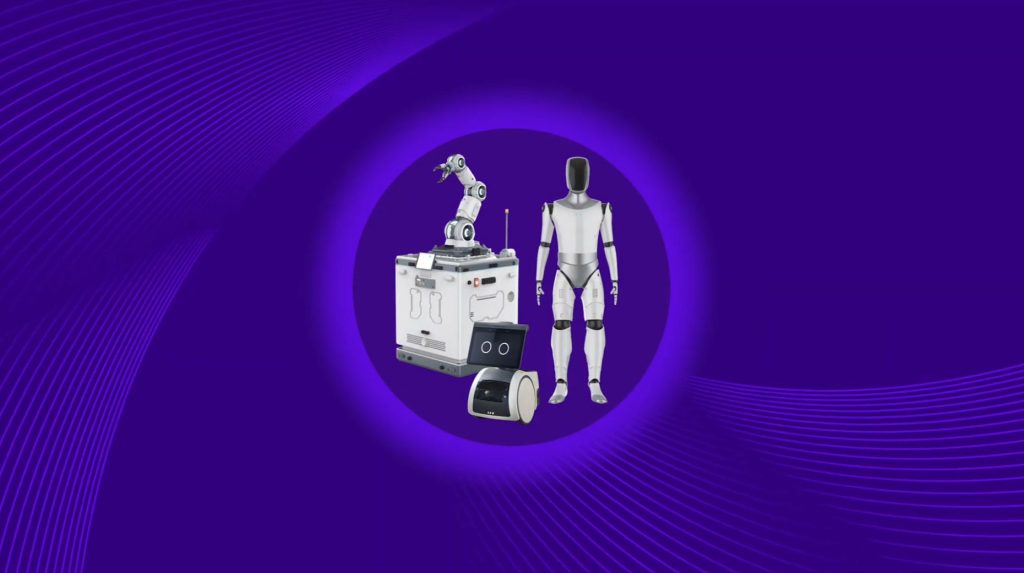
For much of the history of robotics, progress has been driven by specialization. Robots were designed to perform one task, in one environment, under tightly controlled conditions. Industrial robotic arms welded car frames, logistics robots followed fixed paths, cleaning robots vacuumed floors, and surgical robots executed predefined procedures. This single-function paradigm enabled early adoption, reliability, and cost control, but it also imposed fundamental limitations on scalability, adaptability, and long-term value creation.
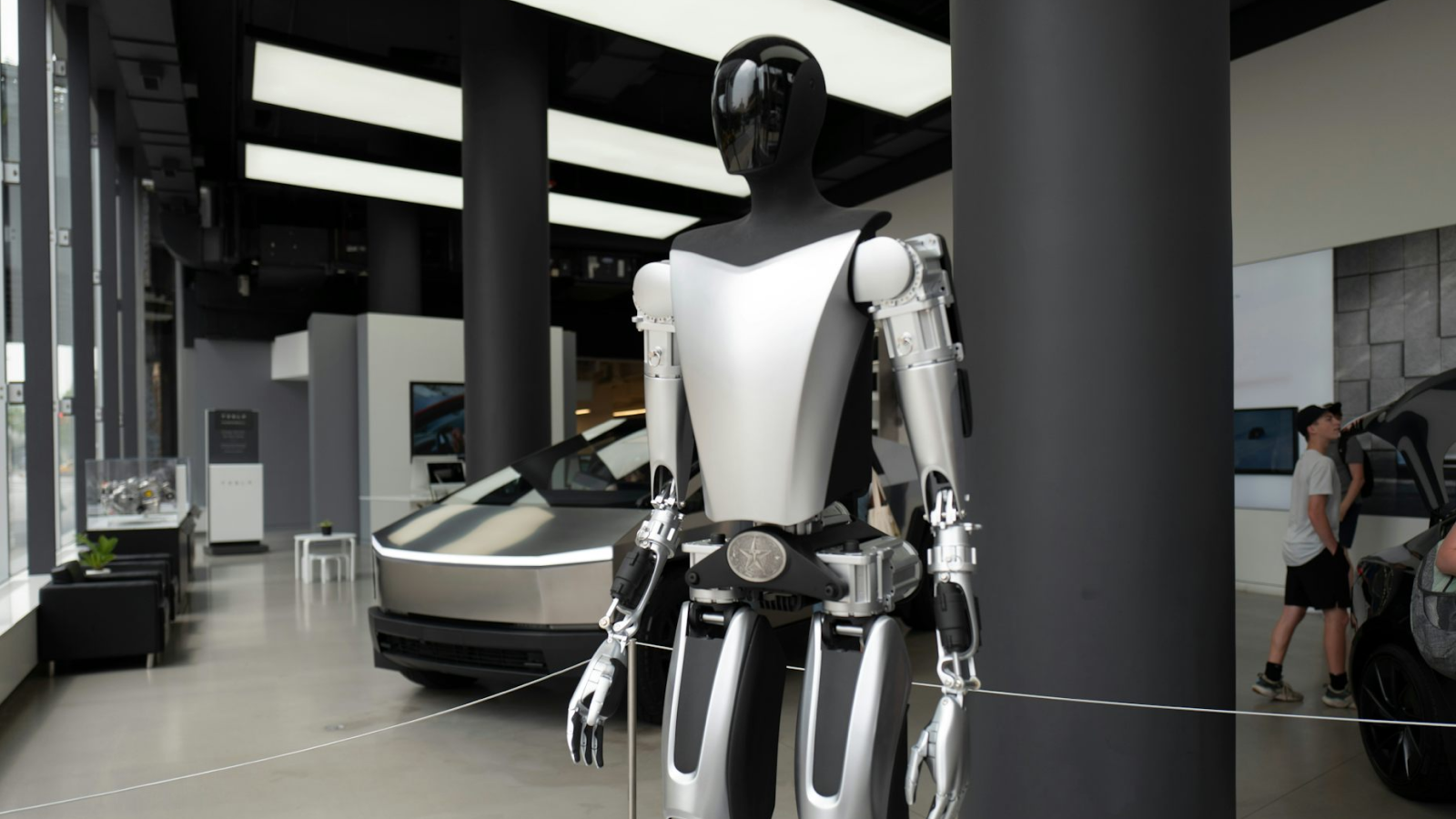
As artificial intelligence, embodied cognition, and system-level integration advance, this paradigm is undergoing a profound transformation. The future of robotics is increasingly defined not by isolated machines optimized for narrow tasks, but by general-purpose robot platforms—flexible, modular, and intelligent systems capable of performing a wide range of tasks across multiple environments. Much like general-purpose computers replaced single-function hardware, general-purpose robot platforms are poised to replace specialized robots as the dominant architecture of the robotic age.
This article explores why general-purpose robot platforms are emerging as the inevitable successor to single-function robots. It examines the technological, economic, and societal drivers behind this shift, analyzes architectural principles and design trade-offs, and evaluates the implications for industries, labor markets, and global economic structures. Ultimately, the transition toward general-purpose robotic platforms represents a foundational reorganization of how intelligence is embodied, deployed, and scaled in the physical world.
1. The Historical Dominance of Single-Function Robots
1.1 Why Specialization Worked in Early Robotics
Single-function robots thrived because early robotics faced severe constraints:
- Limited sensing and perception
- Primitive control algorithms
- High hardware costs
- Strict safety requirements
Designing robots for narrow, repetitive tasks minimized uncertainty and risk. In manufacturing environments, predictability was a feature, not a limitation.
1.2 Structural Limitations of Single-Function Systems
Despite their success, single-function robots suffer from inherent drawbacks:
- Poor adaptability to changing tasks or environments
- High reconfiguration costs when production requirements change
- Fragmented ecosystems, with different robots for each function
- Underutilized capital, as robots sit idle outside their narrow use cases
As economic and operational complexity increased, these limitations became increasingly visible.
2. The Emergence of General-Purpose Robot Platforms
2.1 Defining a General-Purpose Robot Platform
A general-purpose robot platform is not simply a robot that performs many tasks. It is a system-level architecture characterized by:
- Modular hardware components
- Software-defined functionality
- Adaptive perception and control
- Learning-based task acquisition
- Interoperability across environments
The platform approach treats the robot as a reconfigurable intelligence carrier, rather than a fixed-function machine.
2.2 Historical Parallels: From Dedicated Machines to Platforms
Technological history offers clear parallels:
- Mainframe computers replaced task-specific calculators
- Smartphones absorbed cameras, GPS devices, and media players
- Cloud platforms replaced dedicated enterprise servers
In each case, general-purpose platforms delivered superior long-term value by enabling continuous functional expansion through software.
3. Technological Drivers of the Platform Shift
3.1 Advances in Artificial Intelligence
Modern AI enables robots to:
- Perceive unstructured environments
- Generalize knowledge across tasks
- Learn new skills from demonstration or self-exploration
- Adapt behavior in real time
These capabilities reduce the need for task-specific programming and unlock multi-functionality.
3.2 Modular Hardware Architectures
General-purpose platforms rely on modularity:
- Interchangeable arms, grippers, sensors, and mobility bases
- Standardized interfaces for power, data, and control
- Rapid physical reconfiguration without redesign
Modularity transforms hardware from a constraint into an enabler.
3.3 Software-Defined Robotics
Software increasingly defines robot capability:
- Task logic is decoupled from hardware
- Updates and upgrades occur through software deployment
- Cloud and edge computing extend onboard intelligence
This mirrors the evolution of computing toward software-defined infrastructure.
4. Architectural Principles of General-Purpose Robot Platforms
4.1 Layered System Design
Most platforms follow a layered architecture:
- Physical Layer – Actuators, sensors, structure
- Control Layer – Motion planning, force control
- Perception Layer – Vision, tactile sensing, localization
- Cognition Layer – Task reasoning, decision-making
- Application Layer – Task-specific behaviors
Clear abstraction boundaries enable reuse and scalability.
4.2 Task Abstraction and Skill Libraries
Rather than coding tasks from scratch, platforms use:
- Reusable skill primitives (grasp, move, inspect)
- Task graphs combining primitives
- Learning-based skill generalization
This allows one robot to perform hundreds of tasks with minimal incremental effort.
5. Economic Advantages Over Single-Function Robots
5.1 Improved Capital Efficiency
General-purpose platforms maximize utilization:
- One robot performs multiple roles across shifts
- Idle time is reduced
- ROI improves through software upgrades
Capital investment shifts from hardware replacement to capability expansion.
5.2 Lower Total Cost of Ownership
Although platforms may have higher upfront costs, they reduce:
- Integration expenses
- Reprogramming costs
- Hardware redundancy
Over time, platforms are economically superior to fleets of specialized robots.
5.3 Platform-Based Business Models
New models emerge:
- Robot-as-a-Service (RaaS)
- App ecosystems for robot skills
- Subscription-based capability licensing
Robotics begins to resemble the software economy.
6. Impact Across Key Application Domains
6.1 Manufacturing and Industry
Platforms enable:
- Rapid line reconfiguration
- Small-batch and customized production
- Mixed human-robot collaboration
Factories become adaptive systems rather than rigid pipelines.
6.2 Logistics and Warehousing
General-purpose robots can:
- Pick, transport, sort, and inspect
- Adapt to changing inventory
- Operate across multiple facilities
This replaces fleets of task-specific machines.
6.3 Healthcare and Services
In hospitals and care facilities, platforms support:
- Logistics, sanitation, and monitoring
- Patient interaction and assistance
- Emergency response
One platform replaces multiple specialized devices.
6.4 Domestic and Urban Environments
In homes and cities, platforms:
- Perform cleaning, delivery, monitoring, and assistance
- Adapt to diverse layouts and needs
- Evolve with user requirements
This flexibility is essential outside controlled industrial settings.
7. Implications for the Robotics Industry Structure
7.1 Consolidation Around Platforms
The industry shifts from:
- Fragmented hardware vendors
- Toward platform-centric ecosystems
Companies compete on:
- Platform robustness
- Developer ecosystems
- Data and learning capabilities
7.2 Developer and Ecosystem Effects
Platforms enable:
- Third-party skill development
- Rapid innovation through APIs
- Network effects similar to mobile operating systems
This accelerates adoption and innovation.
8. Labor, Skills, and Organizational Transformation
8.1 Changing Human Roles
As platforms replace single-function robots:
- Humans focus on supervision and orchestration
- Programming shifts to high-level task definition
- Maintenance becomes software-centric
The skill profile of robotics work changes fundamentally.
8.2 Workforce Adaptation
Organizations invest in:
- Systems integration skills
- AI and robotics literacy
- Cross-domain operational knowledge
Robotics becomes a strategic capability rather than a technical niche.
9. Governance, Safety, and Standardization Challenges
9.1 Safety in Multi-Task Robots
General-purpose robots must handle:
- Diverse tasks with varying risk profiles
- Dynamic environments and human interaction
This requires adaptive safety frameworks rather than static rules.
9.2 Standardization and Interoperability
Industry-wide standards are essential for:
- Hardware modules
- Software interfaces
- Skill portability
Standards enable healthy platform competition and innovation.
10. Long-Term Societal and Economic Impact
10.1 Robotics as Infrastructure
General-purpose platforms turn robots into:
- Shared infrastructure
- Adaptive service providers
- Long-lived assets
This parallels the evolution of computing and telecommunications.
10.2 Accelerating Automation Adoption
Lower barriers and higher flexibility lead to:
- Faster diffusion across sectors
- Adoption by small and medium enterprises
- Broader societal impact
Automation becomes inclusive rather than exclusive.
11. The Future Trajectory of General-Purpose Robotics
11.1 Convergence with Physical Intelligence
Platforms increasingly integrate:
- Causal reasoning
- World models
- Embodied learning
This enhances autonomy and generality.
11.2 Toward Universal Robotic Agents
In the long term, platforms evolve into:
- Universal physical agents
- Capable of learning new tasks on demand
- Operating safely across domains
This marks the transition from tools to general physical intelligence systems.
Conclusion
The replacement of single-function robots by general-purpose robot platforms is not a matter of preference, but of inevitability. As environments become more dynamic, tasks more varied, and economic pressures more complex, specialization gives way to adaptability. General-purpose platforms deliver superior capital efficiency, scalability, and long-term value by transforming robots from rigid machines into evolving, software-defined systems.
This transition mirrors broader technological history and signals a new phase in the automation of the physical world. By embracing platform-based robotics, industries and societies gain not just more capable machines, but a flexible foundation for continuous innovation. In the coming decades, the most impactful robots will not be those designed for a single task, but those designed to become whatever the world requires.