









Introduction
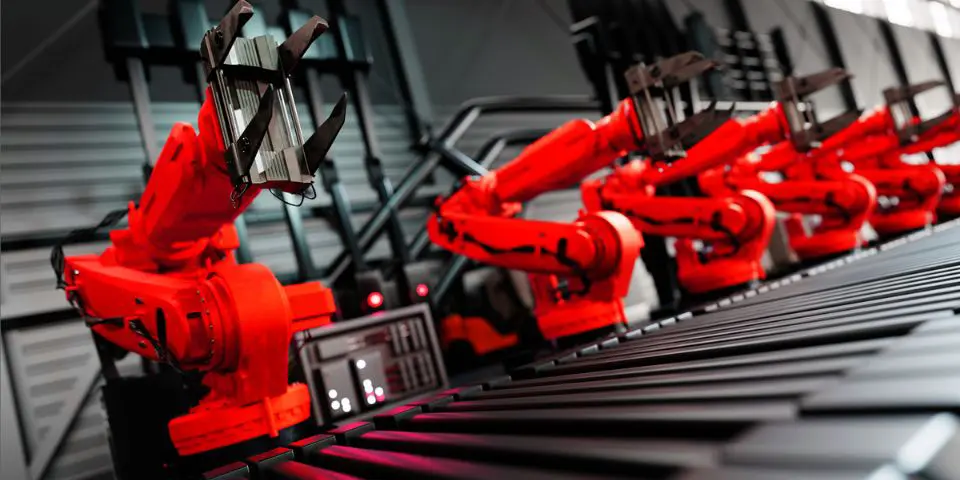
The robotics landscape is undergoing a profound transformation. For decades, industrial robots have been confined to cages or isolated zones, performing repetitive tasks in structured environments without interacting directly with humans. While these robots excel at precision, speed, and endurance, their operations are limited by safety concerns and rigid programming.
Today, the next wave of robotics is centered around collaborative automation, where robots function as true partners to human workers. These robots, often referred to as cobots, are designed to work safely alongside humans, leveraging advanced sensing, AI-driven perception, and adaptive control systems. The transition from isolated automation to human-robot collaborative ecosystems promises to enhance productivity, reduce workplace injuries, and enable new applications across industries ranging from manufacturing to healthcare.
This article explores the technological, industrial, and societal dimensions of this transformation, covering control algorithms, perception systems, safety standards, practical deployment strategies, and future trends in human-robot collaboration.
1. Historical Context: From Isolated Robots to Cobots
1.1 Early Industrial Automation
The first industrial robots, such as the Unimate in the 1960s, were designed for repetitive tasks like welding and material handling. Key characteristics included:
- High speed and precision
- Limited flexibility
- Isolation for safety
These robots were effective in controlled environments but could not safely coexist with humans due to the risk of injury.
1.2 Emergence of Collaborative Robotics
The concept of collaborative robots emerged in the 1990s, pioneered by companies like Universal Robots. Cobots were designed to:
- Operate in close proximity to humans
- Adapt their motion to human presence
- Ensure compliance through force-limited actuators
Unlike traditional industrial robots, cobots rely on safety through design rather than physical barriers, enabling a new paradigm in automation.
2. Core Technologies Enabling Human-Robot Collaboration
2.1 Advanced Sensing Systems
Safety and collaboration rely heavily on accurate perception of the environment:
- Force/Torque Sensors: Detect unintended contact with humans and adjust motion dynamically
- Proximity and Vision Sensors: Cameras, LIDAR, and depth sensors map the workspace in real-time
- Tactile Sensors: Provide feedback for safe gripping and manipulation of objects near humans
These sensors form the foundation for responsive and adaptive robot behavior.
2.2 Adaptive Control Algorithms
Modern collaborative robots employ sophisticated control algorithms:
- Impedance and Admittance Control: Adjusts robot stiffness in response to external forces
- Predictive Motion Planning: Anticipates human movement to avoid collisions
- Learning-Based Control: Reinforcement learning allows robots to improve interaction safety and efficiency over time
Together, these control strategies allow robots to behave more like intuitive partners rather than rigid machines.
2.3 Artificial Intelligence and Perception
AI enhances collaborative capabilities:
- Computer Vision: Detects human pose, gestures, and workspace boundaries
- Behavior Prediction: Machine learning models anticipate human actions to prevent accidents
- Task Adaptation: Robots adjust their workflow dynamically based on human input and environmental changes
AI is central to moving beyond pre-programmed routines to real-time, context-aware collaboration.
2.4 Safety Standards and Certification
- ISO 10218: Provides safety requirements for industrial robots
- ISO/TS 15066: Specifies guidelines for collaborative robot operation, including force limits and risk assessment
- Real-Time Monitoring: Safety-critical systems continuously evaluate robot behavior to prevent injury
Compliance with these standards is essential for widespread adoption of human-robot collaboration.
3. Applications of Human-Robot Collaboration
3.1 Manufacturing
Collaborative robots enhance productivity and flexibility:
- Assembly Lines: Cobots assist humans with repetitive tasks, such as screw driving or part positioning
- Quality Control: Vision-guided robots inspect components while humans focus on complex decision-making
- Hybrid Workflows: Cobots and humans share tasks dynamically, allowing small-batch customization
3.2 Logistics and Warehousing
- Cobots transport goods, assist in picking and packing, and reduce manual strain
- Human workers focus on cognitive tasks like sorting, decision-making, and quality verification
- Integration with warehouse management systems enables real-time coordination
3.3 Healthcare and Service Industries
- Rehabilitation Robots: Collaborate with therapists to assist patients in exercises
- Hospital Service Robots: Deliver medications and equipment, reducing human workload
- Personal Assistance Robots: Operate safely in home environments, providing mobility support and companionship
3.4 Construction and Field Work
- Cobots handle heavy lifting and precise positioning while humans supervise and adapt plans
- Drones and mobile robots survey hazardous environments collaboratively with human teams
4. Economic and Operational Benefits
4.1 Enhanced Productivity
- Human-robot teams can achieve higher throughput than isolated robots alone
- Flexible collaboration allows dynamic task allocation, improving workflow efficiency
4.2 Reduced Workplace Injuries
- Adaptive compliance and collision detection reduce risks associated with heavy machinery
- Ergonomic support for repetitive or strenuous tasks reduces human fatigue
4.3 Cost Efficiency
- Lower infrastructure requirements (no cages or safety fences)
- Rapid deployment in flexible manufacturing and small-scale production
- Reduced training and supervision overhead
4.4 Workforce Augmentation
- Cobots complement human skills rather than replace them
- Enable redeployment of workers to higher-value tasks
- Facilitate skill development in AI and automation technology
5. Technological Challenges in Human-Robot Collaboration
5.1 Real-Time Sensing and Processing
- High-speed perception and response are critical for safe interaction
- Computational delays can result in collisions or operational inefficiencies
Solutions: Edge computing, FPGA-based controllers, and optimized AI algorithms
5.2 Dynamic Workspace Adaptation
- Environments are unpredictable: humans move, objects shift
- Robots must continuously map and adapt to workspace changes
Solutions: SLAM integration, vision-based tracking, and AI-driven adaptive planning
5.3 Force and Motion Compliance
- Balancing rigidity for task execution with softness for safety is complex
- Overly stiff robots risk injury; overly compliant robots may lack precision
Solutions: Impedance/admittance control, sensor fusion, and adaptive motion planning
5.4 Human Factors
- Predicting human behavior in collaborative tasks is inherently uncertain
- Trust, ergonomics, and acceptance influence deployment success
Solutions: Intuitive interfaces, augmented reality feedback, and participatory design with operators
6. Case Studies of Collaborative Robot Deployment
6.1 Automotive Assembly Lines
- Cobots assist in component installation and torque-sensitive assembly
- Safety systems allow humans and robots to operate side by side without barriers
- Result: 20–30% increase in productivity with reduced injury rates
6.2 Electronics Manufacturing
- Cobots handle delicate components, humans perform inspection and troubleshooting
- Vision-guided pick-and-place reduces errors while maintaining throughput
- Integration with MES (Manufacturing Execution System) enables real-time monitoring
6.3 Healthcare Applications
- Rehabilitation robots monitor patient motion and provide adaptive support
- Cobots in hospitals deliver supplies, improving efficiency and reducing human exposure
- AI-driven collaboration adjusts assistance based on real-time patient feedback
7. Future Trends in Human-Robot Collaboration
7.1 AI-Enhanced Cognitive Collaboration
- Robots will anticipate human needs, suggest actions, and optimize workflows
- Integration of natural language processing (NLP) will allow verbal commands and conversational interaction
7.2 Swarm and Multi-Robot Collaboration
- Teams of robots collaborate with humans and each other to perform complex tasks
- Applications in logistics, construction, and disaster response
7.3 Emotional and Social Intelligence
- Robots will recognize human emotions, stress, and fatigue
- Adaptive behaviors will improve human comfort, trust, and efficiency
7.4 Standardization and Interoperability
- Open-source platforms and standardized protocols will simplify deployment
- Interoperability between robots from different vendors will enable scalable collaboration
7.5 Workforce Transformation
- Human-robot teams will redefine workplace roles
- Upskilling programs in robotics, AI, and safety will become critical
- Collaboration between humans and robots will become a norm rather than an exception
8. Strategic Recommendations for Organizations
8.1 Incremental Deployment
- Start with low-risk collaborative tasks
- Gradually scale to complex operations with adaptive control systems
8.2 Safety-First Approach
- Prioritize compliance with ISO/TS 15066
- Implement real-time monitoring and fail-safe mechanisms
8.3 Human-Centric Design
- Involve operators in design and workflow planning
- Develop intuitive interfaces and feedback systems
8.4 Investment in AI and Sensing
- Allocate resources to perception, motion planning, and learning algorithms
- Integrate advanced sensors for robust operation in dynamic environments
8.5 Policy and Regulatory Alignment
- Ensure compliance with local labor and safety regulations
- Engage with standards bodies to influence best practices for human-robot collaboration
Conclusion
The future of robotics lies in true human-robot collaboration. Moving beyond isolated automation, robots are becoming partners that enhance human capabilities, improve productivity, and ensure workplace safety. Advanced sensing, adaptive control, AI-driven perception, and rigorous safety standards form the foundation of this transition.
Human-robot collaboration promises tangible benefits: increased efficiency, reduced injury rates, cost savings, and workforce augmentation. Yet challenges remain in sensing, compliance, human factors, and real-time adaptation. Successful deployment requires incremental integration, human-centric design, and investment in intelligent systems.
Over the next decade, robots will evolve from caged workhorses into intelligent partners capable of co-working with humans across industries. As AI, sensor technology, and collaborative design mature, workplaces will transform into human-robot ecosystems, where safety, efficiency, and innovation thrive hand in hand.