









Introduction
Robotic systems are undergoing a profound transformation. For decades, robots were primarily deterministic machines—pre-programmed to repeat fixed sequences of motions within tightly controlled environments. Their usefulness depended largely on environmental stability and task simplicity. Any deviation from expected conditions often resulted in failure, requiring human intervention or costly reprogramming. While such robots delivered immense value in structured industrial settings, their task execution capabilities remained fundamentally limited.
The convergence of artificial intelligence (AI), reinforcement learning (RL), and multimodal perception has radically altered this paradigm. Robots are no longer confined to rigid scripts; instead, they are increasingly capable of learning from experience, perceiving the world through multiple sensory channels, and adapting their behavior dynamically to changing conditions. This shift marks a transition from traditional automation to intelligent autonomy.
This article offers an in-depth, professional exploration of how AI, reinforcement learning, and multimodal perception are reshaping robotic task execution. It examines the theoretical foundations, technological mechanisms, system-level integration, real-world applications, and remaining challenges. More importantly, it explains why these technologies, when combined, enable robots to perform tasks that were previously considered infeasible, unsafe, or economically impractical.
1. From Deterministic Automation to Intelligent Task Execution
1.1 The Limitations of Traditional Robotic Task Execution
Traditional robots excelled at precision and repeatability, but only under narrow conditions. Their task execution was characterized by:
- Rule-based logic and hard-coded trajectories
- Dependence on fixed environments and fixtures
- Minimal perception beyond basic sensors
- Inability to generalize across tasks
A robotic arm assembling the same component thousands of times per day could achieve remarkable efficiency. However, even small variations—such as part misalignment, lighting changes, or unexpected obstacles—could cause errors or system shutdowns.
This rigidity constrained robots to highly structured domains and prevented widespread adoption in unstructured or semi-structured environments such as homes, hospitals, construction sites, or dynamic warehouses.
1.2 The Emergence of Learning-Based Robotics
Learning-based robotics introduces adaptability into task execution. Instead of encoding every possible condition explicitly, engineers now train robots to learn behaviors from data, simulation, and interaction with the environment.
This shift enables:
- Robustness to uncertainty and variation
- Continuous performance improvement
- Transfer of skills across tasks and environments
At the core of this transformation lie AI, reinforcement learning, and multimodal perception.
2. Artificial Intelligence as the Cognitive Engine of Robots
2.1 AI Beyond Automation
In robotics, artificial intelligence serves as the cognitive layer—the component that interprets sensory data, reasons about goals, and selects appropriate actions. Unlike classical control systems, AI-based approaches can handle ambiguity, incomplete information, and complex decision spaces.
Key AI capabilities in robotic task execution include:
- Object recognition and scene understanding
- Semantic reasoning and task planning
- Prediction of environmental dynamics
- Learning-based decision-making
These capabilities allow robots to move from reactive behavior toward goal-oriented and context-aware task execution.
2.2 Machine Learning and Deep Neural Networks
Deep learning has revolutionized robotic perception and control. Neural networks can process high-dimensional sensory inputs—such as images, point clouds, and audio—and extract meaningful representations for decision-making.
In task execution, deep learning enables robots to:
- Identify objects and their affordances
- Estimate poses and grasp points
- Predict the outcomes of actions
Rather than relying on manually engineered features, robots learn directly from data, improving generalization and scalability.
2.3 AI-Driven Task Planning and Reasoning
Beyond perception, AI enables high-level reasoning. Task planning algorithms—often combined with symbolic reasoning or probabilistic models—allow robots to decompose complex goals into executable steps.
For example, instead of executing a fixed script, a robot can reason:
- Identify the goal state
- Assess the current environment
- Select actions that maximize progress toward the goal
- Re-plan if conditions change
This dynamic planning capability is essential for real-world task execution.
3. Reinforcement Learning: Teaching Robots Through Experience
3.1 Fundamentals of Reinforcement Learning in Robotics
Reinforcement learning is a learning paradigm in which an agent learns to make decisions by interacting with its environment and receiving feedback in the form of rewards or penalties. In robotics, the agent is the robot, and the environment includes the physical world, objects, and other agents.
The core components include:
- State: The robot’s perception of the environment
- Action: The set of possible movements or commands
- Reward: A signal indicating task success or failure
- Policy: The strategy mapping states to actions
Through trial and error, the robot learns policies that maximize cumulative reward.
3.2 Why Reinforcement Learning Matters for Task Execution
Reinforcement learning is particularly powerful for robotic tasks that are:
- Difficult to model analytically
- Highly dynamic or stochastic
- Involving complex contact dynamics
Examples include grasping deformable objects, walking on uneven terrain, or coordinating multiple joints in dexterous manipulation.
Instead of explicitly programming control laws, engineers define goals and constraints, allowing the robot to discover effective behaviors autonomously.
3.3 Simulation, Reality, and Transfer Learning
One of the major breakthroughs in reinforcement learning for robotics is the use of high-fidelity simulation. Robots can train millions of times faster in virtual environments than in the real world.
Techniques such as:
- Domain randomization
- Sim-to-real transfer
- Imitation learning
help bridge the gap between simulation and reality, enabling learned policies to perform reliably in physical environments.
4. Multimodal Perception: Expanding the Robot’s Understanding of the World
4.1 What Is Multimodal Perception?
Multimodal perception refers to a robot’s ability to perceive the environment through multiple sensory channels simultaneously. These may include:
- Vision (RGB, depth, stereo)
- Tactile sensing and force feedback
- Audio and vibration
- Proprioception (joint positions, velocities)
Each modality provides complementary information, and their integration results in a richer and more robust understanding of the world.
4.2 The Role of Sensor Fusion in Task Execution
No single sensor modality is sufficient for reliable task execution in complex environments. Vision may fail under poor lighting, while tactile sensing alone lacks global context.
Sensor fusion algorithms combine multiple data streams to:
- Improve accuracy and robustness
- Resolve ambiguities
- Enable fine-grained control
For example, during object manipulation, vision guides the initial grasp, while tactile feedback refines grip force and detects slippage.
4.3 Multimodal Learning and Representation
Modern robots increasingly use multimodal neural networks that learn joint representations across sensory inputs. These representations allow robots to:
- Associate visual appearance with physical properties
- Predict contact events before they occur
- Adapt actions based on sensory feedback
Multimodal learning is a key enabler of dexterous, human-like task execution.
5. The Synergy Between AI, Reinforcement Learning, and Multimodal Perception
5.1 From Isolated Technologies to Integrated Systems
While each of these technologies is powerful on its own, their true impact emerges when they are integrated into a unified system.
- AI provides reasoning and planning
- Reinforcement learning optimizes behavior through experience
- Multimodal perception supplies rich environmental feedback
Together, they form a closed-loop system capable of perception, decision-making, action, and learning.
5.2 Adaptive Task Execution in Real Time
In an integrated system, robots can adapt task execution dynamically. For example:
- Perception detects a deviation from expected conditions
- AI re-evaluates the task plan
- Reinforcement learning policies adjust control actions
- Multimodal feedback refines execution
This adaptability is essential for operating in unstructured and unpredictable environments.
6. Transformative Impacts on Robotic Task Categories
6.1 Manipulation and Grasping
AI-driven perception and reinforcement learning have dramatically improved robotic manipulation. Robots can now:
- Grasp objects with varying shapes and materials
- Manipulate deformable or fragile items
- Perform fine motor tasks previously exclusive to humans
Multimodal sensing enables nuanced control, while learning-based policies generalize across object categories.
6.2 Locomotion and Mobility
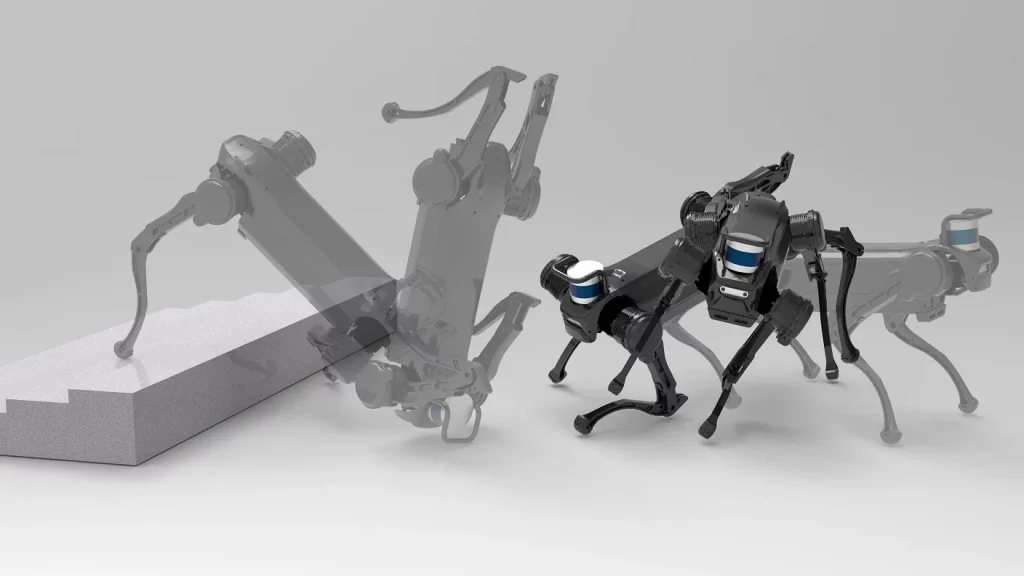
In legged robots, reinforcement learning has enabled stable walking, running, and climbing over uneven terrain. Vision and proprioception work together to anticipate obstacles and maintain balance.
Such capabilities expand robotic task execution into outdoor, industrial, and disaster-response environments.
6.3 Human–Robot Interaction
Multimodal perception allows robots to interpret human gestures, speech, and intent. AI-driven reasoning enables socially appropriate responses, while learning mechanisms refine interaction over time.
As a result, robots can collaborate more effectively with humans, sharing tasks and adapting to individual preferences.
7. Industry Applications and Real-World Impact
7.1 Manufacturing and Flexible Automation
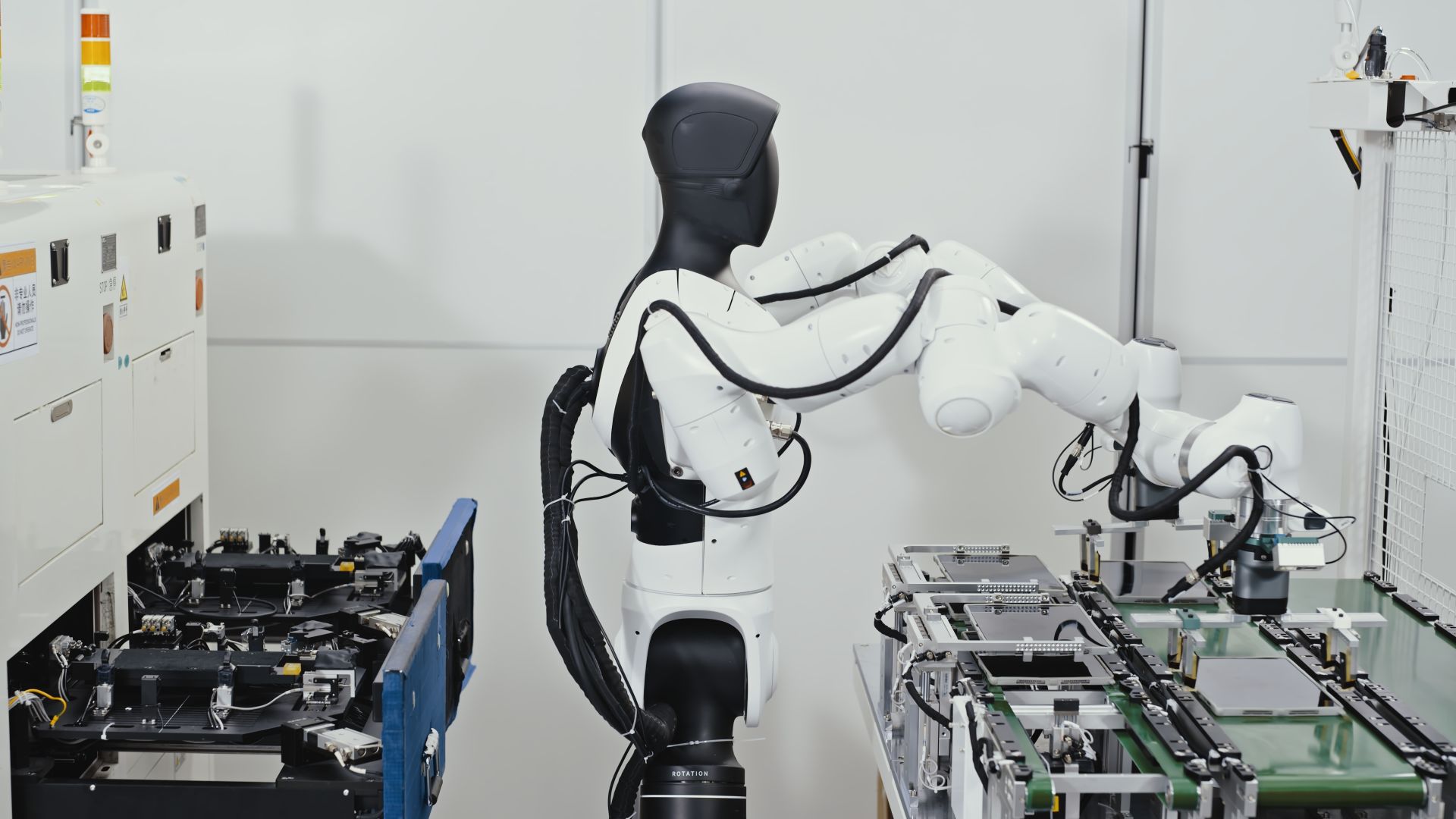
In manufacturing, intelligent robots can switch between tasks with minimal reprogramming. AI-based vision systems identify parts, reinforcement learning optimizes assembly motions, and multimodal sensing ensures quality control.
This flexibility supports small-batch production and rapid product iteration.
7.2 Logistics and Warehousing
Autonomous robots navigate complex warehouses, pick diverse items, and coordinate with human workers. Multimodal perception improves safety, while learning-based planning optimizes efficiency under changing demand.
7.3 Healthcare and Service Robotics
In healthcare, robots assist with surgery, rehabilitation, and patient care. Precision, adaptability, and safety are paramount, making AI-driven perception and learning indispensable.
8. Challenges and Open Research Questions
Despite remarkable progress, significant challenges remain:
- Data efficiency and sample complexity in reinforcement learning
- Robustness to rare or adversarial conditions
- Interpretability and explainability of AI decisions
- Safety certification for learning-based systems
Addressing these issues is critical for widespread deployment.
9. Ethical and Societal Implications
As robots gain autonomy, ethical considerations become central. Questions arise around:
- Accountability for robot decisions
- Human oversight and control
- Impact on employment and skill requirements
Designing robots that align with human values is as important as improving technical performance.
10. Future Outlook: Toward General-Purpose Robotic Intelligence
Looking forward, the integration of AI, reinforcement learning, and multimodal perception is expected to lead toward general-purpose robotic systems capable of performing a wide range of tasks across domains.
Key future trends include:
- Foundation models for robotics
- Continual learning in real-world environments
- Shared learning across robot fleets
- Deeper integration with digital twins and simulation
These developments will further blur the line between programmed machines and adaptive intelligent agents.
Conclusion
Artificial intelligence, reinforcement learning, and multimodal perception are fundamentally redefining what robots can do—and how they do it. Together, they transform robotic task execution from rigid, pre-defined automation into adaptive, intelligent, and context-aware behavior.
This transformation expands robotics beyond factories into the broader human world, enabling robots to work in dynamic, uncertain, and socially complex environments. While technical and ethical challenges remain, the trajectory is clear: robots are becoming learners, perceivers, and decision-makers rather than mere executors of code.
Understanding this shift is essential for anyone seeking to engage with the future of robotics—whether as an engineer, researcher, policymaker, or industry leader.