








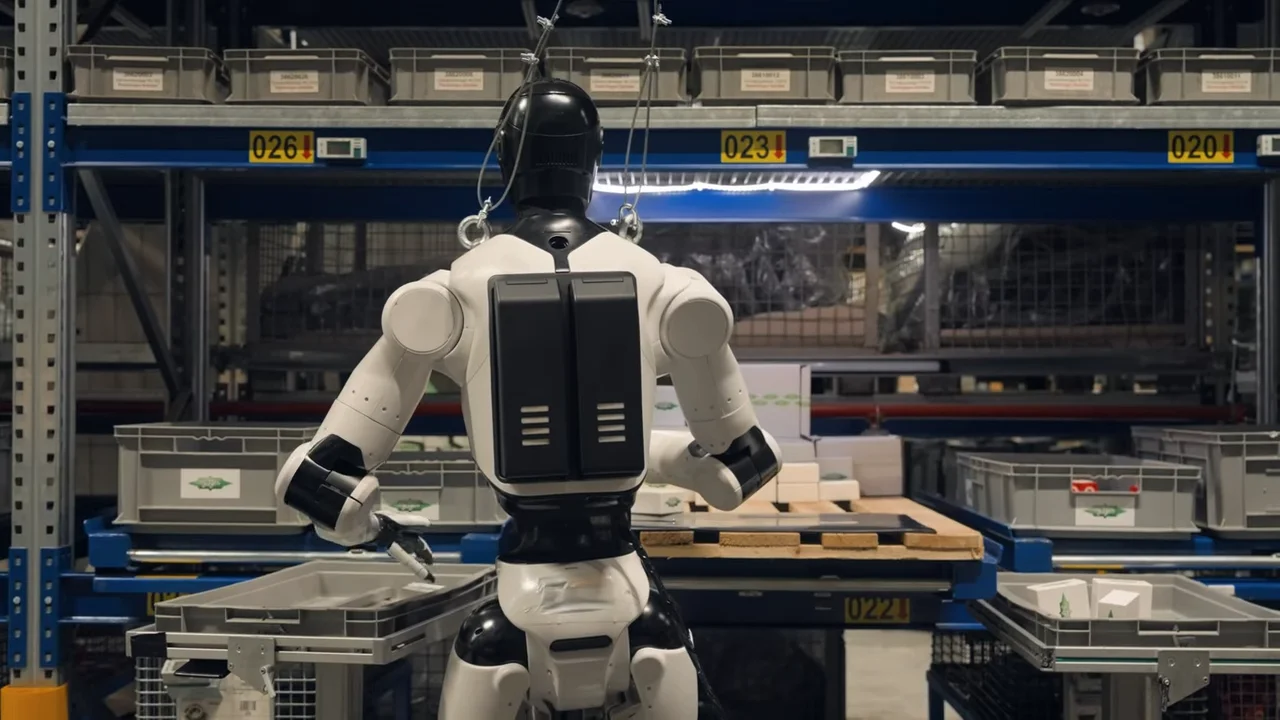

Introduction: The Shift from Cloud AI to Embodied Intelligence
Artificial intelligence has historically been associated with cloud computing, data centers, and screens—abstract environments where models analyze data, generate insights, or provide digital services. Early AI applications included recommendation systems, language processing, and predictive analytics, often far removed from physical realities. However, the next frontier of AI lies in its deep integration with the physical world through robotics.
Embodied AI represents a paradigm shift: intelligence that is physically situated, sensor-driven, and capable of real-time interaction with dynamic environments. In this context, AI is not merely a software layer; it becomes a core component of robotic bodies, perceptual systems, and motor control loops. By tightly coupling AI with sensing and actuation, robots can:
- Perceive and interpret complex environments
- Adaptively plan and execute motions
- Learn continuously from interactions
- Collaborate safely and efficiently with humans
This article explores this transformative trend, detailing the technologies, architectures, applications, and future directions of embodied AI in robotics.
1. From Cloud AI to Embodied Intelligence
1.1 Limitations of Cloud-Centric AI
Cloud-based AI has been transformative in many domains but presents limitations when applied to physical robotics:
- Latency: Even milliseconds of delay can be critical in dynamic interactions.
- Bandwidth: High-resolution sensors like LiDAR, depth cameras, and tactile arrays generate vast amounts of data that are impractical to transmit continuously.
- Reliability: Robots cannot depend solely on network connectivity in industrial, field, or healthcare applications.
- Safety: Physical tasks require immediate response to avoid collisions or unsafe interactions.
These constraints make purely cloud-dependent AI insufficient for real-world robotic applications.
1.2 The Case for Embodied AI
Embodied AI integrates intelligence directly into robots’ bodies, enabling real-time perception, planning, and control. Key benefits include:
- Low-latency sensorimotor loops
- Real-time adaptive behavior
- Energy-efficient computation through on-board processing
- Autonomous decision-making in unstructured environments
This approach treats robots as physical agents, not just carriers of software, bridging the gap between virtual intelligence and tangible action.
2. Robotic Bodies as Intelligence Platforms
2.1 The Role of Physical Morphology
Robots’ physical design is not merely structural; it significantly influences how AI interacts with the environment. Principles include:
- Compliance: Flexible joints and actuators enable safe, adaptive motion.
- Modularity: Interchangeable limbs or tools support task versatility.
- Sensor Integration: Embedded vision, tactile, and proprioceptive sensors create rich data streams.
Physical morphology shapes the computational strategies AI must adopt, as constraints such as joint limits, dynamics, and actuation speeds affect perception-to-action cycles.
2.2 Actuation and AI Control
Modern robots rely on sophisticated actuation systems: tendon-driven limbs, soft robotics, and high-precision motors. AI controls these actuators through:
- Inverse kinematics and dynamics for smooth, coordinated motion
- Trajectory optimization to balance efficiency and safety
- Adaptive feedback loops for force, position, and velocity regulation
By coupling AI algorithms with physical actuation, robots can perform human-like manipulation, locomotion, and dexterous tasks.
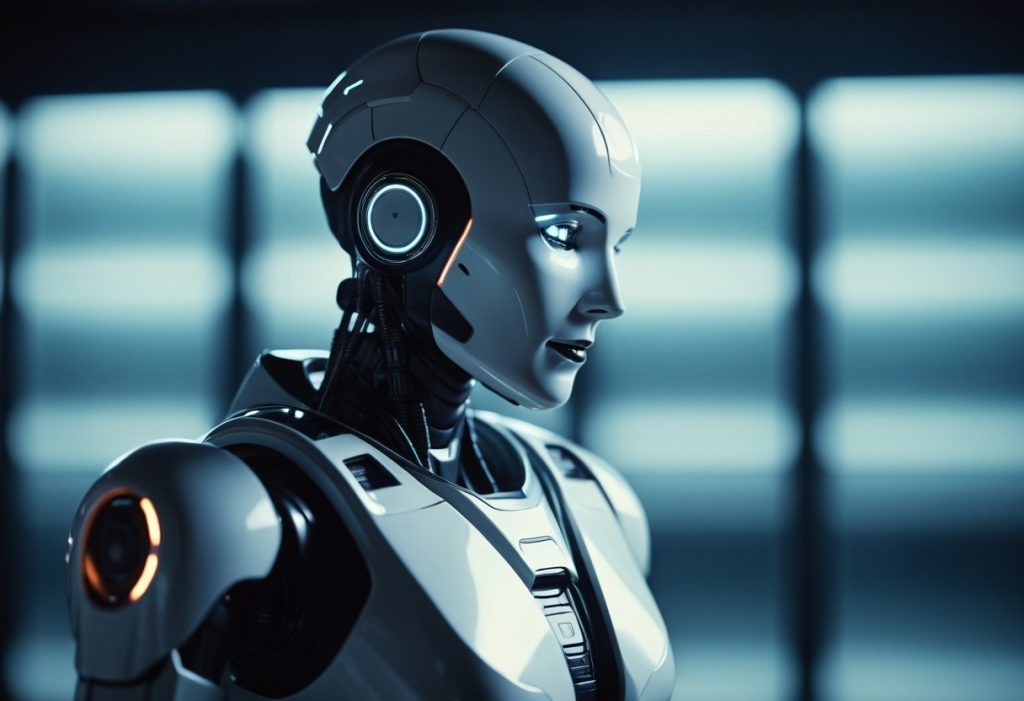
3. Perception: AI Meets Sensor-Rich Bodies
3.1 Visual Perception
Vision systems are central to embodied AI. Modern robots integrate:
- High-resolution RGB and depth cameras for environmental understanding
- Stereo or LiDAR sensors for 3D mapping and obstacle detection
- Event-based cameras for fast motion detection
AI processes this data to identify objects, humans, and dynamic hazards, enabling robots to navigate safely and interact intelligently.
3.2 Tactile and Force Sensing
Touch is critical for real-world manipulation. Robots employ:
- Force-torque sensors in joints and end-effectors
- Tactile arrays for contact detection and pressure mapping
- Soft, compliant skins that detect distributed contact forces
AI interprets these signals to modulate grip strength, maintain balance, and adapt to unforeseen perturbations, effectively turning touch into a decision-making signal.
3.3 Multimodal Sensor Fusion
Embodied AI often fuses multiple sensor modalities:
- Vision + touch for precise grasping
- IMU + joint encoders for stable locomotion
- Force + position sensors for compliant interaction
This fusion allows robots to construct a coherent understanding of the environment despite noisy, incomplete, or conflicting data.
4. Motion: AI-Driven Physical Interaction
4.1 Locomotion
AI enables robots to move adaptively in complex terrains:
- Quadrupeds and humanoids use reinforcement learning to master walking, running, and climbing
- AI predicts terrain characteristics using vision and tactile feedback
- Real-time adjustment maintains balance and prevents falls
This dynamic integration of perception, planning, and actuation exemplifies the embodied AI approach.
4.2 Manipulation
Robotic manipulation requires coordination of multiple joints, sensors, and actuators. AI facilitates:
- Trajectory planning to reach targets efficiently
- Grip adaptation based on object properties (weight, shape, fragility)
- Continuous feedback control to compensate for slippage or deformation
Advanced systems can even perform dexterous in-hand manipulation, previously achievable only by humans.
4.3 Human–Robot Collaboration
AI enables safe and intuitive interaction with humans:
- Predictive models anticipate human movements
- Compliance and force-limiting actuators prevent injury
- Gesture and speech recognition allow natural communication
Embodied AI ensures that motion is context-aware, adaptive, and socially intelligent.
5. AI Architectures for Embodied Systems
5.1 On-Board Edge Computing
Robots now include edge computing platforms capable of running sophisticated AI models locally:
- Nvidia Jetson and similar platforms provide GPU-accelerated neural inference
- Real-time processing supports high-bandwidth sensory input
- Energy-efficient architectures allow prolonged autonomous operation
5.2 Learning-Based Control
AI in robotic bodies often leverages:
- Reinforcement Learning (RL): Optimizing control policies through trial-and-error interaction with environments
- Imitation Learning: Teaching robots to mimic human demonstrations
- Online Adaptation: Continuously adjusting behavior based on environmental changes
These approaches allow robots to develop task-specific skills while adapting to novel situations.
5.3 Neural-Symbolic Integration
Combining deep learning for perception with symbolic reasoning for planning:
- Neural networks handle unstructured data (images, tactile signals)
- Symbolic planners manage high-level task sequencing
- Integration ensures robots can reason about both continuous and discrete domains
This is critical for complex, multi-step tasks such as assembly, caregiving, or disaster response.
6. Real-World Applications
6.1 Industrial Robotics
Embodied AI allows robots to:
- Adapt assembly sequences to variable parts
- Detect and correct human errors in real time
- Operate safely alongside humans in tight spaces
6.2 Service Robots
AI-driven perception and motion enable:
- Dynamic navigation in crowded environments
- Personalized assistance based on user behavior
- Safe interaction with fragile objects or sensitive equipment
6.3 Healthcare and Rehabilitation
- AI-guided exoskeletons adapt to patients’ strength and movement patterns
- Surgical robots use tactile and visual feedback for precision
- Continuous learning tailors therapy to individual patient needs
6.4 Field Robotics
- Disaster response robots navigate unstructured environments autonomously
- Agricultural robots perceive crops, detect obstacles, and adjust motion
- AI-driven autonomy reduces human exposure to hazardous conditions
7. Challenges and Technical Considerations
7.1 Sensor Reliability and Calibration
- Sensor noise, occlusion, or drift can compromise real-time decision-making
- Multi-sensor fusion requires sophisticated filtering and weighting strategies
7.2 Computational Complexity
- Real-time AI inference with high-dimensional sensory input is resource-intensive
- Edge computing must balance performance, power consumption, and thermal management
7.3 Safety and Robustness
- Embodied AI must handle unexpected human behavior or environmental perturbations
- Verification and validation of AI-controlled physical systems remain challenging
7.4 Learning in the Physical World
- Reinforcement learning in hardware carries risks of damaging robots or the environment
- Sim-to-real transfer strategies and safe exploration policies are critical
8. Future Directions
8.1 Lifelong Learning
- Robots continuously improve skills through interaction
- Adaptive models enable personalized and context-aware behavior
8.2 Integration of Soft Robotics
- Soft actuators enhance compliance and safety
- AI controls deformable bodies for versatile manipulation and locomotion
8.3 Collective Embodied AI
- Multi-robot systems share sensory data and learn collaboratively
- Distributed AI enables swarm behaviors and complex coordination
8.4 Human-Centric Design
- AI interprets human social cues to adjust motion and interaction
- Ethical frameworks guide safe deployment in homes, hospitals, and workplaces
9. Case Studies
9.1 Humanoid Service Robots
- Equipped with vision, tactile sensors, and adaptive joint controllers
- AI enables real-time navigation and object manipulation in dynamic human environments
9.2 Quadruped Robots for Industry
- Use reinforcement learning for robust locomotion over uneven terrain
- On-board AI predicts slips and adapts gait to prevent falls
9.3 Robotic Surgical Assistants
- Combine high-precision actuators with AI perception
- Adapt to patient anatomy and respond to surgeon inputs in real time
These examples highlight the synergy between AI, sensing, and physical embodiment in achieving practical utility.
10. Conclusion: Embodied AI as the Future of Robotics
AI is no longer confined to cloud servers or computer screens. Its true potential emerges when integrated with physical bodies, rich sensory systems, and adaptive motion control. Embodied AI enables robots that are:
- Autonomous, safe, and adaptable
- Context-aware and capable of interacting with humans
- Efficient in both perception and actuation
As edge computing, sensor technologies, and learning algorithms continue to advance, robots will increasingly embody intelligence, turning AI into a tangible, interactive, and physically grounded capability.
The future of AI is not just in data or algorithms—it is in action, touch, perception, and motion, transforming robots from tools into intelligent agents capable of navigating and shaping the real world.