









Introduction
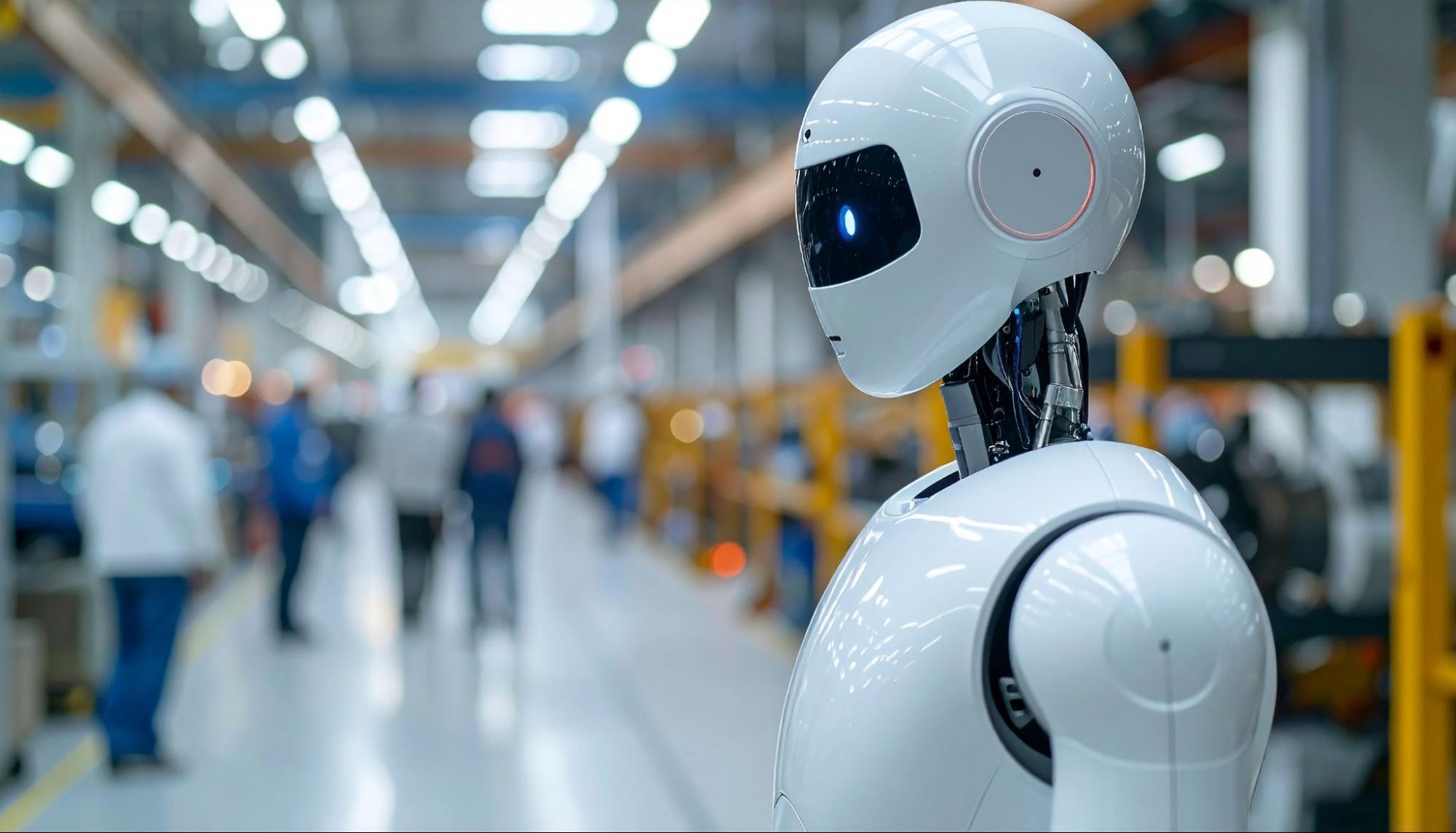
Over the past decade, humanoid robots—robots designed with a human-like body structure, sensory system, and interaction model—have evolved from experimental laboratory prototypes into increasingly practical industrial assets. What once belonged largely to science fiction or academic demonstrations is now becoming a tangible force reshaping production systems, service delivery, and labor structures across industries. The application growth rate of humanoid robots in industry is no longer incremental; it is accelerating, driven by breakthroughs in artificial intelligence, perception, materials science, and systems integration, as well as by powerful economic and demographic pressures.
Unlike traditional industrial robots, which are typically fixed, task-specific, and isolated within structured environments, humanoid robots are designed to operate in human-centric spaces. Their anthropomorphic form allows them to use tools, navigate environments built for people, and collaborate more naturally with human workers. This compatibility dramatically expands their potential application scope—from manufacturing floors and warehouses to hospitals, retail environments, construction sites, and hazardous industrial zones.
This article provides a comprehensive and professional analysis of the accelerating adoption of humanoid robots in industrial contexts. It explores the technological foundations enabling this growth, examines sector-specific application trends, analyzes economic and social drivers, and evaluates the challenges that still constrain large-scale deployment. Finally, it offers a forward-looking perspective on how humanoid robots may reshape industrial ecosystems over the next decade.
1. Defining Humanoid Robots in the Industrial Context
Humanoid robots are typically defined by their human-like morphology: a head equipped with sensors, a torso housing computing and power systems, two arms with multiple degrees of freedom, and two legs enabling bipedal locomotion. However, in industrial applications, functionality matters more than form alone. Modern humanoid robots are characterized by several key capabilities:
- Advanced perception, including vision, depth sensing, tactile feedback, and sometimes auditory processing.
- Cognitive intelligence, driven by machine learning, reinforcement learning, and large-scale neural models that enable decision-making and adaptation.
- Dexterous manipulation, allowing the robot to handle tools, components, and materials designed for human hands.
- Mobility and balance, enabling navigation across uneven terrain, stairs, and confined industrial spaces.
- Human–robot interaction, including gesture recognition, natural language processing, and collaborative safety mechanisms.
In industry, humanoid robots are not meant to replace all specialized automation. Instead, they occupy a complementary niche: tasks that are too complex, variable, or environment-dependent for traditional automation, yet too dangerous, repetitive, or labor-intensive for humans alone.
2. Historical Evolution and Recent Acceleration
2.1 Early Development Stages
The concept of humanoid robots dates back several decades, with early milestones such as Honda’s ASIMO and Boston Dynamics’ early bipedal platforms. These systems demonstrated impressive locomotion and balance but were limited by computational power, battery technology, and the immaturity of artificial intelligence algorithms. Their industrial value was minimal, as they were expensive, fragile, and incapable of sustained autonomous work.
2.2 The AI Inflection Point
The past five to seven years have marked a turning point. The convergence of deep learning, improved sensors, and high-performance edge computing has dramatically enhanced robot perception and decision-making. Vision systems can now recognize objects and environments with near-human accuracy, while reinforcement learning enables robots to acquire complex motor skills through simulation and real-world feedback.
This technological inflection point coincided with rapid progress in actuators, lightweight materials, and energy storage. As a result, humanoid robots have become stronger, more energy-efficient, and more reliable—key prerequisites for industrial deployment.
2.3 Commercialization Momentum
What truly distinguishes the current phase is commercialization. Technology companies, robotics startups, and industrial giants are investing heavily in humanoid platforms aimed specifically at industrial use cases. Pilot deployments are transitioning into limited-scale production rollouts, and the feedback from these real-world applications is further accelerating development cycles.
3. Core Drivers Behind Industrial Adoption Growth
3.1 Labor Shortages and Demographic Shifts
One of the most powerful drivers of humanoid robot adoption is the global labor shortage, particularly in industrial and service sectors. Aging populations in developed economies are shrinking the available workforce, while younger generations are often less willing to take physically demanding or repetitive industrial jobs.
Humanoid robots offer a flexible solution: they can be deployed where labor is scarce, operate continuously without fatigue, and be reprogrammed as tasks evolve. Their human-like form allows them to step into roles traditionally designed for people without requiring costly infrastructure redesign.
3.2 Rising Demand for Flexible Automation
Traditional automation excels in high-volume, low-variation production. However, modern industry increasingly demands flexibility—shorter product life cycles, mass customization, and rapid reconfiguration of production lines. Humanoid robots, equipped with general-purpose intelligence and dexterous manipulation, are well suited to this environment.
Instead of building new automation for every product change, companies can retrain humanoid robots through software updates, demonstration learning, or simulation-based training. This flexibility significantly improves return on investment over time.
3.3 Safety and Risk Mitigation
Many industrial environments involve hazardous conditions: extreme temperatures, toxic substances, heavy machinery, or unstable structures. Humanoid robots can assume roles that expose humans to significant risk, such as inspection in chemical plants, maintenance in high-radiation zones, or disaster response in industrial accidents.
Reducing workplace injuries not only protects employees but also lowers insurance costs, regulatory risks, and downtime—creating a strong economic incentive for adoption.
3.4 Advances in Human–Robot Collaboration
Modern safety standards and sensor technologies enable humanoid robots to work alongside humans without cages or physical barriers. Force-limiting actuators, real-time motion prediction, and collaborative control algorithms reduce the risk of collisions and injuries.
This capability is critical in industries where full automation is impractical and human expertise remains essential. Instead of replacing workers, humanoid robots increasingly act as assistants or teammates.
4. Sector-Specific Applications and Growth Patterns
4.1 Manufacturing and Assembly
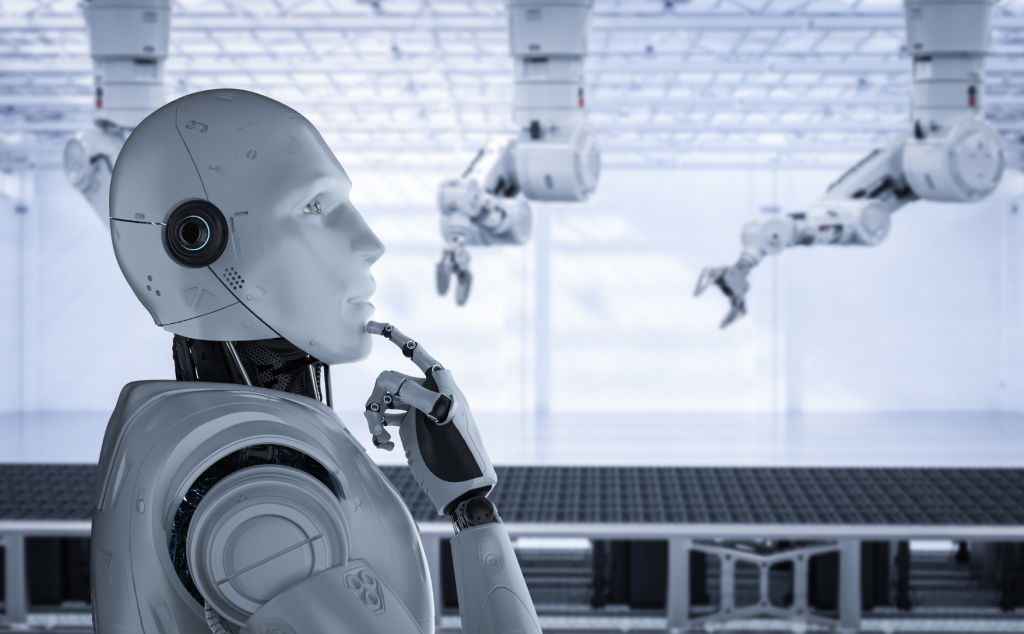
Manufacturing remains the largest and fastest-growing application domain for humanoid robots. In assembly lines, humanoid robots can handle tasks requiring fine motor skills, such as component insertion, wiring, fastening, and quality inspection.
Their ability to use standard tools—screwdrivers, torque wrenches, inspection devices—allows them to integrate seamlessly into existing workflows. As factories transition toward smart manufacturing and Industry 4.0 models, humanoid robots serve as mobile, intelligent nodes within cyber-physical systems.
4.2 Warehousing and Logistics
In logistics centers, humanoid robots are increasingly deployed for picking, packing, sorting, and internal transportation. Unlike traditional automated guided vehicles or robotic arms, humanoid robots can navigate human-designed storage layouts, climb stairs, and access shelves of varying heights.
Their application growth is particularly rapid in e-commerce-driven logistics, where order variability and peak demand periods challenge conventional automation solutions.
4.3 Healthcare and Industrial Services
In hospitals and care facilities, humanoid robots support logistics, sanitation, patient transport, and basic caregiving tasks. While healthcare is not traditionally classified as heavy industry, it represents a critical service sector with industrial-scale operations.
The COVID-19 pandemic highlighted the value of robotic systems that can reduce human exposure to infectious environments. Since then, investment in humanoid service robots has increased significantly.
4.4 Construction and Infrastructure Maintenance
Construction sites are highly unstructured and hazardous, making them difficult to automate. Humanoid robots are uniquely suited to this domain due to their mobility and tool-use capabilities. Early applications include material handling, inspection, site monitoring, and repetitive tasks such as drilling or fastening.
Although adoption is still in its early stages, growth rates are high as companies seek to address labor shortages and improve safety in construction.
4.5 Energy, Mining, and Heavy Industry
In energy production, mining, and heavy industrial facilities, humanoid robots are used for inspection, maintenance, and emergency response. Their ability to operate in extreme conditions and navigate complex industrial layouts provides significant value.
As energy infrastructure becomes more distributed and technologically complex, the demand for intelligent robotic maintenance solutions continues to rise.
5. Economic Impact and Productivity Implications
5.1 Cost Structures and ROI
The upfront cost of humanoid robots remains high compared to traditional automation. However, total cost of ownership is declining as hardware prices fall and software capabilities improve. When amortized over long operating hours and multiple task domains, humanoid robots can deliver competitive or superior returns.
Furthermore, their ability to reduce downtime, errors, and workplace injuries contributes to indirect economic benefits that are often underestimated in initial calculations.
5.2 Productivity Enhancement
Humanoid robots enhance productivity not only by performing tasks faster or longer than humans but also by enabling new operational models. For example, they can facilitate 24/7 production, rapid scaling during demand spikes, and real-time reconfiguration of workflows.
In collaborative settings, robots can handle physically demanding or monotonous aspects of a task, allowing human workers to focus on decision-making, creativity, and supervision.
5.3 Workforce Transformation
Rather than causing simple job displacement, humanoid robots are driving workforce transformation. New roles emerge in robot supervision, maintenance, training, and systems integration. Companies that invest in reskilling programs often find that human–robot teams outperform either humans or robots working alone.
6. Technological Challenges Limiting Adoption
6.1 Energy Efficiency and Power Supply
Battery technology remains a major constraint. Humanoid robots require significant energy to power actuators, sensors, and onboard computing. Limited operating time restricts continuous deployment in some industrial scenarios.
Research into more efficient actuators, energy recovery systems, and alternative power sources is ongoing, but widespread solutions are still developing.
6.2 Reliability and Robustness
Industrial environments are unforgiving. Dust, vibration, temperature extremes, and electromagnetic interference can degrade robotic performance. Ensuring long-term reliability comparable to traditional industrial machinery is a critical challenge.
6.3 Software Generalization
While AI has made remarkable progress, true general intelligence remains elusive. Humanoid robots still struggle with edge cases, unexpected situations, and tasks that require deep contextual understanding. Achieving robust generalization across diverse industrial tasks is an active area of research.
6.4 Ethical and Regulatory Considerations
The deployment of humanoid robots raises ethical questions related to job displacement, data privacy, and safety accountability. Regulatory frameworks are still evolving, and uncertainty can slow adoption in highly regulated industries.
7. Regional Adoption Trends
7.1 Asia-Pacific
Countries such as Japan, South Korea, and China are at the forefront of humanoid robot adoption. Strong manufacturing bases, aging populations, and government support for robotics innovation drive rapid growth in this region.
7.2 Europe
European adoption is characterized by a focus on safety, human–robot collaboration, and regulatory compliance. Germany, in particular, plays a leading role in integrating humanoid robots into advanced manufacturing.
7.3 North America
In North America, adoption is driven by logistics, technology companies, and high labor costs. Startups and large corporations alike are investing in humanoid robots to address workforce shortages and improve operational flexibility.
8. Future Outlook: The Next Decade of Growth
Looking ahead, the application growth rate of humanoid robots in industry is expected to remain high, with several trends shaping their trajectory:
- Increased standardization, reducing costs and simplifying integration.
- AI-driven learning at scale, enabling robots to share skills and experiences across fleets.
- Deeper human–robot collaboration, blurring the line between tool and teammate.
- Policy and regulatory maturation, providing clearer frameworks for deployment.
As these trends converge, humanoid robots are likely to become a standard component of industrial systems rather than a novelty or niche solution.
Conclusion
The accelerating industrial adoption of humanoid robots represents a fundamental shift in how work is performed, organized, and valued. Driven by technological breakthroughs, economic necessity, and societal change, humanoid robots are moving rapidly from experimental platforms to productive industrial assets.
While significant challenges remain—particularly in energy efficiency, reliability, and ethical governance—the momentum is unmistakable. Industries that proactively explore and invest in humanoid robotics are positioning themselves at the forefront of the next industrial transformation.
In this context, humanoid robots are not merely machines that imitate human form; they are catalysts for a new era of flexible, intelligent, and collaborative industry.