









Introduction: When Robots Step Onto the World’s Sporting Stage
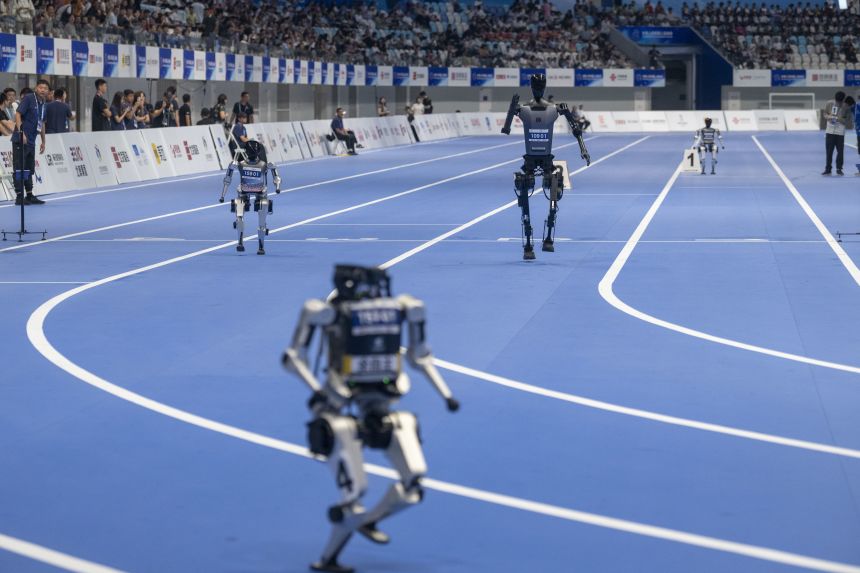
The history of sport has always mirrored the technological and cultural state of human civilization. From ancient Olympic contests celebrating physical excellence to modern global events shaped by data analytics, biomechanics, and broadcasting technology, athletic competition has continually evolved. In this historical continuum, the Inaugural World Humanoid Robot Games, which attracted hundreds of humanoid robots from across the globe, marks a profound and symbolic turning point.
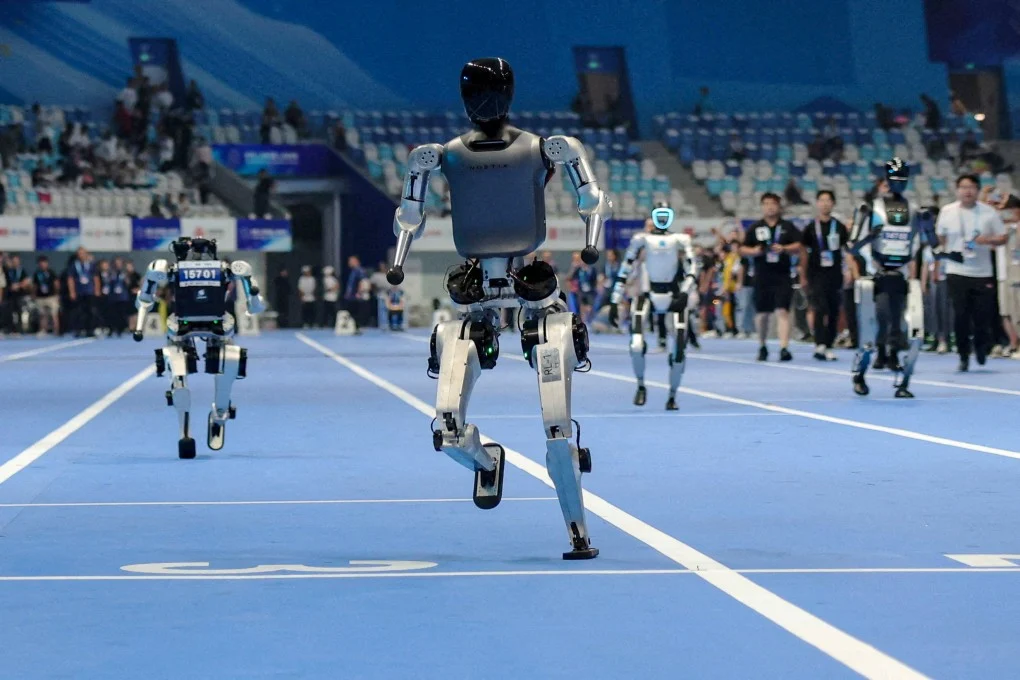
For the first time, humanoid robots—machines designed to replicate human form, motion, and coordination—gathered not merely as engineering demonstrations or laboratory prototypes, but as competitive entities participating in structured athletic events. These robots ran, jumped, balanced, collaborated, strategized, and, in some cases, failed spectacularly under the pressure of real-world competition. The spectacle captivated engineers, policymakers, investors, and the general public alike, signaling that humanoid robotics has entered a new phase of maturity.
More than a technological showcase, the World Humanoid Robot Games represent a systems-level experiment. They test not only hardware and algorithms, but also organizational coordination, ethical frameworks, safety standards, and public perception. This article provides a comprehensive and professional analysis of the Games: their origins, structure, technological significance, competitive disciplines, economic and social implications, and their role in shaping the future of humanoid robotics.
1. The Genesis of the World Humanoid Robot Games
1.1 From Research Labs to Public Arenas
For decades, humanoid robots were confined primarily to academic laboratories and corporate research centers. While milestone achievements—such as stable bipedal walking or dynamic balance—made headlines, progress was incremental and often opaque to the public. The idea of a large-scale humanoid sports competition emerged from a recognition that open, adversarial, and dynamic environments accelerate innovation more effectively than controlled lab settings.
Inspired by events such as robot soccer leagues, autonomous vehicle challenges, and even human Olympic traditions, international robotics organizations proposed a global competition focused exclusively on humanoid robots. The goal was clear: create a platform that would push robots to operate under realistic physical constraints, unpredictable interactions, and public scrutiny.
1.2 International Collaboration and Standardization
The inaugural Games were the result of extensive international collaboration among:
- Robotics research institutions
- Technology corporations and startups
- Standards organizations
- Sports science experts
- Government and academic sponsors
To ensure fairness and safety, unified rules were established governing robot size, power limits, autonomy levels, and permissible materials. This standardization effort alone represented a significant achievement, laying groundwork for future global cooperation in humanoid robotics.
2. Scale and Participation: Hundreds of Robots, One Global Stage
2.1 Diversity of Participants
The inaugural event attracted several hundred humanoid robots, representing a remarkable diversity in design philosophy and technical approach. Participants ranged from:
- Compact, lightweight humanoids optimized for agility
- Full-sized humanoid robots approximating adult human dimensions
- Modular systems emphasizing repairability and adaptability
- Highly anthropomorphic designs focusing on natural movement
Teams hailed from universities, research consortia, multinational corporations, and independent robotics labs. This diversity transformed the Games into a living encyclopedia of humanoid robotics.
2.2 Levels of Autonomy
One of the defining features of the competition was its emphasis on autonomy. While remote intervention was permitted in limited categories, the most prestigious events required robots to operate with minimal or no human control. This constraint forced teams to integrate:
- Real-time perception
- Onboard decision-making
- Adaptive control systems
- Fault detection and recovery mechanisms
As a result, the Games provided a clear snapshot of the current state of autonomous humanoid intelligence.
3. Competitive Disciplines: Redefining “Athletics”
3.1 Locomotion Events: Walking, Running, and Endurance
At the heart of humanoid robotics lies locomotion. Events such as sprinting, obstacle navigation, and long-distance walking tested:
- Dynamic balance and gait planning
- Energy efficiency
- Terrain adaptability
- Mechanical robustness
Unlike laboratory demonstrations, competition conditions introduced variability—uneven surfaces, slight collisions, and timing pressure—revealing the true capabilities and limitations of current humanoid designs.
3.2 Manipulation and Dexterity Challenges
Another core category focused on upper-body coordination and fine motor skills. Tasks included:
- Object sorting and assembly
- Tool usage
- Precision placement under time constraints
These challenges highlighted the difficulty of achieving human-level dexterity, emphasizing the importance of tactile sensing, compliant actuators, and advanced control algorithms.
3.3 Team Sports and Cooperative Tasks
Some of the most engaging events involved multi-robot collaboration, such as humanoid relay races or cooperative construction challenges. These competitions required:
- Inter-robot communication
- Distributed decision-making
- Role assignment and adaptation
Such tasks mirrored real-world scenarios in manufacturing, disaster response, and logistics, where teams of robots must operate cohesively.
3.4 Cognitive and Strategy-Based Events
Beyond physical performance, the Games included competitions emphasizing planning and reasoning, such as navigation through unknown environments or strategic games with physical execution. These events underscored the convergence of robotics and artificial intelligence.
4. Technological Significance: A Stress Test for Humanoid Systems
4.1 Hardware Under Pressure
Competitive environments expose weaknesses that controlled testing often conceals. Throughout the Games, observers noted:
- Actuator overheating under sustained load
- Structural fatigue in joints and frames
- Sensor degradation due to impact and vibration
These failures were not embarrassments but valuable data points, guiding future hardware improvements.
4.2 Software Robustness and Adaptability
Equally important was software performance. Robots faced unexpected scenarios: slipping surfaces, partial sensor occlusion, or interference from other robots. Successful systems demonstrated:
- Robust perception pipelines
- Graceful degradation rather than catastrophic failure
- Real-time replanning capabilities
The Games thus functioned as a benchmark for real-world readiness.
4.3 Energy Management and Efficiency
Battery technology remains a limiting factor in humanoid robotics. Endurance events revealed stark differences in energy efficiency, prompting renewed focus on:
- Lightweight design
- Efficient locomotion strategies
- Intelligent power management
Energy efficiency emerged as a decisive competitive advantage.
5. Human–Robot Interaction and Public Engagement
5.1 Spectatorship and Media Impact
The visual familiarity of humanoid robots made the Games highly accessible to the public. Spectators intuitively understood the challenges robots faced, fostering emotional engagement rarely seen in traditional robotics exhibitions. Media coverage emphasized not only victories but also moments of failure, resilience, and unexpected success.
5.2 Changing Public Perception of Robots
By watching robots compete in human-like activities, audiences began to perceive them less as abstract machines and more as embodied technological agents. This shift has profound implications for social acceptance, trust, and future integration of humanoid robots into daily life.
6. Economic and Industrial Implications
6.1 Accelerating Commercialization
The Games acted as a catalyst for commercialization. Technologies demonstrated under competitive conditions gained credibility, attracting investment and industry partnerships. Startups used the platform to showcase capabilities, while established firms validated their research directions.
6.2 Standardization and Ecosystem Development
Shared rules and benchmarks encouraged modularity and interoperability. Over time, such standards can give rise to a robust humanoid robotics ecosystem, reducing duplication and accelerating innovation.
6.3 Talent Development and Education
The competition also served as a training ground for engineers and researchers. Students and young professionals gained hands-on experience with complex systems, bridging the gap between theory and practice.
7. Ethical, Safety, and Governance Considerations
7.1 Safety in Physical Human–Robot Proximity
Humanoid sports competitions involve significant kinetic energy. Ensuring safety required rigorous testing, emergency shutdown mechanisms, and real-time monitoring. These protocols offer valuable insights for deploying humanoid robots in public spaces.
7.2 Ethical Framing of Competition
As robots become more capable, questions arise regarding fairness, transparency, and accountability. The Games provided an early framework for addressing such issues, emphasizing openness and shared responsibility.
8. Scientific Value: Competition as a Research Method
8.1 Benchmarking Progress
Unlike isolated performance metrics, competitive outcomes provide holistic benchmarks. They integrate hardware, software, and system-level design into a single evaluative framework.
8.2 Driving Breakthrough Innovation
History shows that competitions—from aviation prizes to autonomous driving challenges—often accelerate breakthroughs. The World Humanoid Robot Games follow this tradition, pushing teams to attempt bold, unconventional solutions.
9. Cultural and Symbolic Meaning
9.1 Robots as Participants, Not Tools
By placing robots in athletic competition, the Games symbolically reposition them—from passive tools to active participants in human-designed systems. This does not imply personhood, but it reshapes narratives around agency and capability.
9.2 A Mirror of Human Aspiration
Humanoid robots competing in sports reflect humanity’s enduring fascination with self-replication and self-improvement. They embody both our technological ambition and our desire to understand ourselves through machines.
10. Challenges Revealed by the Games
10.1 Technical Gaps
Despite impressive performances, significant gaps remain in:
- General-purpose locomotion
- Fine manipulation under uncertainty
- Long-term autonomy without human intervention
These gaps define the research agenda for the coming decade.
10.2 Accessibility and Cost
High development costs limit participation to well-funded teams. Broadening access will be essential to sustain innovation and global inclusivity.
11. The Road Ahead: From Games to Society
11.1 Future Editions and Expansion
Organizers plan to expand future Games with:
- More complex environments
- Mixed human–robot events
- Real-world scenario simulations
Each iteration will further blur the line between competition and application.
11.2 Impact on Everyday Life
Technologies refined in competition will eventually permeate daily life, influencing:
- Industrial production
- Healthcare and rehabilitation
- Emergency response and exploration
In this sense, the Games serve as a prototype for future society.
Conclusion: A Defining Moment for Humanoid Robotics
The Inaugural World Humanoid Robot Games, with hundreds of robots competing on a global stage, represent far more than a technological spectacle. They mark a defining moment in the evolution of robotics, where humanoid machines are tested not in isolation, but in open, dynamic, and socially visible contexts.
By combining athletic competition, scientific benchmarking, public engagement, and international collaboration, the Games demonstrate how humanoid robots are transitioning from experimental systems to viable, embodied technologies. They reveal both extraordinary progress and persistent limitations, offering a clear roadmap for future development.
Ultimately, the significance of the World Humanoid Robot Games lies not in who won or lost, but in what they revealed: that humanoid robots are no longer distant promises. They are active participants in a shared technological future—learning, competing, and evolving alongside humanity.