









Introduction: A New Era for Humanoid Robotics
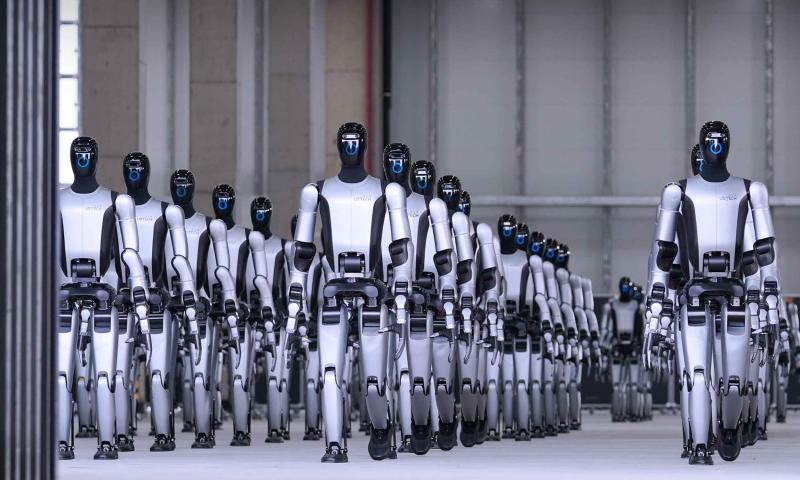
The global robotics industry has reached a historic milestone: the announcement of the largest-ever contract for humanoid robots. This unprecedented agreement signals a dramatic acceleration in the deployment of human-like machines across multiple sectors, from manufacturing and logistics to healthcare, customer service, and beyond. Unlike traditional industrial robots, humanoid robots are designed to mimic human appearance, movement, and behavior, enabling them to work in environments tailored for people rather than machines.
This article provides a comprehensive analysis of the contract, including its scope, technological implications, economic impact, and industry significance. We also explore how such large-scale humanoid deployments could reshape global labor markets, human-robot collaboration, and technological standards.
1. Overview of the Contract
1.1 Scope and Scale
The contract involves thousands of humanoid robots, representing the largest single deployment commitment in the industry’s history. Key features include:
- Diverse Robot Models: From general-purpose service robots to specialized industrial assistants
- Global Reach: Deployment planned across multiple countries and continents
- Long-Term Support: Includes maintenance, software updates, and AI training for extended operational life
1.2 Participating Companies
The agreement involves collaboration between major players in robotics hardware, AI, and systems integration:
- Robot Manufacturers: Delivering state-of-the-art humanoid platforms
- AI and Software Providers: Supplying perception, motion planning, and decision-making frameworks
- System Integrators: Ensuring seamless deployment into existing industrial and service environments
1.3 Financial and Strategic Implications
- Value: The contract is valued in the billions of dollars, highlighting the economic significance of humanoid robotics
- Strategic Significance: Governments and enterprises see humanoid robots as a way to address labor shortages, improve operational efficiency, and gain competitive advantage
2. Technological Implications
2.1 Advanced Robotics Platforms
Humanoid robots in this contract are equipped with cutting-edge technologies:
- Actuation and Mobility: Tendon-driven joints, high-torque motors, and compliant actuators enable smooth, human-like motion
- Sensory Systems: Multi-modal sensing including vision, touch, proprioception, and auditory inputs for environmental awareness
- AI Integration: On-board AI allows real-time perception, decision-making, and adaptive motion control without relying solely on cloud processing
2.2 Human-Like Interaction
The humanoid robots are designed for environments requiring direct interaction with humans:
- Gesture recognition and natural language processing
- Facial expression and social behavior simulation
- Safety features including force-limiting joints and collision detection
2.3 Scalability and Manufacturing
Producing thousands of humanoid robots requires:
- Modular design to facilitate mass production
- Standardized components for efficiency and maintainability
- Advanced quality assurance processes to ensure consistency and reliability

3. Economic and Industrial Impact
3.1 Labor Market Transformation
- Automation of Repetitive Tasks: Robots replace manual labor in manufacturing, warehousing, and service industries
- Skill Shift: Human workers transition to supervisory, technical, and creative roles
- Global Workforce Implications: Widespread adoption may reshape employment patterns, particularly in logistics, hospitality, and elder care
3.2 Supply Chain Effects
- Increased demand for robotics components, sensors, AI processors, and maintenance services
- Growth in logistics solutions to handle robot distribution and deployment
- Expansion of specialized AI software ecosystems tailored to humanoid robotics
3.3 Investment and Innovation Stimulus
- The contract is expected to stimulate R&D in human-robot collaboration, perception systems, and AI learning algorithms
- Encourages startups and traditional manufacturers to accelerate humanoid robot development
4. Applications Across Industries
4.1 Manufacturing and Logistics
- Assembly lines and quality control with humanoid dexterity
- Warehouses using humanoids for order picking and packaging
- Dynamic coordination with existing robotic and human workers
4.2 Healthcare and Elder Care
- Assistance for nurses and caregivers
- Patient monitoring and mobility support
- Mental health and social engagement applications
4.3 Customer Service and Hospitality
- Receptionists, guides, and concierge roles in hotels and airports
- Interactive kiosks and retail assistance
- Event and entertainment applications
4.4 Research and Education
- Collaborative research platforms for AI, robotics, and human-machine interaction
- Teaching assistants in classrooms or laboratories
- Platforms for training in technical and medical fields
5. Safety, Regulation, and Ethical Considerations
5.1 Safety Standards
Large-scale humanoid deployment necessitates strict adherence to safety standards, including:
- ISO 10218 and ISO/TS 15066 for collaborative robots
- Force and speed limitations to prevent injuries
- Multi-layered sensing for environmental awareness
5.2 AI Governance
- Ensuring AI decisions are predictable, explainable, and reliable
- Maintaining ethical boundaries in service roles and decision-making
- Incorporating human oversight for sensitive tasks
5.3 Social and Ethical Implications
- Addressing public perception and trust in humanoid robots
- Ensuring privacy and data protection in AI-enabled interactions
- Avoiding over-reliance on robots for tasks requiring human judgment
6. Implementation Challenges
6.1 Technical Challenges
- Coordinating thousands of robots across global sites
- Maintaining high uptime with preventive maintenance and software updates
- Ensuring interoperability between heterogeneous hardware and software platforms
6.2 Operational Challenges
- Training staff to work alongside humanoid robots
- Redesigning workflows to optimize human-robot collaboration
- Managing logistics of deployment, spare parts, and technical support
6.3 Economic Challenges
- High upfront investment versus gradual ROI realization
- Balancing automation with employment considerations
- Long-term scalability and maintenance costs
7. Strategic Implications for the Robotics Industry
7.1 Market Leadership
- Companies involved in the contract position themselves as leaders in humanoid robotics
- Establishes long-term strategic partnerships with industrial and governmental stakeholders
7.2 Global Standard Setting
- Large-scale deployment drives standardization in hardware, AI algorithms, and safety protocols
- Sets benchmarks for future humanoid robot contracts and industry expectations
7.3 Innovation Acceleration
- Encourages continuous improvement in AI, sensors, motion control, and human-robot interaction
- Opens new opportunities for startups, research institutions, and component manufacturers
8. Case Studies and Pilot Programs
8.1 Logistics Deployment
- Pilot warehouses demonstrate collaborative humanoids working with human staff
- AI-enabled robots optimize route planning, order picking, and inventory management
8.2 Healthcare Pilot
- Humanoid assistants support nurses with patient transfers
- AI monitors patient vitals and alerts human caregivers in real time
8.3 Customer-Facing Deployment
- Hotels and airports trial humanoid receptionists
- Robots assist with check-ins, directions, and information dissemination
These early pilots inform large-scale rollout strategies and highlight best practices for human-robot collaboration.
9. Future Outlook
9.1 Global Adoption Trends
- Increasing labor shortages drive demand for humanoid robots
- Emerging economies invest in robotics to accelerate industrialization
- Service industries adopt humanoids to enhance customer experience
9.2 Technological Evolution
- Improvements in AI perception, reinforcement learning, and natural language processing
- Enhanced dexterity and mobility through advanced actuators and tendon-driven designs
- Integration with cloud-based AI for collaborative intelligence
9.3 Socio-Economic Implications
- Potential to transform employment structures
- Requires policies for human-robot coexistence and ethical AI deployment
- Encourages public education and workforce upskilling
10. Conclusion: A Milestone in Humanoid Robotics
The announcement of the world’s largest humanoid robot contract marks a historic turning point in robotics. By integrating AI, advanced sensing, and human-like motion at scale, the contract demonstrates the maturity, reliability, and potential of humanoid robotics.