









Introduction: The Role of Sensors in Modern Robotics
In modern robotics, sensors form the foundation of perception, interaction, and intelligent behavior. The rapid evolution of robotics—from industrial automation to service robots and humanoid systems—depends heavily on accurate, reliable, and high-fidelity sensory data. Traditional sensors, while functional, are increasingly insufficient to meet the demands of adaptive, human-like robotic perception.
Emerging sensor technologies—force sensors, flexible tactile sensors, and visual depth sensors—have revolutionized how robots perceive and interact with their environments. Coupled with advanced signal processing techniques, these sensors enable robots to detect subtle forces, tactile variations, and three-dimensional spatial information, all in real time.
This article provides a comprehensive examination of new sensor technologies, their underlying principles, integration strategies, and applications across industrial, service, and research-oriented robotics.
1. Force Sensors: Measuring Mechanical Interaction
1.1 Principles of Force Sensing
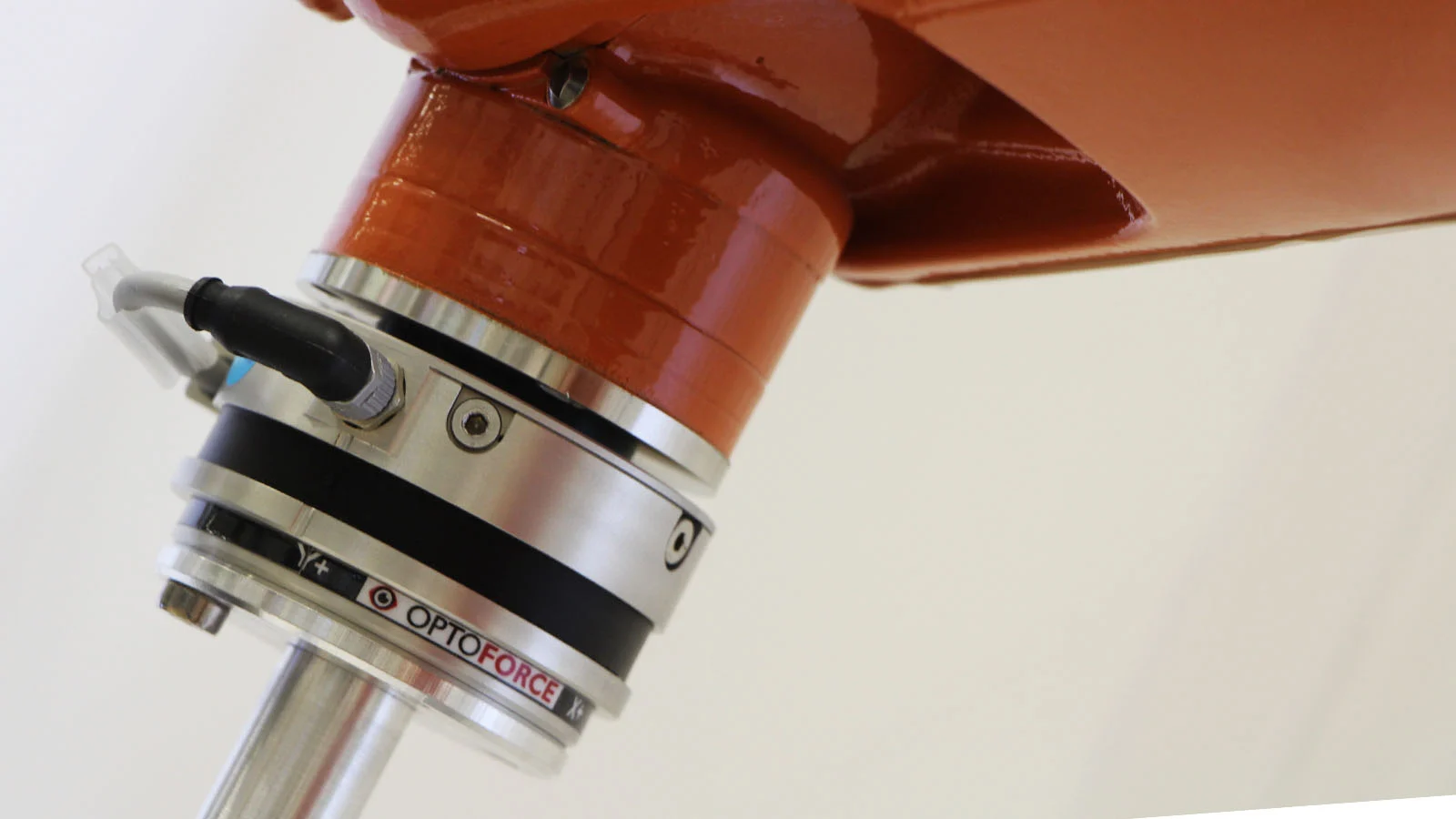
Force sensors measure contact forces and torques applied to a robotic end-effector, joint, or body. Core technologies include:
- Strain gauges: Detect deformation under load; widely used in robotic manipulators
- Piezoelectric sensors: Generate electrical charge proportional to force; suitable for dynamic measurements
- Capacitive sensors: Measure changes in capacitance due to applied force; provide high sensitivity
1.2 Key Performance Metrics
- Sensitivity: Ability to detect small force changes
- Linearity: Accuracy across the measurement range
- Bandwidth: Ability to measure dynamic forces during fast manipulation
- Hysteresis: Minimizing residual effects after loading and unloading
1.3 Applications
- Industrial robots: Torque-controlled assembly, precision machining, and safety interaction with humans
- Exoskeletons: Measuring user-applied forces for adaptive assistance
- Humanoid robotics: Balancing and manipulation tasks relying on accurate contact feedback
1.4 Signal Processing for Force Sensors
- Filtering: Low-pass, high-pass, and adaptive filters remove noise from mechanical vibrations
- Calibration: Compensates for temperature drift, material nonlinearity, and sensor aging
- Sensor fusion: Combining multiple force sensors for 6-DOF force/torque estimation
- Real-time control integration: Feedback loops in robotic controllers utilize processed force data for dynamic motion adaptation
2. Flexible Tactile Sensors: Soft, Conformable Touch
2.1 Principles and Materials
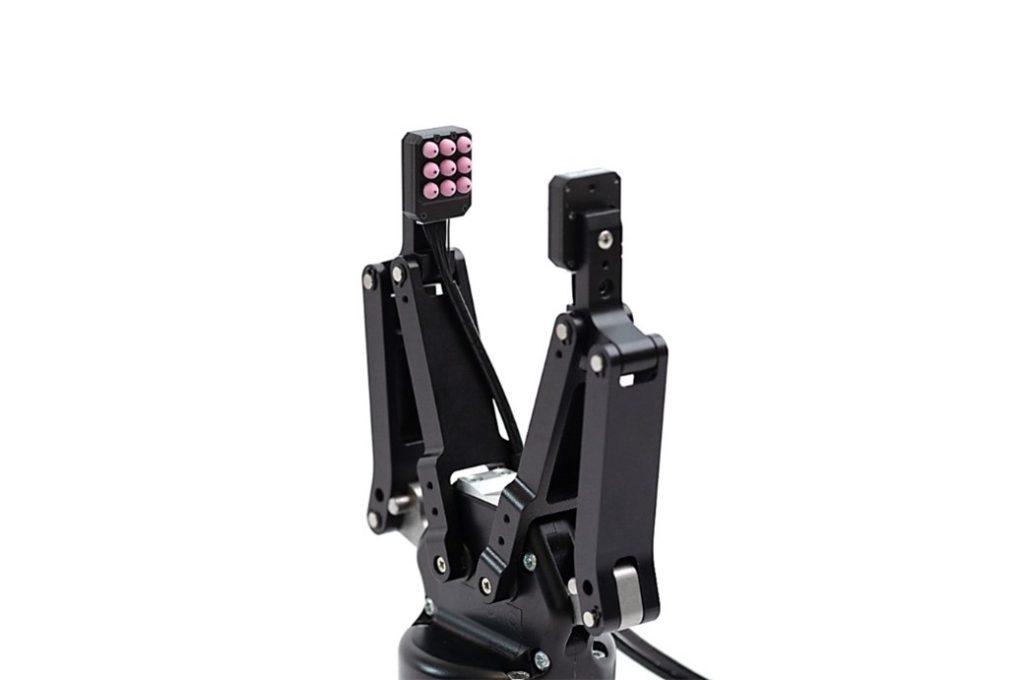
Flexible tactile sensors mimic human skin’s sense of touch. Key approaches include:
- Resistive films: Electrical resistance changes under applied pressure
- Capacitive membranes: Detect changes in dielectric properties when deformed
- Optical tactile sensors: Use light modulation caused by contact to detect pressure or deformation
- Piezoelectric polymers: Flexible piezoelectric materials generate charge under pressure
Flexible tactile sensors offer:
- Conformability: Can cover curved surfaces of robotic hands or exoskeletons
- High spatial resolution: Localized detection of pressure distributions
- Durability: Suitable for repetitive contact tasks
2.2 Sensing Capabilities
- Normal force detection: Perpendicular forces applied to the surface
- Shear force detection: Tangential forces for slip detection
- Texture sensing: Fine surface characterization through micro-vibrations
2.3 Signal Processing Methods
- Noise reduction: Digital filtering to remove environmental and mechanical interference
- Spatial interpolation: Filling gaps between discrete sensing points for continuous tactile maps
- Machine learning algorithms: Pattern recognition for grasp stability, object identification, or slip detection
- Multi-modal fusion: Combining tactile data with vision or proprioception for intelligent manipulation
2.4 Applications
- Robotic grippers: Enhance object handling by detecting grip force and slippage
- Humanoid robots: Provide skin-like sensation to arms, torso, or fingers
- Medical robotics: Tactile feedback in surgical robotics for minimally invasive procedures
3. Visual Depth Sensors: Capturing 3D Environments
3.1 Principles of Depth Sensing
Visual depth sensors provide three-dimensional perception, crucial for navigation, obstacle avoidance, and spatial understanding. Key technologies include:
- Stereo vision: Computes depth by triangulating matching points from dual cameras
- Structured light sensors: Project known patterns onto objects; deviations determine depth
- Time-of-Flight (ToF) sensors: Measure the time light takes to reflect from surfaces
- LiDAR systems: Active laser scanning for high-precision 3D mapping
3.2 Performance Metrics
- Depth accuracy: Precision in distance measurement
- Range: Minimum and maximum measurable distances
- Resolution: Number of points per unit area in depth map
- Frame rate: Ability to capture dynamic scenes without motion blur
3.3 Signal Processing Techniques
- Calibration: Correcting lens distortion and geometric misalignments
- Noise filtering: Removing random reflections or missing data points
- Depth map fusion: Combining multiple viewpoints for complete 3D reconstruction
- Edge detection and segmentation: Extracting meaningful objects from point clouds for robotics applications
- Real-time SLAM integration: Feeding processed depth maps into Simultaneous Localization and Mapping systems
3.4 Applications
- Autonomous navigation: Ground, aerial, and service robots avoid obstacles and plan trajectories
- Industrial inspection: Detects surface defects and object dimensions
- Human-robot interaction: Visual perception allows gestures and movement tracking for collaborative robots
- Virtual and augmented reality integration: Depth sensing enables immersive and interactive environments
4. Integration of Multi-Modal Sensor Systems
4.1 Combining Force, Tactile, and Depth Sensors
- Multi-sensor integration enhances robust perception and task adaptability
- Example: A robotic hand uses force sensors for grip control, tactile sensors for texture recognition, and depth sensors to locate and orient objects
4.2 Sensor Fusion Techniques
- Kalman Filtering: Combines sensor data with predicted states for smooth, accurate estimation
- Bayesian Inference: Probabilistic integration for uncertain measurements
- Deep Learning Approaches: Neural networks process high-dimensional multi-modal data for object recognition, anomaly detection, and adaptive manipulation
4.3 Benefits
- Increased perception reliability in complex, unstructured environments
- Improved grasping and manipulation accuracy
- Enhanced robot safety and human collaboration capabilities
5. Signal Processing Innovations
5.1 Advanced Filtering Techniques
- Adaptive filters: Adjust filtering parameters in real-time based on sensor dynamics
- Wavelet transforms: Detect transient events such as slippage or sudden force spikes
- Sensor-specific calibration algorithms: Compensate for drift, hysteresis, and temperature effects
5.2 Data Compression and Bandwidth Optimization
- High-resolution tactile arrays and depth sensors generate large data streams
- Compression algorithms reduce bandwidth while maintaining critical signal integrity
- Real-time onboard processing minimizes latency in robotic control loops
5.3 Machine Learning and AI Integration
- Pattern recognition from tactile or force data enables predictive grasping and object classification
- Depth sensor point clouds processed through CNNs or transformers enhance object detection and scene understanding
- Reinforcement learning uses sensory feedback to optimize robot behavior adaptively
6. Industrial Applications
6.1 Precision Assembly
- Force sensors ensure accurate insertion and alignment
- Tactile sensors detect secure contact without damaging components
- Depth sensors guide robotic arms for complex 3D tasks
6.2 Collaborative Robotics
- Humans and robots share workspaces safely
- Sensors detect human presence, adjust force, and prevent collisions
- Multi-modal sensing improves ergonomic and responsive interactions
6.3 Quality Inspection and Monitoring
- Depth sensors and vision algorithms detect surface defects or misalignments
- Force and tactile sensors monitor mechanical integrity during automated tests
7. Service and Healthcare Applications
7.1 Assistive Robotics
- Tactile feedback enhances robotic prosthetics or exoskeletons
- Force sensors prevent excessive pressure in caregiving tasks
- Depth sensors allow navigation in cluttered, dynamic environments
7.2 Surgical Robotics
- High-precision force sensing supports delicate tissue manipulation
- Tactile sensors provide haptic feedback to surgeons
- Depth sensing enables 3D visualization and navigation within the surgical field
7.3 Human-Robot Interaction
- Robots detect intentional gestures, touch, or proximity using combined sensors
- Enables adaptive assistance, safe guidance, and personalized service
8. Future Trends in Sensor Technology
8.1 Miniaturization and Flexibility
- Development of ultra-thin, stretchable tactile arrays for full-body robotic coverage
- Integration into soft robotics and wearable devices
8.2 High-Speed, Low-Latency Processing
- Sensor signal processing moving to dedicated edge AI processors for real-time action
- Enables dynamic response in high-speed assembly or human collaboration
8.3 Multi-Modal Intelligence
- Combining force, tactile, depth, vision, and proprioception for holistic perception
- Multi-sensor AI models predict object behavior, human intent, and environmental dynamics
8.4 Smart Self-Calibrating Sensors
- Sensors adapt calibration dynamically to temperature changes, aging, and wear
- Reduces maintenance and increases reliability in long-term deployments
9. Challenges and Considerations
- Data Overload: High-density sensors generate massive data requiring efficient processing and compression
- Durability: Flexible and tactile sensors must endure repeated deformation without degradation
- Calibration Complexity: Multi-sensor fusion demands precise temporal and spatial alignment
- Cost vs. Performance: High-performance sensor arrays are often expensive; balancing affordability with capability remains a challenge
10. Conclusion
Novel sensor technologies—force sensors, flexible tactile sensors, and visual depth sensors—are transforming robotics. By providing rich, high-fidelity, and multi-modal information, these sensors empower robots to perceive and interact with complex, unstructured environments safely and efficiently.