









Introduction: The Emergence of Robotics in High-Stakes Industries
The adoption of robotics in aviation and manufacturing represents one of the most transformative trends in modern industry. Collaborative robotics, or cobots, are no longer confined to controlled lab environments; they are now actively deployed on production floors, performing assembly, inspection, and maintenance tasks alongside human workers.
In aerospace, where precision, safety, and repeatability are paramount, robots enhance quality control and assembly efficiency. Similarly, in manufacturing sectors ranging from automotive to electronics, human-robot collaboration drives flexible production, cost reduction, and workforce safety.
This article explores the technical, operational, and strategic aspects of collaborative robotics in aviation and manufacturing, with a focus on real-world deployments, sensor and AI integration, and industry-specific challenges and solutions.
1. The Role of Robotics in Aviation
1.1 High-Precision Assembly
- Aircraft manufacturing involves complex assemblies, including fuselage, wings, and avionics.
- Collaborative robots assist with:
- Fastener insertion
- Composite material layup
- Wire harness installation
1.2 Inspection and Quality Assurance
- Vision-based and laser scanning systems detect micro-scale defects in components.
- Cobots perform non-destructive testing (NDT) such as ultrasonic inspection or X-ray scanning.
1.3 Maintenance, Repair, and Overhaul (MRO)
- Robotic arms can assist in engine disassembly, painting, and surface treatment.
- Cobots reduce human exposure to hazardous environments and repetitive tasks.
2. Collaborative Robotics in Manufacturing
2.1 Industry 4.0 and Smart Factories
- The integration of IoT, AI, and robotics drives adaptive, data-driven production.
- Cobots contribute to flexible production lines, enabling quick reconfiguration for different products.
2.2 Assembly Line Collaboration
- Cobots work alongside humans for part insertion, screw fastening, and inspection tasks.
- Force-sensing actuators and motion prediction algorithms ensure safe human-robot interaction.
2.3 Logistics and Material Handling
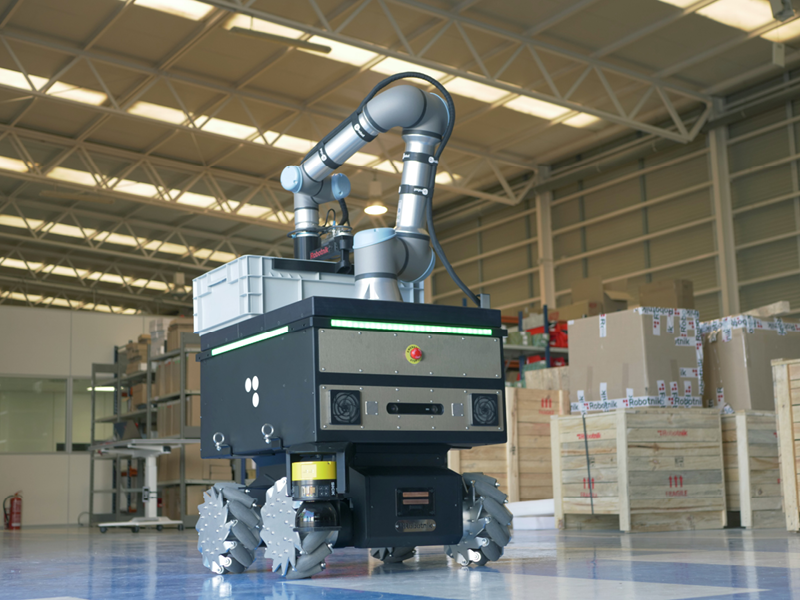
- Autonomous mobile robots (AMRs) transport materials across manufacturing floors.
- Multi-robot coordination optimizes throughput and reduces human fatigue.
3. Sensor and Perception Technologies
3.1 Vision Systems
- High-resolution cameras detect surface defects, part orientation, and workspace occupancy.
- Integration with AI enables object recognition and trajectory planning in real time.
3.2 Force and Torque Sensors
- Force-torque sensors provide compliance during assembly, reducing the risk of damage or injury.
- Cobots adapt to variations in part geometry and human presence.
3.3 Multi-Sensor Fusion
- Combines LIDAR, IMU, and vision data for robust environment perception.
- Essential for dynamic factory floors where humans and robots coexist.
4. Control and Motion Planning
4.1 Impedance and Admittance Control
- Cobots modulate their stiffness and response to external forces, enabling safe collaboration.
- Especially critical in aerospace assembly, where precision and human safety are paramount.
4.2 Predictive AI and Reinforcement Learning
- AI algorithms predict human motion and optimize robot trajectories.
- Reinforcement learning allows robots to adapt to novel tasks without manual reprogramming.
4.3 Safety Protocols
- Speed and force limitations prevent injuries.
- Emergency stop systems and monitored zones comply with ISO 10218 and ISO/TS 15066 standards.
5. Case Studies
5.1 Boeing and Airbus
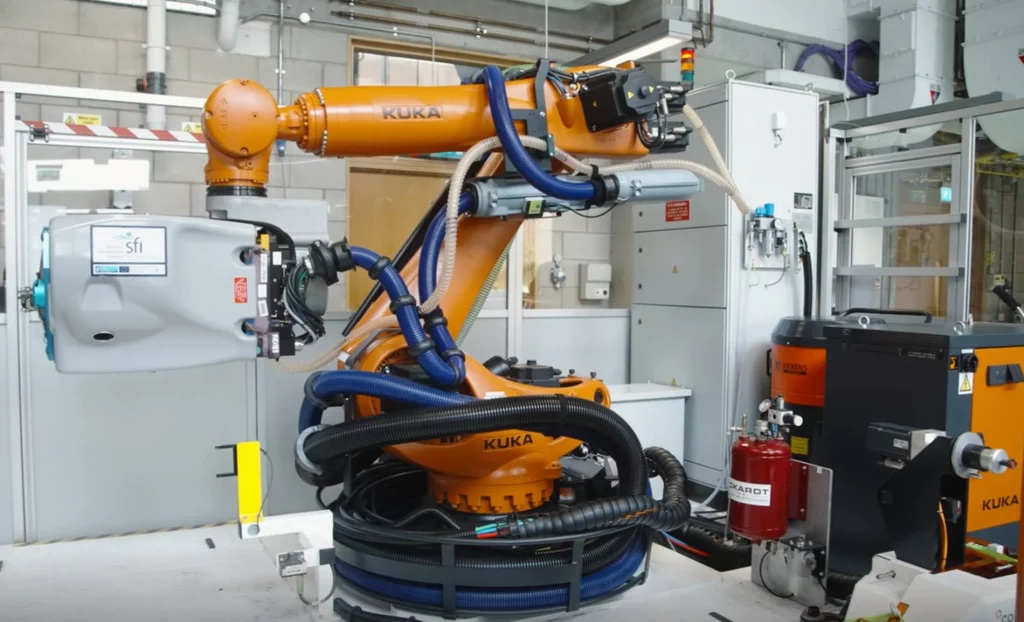
- Boeing utilizes collaborative robots for wing assembly and drilling operations.
- Airbus deploys cobots for fastener insertion and surface preparation on composite fuselage sections.
- Benefits: enhanced precision, reduced human fatigue, and faster assembly cycles.
5.2 Automotive Manufacturing
- Automotive manufacturers integrate cobots for door assembly, engine installation, and quality checks.
- Example: BMW uses force-sensitive cobots for adaptive assembly of chassis components, improving safety and flexibility.
5.3 Electronics and Semiconductor Industry
- Collaborative robots handle delicate PCB assembly, inspection, and packaging tasks.
- Force-sensitive and vision-guided cobots reduce human error and improve yield.
6. Economic Impact
6.1 Productivity and Efficiency
- Cobots reduce cycle times and allow 24/7 operations in tasks unsuitable for humans.
- Flexible deployment minimizes downtime during production changes.
6.2 Workforce Transformation
- While cobots automate repetitive or dangerous tasks, humans focus on:
- Supervision
- Quality control
- Programming and maintenance
6.3 ROI and Investment
- Payback periods are often 2–4 years, depending on task complexity and throughput improvements.
- Hybrid production lines combining humans and cobots maximize efficiency without massive capital expenditure.
7. Challenges in Deployment
7.1 Safety and Compliance
- Shared workspaces require precise sensing, collision prediction, and adherence to regulatory standards.
- Dynamic risk assessment is essential in environments with multiple human operators.
7.2 Integration Complexity
- Legacy manufacturing systems may not support real-time AI-driven control.
- Integration of sensors, robots, and enterprise software can be resource-intensive.
7.3 Adaptation to Variability
- Aerospace components are often large, irregular, and delicate, requiring advanced path planning and force compliance.
- Manufacturing variability demands reconfigurable cobot setups.
8. Future Trends
8.1 Human-Robot Co-Creation
- Cobots will increasingly assist humans in decision-making, quality assurance, and adaptive assembly.
- AI-enhanced collaboration will allow shared planning and real-time adjustments.
8.2 Edge AI and Real-Time Decision Making
- Robots with onboard intelligence can process sensor data locally, reducing latency for safety-critical tasks.
8.3 Standardization and Interoperability
- Industry-wide standards for safety, communication protocols, and task interoperability will accelerate adoption.
8.4 Robotics-as-a-Service
- Flexible leasing models and cloud-based control allow smaller manufacturers to access cobot capabilities without heavy upfront costs.
9. Conclusion
The deployment of collaborative robots in aviation and manufacturing demonstrates the potential for precision, safety, and efficiency gains across complex, high-stakes industries. Key insights include:
- Human-robot collaboration enhances productivity without compromising safety.
- Advanced sensing, AI, and motion control enable adaptation to dynamic environments.
- Economic and strategic benefits include faster production cycles, lower human fatigue, and reduced error rates.
- Future growth relies on standardization, AI integration, and flexible deployment models.
As collaborative robotics matures, its role will expand beyond assembly lines, supporting maintenance, quality assurance, and complex manufacturing processes. In aviation and other precision industries, cobots are poised to become indispensable partners in achieving operational excellence.