










Introduction: The New Frontier of Robotic Intelligence
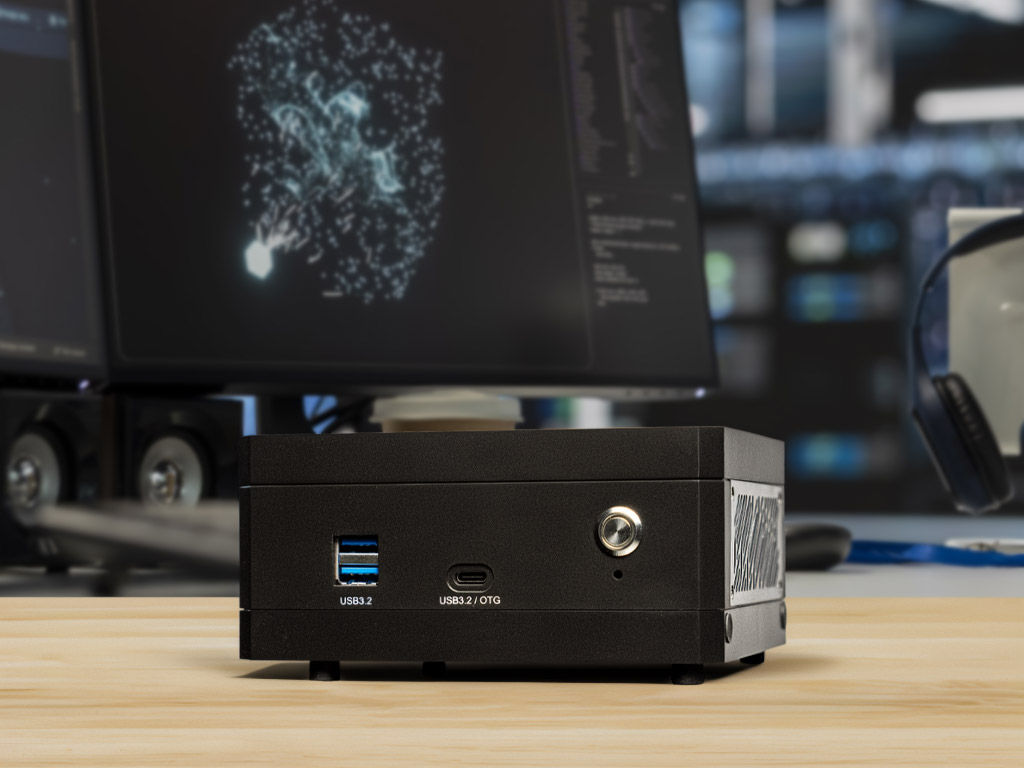
The evolution of robotics is reaching a pivotal juncture. While early generations relied on centralized computing and cloud-based AI, modern applications demand real-time decision-making, high-speed perception, and autonomous adaptability. The emergence of autonomous processing units (APUs) and edge AI computing has become the central factor in overcoming the bottlenecks of traditional robotic systems.
Robots can no longer depend solely on cloud servers for computation. Latency, bandwidth limitations, network reliability, and data privacy pose challenges to fully autonomous operation. Edge AI enables on-device intelligence, allowing robots to process vast streams of sensor data, make real-time decisions, and learn adaptively without constant cloud dependence.
This article examines the technical architecture, algorithmic innovations, hardware-software integration, industrial applications, and strategic implications of autonomous processing units and edge AI computing in robotics.
1. Defining Autonomous Processing Units and Edge AI
1.1 Autonomous Processing Units (APUs)
- APUs are dedicated hardware modules integrated into robotic platforms to execute AI algorithms locally.
- Capabilities include:
- Sensor fusion and perception
- Motion planning and dynamic control
- Real-time decision-making and adaptive learning
- APUs bridge the gap between low-level motor control and high-level cognitive tasks, functioning as the “brain” of the robot.
1.2 Edge AI Computing
- Edge AI refers to performing AI inference and, in some cases, training directly on the robot or near-field computing nodes.
- Advantages include:
- Minimal latency for critical decisions
- Reduced dependency on cloud connectivity
- Enhanced data privacy and security
- Lower network bandwidth requirements
1.3 Relationship Between APUs and Edge AI
- APUs host edge AI workloads, combining high-performance processors, neural accelerators, and memory to execute deep learning, computer vision, and control algorithms.
- Edge AI ensures APUs can interpret complex environments in real time, enabling fully autonomous operations in industrial, service, and mobile robotics.
2. Architectural Design of Edge AI in Robotics
2.1 Hardware Components
- Central Processing Units (CPUs): Manage general tasks and system orchestration.
- Graphics Processing Units (GPUs): Accelerate deep learning inference for visual perception.
- Neural Processing Units (NPUs) / AI Accelerators: Dedicated for low-latency AI inference with minimal power consumption.
- Memory and Storage: High-bandwidth memory supports simultaneous sensor data streams from LiDAR, cameras, IMUs, and tactile sensors.
2.2 Software and Middleware
- Robotic Operating System (ROS) 2: Provides middleware for sensor integration, message passing, and modular application development.
- AI Frameworks: TensorRT, PyTorch Mobile, ONNX Runtime enable optimized edge inference.
- Real-Time OS: Guarantees deterministic task scheduling, crucial for motion control and safety-critical applications.
2.3 Sensor Fusion Integration
- Edge AI consolidates camera, LiDAR, radar, IMU, and force sensor data, providing a holistic perception layer.
- Data preprocessing and error correction are performed locally, enabling reliable navigation and manipulation in dynamic environments.
3. Algorithmic Innovations Enabling Edge AI
3.1 Real-Time Perception
- Computer Vision Models: Object detection, semantic segmentation, and pose estimation executed on-device for immediate response.
- 3D Mapping and Localization: Visual-inertial odometry and LiDAR SLAM processed locally reduce reliance on remote computation.
3.2 Motion Planning and Control
- Predictive Control: Edge AI allows APUs to anticipate environmental changes and adjust trajectory dynamically.
- Reinforcement Learning: Enables adaptive behavior through local simulations and on-the-fly updates.
- Nonlinear and Robust Control Algorithms: Real-time execution ensures precise manipulation and balance in humanoid and mobile robots.
3.3 Autonomous Decision-Making
- Edge AI implements behavioral and task planning, allowing robots to make context-aware decisions without external input.
- Examples:
- Warehouse robot dynamically rerouting around obstacles
- Humanoid robot performing object manipulation based on visual cues
- Delivery drones adjusting flight path based on environmental conditions
4. Industrial and Commercial Applications
4.1 Manufacturing Robotics
- APUs enable collaborative robots (cobots) to sense human workers and adjust force or trajectory in real time.
- Edge AI optimizes assembly line efficiency, predictive maintenance, and safety compliance.
4.2 Autonomous Vehicles and Logistics
- Mobile robots and drones rely on edge AI for real-time navigation, collision avoidance, and fleet coordination.
- APUs reduce latency in high-speed environments, critical for logistics warehouses and urban delivery.
4.3 Service and Healthcare Robotics
- Humanoid and assistive robots require fast perception-action loops to interact safely with humans.
- Edge AI ensures data privacy for sensitive information, such as patient monitoring or home assistance.
4.4 Consumer Robotics
- Domestic robots, including vacuum cleaners and security units, leverage APUs to adapt to changing environments and optimize task efficiency.
- Local AI reduces dependency on cloud updates, enabling instant response to environmental changes.
5. Advantages of APUs and Edge AI
5.1 Latency Reduction
- Critical in high-speed navigation, object manipulation, and safety-critical operations.
- APUs performing inference on-device eliminate network-induced delays.
5.2 Enhanced Autonomy
- Robots can operate without constant cloud connectivity, essential for remote, hazardous, or privacy-sensitive environments.
5.3 Energy Efficiency
- Edge AI reduces data transmission costs and allows optimized power management, balancing high-performance AI with battery constraints.
5.4 Scalability and Fleet Coordination
- APUs enable distributed intelligence in multi-robot systems, facilitating swarm coordination and decentralized decision-making.
6. Challenges and Considerations
6.1 Computational Constraints
- Limited power and thermal budgets on mobile robots restrict high-capacity AI models.
- Optimization techniques like quantization, pruning, and model distillation are essential.
6.2 Software-Hardware Co-Design
- Algorithms must be designed considering processor capabilities, memory bandwidth, and sensor latency.
- Real-time OS and AI middleware integration are critical to avoid processing bottlenecks.
6.3 Safety and Reliability
- Edge AI must operate deterministically in safety-critical applications.
- APUs require fail-safes, redundancy, and watchdog mechanisms to prevent catastrophic failures.
6.4 Development Complexity
- Designing APUs and edge AI pipelines demands expertise in AI, robotics, embedded systems, and real-time software engineering.
- Toolchains must support efficient deployment and remote updates while ensuring system stability.
7. Strategic Implications for Robotics Companies
- Invest in Edge AI Hardware: Prioritize high-efficiency NPUs, GPUs, and heterogeneous computing platforms.
- Develop Optimized AI Models: Tailor perception, control, and decision-making algorithms for on-device execution.
- Leverage Modular APUs: Facilitate upgrades, expandability, and multi-robot fleet compatibility.
- Integrate with Cloud Smartly: Use cloud for long-term learning, data aggregation, and fleet optimization, keeping critical real-time tasks local.
- Ensure Compliance and Safety: Design deterministic systems with redundancy, fail-safe mechanisms, and environmental robustness.
8. Future Trends
8.1 AI Model Compression and Efficiency
- Emerging methods like LoRA, edge quantization, and sparse neural networks enable complex AI on limited hardware.
8.2 Specialized Edge AI Chips
- Companies like NVIDIA, Intel, Qualcomm, and Graphcore are producing robotics-tailored NPUs for high-speed, low-power inference.
8.3 Collaborative Edge-Cloud Intelligence
- Future systems will blend local edge AI with cloud intelligence, enabling both real-time autonomy and long-term learning.
8.4 Autonomous Multi-Agent Systems
- Edge AI allows distributed intelligence across fleets, enabling swarm robotics, industrial coordination, and autonomous delivery networks.
8.5 Integration with 5G and Beyond
- High-bandwidth, low-latency connectivity complements edge AI for hybrid cloud-edge operations, enhancing capabilities without compromising autonomy.
9. Conclusion
Autonomous processing units and edge AI computing represent the critical breakthrough for modern robotics. Key takeaways:
- APUs provide on-device intelligence, enabling real-time perception, planning, and decision-making.
- Edge AI reduces latency, dependency on cloud infrastructure, and network constraints.
- Industrial, service, and consumer robots benefit from enhanced autonomy, energy efficiency, and safety.
- Challenges include hardware limitations, software-hardware co-design, and development complexity, which require integrated strategies.
- Future advancements in specialized AI chips, model optimization, and hybrid edge-cloud architectures will continue to reshape robotic capabilities and applications.
In the rapidly evolving robotics landscape, edge AI and autonomous processing units are no longer optional—they are the foundation for true intelligence, adaptability, and scalability in next-generation robotic systems.