









Abstract
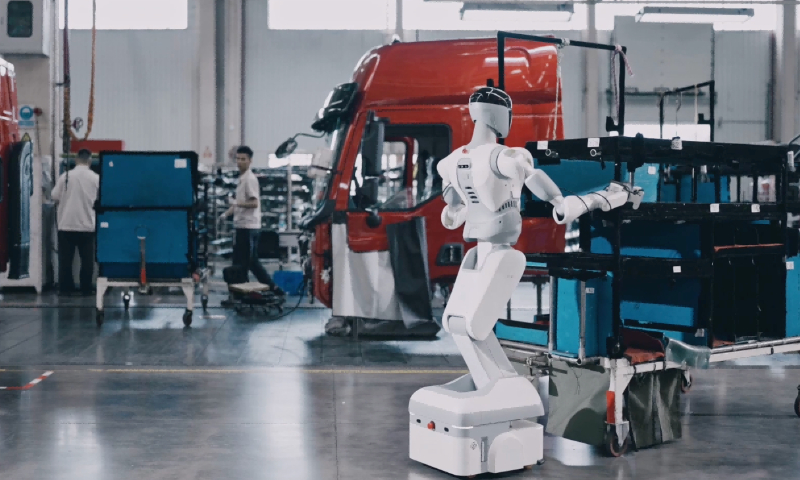
Industrial robots have been a cornerstone of modern manufacturing for decades, enabling high efficiency, precision, and consistency in structured production environments. Traditionally, these robots relied on pre-programmed instructions and operated in isolated settings with limited adaptability. Today, however, industrial robots are undergoing a profound transformation. Driven by advances in artificial intelligence, sensing technologies, connectivity, and computing, industrial robots are continuously evolving toward higher levels of intelligence.
This article provides a comprehensive and professional analysis of the intelligent evolution of industrial robots. It explores the technological drivers behind this transition, the changing capabilities of intelligent industrial robots, their integration into smart manufacturing systems, and their impact on productivity, workforce structures, and industrial ecosystems. Furthermore, it examines challenges, standards, and future trends, offering a holistic perspective on how industrial robots are reshaping the future of manufacturing through intelligence.
1. Introduction
Industrial robots were originally designed to perform repetitive, high-precision tasks such as welding, painting, assembly, and material handling. Their success stemmed from reliability and consistency rather than flexibility or autonomy. While these characteristics remain essential, modern manufacturing increasingly demands systems that can adapt to changing products, variable batch sizes, and dynamic environments.
Global competition, mass customization, labor shortages, and the pursuit of higher quality and efficiency are pushing manufacturers to rethink automation strategies. In this context, intelligent industrial robots—robots capable of perception, learning, reasoning, and collaboration—are emerging as a critical enabler of next-generation manufacturing.
The shift from traditional automation to intelligent robotics is not incremental; it represents a structural change in how robots perceive their environment, make decisions, and interact with humans and other machines. This evolution is redefining the role of robots from isolated tools to autonomous and collaborative agents within complex industrial systems.
2. From Traditional Automation to Intelligent Robotics
2.1 Characteristics of Traditional Industrial Robots
Traditional industrial robots are characterized by:
- Fixed programming and deterministic behavior
- Operation in highly structured and predictable environments
- Dependence on external safety fencing
- Limited sensing and adaptability
These robots excel in high-volume, standardized production but struggle in environments requiring flexibility or frequent reconfiguration.
2.2 Drivers of Intelligent Transformation
Several forces are driving industrial robots toward intelligence:
- Shortened product life cycles
- Demand for mass customization
- Rising labor costs and workforce shortages
- Advances in AI, sensors, and computing
- Integration of digital technologies in manufacturing
Together, these factors create the conditions for intelligent robots to deliver greater value than conventional automation.
3. Core Technologies Enabling Intelligent Industrial Robots
3.1 Artificial Intelligence and Machine Learning
AI is the foundation of intelligent robotics. Key applications include:
- Vision-based object recognition and inspection
- Adaptive motion planning and control
- Predictive maintenance and anomaly detection
- Process optimization through data-driven learning
Machine learning allows robots to improve performance over time, adapting to variations in materials, tools, and operating conditions.
3.2 Advanced Perception Systems
Intelligent industrial robots rely on rich perception to understand their environment. Perception technologies include:
- 2D and 3D vision systems
- Force and torque sensing
- Tactile and proximity sensors
- Multimodal sensor fusion
These systems enable robots to identify objects, estimate poses, detect contact forces, and respond to environmental changes in real time.
3.3 Intelligent Control and Motion Planning
Traditional control methods are being augmented by learning-based and hybrid approaches. Intelligent control enables:
- Real-time trajectory optimization
- Collision avoidance and safe interaction
- Compliance and force-adaptive manipulation
This allows robots to operate in less structured environments and perform complex tasks with higher reliability.
3.4 Edge Computing and Connectivity
Edge computing brings computational power closer to the robot, reducing latency and enabling real-time decision-making. Connectivity to cloud platforms enables:
- Centralized monitoring and analytics
- Remote updates and optimization
- Knowledge sharing across robot fleets
Together, edge and cloud computing form the backbone of intelligent robotic systems.
4. Intelligent Capabilities of Modern Industrial Robots
4.1 Perception-Driven Autonomy
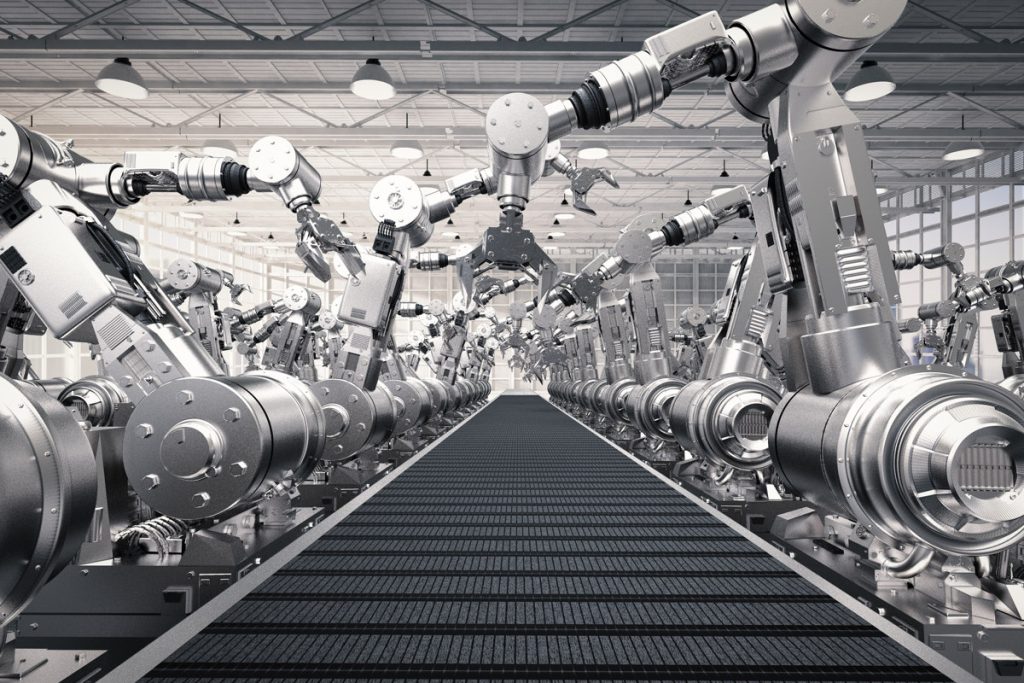
Modern industrial robots are increasingly capable of autonomous operation. Vision-guided robots can:
- Locate randomly oriented parts
- Adapt to variations in shape and size
- Perform inspection and quality control
This autonomy reduces the need for rigid fixtures and precise part placement.
4.2 Learning and Adaptation
Learning-enabled robots can adjust their behavior based on experience. Examples include:
- Learning optimal gripping strategies
- Adapting welding parameters to material variations
- Improving assembly accuracy through feedback
Learning transforms robots from static machines into adaptive systems.
4.3 Human-Robot Collaboration
Collaborative robots (cobots) exemplify the intelligent evolution of industrial robotics. They are designed to:
- Safely operate alongside humans
- Respond to human presence and gestures
- Share tasks in flexible workflows
Intelligent perception and control enable cobots to combine safety with productivity.
5. Integration into Smart Manufacturing Systems
5.1 Role in Industry 4.0
Intelligent industrial robots are central to Industry 4.0, where cyber-physical systems integrate the physical factory with digital intelligence. Robots serve as:
- Data-generating nodes
- Actuators executing optimized decisions
- Participants in interconnected production networks
Their intelligence enables seamless integration with manufacturing execution systems (MES) and enterprise resource planning (ERP) platforms.
5.2 Digital Twins and Simulation
Digital twins provide virtual representations of robots and production systems. They enable:
- Offline programming and optimization
- Predictive maintenance and fault diagnosis
- Scenario testing and system validation
The combination of digital twins and intelligent robots enhances efficiency and reduces downtime.
5.3 Flexible and Reconfigurable Production Lines
Intelligent robots support flexible manufacturing by enabling:
- Rapid changeover between products
- Small-batch and customized production
- Dynamic task allocation
This flexibility is critical for responding to market volatility.
6. Application Domains of Intelligent Industrial Robots
6.1 Assembly and Precision Manufacturing
In electronics, automotive, and machinery manufacturing, intelligent robots perform:
- Complex assembly tasks
- Vision-guided insertion and alignment
- Adaptive fastening and joining
Their precision and adaptability improve yield and quality.
6.2 Welding, Painting, and Surface Treatment
AI-enhanced robots can dynamically adjust parameters based on real-time feedback, improving consistency and reducing defects.
6.3 Quality Inspection and Testing
Robots equipped with vision and AI algorithms perform automated inspection, identifying defects with high accuracy and consistency.
6.4 Logistics and Material Handling
Autonomous mobile robots and robotic arms coordinate to handle materials efficiently, optimizing internal logistics.
7. Impact on Productivity and Industrial Efficiency
7.1 Improved Throughput and Quality
Intelligent robots reduce variability and human error, leading to higher throughput and more consistent quality.
7.2 Reduced Downtime
Predictive maintenance enabled by data analytics minimizes unplanned downtime and extends equipment life.
7.3 Energy and Resource Efficiency
Adaptive control and optimization reduce energy consumption and material waste, supporting sustainable manufacturing goals.
8. Workforce Transformation and Human Roles
8.1 Shifting Skill Requirements
As robots become more intelligent, workforce roles evolve toward:
- Robot supervision and programming
- Data analysis and process optimization
- Maintenance and system integration
Upskilling and reskilling become essential.
8.2 Human-Robot Synergy
Rather than replacing humans, intelligent robots often complement human skills, combining human creativity and judgment with robotic precision and endurance.
8.3 Workplace Safety and Ergonomics
Robots take over hazardous or physically demanding tasks, improving workplace safety and ergonomics.
9. Challenges in the Intelligent Evolution of Industrial Robots
9.1 Technical Complexity
Integrating AI, perception, and control increases system complexity, requiring robust design and validation.
9.2 Data Quality and Availability
Learning-based systems depend on high-quality data. Data collection, labeling, and governance remain challenges.
9.3 Reliability and Trust
Manufacturers require predictable and reliable performance. Ensuring robustness under diverse conditions is critical.
9.4 Standardization and Interoperability
Lack of unified standards can hinder integration and scalability across platforms and vendors.
10. Safety, Ethics, and Regulation
10.1 Functional Safety in Intelligent Systems
As robots gain autonomy, ensuring safety through redundancy, monitoring, and fail-safe mechanisms is essential.
10.2 Ethical Considerations
Transparency, accountability, and responsible use of AI in industrial robotics are increasingly important.
10.3 Regulatory Frameworks
Regulations must evolve to address collaborative operation, AI-driven decision-making, and cybersecurity.
11. Economic and Strategic Implications
11.1 Competitive Advantage
Companies adopting intelligent robotics gain advantages in flexibility, cost efficiency, and innovation capacity.
11.2 Reshaping Global Manufacturing
Intelligent automation may influence reshoring, localization of production, and global supply chain resilience.
11.3 Ecosystem Development
The intelligent robotics ecosystem includes hardware manufacturers, AI developers, integrators, and service providers working collaboratively.
12. Future Trends in Intelligent Industrial Robotics
12.1 Toward Autonomous Factories
Future factories will feature highly autonomous robotic systems capable of self-optimization and coordination.
12.2 Learning Across Robot Fleets
Shared learning across fleets will accelerate performance improvement and standardization.
12.3 General-Purpose Industrial Robots
Robots capable of performing a wide range of tasks with minimal reprogramming will become more common.
12.4 Integration with Digital and Physical AI
Industrial robots will increasingly integrate with broader Physical AI systems, combining digital intelligence with physical action.
13. Conclusion
Industrial robots are no longer confined to rigid, pre-programmed automation. They are continuously advancing toward intelligence, driven by AI, advanced sensing, connectivity, and integration into digital manufacturing ecosystems. This transformation enables robots to perceive, learn, adapt, and collaborate—capabilities that are essential for modern, flexible, and resilient manufacturing.
While challenges remain in reliability, safety, and standardization, the trajectory is clear. Intelligent industrial robots are becoming central actors in the evolution of global industry, reshaping productivity, workforce roles, and competitive dynamics. As technology continues to mature, the intelligent transformation of industrial robots will not only enhance manufacturing efficiency but also redefine the relationship between humans, machines, and industrial systems in the decades to come.