









Abstract
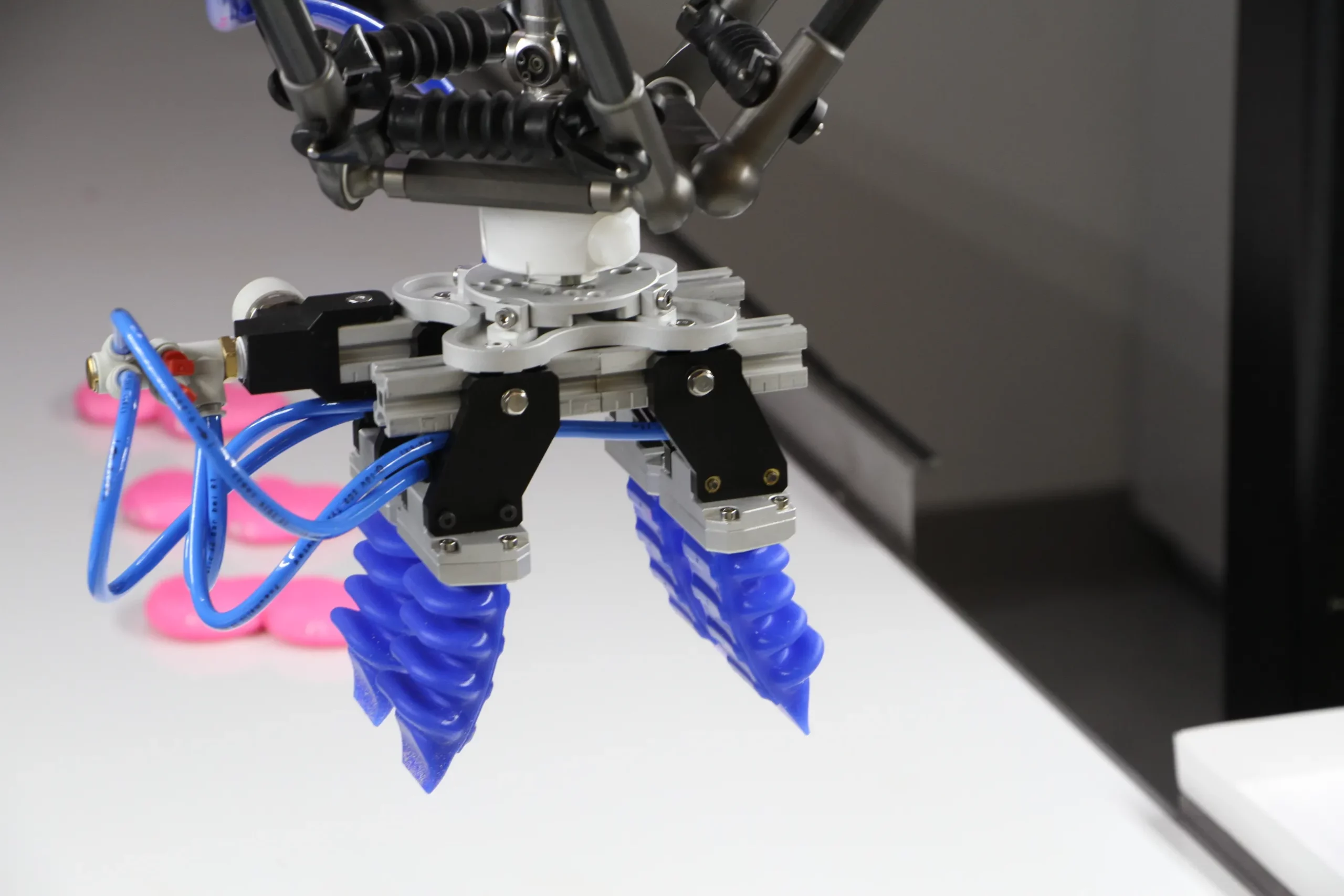
Bio-inspired soft robotic grippers represent a frontier in robotic manipulation, offering dexterity, adaptability, and safe interaction with fragile or irregular objects. A critical component of these systems is the integration of force and tactile sensing, which enables grippers to perceive contact forces, slippage, and texture while performing complex tasks. This article provides a comprehensive, professional analysis of the methods for integrating force and tactile sensors in soft grippers, including sensor technologies, mechanical design strategies, signal processing techniques, control algorithms, and applications. It examines bio-inspired designs, multi-modal sensing approaches, and adaptive grasping strategies, highlighting the key challenges and future directions in this rapidly evolving field.
1. Introduction
1.1 The Need for Bio-Inspired Soft Grippers
Traditional rigid robotic hands excel in structured environments but struggle with:
- Handling delicate or irregular objects
- Operating safely alongside humans
- Adapting to uncertain and unstructured environments
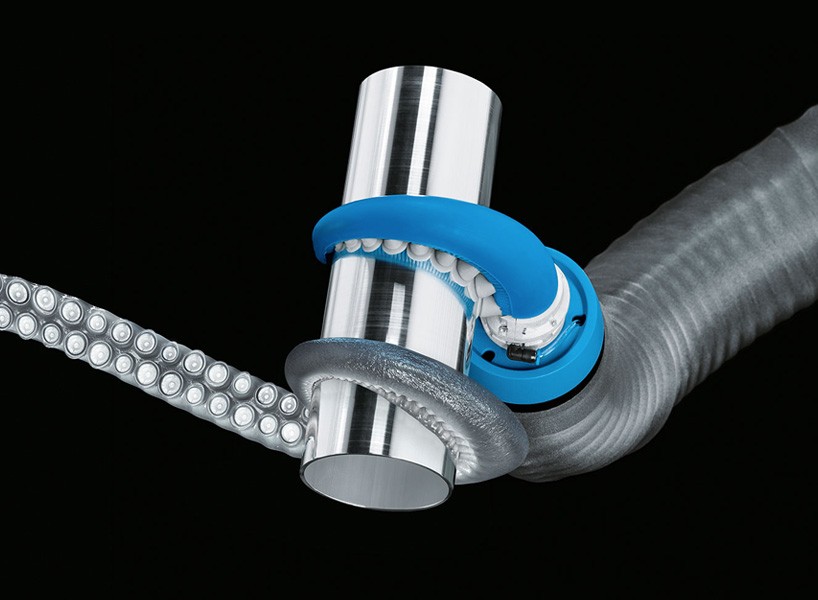
Bio-inspired soft grippers, often modeled on human fingers, octopus tentacles, or elephant trunks, provide compliant manipulation, distributing contact forces over larger surfaces while conforming to object geometry. Integrating force and tactile sensing is essential for:
- Measuring grip strength and preventing object damage
- Detecting slippage for corrective action
- Facilitating dexterous tasks such as sorting, assembly, or medical manipulation
1.2 Scope of the Article
This article focuses on:
- Soft material and actuation technologies for grippers
- Force and tactile sensor types and integration strategies
- Signal processing and control methods
- Case studies in industrial, service, and medical applications
- Future research directions
2. Bio-Inspired Design Principles
2.1 Mimicking Biological Systems
- Human Hand: Finger joints, soft pads, and mechanoreceptors inspire gripper compliance and tactile feedback.
- Octopus Tentacles: Enable continuous, flexible bending and distributed pressure sensing.
- Elephant Trunks: Multi-segmented compliance with force distribution capabilities.
2.2 Mechanical Design Strategies
- Soft Elastomers: Silicone, polyurethane, and other flexible polymers allow conformal contact.
- Segmented Structures: Multi-chamber pneumatic actuators enable bending and curling motions.
- Embedded Sensors: Integration of thin, flexible sensors within the material or along the surface enhances feedback without reducing compliance.
3. Force and Tactile Sensor Technologies
3.1 Force Sensing
Force sensors in soft grippers measure normal, shear, and torque forces applied to objects:
- Resistive Force Sensors: Simple, flexible, measure deformation-induced resistance changes.
- Capacitive Sensors: High sensitivity, detect small force variations and distributed load.
- Piezoelectric Sensors: Capture dynamic force changes and vibrations.
- Optical Fiber Sensors: Use strain-induced light modulation for precise force detection.
3.2 Tactile Sensing
Tactile sensors detect texture, slip, and contact location:
- Piezoresistive Arrays: Flexible arrays for spatially distributed pressure measurement.
- Capacitive Tactile Mats: Detect subtle surface features and contact distribution.
- Magnetic Sensors: Measure soft material deformation using embedded magnets.
- Microfluidic Sensors: Liquid-based pressure detection for soft, conformal surfaces.
3.3 Multi-Modal Integration
- Combining force and tactile sensors allows:
- Detection of both gross contact forces and fine surface features
- Adaptive grip strategies using real-time feedback
- Enhanced slip detection and object manipulation precision
4. Integration Methods
4.1 Sensor Embedding in Soft Structures
- Direct Embedding: Sensors embedded during material molding or 3D printing.
- Surface Mounting: Flexible sensor films adhered to gripper surfaces.
- Hybrid Approaches: Combination of embedded and external sensors for redundancy and reliability.
4.2 Signal Transmission and Wiring
- Flexible Conductive Traces: Stretchable copper or silver nanowires embedded in elastomers.
- Wireless Sensing: Reduces wiring complexity, suitable for multi-fingered grippers.
- Soft Printed Circuit Boards (PCBs): Conformable electronics that maintain elasticity.
4.3 Sensor Calibration
- Force Calibration: Use known weights and robotic arms to map sensor readings to real-world forces.
- Tactile Calibration: Surface textures and pressure maps create reference datasets.
- Dynamic Calibration: Adjustments for hysteresis and nonlinear behavior in soft materials.
5. Signal Processing and Data Fusion
5.1 Preprocessing
- Noise filtering with low-pass, median, or Kalman filters
- Compensation for temperature-induced drift and material elasticity
5.2 Data Fusion
- Combining force and tactile signals using sensor fusion algorithms
- Multi-sensor integration improves grasp stability, slip detection, and object recognition
5.3 Machine Learning for Tactile Intelligence
- Deep learning models extract patterns of contact, texture, and slippage
- Reinforcement learning enables adaptive gripping strategies based on sensory feedback
- Multi-modal learning fuses visual, tactile, and force inputs for robust manipulation
6. Control Strategies
6.1 Force-Based Control
- Maintain optimal grip force to prevent object deformation or slippage
- Real-time adjustments using PID, adaptive, or model predictive control
6.2 Tactile Feedback Control
- Detect onset of slip and adjust grip dynamically
- Texture recognition informs grasp strategies for different objects
6.3 Combined Force-Tactile Control
- Multi-objective control frameworks integrate tactile and force feedback
- Enables dexterous, adaptive, and safe manipulation in unstructured environments
7. Applications
7.1 Industrial Applications
- Assembly Lines: Handling delicate components in electronics or automotive sectors
- Pick-and-Place Operations: Gripping irregular objects without pre-programmed trajectories
- Inspection and Quality Control: Detecting defects through tactile sensing
7.2 Healthcare and Rehabilitation
- Prosthetic Hands: Bio-inspired fingers with integrated tactile sensors for feedback
- Surgical Assistance: Soft grippers with force sensing prevent tissue damage
- Rehabilitation Devices: Adaptive grip strength training with real-time feedback
7.3 Service and Domestic Robots
- Food Handling: Gripping fragile items such as fruits or baked goods
- Household Assistance: Handling household objects safely around humans
- Logistics: Gripping variable-shaped packages in warehouses
8. Case Studies
8.1 Harvard’s Soft Robotic Gripper
- Pneumatically actuated soft fingers
- Embedded strain and pressure sensors
- Successfully manipulate delicate objects with adaptive force control
8.2 Shadow Robot Dexterous Hand
- Multi-fingered hand with tactile and force sensors
- Capable of human-like dexterity, object recognition, and adaptive grasping
8.3 RBO Hand 2
- Flexible gripper for research in unstructured environments
- Multi-modal sensing allows grasping of objects of varying shapes, weights, and textures
9. Challenges
9.1 Sensor Durability
- Soft sensors are prone to wear, tear, and mechanical fatigue
- Embedded sensors require protection without compromising compliance
9.2 Calibration and Nonlinearity
- Soft materials exhibit hysteresis and nonlinear deformation
- Accurate calibration of tactile and force signals remains challenging
9.3 Signal Interference
- Multi-modal sensors may suffer from crosstalk
- Requires advanced filtering and sensor fusion algorithms
9.4 Scalability and Manufacturing
- Integrating sensors in mass-produced soft grippers is complex
- Requires standardized processes and robust material-sensor interfaces
10. Future Directions
10.1 Advanced Materials
- Self-healing elastomers, conductive polymers, and stretchable electronics improve durability
- Bio-inspired composite structures mimic skin and muscle properties
10.2 AI-Driven Grasping
- Reinforcement and imitation learning for real-time adaptive gripping
- Multi-modal data integration for intelligent object manipulation
10.3 Miniaturization
- Smaller, flexible sensors allow multi-fingered grippers with higher resolution tactile maps
- Integration in prosthetics and wearable robotic systems
10.4 Cloud and Edge Robotics
- Distributed processing enables real-time learning and adaptation
- Remote monitoring and collaborative robotics applications
11. Conclusion
Integrating force and tactile sensing in bio-inspired soft robotic grippers is critical for achieving dexterous, adaptive, and safe manipulation. Key points include:
- Bio-inspired designs provide compliance, adaptability, and safe human interaction
- Multi-modal sensing (force + tactile) enables real-time feedback and adaptive control
- Signal processing, sensor fusion, and AI-driven control enhance dexterity, slippage detection, and object recognition
- Applications span industrial automation, healthcare, service robotics, and domestic assistance
Future developments in materials, sensor technologies, AI, and manufacturing methods will continue to improve the capability, scalability, and reliability of soft robotic grippers, establishing them as a cornerstone of next-generation robotics.