









Introduction
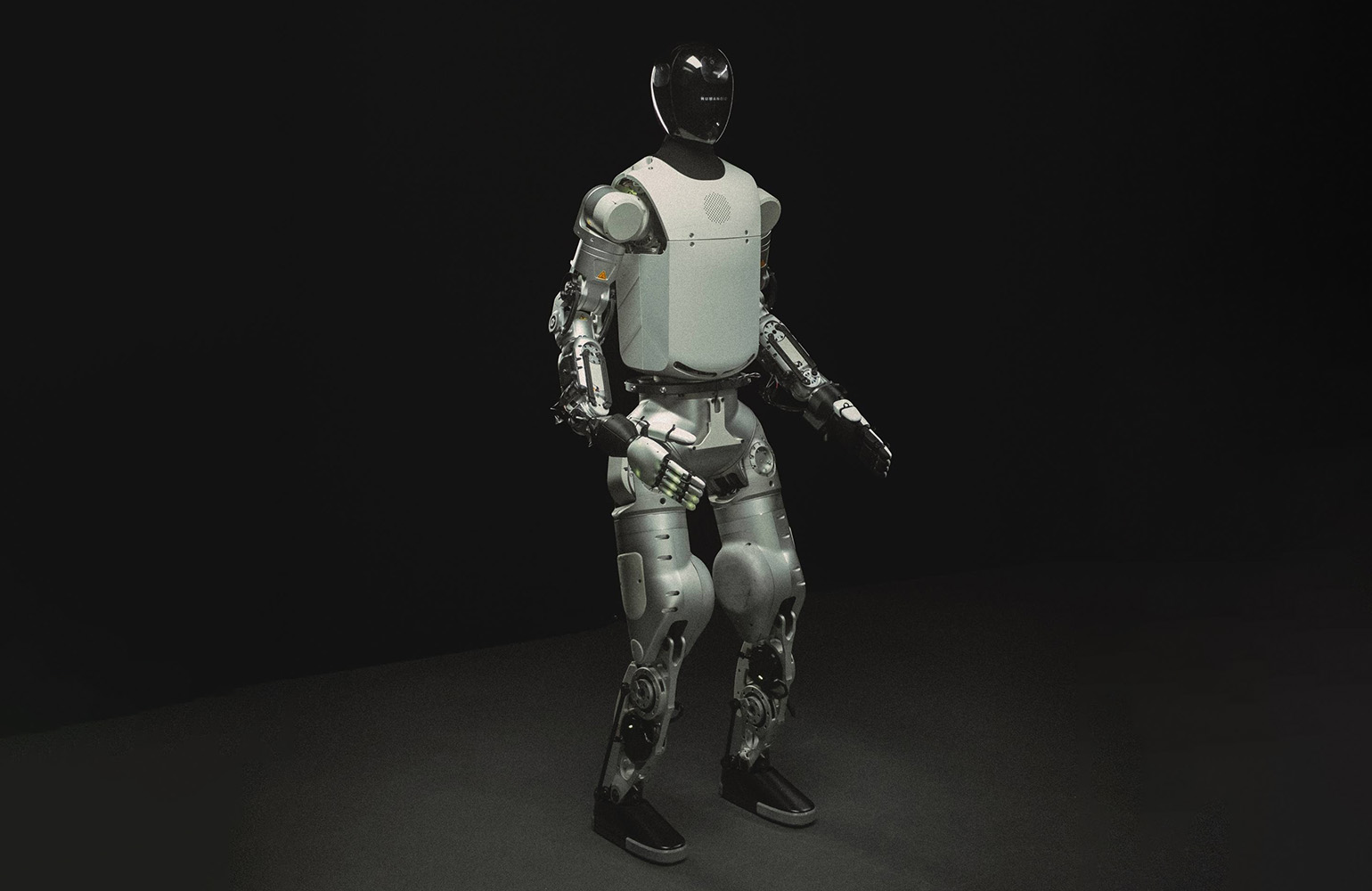
Robotics has made remarkable progress in recent decades, transitioning from simple mechanical devices to autonomous, intelligent systems capable of interacting with complex environments and humans. However, despite breakthroughs in AI, control algorithms, and sensor technology, three key challenges continue to define the frontier of robotics: intelligent behavior, operational stability, and adaptation to real-world environments.
These challenges are interdependent. High-level intelligence is futile without mechanical and computational stability, while both are constrained by the unpredictable conditions of real-world deployment. Addressing these areas is critical for robotics to move from controlled lab experiments to large-scale industrial, healthcare, retail, and public deployment.
This article provides a comprehensive analysis of these three domains, exploring the latest technological innovations, operational strategies, deployment case studies, and future research directions in robotics.
1. Intelligence in Robotics
1.1 Defining Robotic Intelligence
Robotic intelligence goes beyond programmed automation. Key dimensions include:
- Perception: Understanding and interpreting complex sensory inputs
- Decision-Making: Planning actions based on dynamic environmental data
- Learning: Adapting behaviors over time to improve efficiency or accuracy
- Interaction: Communicating with humans and other systems effectively
1.2 Core AI Technologies for Robots
- Deep Learning for Perception
- Enables object recognition, semantic segmentation, and scene understanding
- Examples: Visual perception in humanoids, defect detection in industrial robots
- Reinforcement Learning for Adaptive Behavior
- Robots learn optimal actions via trial-and-error in simulated or real environments
- Applications: Locomotion, grasping, and manipulation in unstructured spaces
- Natural Language Processing (NLP) for Interaction
- Supports human-robot dialogue, task instruction, and social interaction
- Challenges include context understanding, speech recognition in noisy environments, and multi-language support
- Sensor Fusion and Multimodal Reasoning
- Integrates vision, LIDAR, tactile feedback, and proprioception for robust decision-making
- Crucial for complex tasks like object manipulation or navigation in crowded spaces
2. Stability: Mechanical and Computational
2.1 Mechanical Stability
- Actuators and Dynamics: High-torque motors, series elastic actuators (SEAs), and hydraulic systems contribute to precise, reliable movement.
- Balance Control: Humanoid robots rely on real-time inverse kinematics, zero-moment point (ZMP) control, and gait adaptation for stable locomotion.
- Robust Frame Design: Lightweight yet durable materials reduce mechanical stress while maintaining agility.
2.2 Computational Stability
- Control Algorithms: Robust PID controllers, model predictive control (MPC), and adaptive feedback loops ensure consistent behavior under disturbances.
- Real-Time Processing: Edge computing allows immediate reaction to environmental changes without cloud latency.
- Fault Tolerance: Redundant sensors, error-checking mechanisms, and safe fallback modes prevent catastrophic failures.
2.3 Co-Dependence of Intelligence and Stability
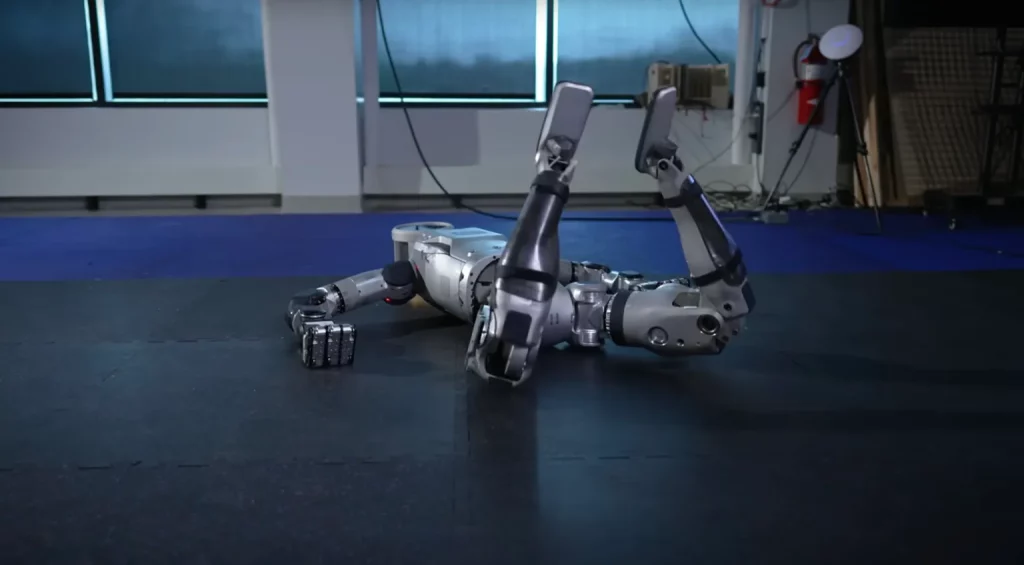
- A robot can possess advanced AI but fail in real-world tasks if its mechanical and computational systems cannot execute decisions reliably.
- Conversely, a highly stable platform without intelligent perception or planning is limited to repetitive, predictable tasks.
3. Real-World Adaptation
3.1 The Challenges of Real-World Environments
Robots encounter unpredictable and dynamic conditions:
- Variable Terrain: Slopes, stairs, uneven surfaces for legged robots
- Crowded Spaces: Humans, animals, or other robots in industrial, retail, or public areas
- Environmental Factors: Rain, dust, temperature extremes, and lighting variations
- Task Variability: Changes in objects, workflow, or operational priorities
3.2 Technological Solutions
- Sim-to-Real Transfer
- Robots are trained in simulated environments and then fine-tuned in real conditions
- Techniques include domain randomization and reinforcement learning adaptation
- Adaptive Control Systems
- Continuously modify gait, grasp, or locomotion parameters based on sensor feedback
- Examples: Humanoid robots adjusting stride on uneven floors, robotic arms compensating for payload variations
- Autonomous Navigation and Obstacle Avoidance
- SLAM (Simultaneous Localization and Mapping) and sensor fusion enable real-time path planning
- Dynamic replanning allows robots to avoid moving obstacles and adapt to changes
- Energy-Aware Operation
- Power optimization strategies extend operational time in mobile robots, drones, or warehouse fleets
- Battery management and predictive energy planning prevent mission failure
4. Industry Applications and Case Studies
4.1 Healthcare
- Humanoid Assistants: Guiding patients, delivering medications, and supporting telepresence
- Rehabilitation Robots: Adaptive exoskeletons respond to patient motion and muscle feedback
- Case Study: A hospital deploying autonomous delivery robots observed 30% reduction in nurse walking distance and improved workflow reliability
4.2 Retail and Hospitality
- Customer Service Robots: Greeting, guiding, and assisting customers with real-time dialogue and gestures
- Inventory and Stocking Robots: Autonomous scanning and replenishment with adaptive navigation in dynamic store layouts
- Case Study: A chain of supermarkets achieved up to 98% inventory accuracy with autonomous scanning robots navigating crowded aisles
4.3 Industrial Automation
- Collaborative Robots (Cobots): Work alongside humans on assembly lines, adjusting force and motion in response to human presence
- Inspection Robots: Adaptive vision-based defect detection compensates for variations in lighting and product orientation
- Case Study: Automotive manufacturers deploying inspection robots observed reduction of defect rates by 40% while maintaining production flexibility
5. Challenges in Scaling Intelligent, Stable, Adaptive Robots
| Challenge | Mitigation Strategy |
|---|---|
| Mechanical wear and tear | High-durability actuators, modular parts, predictive maintenance |
| AI model brittleness | Domain randomization, continual learning, edge-based model updates |
| Environmental unpredictability | Sensor fusion, adaptive control, real-time replanning |
| Human-robot interaction | Transparent communication, intuitive interfaces, safety-compliant behavior |
| Energy and uptime | Power-efficient hardware, hybrid power solutions, dynamic task scheduling |
6. Technological Enablers for Next-Generation Robots
6.1 Edge AI and On-Device Processing
- Reduces latency and dependence on cloud connectivity
- Enables real-time perception, planning, and control
6.2 Custom AI Accelerators
- NPUs, GPUs, and FPGAs optimized for robotic inference
- Supports complex models for perception, reinforcement learning, and multi-task decision-making
6.3 Advanced Sensor Integration
- Multimodal sensors (vision, LIDAR, tactile, force) provide robust environmental awareness
- Adaptive filtering and noise reduction improve real-world perception
6.4 Human-Centered Design
- Robots must safely and intuitively interact with humans
- Ergonomic design, socially aware motion planning, and multimodal communication enhance acceptance
7. Strategies for Continuous Improvement
- Iterative Deployment: Gradual scaling from controlled labs to operational environments
- Data-Driven Feedback Loops: Use operational metrics to refine AI models, control algorithms, and mechanical parameters
- Cross-Domain Learning: Transfer insights from healthcare, retail, and industrial deployments to improve adaptability
- Simulation-Based Testing: Validate robot behaviors in diverse virtual scenarios before real-world application
- Human-in-the-Loop Systems: Combine autonomous operation with supervisory oversight for safety and efficiency
8. Future Directions
- Robust Multi-Robot Collaboration: Fleets of adaptive robots working in coordinated, autonomous networks
- Self-Learning and Lifelong Adaptation: Robots continuously improving intelligence and environmental understanding over time
- Integration with IoT and Smart Environments: Seamless data exchange for predictive maintenance, workflow optimization, and safety compliance
- Bio-Inspired Design: Legged robots with animal-like agility and manipulation capabilities in unstructured environments
- Sustainability: Energy-efficient robotics reducing operational costs and environmental impact
Conclusion
While robotics has achieved remarkable milestones in perception, autonomy, and manipulation, the ongoing frontiers remain intelligence, stability, and real-world adaptation. These three pillars define the capability of a robot to operate reliably, safely, and efficiently in complex environments.