









Abstract
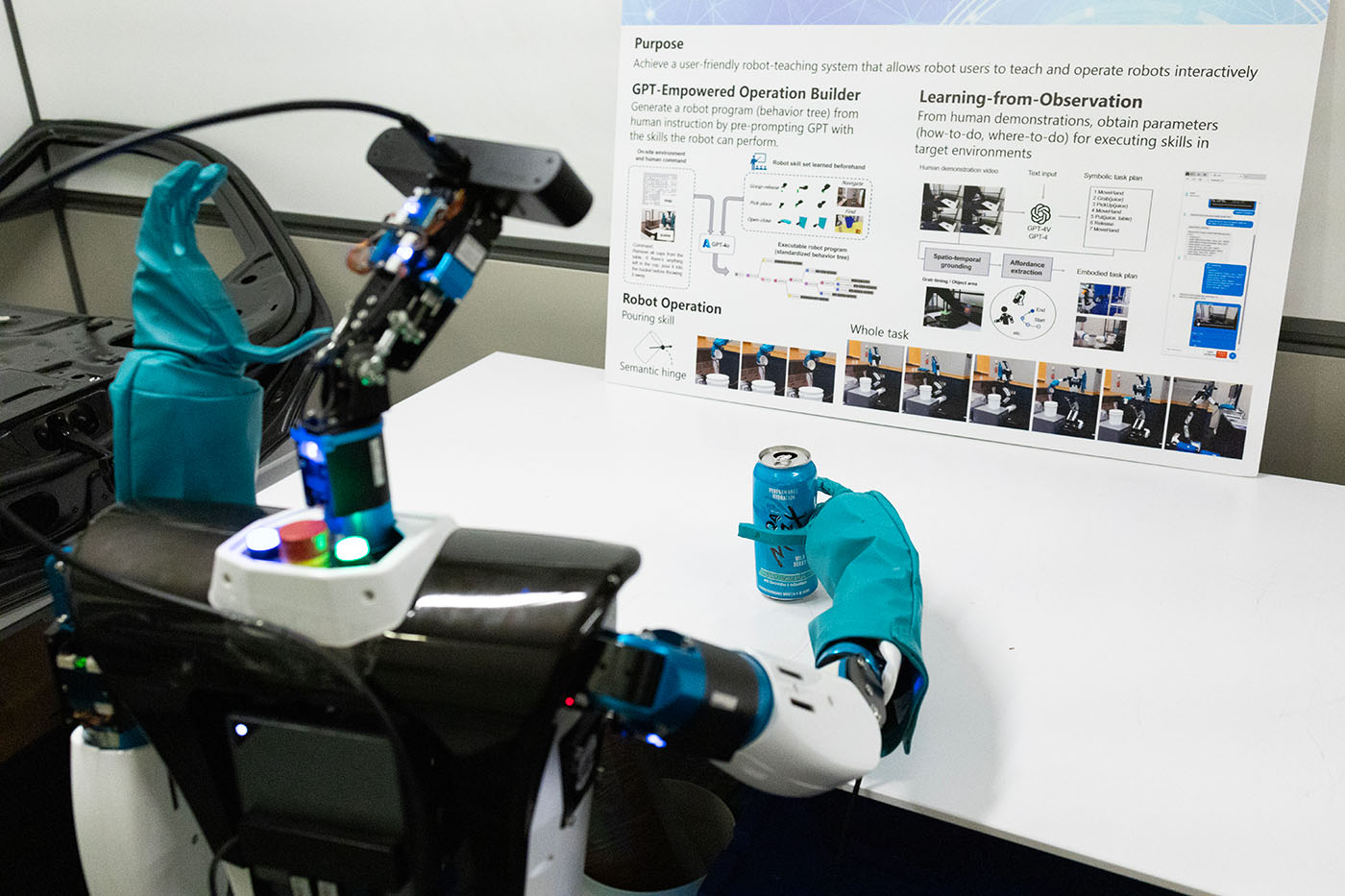
Embodied Intelligence (EI) has rapidly become a key focus in robotics, artificial intelligence (AI), and autonomous systems, reflecting a shift from purely computational intelligence to intelligence grounded in physical interaction with the environment. Unlike traditional AI, which primarily operates on abstract data, EI integrates perception, action, and learning in a physical context, enabling systems to adapt dynamically, interact safely, and perform complex tasks in unstructured environments. This article presents a comprehensive and professional exploration of embodied intelligence as a technological and industrial trend. It examines conceptual frameworks, core technologies, robotics applications, advances in sensorimotor learning, human-robot collaboration, and commercial potential, highlighting why EI is becoming a central research and investment hotspot.
1. Introduction
The concept of intelligence has traditionally been cognitive and computational, focusing on reasoning, planning, and symbolic problem-solving. However, real-world intelligence requires embodiment, meaning the ability to perceive, act, and learn through physical interactions with the environment. This recognition has led to the rise of Embodied Intelligence (EI) as a research frontier and emerging industry.
1.1 Definition of Embodied Intelligence
Embodied Intelligence refers to:
“Intelligence that arises from the integration of an agent’s body, sensors, actuators, and environment, allowing adaptive and goal-directed behavior through interaction rather than abstract computation alone.”
Key characteristics include:
- Physical grounding: Intelligence emerges through real-world interaction rather than disembodied simulations.
- Sensorimotor integration: Coordinated perception and action allow adaptive responses.
- Learning from experience: Continuous adaptation through reinforcement, imitation, and exploration.
- Contextual awareness: Understanding and exploiting environmental affordances.
1.2 Why EI Is Gaining Industry Attention
- Robotics and AI increasingly target complex, unstructured environments such as homes, factories, and healthcare facilities.
- Traditional AI models, including large language models and computer vision systems, lack physical context and adaptability.
- EI promises more versatile, efficient, and safe robotic systems, expanding commercial applications across industries.
2. Historical Context and Evolution
2.1 Early Foundations
- The notion of embodied intelligence is rooted in cybernetics and control theory (Norbert Wiener, 1940s).
- Rodney Brooks’ subsumption architecture (1990s) introduced robots capable of adaptive behavior without central symbolic planning.
- Early robots demonstrated reactive, environment-driven intelligence, laying the foundation for modern EI.
2.2 Cognitive Robotics
- Cognitive robotics integrates learning, perception, and reasoning with physical interaction.
- Combines symbolic AI with sensorimotor control to achieve goal-directed behavior in dynamic environments.
- Key milestones: humanoid robots (Honda ASIMO), Boston Dynamics’ Atlas, and soft robotics for adaptive manipulation.
2.3 Emergence of Industry Interest
- Investors and corporations increasingly recognize EI as critical for automation in unstructured spaces: logistics, healthcare, home robotics, and mobility.
- The rise of physical AI and learning-enabled robotics has driven R&D investment, fueling startup growth and academic-industry partnerships.
3. Core Technologies Enabling Embodied Intelligence
3.1 Sensorimotor Systems
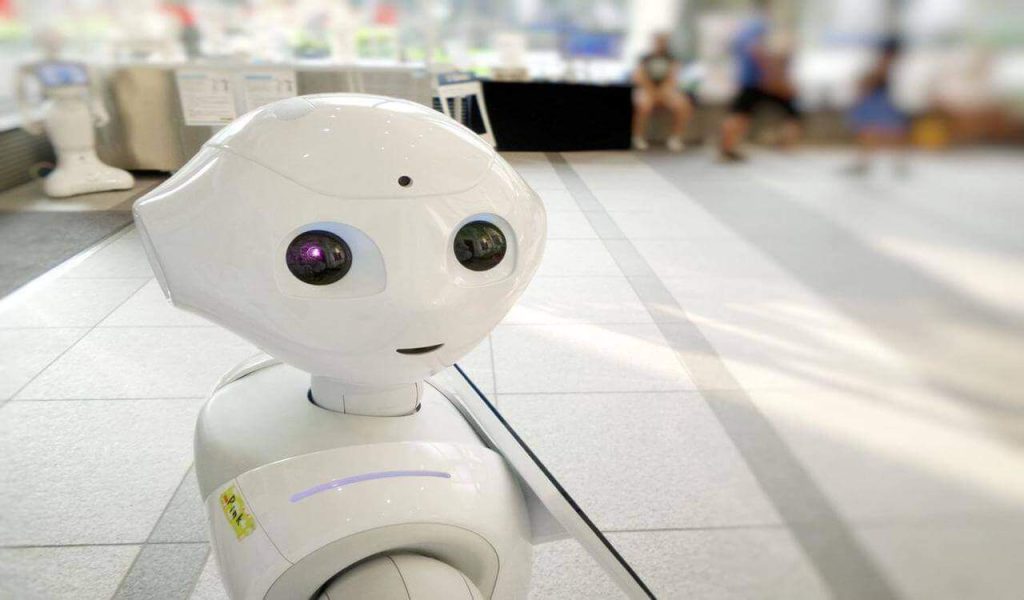
- Vision systems: Cameras, LiDAR, depth sensors for environment perception.
- Tactile sensors: Enable fine manipulation, object recognition, and force feedback.
- Proprioception: Measures internal joint states, velocities, and torques for precise movement.
- Auditory and chemical sensing: Emerging modalities for environmental understanding and human-robot interaction.
3.2 Learning-Based Control
- Reinforcement Learning (RL): Enables robots to learn optimal behaviors through trial and error.
- Imitation Learning: Robots acquire skills by observing human demonstrations.
- Self-supervised Learning: Robots autonomously collect data and refine models for motor control.
3.3 Simulation and Digital Twins
- Simulated environments accelerate learning without risking physical hardware.
- Digital twins allow iterative design, testing, and optimization of sensorimotor policies.
- Sim-to-real transfer ensures learned behaviors are applicable in real-world contexts.
3.4 Artificial Intelligence and Planning
- Integration of deep learning, probabilistic models, and reasoning algorithms enables anticipatory and context-aware actions.
- Combines low-level motor control with high-level decision-making for robust task execution.
4. Application Domains
4.1 Industrial Automation
- Flexible manufacturing robots adapt to variable product geometries and changing assembly lines.
- EI enables robots to operate safely alongside humans, dynamically adjusting speed and force.
- Example: Collaborative robots (cobots) in electronics and automotive assembly.
4.2 Healthcare and Rehabilitation
- Exoskeletons and assistive devices provide adaptive support based on patient movements.
- EI-driven prosthetics learn individual gait patterns for personalized mobility.
- Robotics therapy systems dynamically adjust exercise intensity and trajectories for rehabilitation.
4.3 Service Robotics
- Domestic robots navigate cluttered environments, interact with humans, and perform tasks like cleaning, delivery, or elderly assistance.
- Embodied learning ensures safe operation in dynamic, unpredictable spaces.
4.4 Mobility and Logistics
- Autonomous vehicles, drones, and delivery robots exploit embodied intelligence for navigation, obstacle avoidance, and dynamic decision-making.
- Warehouse robots adapt to human presence, changing inventory layouts, and multi-agent coordination.
4.5 Research and Exploration
- EI is essential in unstructured or extreme environments: deep-sea exploration, space missions, and disaster response.
- Embodied robots can adapt to unforeseen conditions and perform tasks beyond preprogrammed instructions.
5. Scientific Breakthroughs Driving EI
5.1 Bipedal and Quadrupedal Locomotion
- Deep reinforcement learning enables robots like Boston Dynamics’ Atlas to walk, jump, and recover from disturbances.
- Learned policies integrate perception, balance control, and actuation, exemplifying embodied intelligence.
5.2 Manipulation and Dexterity
- Soft robotic hands and tactile sensors allow fine manipulation, gripping delicate objects without prior programming.
- Multi-modal learning combines vision, force feedback, and proprioception to generalize across objects and tasks.
5.3 Multi-Agent Embodied Systems
- Swarm robotics and collaborative EI systems coordinate actions dynamically in shared environments.
- Applications include logistics, construction, and disaster response.
5.4 Human-Robot Interaction
- EI robots learn social cues, gestures, and task collaboration strategies.
- Adaptive interaction ensures safety, efficiency, and intuitive communication.
6. Industrial and Commercial Implications
6.1 Market Trends
- EI startups have attracted billions in venture capital, targeting cobots, autonomous logistics, and home robotics.
- Major industrial players integrate embodied intelligence to maintain competitiveness and operational flexibility.
6.2 Investment Hotspots
- Flexible automation solutions for factories
- Service robots for healthcare and hospitality
- Autonomous mobility platforms in logistics and delivery
6.3 Value Proposition
- Enhanced operational efficiency and reduced downtime
- Increased safety in human-robot collaboration
- Capability to operate in complex, unstructured environments
- Rapid adaptation to evolving tasks and workflows
7. Challenges and Barriers
7.1 Technical Limitations
- High computational demands for real-time sensorimotor learning
- Energy efficiency for autonomous systems in continuous operation
- Robust perception and control under uncertain or dynamic conditions
7.2 Standardization and Interoperability
- Lack of unified protocols for multi-vendor embodied intelligence systems
- Integration challenges across IT/OT and industrial networks
7.3 Human Factors and Social Acceptance
- Safety and trust in physical interaction with humans
- Ethical considerations in autonomous decision-making and adaptive behavior
7.4 Cost and Scalability
- High development and deployment costs for advanced embodied intelligence robots
- Scalability to mass-market applications remains a challenge
8. Emerging Trends
8.1 Physical AI and Neuro-Inspired Systems
- Neuroscience-inspired control architectures replicate human motor learning and adaptive perception.
- Hybrid physical-AI systems combine embodied intelligence with symbolic reasoning for complex task execution.
8.2 Cloud-Edge Integration
- Distributed computation allows EI robots to access high-power AI models while performing real-time tasks locally.
- Facilitates fleet-level optimization in logistics and manufacturing.
8.3 Soft Robotics and Bio-Inspired Designs
- Compliant, deformable actuators improve adaptability and safe human interaction.
- Bio-inspired locomotion and manipulation strategies increase efficiency in unstructured environments.
8.4 Multi-Modal Learning
- Combining vision, touch, auditory, and proprioceptive inputs enhances robustness and generalization.
- Supports lifelong learning and adaptation to changing environments.
9. Future Outlook
Embodied Intelligence is expected to become a core differentiator in robotics and AI-driven industries. Future directions include:
- Widespread adoption in collaborative industrial environments
- Personalized healthcare and rehabilitation solutions
- Home and service robotics capable of intuitive interaction
- Multi-agent systems for logistics, construction, and disaster response
- Integration with digital twins, IoT, and Industry 4.0 infrastructure
Investment and R&D in EI will shape the next generation of intelligent, adaptive, and physically grounded robots, creating new market opportunities and societal impact.
10. Conclusion
Embodied Intelligence represents a paradigm shift in robotics and AI, moving from abstract computation to context-aware, physically grounded intelligence. By integrating sensors, actuators, and learning algorithms, EI enables robots to:
- Adapt to dynamic, unstructured environments
- Collaborate safely and effectively with humans
- Perform complex, dexterous, and context-dependent tasks
As an industry hotspot, EI offers significant commercial, operational, and societal benefits, but requires continued investment in technology, standardization, and workforce development. With advances in sensorimotor learning, AI integration, and multi-modal perception, embodied intelligence is poised to redefine the future of robotics, automation, and intelligent systems.