









Introduction
The global robotics landscape is rapidly shifting from research and prototype showcases to high‑frequency product launches and commercial deployments. Over the past year, an increasing number of companies across continents have moved from experimental labs to mass‑production announcements and real‑world demonstrations. This surge in activity reflects maturing technologies, growing industry confidence, and a competitive imperative to establish leadership in an era where artificial intelligence and physical robotics converge.
In 2025‑2026, flagship events like CES 2026 served not just as stages for flashy demos but as platforms for product introduction and commercial positioning—from service robots to industrial humanoids and autonomous systems. Major manufacturers are unveiling new platforms designed for real‑world applications such as manufacturing automation, logistics, human‑robot collaboration, and consumer services.
This article provides a comprehensive, professional analysis of the current trend of intensive robot product releases, examines the technological and market dynamics driving this wave, profiles key companies and their offerings, and forecasts the implications for industry evolution and adoption.
1. The Shift Toward Product‑Oriented Robotics
1.1 From Labs to Launch Schedules
For much of the past decade, robotics progress was characterized by theoretical advances and prototype demonstrations. Robots often impressed at trade shows or in labs but lacked market‑ready features or robust deployment models. Today, that paradigm is shifting:
- Robotics startups and established manufacturers alike are announcing products with real application focus—whether humanoids designed for commercial use or industrial robots with AI‑driven autonomy.
- These releases are increasingly backed by scalable production plans and ecosystem partnerships, signaling confidence in near‑term commercialization.
This transition marks the maturation of robotics technology, where R&D gives way to product engineering and market introduction.
1.2 Events as Commercial Launch Platforms
Industry events play a central role in this acceleration. For example, CES 2026 in Las Vegas hosted numerous product debuts that span sectors, such as industrial automation solutions and humanoid robots that are closer to deployment than before.
These platforms help companies gain visibility, attract investment, accelerate global collaborations, and validate product readiness directly with enterprise customers and developers.
2. Key Robot Product Releases in 2025–2026
2.1 Humanoid Robots Emerging from Prototypes
Humanoid robots have long been featured as futuristic concepts, but many manufacturers are now shifting toward product launches capable of real‑world function.
Richtech Robotics Dex
At CES 2026, Richtech Robotics debuted Dex, a mobile humanoid robot platform for commercial and industrial environments. Dex integrates AI reasoning, real‑time adaptability, and dynamic task execution, exemplifying how robotics moves beyond isolation demos to operational prototypes.
UniX AI’s Mass‑Production Focus
UniX AI officially unveiled its humanoid lineup and signaled readiness for scaled commercial deployment. The company’s presence at CES 2026 underscored its shift from R&D to mass production and global rollout—targeting hospitality, retail, and domestic services.
Boston Dynamics / Hyundai Atlas
In a highly visible debut, Boston Dynamics’ Atlas humanoid was publicly showcased at CES 2026 under the Hyundai Motor Group umbrella, demonstrating practical mobility and human‑like action. Plans include phased deployment in industrial applications, such as car assembly, starting in the late 2020s.
These examples illustrate increased product readiness and industry confidence in humanoid robotics as a deployable class of machines.
2.2 AI‑Driven Industrial and Collaborative Robots
Products aimed at manufacturing and logistics reflect how robotics is integrating AI into real‑world workflows.
Doosan Robotics Innovations
Doosan Robotics unveiled award‑winning solutions at CES 2026, including the Scan & Go Autonomous Robotic Solution, which uses AI and 3D vision to optimize large‑scale composite repair without traditional CAD modeling. The company also highlighted AI depalletizing systems for supply chain automation.
WIRobotics Wearables and Humanoids
WIRobotics showcased wearable walking‑assist robots designed for everyday use alongside the advanced humanoid ALLEX, demonstrating dual product streams that address both consumer mobility and next‑generation robotics.
These products represent not just incremental improvements but new classes of robots optimized with AI for adaptability and scalability.
2.3 Broader Ecosystem Involvement
Many other vendors—ranging from service robot producers to sensor and AI platform providers—used major events to launch or preview products. These releases signify a dense innovation pipeline where robots are increasingly equipped with:
- Multimodal perception systems
- Real‑time adaptability
- Human‑robot interaction capabilities
This broad participation reflects an ecosystem moving from niche to mainstream readiness.
3. Drivers of Product Release Intensification
3.1 Technological Maturity
Several technological advancements are enabling more frequent and reliable robot product launches:
- AI integration with real‑time decision making allows robots to operate in dynamic, unpredictable environments.
- Simulation platforms reduce development iteration cycles by enabling virtual training and validation.
- Edge computing and accelerated hardware empower robots to process sensor data without cloud latency.
These improvements shorten development timelines and lower the barriers to productization.
3.2 Market Demand and Commercial Opportunity
The demand for automation is rising across sectors:
- Manufacturing seeks flexible automation to address labor shortages.
- Logistics and warehouse operations demand intelligent mobile systems.
- Service industries are beginning to adopt robots for customer interaction and assistance.
This demand justifies significant investment into product development and rapid deployment strategies.
3.3 Strategic Competition and Partnerships
Strategic partnerships—such as Hyundai’s work with Boston Dynamics and collaborations with AI semiconductor companies—are accelerating product readiness.
Competition among global players (North America, East Asia, Europe) drives faster innovation cycles and pushes companies to release products to establish leadership and capture market share.
4. Segments in the Intensive Release Phase
The robotic product release landscape can be segmented into several trends:
4.1 Humanoid and General‑Purpose Robots
Once seen as visionary future tech, humanoid robots are now approaching commercial viability, with companies preparing strategies for industrial and service adoption.
4.2 Industrial and Automation Robots
AI‑enabled automation robots are scaling beyond traditional PLC‑based systems, incorporating perception and cognitive capabilities to tackle complex tasks previously reserved for skilled human labor.
4.3 Wearable and Assistive Robotics
Wearables such as walking‑assist robots represent a bridge between medical devices and general use robotics, promoting independence and mobility for users outside industrial contexts.
4.4 Consumer and Service Robots
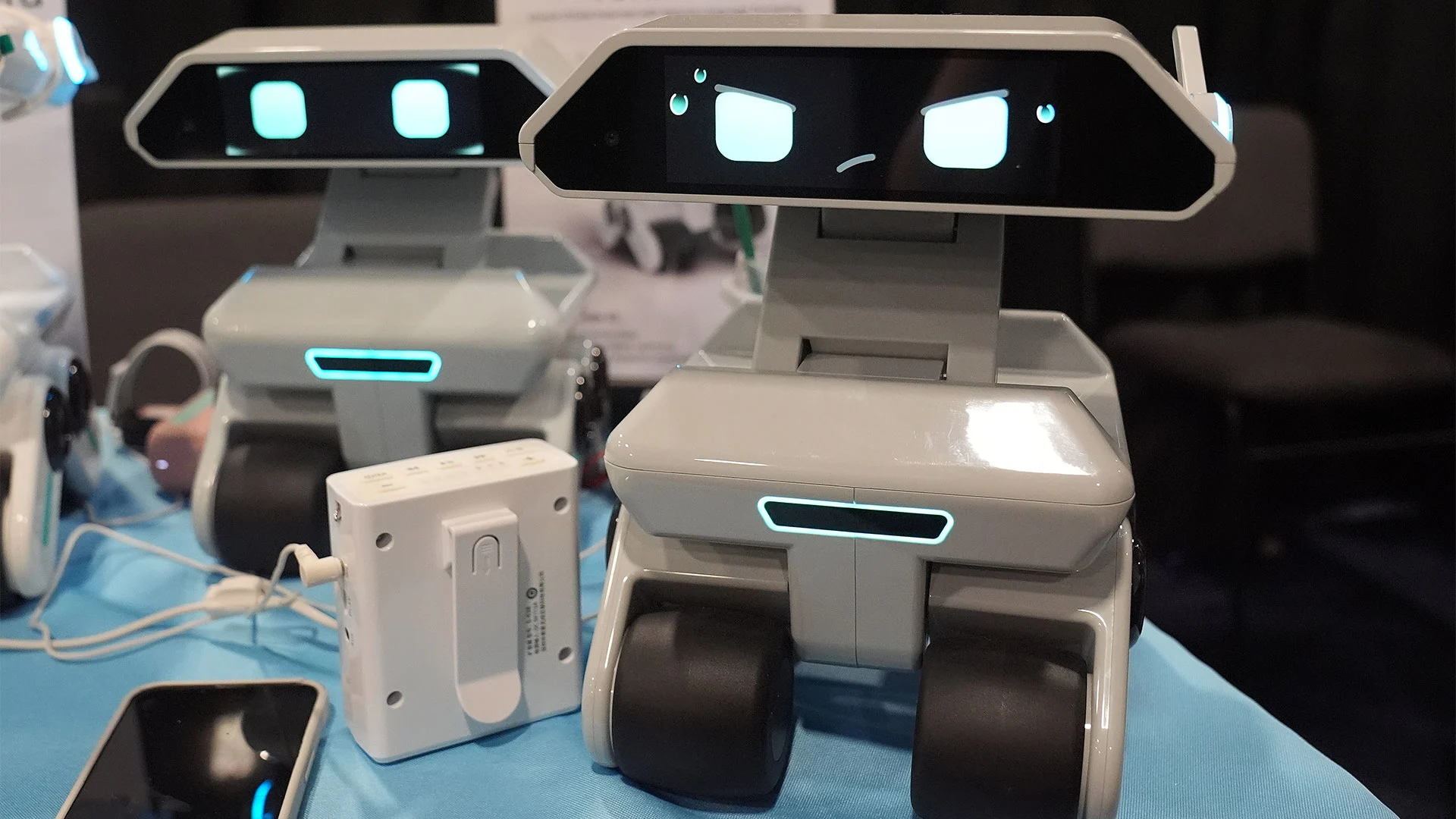
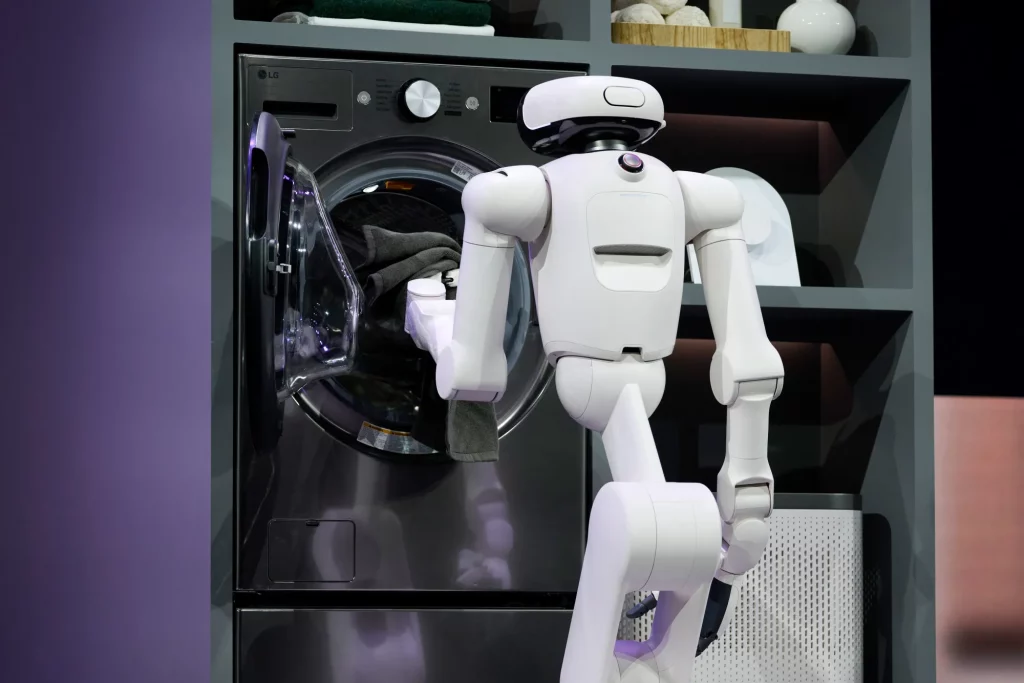
Robots designed for daily life—from companionship to household management—are also entering product release cycles driven by AI improvements and user acceptance growth.
5. Challenges Amid Intensified Product Releases
Despite the momentum, several challenges temper the pace of adoption:
5.1 Scalability and Production Constraints
High‑complexity products such as humanoid robots still encounter production bottlenecks, with scale‑up remaining slow due to supply chain and engineering complexity. For example, Tesla’s Optimus and Cybercab projects face slow initial production timelines.
5.2 Practical Efficiency vs. Human Labor
Some systems still exhibit performance gaps compared to human workers. For instance, certain humanoid platforms currently operate at significantly less than human efficiency, particularly outside controlled tasks.
5.3 Integration and Deployment Complexity
Deploying robots in real‑world environments requires robust safety, monitoring, and integration with existing infrastructure, presenting both technical and operational hurdles.
6. Impacts on Industry and Ecosystems
6.1 Acceleration of Adoption and Revenue Growth
With more products entering the market, robotics is transitioning from a capital‑intensive experimental phase to scalable commercial business models, including Robot‑as‑a‑Service (RaaS) and direct enterprise solutions.
6.2 Expansion of Standards and Interoperability
With increased product launches, interoperability standards become critical to ensure robots can operate cohesively within industrial or smart building ecosystems.
6.3 Talent and Workforce Transformation
The proliferation of robots in workplaces influences workforce dynamics, creating demand for new skills in robotics integration, maintenance, and human‑robot collaboration.
7. Future Outlook
As more robot manufacturers intensify product releases, the industry is poised to enter a rapid adoption phase where robots become embedded in diverse facets of economic life:
- Commercial humanoids may become common in hospitality and retail.
- Industrial AI robots will handle complex tasks previously unautomatable.
- Assistive and consumer robots may transform daily living and elder care.
This phase of product density represents a technological inflection point in robotics similar to the PC revolution of the 1980s or the smartphone boom of the 2000s.
Conclusion
The robotics industry is experiencing a wave of accelerated product releases, moving from isolated demonstrations to practical commercial offerings. With significant activity highlighted at global venues like CES 2026, manufacturers around the world are launching diverse robotic solutions—from advanced humanoids to intelligent automation systems designed for real‑world use.
This intensive release phase reflects deeper shifts in technology maturity, economic demand, and competitive strategy. While challenges remain—including production scalability and integration complexity—the pace of innovation and product availability signals a pivotal moment in robotics history. The coming years are likely to see robots transition from emerging technologies to normalized elements of industry, services, and everyday life, dramatically reshaping how humans work, live, and interact with intelligent machines.