









Introduction
The robotics industry is experiencing a paradigm shift as modularity and adaptability in hardware design redefine operational efficiency, scalability, and flexibility. Traditional robotic systems were largely monolithic, with fixed configurations and limited adaptability, often requiring complete replacement or extensive reprogramming to perform new tasks. In contrast, modular robotic hardware enables interchangeable components, standardized interfaces, and adaptable configurations, allowing robots to meet evolving industrial, commercial, and research needs.
This article explores the principles, technological underpinnings, industrial applications, market implications, and future prospects of modular and adaptable robotic hardware. It emphasizes the commercial and operational value of modularity, highlighting why this design philosophy is central to the next generation of intelligent automation.
1. Principles of Robotic Hardware Modularity
1.1 Definition and Core Concepts
Robotic hardware modularity refers to the design approach where robots are constructed from discrete, interchangeable components that can be configured and reconfigured without extensive redesign. Core concepts include:
- Interchangeable Modules: Arms, joints, sensors, grippers, and actuators designed as plug-and-play units.
- Standardized Interfaces: Electrical, mechanical, and software interfaces that allow components from different vendors to integrate seamlessly.
- Scalable Architectures: Modules can be added or removed to modify reach, payload, or functionality.
- Task-Specific Adaptation: Robots can be reconfigured to perform new tasks or operate in varied environments without full replacement.
1.2 Benefits of Modularity
- Flexibility: One robotic platform can adapt to multiple tasks.
- Reduced Total Cost of Ownership (TCO): Upgrading individual modules is cheaper than replacing entire robots.
- Faster Deployment: Modular systems reduce the time required for installation and reconfiguration.
- Innovation Enablement: Easier integration of new technologies, such as AI-driven sensors or advanced grippers.
2. Key Components of Modular Robotic Hardware
2.1 Modular Arms and Joints
- Segmented Design: Robotic arms are built from modular joints and links, allowing customization of reach and payload.
- Interchangeable Actuators: Motors and drive systems can be swapped to increase torque, speed, or precision.
- Applications: Manufacturing, logistics, assembly lines, and research labs benefit from adjustable robotic arms.
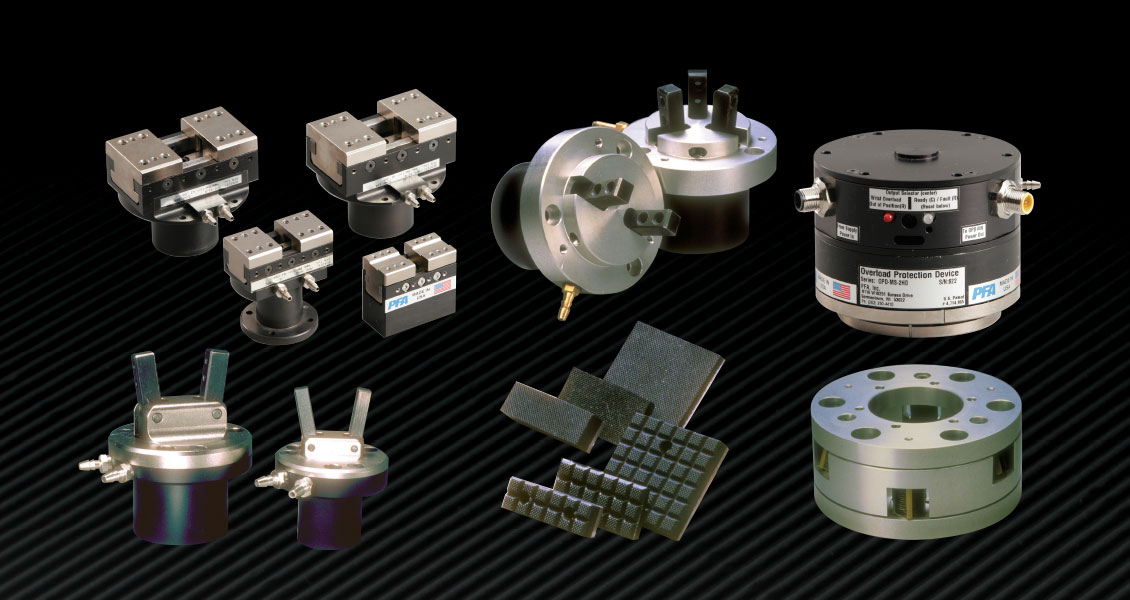
2.2 Grippers and End-Effectors
- Adaptive End-Effectors: Grippers designed to handle objects of varying size, shape, or material.
- Quick-Change Mechanisms: Enable operators to replace grippers without tools, reducing downtime.
- Commercial Value: Enhances versatility, allowing one robotic platform to serve multiple purposes.
2.3 Sensor Modules
- Vision Systems: Cameras and LiDAR units integrated as interchangeable modules.
- Force and Tactile Sensors: Enhance precision and safety in manipulation tasks.
- Environmental Sensors: Temperature, chemical, or proximity sensors allow robots to adapt to diverse operational contexts.
- Benefit: Modular sensors allow robots to evolve with industry requirements without redesigning the entire system.
2.4 Control and Computing Modules
- Embedded Controllers: Plug-and-play modules for motion planning and task execution.
- AI Acceleration Units: GPU or TPU modules for onboard AI processing.
- Network Interfaces: Standardized communication modules for cloud connectivity or fleet coordination.
3. Adaptability in Robotic Hardware
3.1 Concept of Adaptability
Adaptability refers to a robot’s capacity to adjust its structure, function, or behavior in response to:
- Changing tasks and workflows
- Variable environmental conditions
- Integration of new technologies
Adaptable hardware maximizes robot utility, ensuring long-term operational relevance.
3.2 Adaptive Mechanisms
- Physical Reconfiguration: Adjustable arm lengths, modular joints, and replaceable end-effectors.
- Dynamic Control Adaptation: AI-driven controllers adjust speed, trajectory, or grip in real-time.
- Task-Aware Module Selection: Software determines optimal module configuration for each task, minimizing human intervention.
3.3 Industrial Relevance
Adaptable hardware allows robots to:
- Switch between high-precision assembly and bulk material handling.
- Operate in multi-product manufacturing lines without downtime.
- Collaborate safely with human operators in dynamic environments.
4. Commercial Value of Modular and Adaptable Robotics
4.1 Cost Efficiency
- Reduced capital expenditure: One platform can replace multiple single-purpose robots.
- Incremental upgrades: Individual modules can be replaced or enhanced without full system replacement.
- Lower maintenance costs due to standardized parts and easier troubleshooting.
4.2 Market Expansion
- Small and medium enterprises can adopt modular robots for scalable automation.
- Diverse industrial sectors, including electronics, automotive, logistics, and healthcare, benefit from flexible deployment.
4.3 Revenue Opportunities
- Hardware Sales: Premium modular robotic systems command higher margins.
- Service Models: Robot-as-a-Service (RaaS) for modular platforms reduces upfront costs for end-users while generating recurring revenue.
- Customization Services: Tailored modules for niche applications can capture high-margin markets.
- Data Monetization: Sensor modules generate actionable data for predictive maintenance and optimization.
5. Technological Drivers Enhancing Modularity and Adaptability
5.1 AI and Machine Learning
- Adaptive algorithms allow robotic modules to self-optimize based on task and environmental feedback.
- AI enhances predictive maintenance of modular joints, actuators, and sensors.
5.2 IoT and Cloud Connectivity
- Remote monitoring and reconfiguration of modular robots via cloud platforms.
- Collaborative fleets share insights across factories, improving efficiency and reducing trial-and-error reconfiguration.
5.3 Advanced Materials and Actuators
- Lightweight, durable materials reduce payload constraints and energy consumption.
- Flexible actuators allow modular arms to perform delicate or irregular manipulation tasks.
5.4 Standardized Interfaces
- Open standards facilitate integration of third-party modules.
- Modular ecosystems encourage innovation and reduce vendor lock-in.
6. Industrial Applications of Modular and Adaptable Hardware
6.1 Manufacturing
- Multi-product assembly lines: Modular robots adjust arm lengths, grippers, and sensors for varying parts.
- Quality inspection: Vision modules can be swapped to detect different defects or tolerances.
6.2 Logistics and Warehousing
- Autonomous mobile robots with modular arms and grippers handle diverse packages efficiently.
- Sensor modules ensure safe navigation and collision avoidance in dynamic environments.
6.3 Healthcare and Laboratory Automation
- Modular surgical robots can swap instruments for different procedures.
- Lab automation systems adapt to different sample types and testing protocols.
6.4 Research and Education
- Modular robots serve as experimental platforms for testing AI, sensors, and control algorithms.
- Adaptability allows rapid prototyping of new robotic functionalities.
7. Challenges and Considerations
7.1 Integration Complexity
- Ensuring seamless compatibility between modules from different vendors can be challenging.
- Software-hardware interoperability is critical for adaptive behavior.
7.2 Initial Investment
- Modular systems may have higher upfront costs than traditional monolithic robots.
- ROI depends on frequency of reconfiguration and long-term scalability.
7.3 Skill Requirements
- Operators must understand module replacement, calibration, and adaptive control software.
- AI integration requires expertise in machine learning and robotic programming.
7.4 Market Fragmentation
- Lack of universal standards can slow adoption and limit interoperability.
- Proprietary module ecosystems may constrain flexibility for end-users.
8. Future Trends and Opportunities
8.1 AI-Enhanced Modularity
- AI algorithms will dynamically select modules and configurations based on task complexity.
- Predictive adjustments reduce downtime and optimize robot performance.
8.2 Plug-and-Play Ecosystems
- Standardized interfaces and modular architectures will facilitate rapid deployment and upgrades.
- Cross-vendor collaboration will enable a rich ecosystem of compatible modules.
8.3 Collaborative and Service Robotics
- Cobots with modular hardware will operate alongside humans safely and efficiently.
- RaaS models will increase adoption by providing flexible, subscription-based access to modular platforms.
8.4 Data-Driven Optimization
- Sensor modules generate real-time data for workflow optimization, predictive maintenance, and digital twin simulations.
- Cloud-connected modular robots can learn collectively, improving efficiency across multiple facilities.
Conclusion
The modularization and adaptability of robotic hardware are central to the evolution of modern automation. Modular arms, interchangeable grippers, and sensor modules provide flexibility, scalability, and cost efficiency, while adaptive control systems enable robots to perform diverse tasks autonomously.
These features deliver substantial commercial value, including reduced capital expenditure, faster deployment, lower maintenance costs, and expanded market opportunities. By integrating AI, IoT, and standardized interfaces, modular robotic systems offer industrial, service, and research sectors unprecedented versatility and operational efficiency.
As Industry 4.0 continues to reshape manufacturing and services, modular and adaptable robotic hardware will define the next generation of automation, enabling businesses to respond rapidly to changing market demands, optimize workflows, and invest strategically in scalable, future-proof robotic platforms.