









Introduction: The Rise of AI-Powered Robotics Platforms
In recent years, AI computing platforms for robotics have emerged as the central enabler of autonomous, adaptive, and intelligent robotic systems. From industrial manufacturing to service and healthcare applications, robots are no longer limited to pre-programmed routines. They are increasingly capable of perception, reasoning, decision-making, and learning, thanks to the integration of high-performance AI computing platforms.
The performance of these platforms directly determines a robot’s processing speed, perception accuracy, real-time decision-making capability, and energy efficiency. At the forefront of this technological evolution, specialized edge AI processors, GPU-accelerated computing, and AI inference frameworks allow robots to execute complex deep learning models locally, without relying solely on cloud connectivity.
This article provides a comprehensive exploration of AI computing platforms in robotics, covering:
- Architecture and hardware evolution
- AI algorithms and model optimization
- Edge and cloud integration
- Applications across industrial, warehousing, and service domains
- Future trends and challenges
1. Defining Robotics AI Computing Platforms
An AI computing platform for robotics refers to the hardware and software stack that allows a robot to perform intelligent tasks autonomously. Unlike traditional embedded control systems, AI platforms combine:
- High-performance processors: GPUs, TPUs, or specialized AI accelerators
- Memory and storage systems: To handle large datasets and neural network models
- Software frameworks: Robotics Operating Systems (ROS), AI inference engines, and middleware for sensor integration
- Connectivity and I/O interfaces: For sensors, actuators, and cloud or edge integration
These platforms allow robots to perform real-time perception, motion planning, and adaptive decision-making, supporting applications that require both speed and precision.
2. Evolution of Robotics Computing Hardware
2.1 Central Processing Units (CPUs)
- Initially, robots relied on CPUs for control and basic sensing tasks
- Suitable for sequential processing, but limited for high-volume neural network inference
2.2 Graphics Processing Units (GPUs)
- Parallel processing capabilities enable efficient execution of deep learning models
- GPUs have become standard for vision, SLAM (Simultaneous Localization and Mapping), and complex motion planning
2.3 AI-Specific Accelerators
- AI accelerators such as NVIDIA Jetson, Google Edge TPU, and Intel Movidius provide high-throughput, low-latency inference
- These accelerators allow robots to process multiple sensor streams simultaneously
2.4 Edge Computing Platforms
- Enable onboard AI inference, reducing latency and dependence on cloud connectivity
- Crucial for autonomous navigation, real-time decision-making, and collaborative robotics
3. Software Frameworks and Middleware
3.1 Robotics Operating System (ROS)
- ROS provides a modular framework for integrating sensors, actuators, and AI models
- Supports multi-robot coordination, SLAM, and vision-based perception
3.2 AI Frameworks
- TensorFlow, PyTorch, and ONNX Runtime enable deployment of neural networks on embedded platforms
- Optimizations such as quantization, pruning, and operator fusion improve inference speed and energy efficiency
3.3 Middleware and APIs
- Facilitate sensor fusion, motion control, and communication between edge devices and the cloud
- Allow developers to deploy AI models across heterogeneous platforms efficiently
4. AI Algorithms Empowering Robotics
4.1 Computer Vision
- Object recognition, scene segmentation, and human pose estimation
- Multi-modal perception combining vision, LiDAR, and tactile sensors
4.2 SLAM and Navigation
- Visual SLAM, LiDAR SLAM, and AI-enhanced SLAM for dynamic environment mapping
- Real-time path planning using deep reinforcement learning
4.3 Motion Planning and Control
- AI-driven motion controllers optimize energy consumption, precision, and safety
- Learning-based adaptive control allows robots to handle unpredictable interactions
4.4 Decision-Making and Multi-Agent Coordination
- Multi-robot systems leverage AI platforms to coordinate tasks
- Edge AI supports real-time task allocation, obstacle avoidance, and cooperative planning
5. Industrial Applications
5.1 Smart Manufacturing
- AI computing platforms enable high-speed defect detection, quality inspection, and predictive maintenance
- Industrial robots perform adaptive assembly and material handling with AI perception
5.2 Collaborative Robots (Cobots)
- Onboard AI allows safe interaction with human operators
- Robots adjust grip, force, and motion in real-time based on sensor feedback
5.3 Flexible Production Lines
- AI-powered robots dynamically adjust to small-batch production and product variation
- Integration with digital twins enhances simulation, optimization, and error prediction
6. Warehousing and Logistics
6.1 Autonomous Mobile Robots (AMRs)
- Edge AI platforms enable AMRs to navigate complex warehouse layouts, avoid obstacles, and coordinate with fleets
- Real-time perception reduces accidents and optimizes route planning
6.2 Picking and Sorting
- AI-powered robots recognize irregular shapes and varying object orientations
- Dexterous manipulation allows handling fragile or heavy items with precision
6.3 Inventory Management
- AI platforms process sensor and RFID data to track inventory, forecast demand, and optimize storage
- Robots communicate with warehouse management systems via middleware
7. Service and Healthcare Applications
7.1 Humanoid and Service Robots
- AI platforms enable natural language understanding, facial recognition, and gesture interaction
- Robots provide guidance, delivery, and personalized assistance in public spaces
7.2 Healthcare Robotics
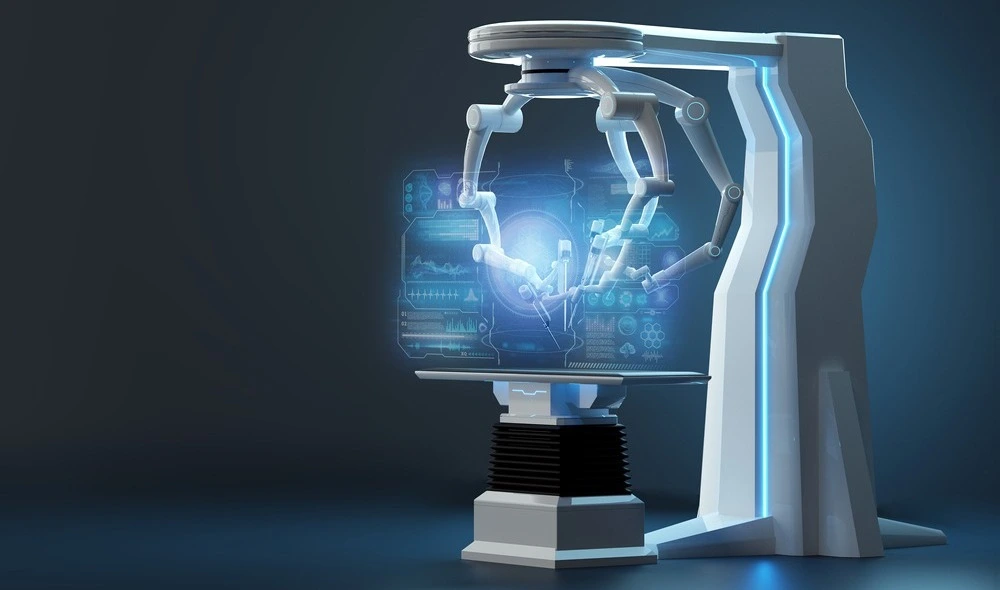
- Surgery-assist robots process high-resolution imagery and haptic feedback for precision operations
- Rehabilitation robots adjust movements using AI-based adaptive control
- Patient-monitoring robots perform real-time anomaly detection using edge AI
7.3 Hospitality and Customer Service
- Robots use AI to interact naturally with guests, provide recommendations, and manage logistics
- Platforms support multi-modal inputs (speech, vision, tactile) for human-like interaction
8. Optimizing AI Platforms for Robotics
8.1 Model Optimization Techniques
- Quantization and pruning reduce model size and energy consumption
- Knowledge distillation enables smaller AI models to maintain performance
- Operator fusion and parallel computation optimize latency and throughput
8.2 Edge-Cloud Hybrid Architectures
- Onboard edge AI handles real-time inference, while cloud servers manage long-term learning and analytics
- Distributed learning allows fleets of robots to share knowledge while maintaining data privacy
8.3 Energy Efficiency and Thermal Management
- High-performance AI platforms require efficient power management
- Novel cooling solutions and low-power AI chips extend operational duration for mobile robots
9. Case Studies
9.1 Autonomous Warehouse Robots
- A major e-commerce company deployed edge AI robots for picking, sorting, and transporting items
- Real-time perception and fleet coordination reduced errors and improved throughput
9.2 Collaborative Manufacturing Robots
- AI platforms enabled robots to adapt assembly processes based on part variation and human workflow
- Edge AI inference ensured sub-millisecond response for force-sensitive operations
9.3 Service and Healthcare Robots
- Hospital robots used AI platforms to monitor vitals, deliver medications, and navigate complex corridors autonomously
- Humanoid reception robots guided visitors and managed dynamic environments using multi-modal AI perception
10. Challenges and Considerations
10.1 Computational Constraints
- Balancing high AI performance with power efficiency remains a critical challenge
- Embedded platforms must handle large neural networks while maintaining low latency
10.2 Safety and Reliability
- AI-based decision-making must ensure robustness in unpredictable environments
- Fault tolerance and redundancy are essential for critical industrial and healthcare applications
10.3 Integration with Legacy Systems
- Existing industrial workflows require seamless integration with AI-powered robotics
- Middleware and interoperability standards are key for scalable deployment
10.4 Data Management and Privacy
- AI platforms process large volumes of sensor and operational data
- Edge AI reduces cloud dependency, enhancing data privacy and regulatory compliance
11. Future Trends
11.1 Next-Generation AI Chips
- Highly parallel, low-power chips optimized for robotics workloads
- Integration of neuromorphic computing for real-time perception and adaptive learning
11.2 Distributed and Collaborative AI
- Multi-robot systems with federated learning and shared knowledge bases
- Edge-to-edge communication enables collective intelligence in logistics and manufacturing
11.3 Human-Robot Collaboration
- AI platforms will support more intuitive interaction, including natural language, gestures, and predictive motion adaptation
- Robots become true collaborators rather than automated tools
11.4 Autonomous Decision-Making
- AI platforms will enable robots to plan and execute complex sequences with minimal human supervision
- Integration of reinforcement learning and symbolic reasoning will allow higher-level cognition
12. Conclusion
AI computing platforms have become the backbone of modern robotics, enabling unprecedented levels of autonomy, perception, and adaptability. By combining high-performance processors, edge AI, software frameworks, and advanced algorithms, these platforms allow robots to operate effectively across industrial, warehousing, and service sectors.