








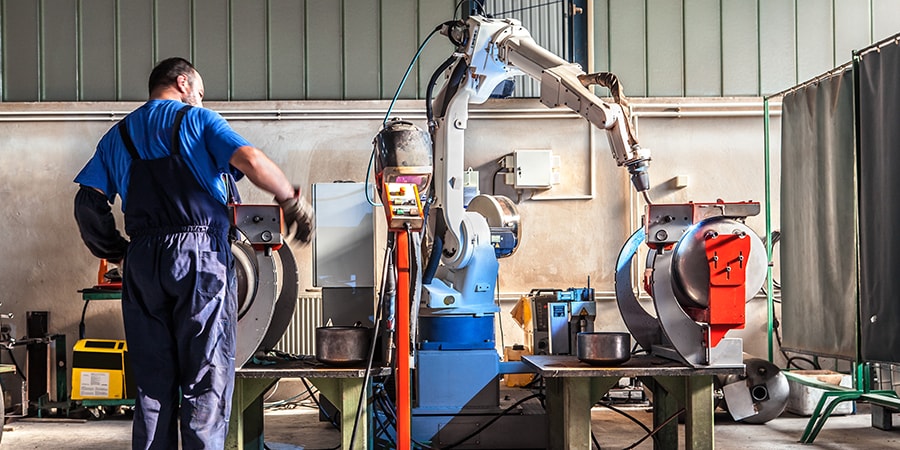

Introduction: The Emergence of Collaborative Robotics
Collaborative robots, or cobots, represent a transformative technology in industrial, logistics, and medical domains. Unlike traditional industrial robots, which operate in isolated cages, cobots are designed to safely interact with humans, bringing flexibility, adaptability, and intelligence to complex workflows.
With advancements in AI, sensing technologies, and adaptive control systems, cobots are increasingly capable of performing tasks ranging from precision assembly to autonomous material handling and even medical assistance. This article examines the current state, technological underpinnings, and future potential of collaborative robots across three key sectors: manufacturing, logistics, and healthcare.
1. Collaborative Robots in Manufacturing
1.1 Industry 4.0 Context
- Manufacturing is transitioning from traditional mechanized production lines to intelligent, flexible systems.
- Cobots enable human-robot collaboration, improving productivity while reducing ergonomic strain and workplace injuries.
1.2 Core Applications
- Assembly Operations
- Cobots can perform repetitive, high-precision tasks such as screw fastening, welding, and component alignment.
- AI-assisted vision systems allow robots to adapt to variable part placement, reducing setup time.
- Quality Inspection
- Cobots equipped with high-resolution cameras and tactile sensors detect defects in real time.
- Machine learning algorithms enable predictive quality assurance and process optimization.
- Machine Tending
- Cobots can load/unload CNC machines, presses, and injection molding systems.
- Integration with IoT-enabled machinery allows dynamic scheduling and adaptive operation.
1.3 Advantages Over Traditional Robotics
- Flexible Deployment: Cobots require minimal programming and can be redeployed across multiple workstations.
- Safety: Lightweight materials, force-limited actuators, and vision-based safety systems allow direct human interaction.
- Scalability: Easily integrated into both small-scale workshops and large industrial plants.
1.4 Future Outlook
- Cobots will increasingly handle complex assembly processes, including microelectronics assembly and precision aerospace components.
- AI-driven motion planning and adaptive control will allow robots to anticipate human actions, further enhancing collaboration.
2. Collaborative Robots in Logistics
2.1 Current Landscape
- E-commerce growth and supply chain complexity demand fast, flexible, and automated material handling.
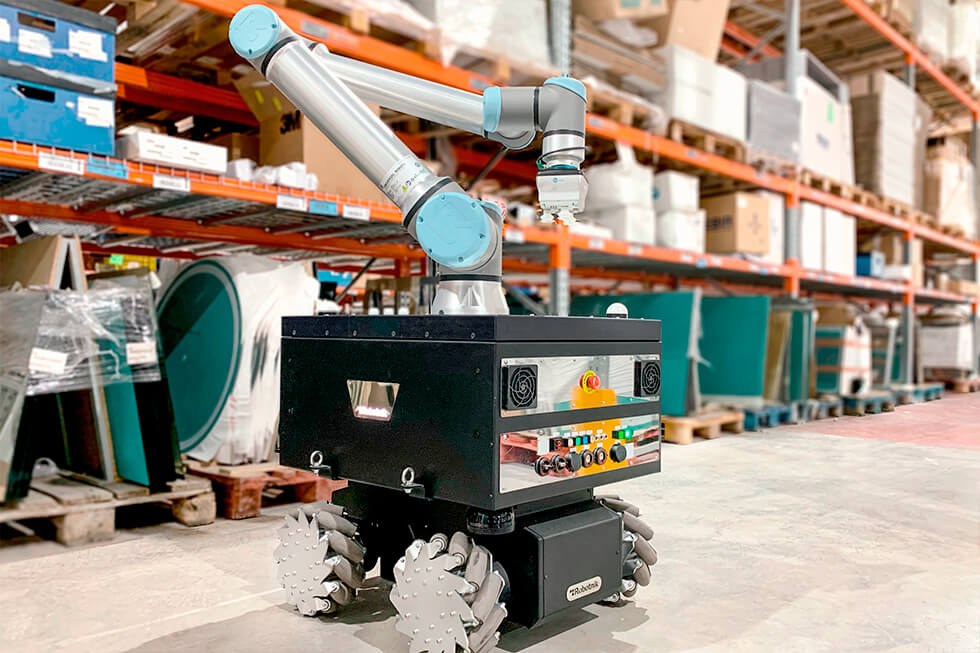
- Cobots bridge the gap between fully autonomous systems and human labor, performing tasks such as picking, sorting, packing, and palletizing.
2.2 Technological Enablers
- Automated Guided Vehicles (AGVs) and AMRs
- Cobots integrated with mobile platforms transport goods autonomously, avoiding obstacles in dynamic warehouse environments.
- Vision-Guided Picking
- Cameras, depth sensors, and AI algorithms allow robots to identify, grasp, and sort items of varying size, shape, and texture.
- Collaborative Packing and Sorting
- Cobots work alongside humans, dynamically adjusting their speed and motion paths to avoid collisions while maintaining productivity.
2.3 Advantages in Logistics
- Operational Efficiency: Continuous operation with minimal human supervision.
- Workplace Safety: Reduction of injuries from repetitive lifting and hazardous materials handling.
- Flexibility: Rapid adaptation to new warehouse layouts, SKUs, and order volumes.
2.4 Future Outlook
- Cobots will become fully integrated into smart warehouses, leveraging real-time data, predictive analytics, and fleet coordination.
- Collaboration with human workers will focus on decision-making, exception handling, and complex item management, while robots handle repetitive or physically demanding tasks.
3. Collaborative Robots in Healthcare
3.1 Emerging Trends
- Healthcare environments are increasingly adopting robot-assisted solutions for patient care, surgery, rehabilitation, and logistics.
- Cobots can operate safely around patients and medical staff, performing tasks traditionally requiring human dexterity and attention.
3.2 Applications
- Surgical Assistance
- Cobots provide precise, steady movements for minimally invasive procedures.
- Integration with augmented reality (AR) and AI enhances surgical planning and execution.
- Rehabilitation Robotics
- Cobots assist patients with physical therapy, providing repetitive, controlled motions tailored to recovery stages.
- Hospital Logistics
- Cobots transport medications, medical equipment, and supplies within hospital environments, reducing human workload and infection risk.
- Elderly and Patient Care
- Socially interactive cobots assist with mobility, medication reminders, and monitoring, promoting autonomy and safety.
3.3 Advantages
- Precision and Reliability: Consistent performance in critical procedures.
- Reduced Human Fatigue: Enables medical staff to focus on complex decision-making.
- Scalable Deployment: Robots can operate in diverse settings, from hospitals to home care.
3.4 Future Outlook
- AI-enabled cobots will integrate medical data analysis, patient monitoring, and adaptive therapy guidance.
- Collaborative systems will extend to emergency response, telemedicine, and pandemic management, enhancing both efficiency and safety.
4. Enabling Technologies
4.1 AI and Machine Learning
- Real-time perception, predictive motion, and task optimization rely on deep learning and reinforcement learning.
- AI allows cobots to adapt to dynamic environments, anticipate human actions, and optimize workflows.
4.2 Advanced Sensors
- Force-torque, tactile, vision, and LiDAR sensors provide multi-modal perception for safe interaction.
- Sensor fusion enhances accuracy, situational awareness, and collision avoidance.
4.3 Edge Computing and Connectivity
- High-performance edge processors enable real-time data processing without latency.
- Connectivity with IoT platforms facilitates fleet coordination, predictive maintenance, and workflow optimization.
4.4 Safety Systems
- Cobots integrate proximity detection, force limitation, and dynamic motion planning to meet international safety standards (ISO 10218, ISO/TS 15066).
5. Strategic Significance
5.1 Manufacturing Competitiveness
- Cobots enhance productivity while reducing labor costs, helping manufacturers adapt to global competition.
- Supports customized, small-batch production, aligning with Industry 4.0 paradigms.
5.2 Logistics Efficiency
- Cobots increase throughput and reduce errors in supply chains, enabling faster delivery times and cost optimization.
- Flexible deployment supports peak demand management, such as during e-commerce surges.
5.3 Healthcare Transformation
- Improves surgical outcomes, patient safety, and care quality.
- Addresses workforce shortages and supports aging populations through automation-assisted care.
6. Challenges and Limitations
6.1 Human-Robot Interaction
- Safe, intuitive collaboration requires advanced perception, motion prediction, and adaptive control.
- Human acceptance and trust are critical for deployment in sensitive environments.
6.2 Cost and Integration
- High upfront costs and complex system integration may limit adoption for smaller enterprises.
- Requires training, maintenance, and workflow redesign.
6.3 Regulatory and Ethical Considerations
- Standards for medical safety, patient privacy, and workplace safety must evolve alongside technology.
- Liability frameworks for autonomous actions remain under development.
6.4 Technical Constraints
- Limitations in battery life, payload capacity, and processing speed may restrict certain applications.
- Sensor reliability and AI robustness are critical for real-time decision-making in dynamic environments.
7. Future Directions
7.1 AI-Enhanced Autonomy
- Cobots will leverage reinforcement learning, predictive modeling, and multi-sensor fusion to improve adaptive behavior.
7.2 Networked and Cooperative Cobots
- Multiple robots working in coordinated teams will enhance efficiency in manufacturing lines, warehouses, and healthcare settings.
7.3 Personalized Human-Robot Interaction
- Advanced perception and natural language processing will enable intuitive interaction, including gestures, speech, and predictive assistance.
7.4 Integration with Digital Twins
- Digital twin frameworks will allow simulation-driven optimization of collaborative workflows, reducing downtime and improving safety.
8. Case Studies
8.1 Automotive Manufacturing
- Cobots assist human workers in engine assembly and quality inspection, reducing injury rates and cycle time.
8.2 E-Commerce Warehousing
- Robots autonomously pick and sort products, integrating with human operators for complex exception handling.
8.3 Surgical Robotics
- Cobots enhance laparoscopic procedures, providing steady, precise instrument control and integrating with imaging systems.
8.4 Hospital Logistics
- Autonomous transport robots deliver medications and supplies, reducing staff workload and improving operational efficiency.
9. Strategic Implications
- Adoption of cobots will reshape labor markets, emphasizing supervisory, programming, and maintenance roles over repetitive manual labor.
- Industries will benefit from flexible automation, allowing faster adaptation to market fluctuations and complex tasks.
- Successful deployment requires investment in workforce training, regulatory compliance, and human-robot collaboration design.
10. Conclusion
Collaborative robots are poised to revolutionize manufacturing, logistics, and healthcare. Key takeaways:
- Manufacturing: Cobots enhance precision, flexibility, and safety, enabling small-batch and high-variability production.
- Logistics: Cobots improve efficiency, reduce errors, and enable human-robot cooperation in dynamic supply chains.
- Healthcare: Cobots support surgery, rehabilitation, and patient care, improving safety and quality while addressing workforce challenges.
Enabling technologies such as AI, multi-modal sensing, edge computing, and safety systems allow cobots to operate autonomously while remaining human-centric.
The future of collaborative robotics will focus on adaptive intelligence, seamless human-robot interaction, and multi-robot coordination, unlocking new levels of productivity, safety, and service quality across industries.
As industries evolve toward flexible, intelligent, and human-centered automation, collaborative robots will serve as key enablers of the next generation of work, from factory floors to hospitals and warehouses worldwide.