









Introduction: Strategic Decisions in Robotics Development
In the rapidly evolving robotics industry, companies face a fundamental question when planning their technology roadmap: Should they pursue fully in-house, proprietary development, or adopt modular, off-the-shelf platforms as a foundation?
This decision shapes the capabilities, scalability, cost structure, time-to-market, and long-term innovation potential of robotic systems. In-house development offers full customization and control but requires substantial investment in R&D, talent, and infrastructure. Modular platforms, in contrast, accelerate deployment and reduce risk but may impose limitations on performance optimization and differentiation.
This article provides a comprehensive analysis of the trade-offs, technical principles, implementation strategies, and long-term implications of autonomous development versus modular platform adoption, delivering professional insights for robotics engineers, product managers, and strategic planners.
1. Core Considerations in Technology Roadmap Decisions
1.1 Strategic Objectives
- Performance Differentiation: Proprietary development allows companies to design for specific operational needs, pushing boundaries of speed, dexterity, or energy efficiency.
- Time-to-Market: Modular platforms enable rapid prototyping and deployment, critical in competitive industries like logistics, service robotics, and healthcare.
- Innovation Flexibility: In-house development fosters tailored algorithms, custom sensors, and unique mechanical architectures, supporting long-term differentiation.
1.2 Resource Allocation
- In-house R&D requires investment in mechanical design, electronics, AI algorithms, and software integration.
- Modular platforms shift resources toward integration, system-level optimization, and application-specific software, reducing initial capital expenditure.
1.3 Risk Management
- Proprietary systems carry technical risk, including potential delays, hardware/software failures, or unforeseen design limitations.
- Modular platforms reduce hardware risk through proven components but may introduce dependency on external suppliers and licensing costs.
2. In-House Development: Building from Scratch
2.1 Advantages
- Customization and Optimization: Design every subsystem—actuators, sensors, computing, and control algorithms—for maximum performance.
- Intellectual Property Ownership: Full control over patents, trade secrets, and algorithmic innovations.
- Competitive Differentiation: Proprietary capabilities can provide a market edge in unique applications.
2.2 Challenges
- High Cost: Significant investment in hardware prototyping, software development, and testing infrastructure.
- Extended Development Cycles: Iterative design, testing, and refinement may take years before commercial deployment.
- Talent Demands: Requires multidisciplinary teams in mechanical engineering, electronics, AI, and control systems.
2.3 Implementation Principles
- Adopt systems engineering methodologies to manage complex interactions between mechanical, electrical, and software subsystems.
- Use simulation and digital twins to accelerate design iteration and reduce physical prototyping costs.
- Integrate performance-driven algorithms such as model predictive control, reinforcement learning, and advanced SLAM to leverage full hardware potential.
3. Modular Platforms: Leveraging Pre-Built Systems
3.1 Advantages
- Rapid Deployment: Pre-integrated mechanical, sensing, and computational modules allow early testing and pilot deployment.
- Lower Entry Barrier: Reduces need for in-house expertise in every subsystem.
- Scalability: Modular components can be upgraded or swapped to adapt to evolving requirements.
3.2 Limitations
- Design Constraints: Hardware and software are predetermined, limiting custom motion profiles, precision, or payload optimization.
- Dependency Risk: Reliance on platform vendors for updates, bug fixes, and long-term support.
- Integration Overhead: Adapting modules for specialized tasks may require complex software bridging or hardware modifications.
3.3 Implementation Principles
- Select platforms with extensive API support, edge AI capabilities, and modular expansion options.
- Focus on system-level software optimization, integrating perception, motion planning, and decision-making algorithms.
- Implement custom end-effectors or attachments to achieve application-specific functionality without redesigning the entire platform.
4. Comparative Analysis: In-House vs. Modular
| Dimension | In-House Development | Modular Platform |
|---|---|---|
| Performance | Fully optimized for task-specific needs | Limited by platform capabilities |
| Cost | High upfront R&D investment | Lower initial investment |
| Time-to-Market | Longer due to design and testing cycles | Faster deployment with ready-to-use modules |
| Adaptability | High—customizable to new scenarios | Moderate—dependent on available modules |
| Intellectual Property | Full ownership | Partial, platform-dependent |
| Risk | Technical, resource-intensive | Vendor dependency, integration complexity |
5. Technical Case Studies
5.1 Industrial Manipulators
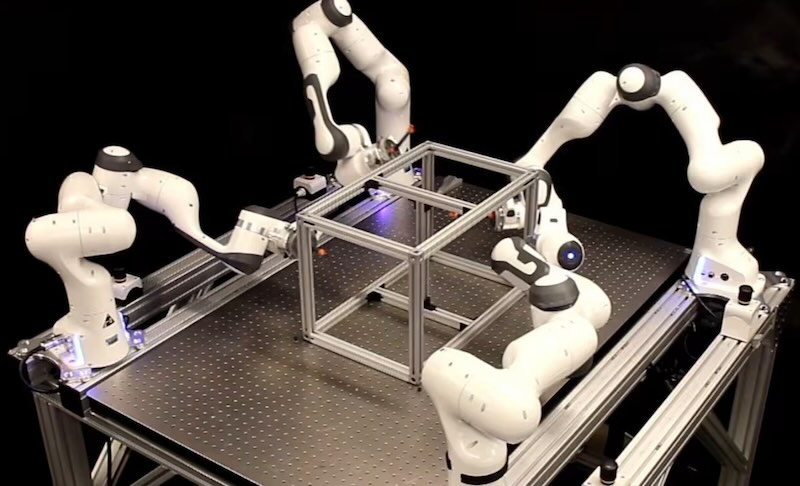
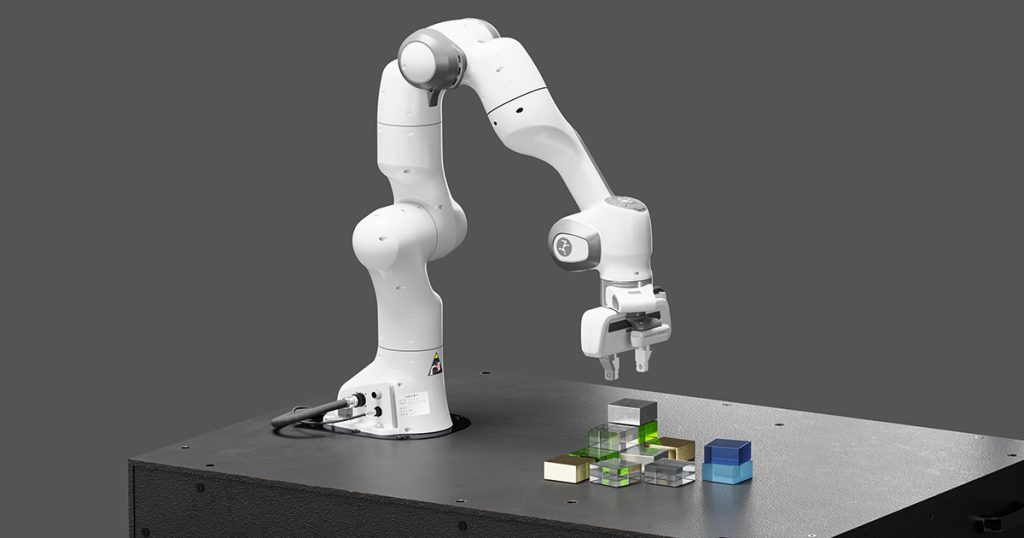
- In-House Approach: Fully custom 7-DOF manipulator with proprietary torque control algorithms achieves higher precision and payload handling.
- Modular Approach: Standardized robotic arm module integrated with custom end-effector for assembly tasks reduces cost and shortens deployment time.
5.2 Autonomous Mobile Robots (AMRs)
- In-House Approach: Custom chassis, sensor suite, and navigation stack allow high-speed warehouse operations with complex obstacle avoidance.
- Modular Approach: Off-the-shelf AMR platform used for delivery and inventory transport, software adaptations focus on fleet management and routing optimization.
5.3 Humanoid Service Robots
- In-House Approach: Tailored hardware and AI stack enable dynamic interaction, manipulation, and environment-aware motion.
- Modular Approach: Core modules (torso, arms, sensors) sourced from robotics vendors; customized software layer handles human interaction, task scheduling, and AI reasoning.
6. Hybrid Approaches: The Best of Both Worlds
6.1 Custom Modules on Standard Platforms
- Combine proven base modules with proprietary actuators, sensors, or computing units for specialized performance.
- Reduces risk while retaining competitive differentiation in critical capabilities.
6.2 Layered Software Architecture
- Modular hardware paired with custom AI, control, and perception layers allows scenario-specific adaptation without rebuilding hardware.
- Example: SLAM and reinforcement learning layers customized for specific warehouse or hospital layouts.
6.3 Open-Source Ecosystems
- Platforms like ROS2, OpenManipulator, and NVIDIA Isaac support rapid integration of proprietary control algorithms while leveraging community-tested base modules.
- Hybrid approach accelerates deployment, reduces cost, and ensures flexibility.
7. Strategic Guidelines for Roadmap Decisions
- Assess Application Complexity: High-precision or dynamic tasks may justify in-house development; repetitive, standardized applications may suit modular platforms.
- Evaluate Resource Availability: Talent, capital, and infrastructure influence feasibility.
- Balance Time-to-Market and Differentiation: Consider competitive pressures and potential ROI.
- Plan for Lifecycle Flexibility: Modular platforms allow upgrades, while in-house systems require strategic foresight in hardware and software architecture.
- Consider Hybrid Integration: Leverage the modular ecosystem for speed and reliability, and reserve in-house innovation for critical differentiators.
8. Future Trends
8.1 Modular AI and Edge Computing
- Edge AI-enabled modules allow on-device intelligence, reducing the need for complete proprietary development while maintaining real-time adaptability.
8.2 Plug-and-Play Hardware Components
- Emerging standards in mechanical, electrical, and software interfaces will make modular assembly and upgrade more seamless.
8.3 Co-Design of Hardware and Software
- Even modular platforms benefit from co-optimization of software layers and hardware capabilities to achieve near-proprietary performance without full R&D investment.
8.4 Open Innovation and Crowdsourcing
- Collaboration between platform vendors, open-source communities, and proprietary teams accelerates innovation while maintaining cost efficiency and market responsiveness.
9. Conclusion
Choosing between in-house development and modular robotics platforms is not a binary decision. Each path offers distinct advantages and challenges:
- In-house development maximizes performance, IP control, and customization but requires high investment and extended timelines.
- Modular platforms reduce cost, accelerate deployment, and lower technical risk, though they may limit differentiation and long-term flexibility.
Hybrid approaches—combining modular hardware with custom AI, control systems, or end-effectors—offer a strategically optimal solution, balancing speed, cost, and performance.
A deliberate, knowledge-driven roadmap ensures that robotics initiatives meet operational objectives, scale sustainably, and maintain competitiveness in an increasingly dynamic market.
By analyzing technical requirements, resource availability, and application scenarios, organizations can design a technology pathway that balances innovation, practicality, and strategic advantage.