









Introduction: From Isolated Tools to Societal Infrastructure
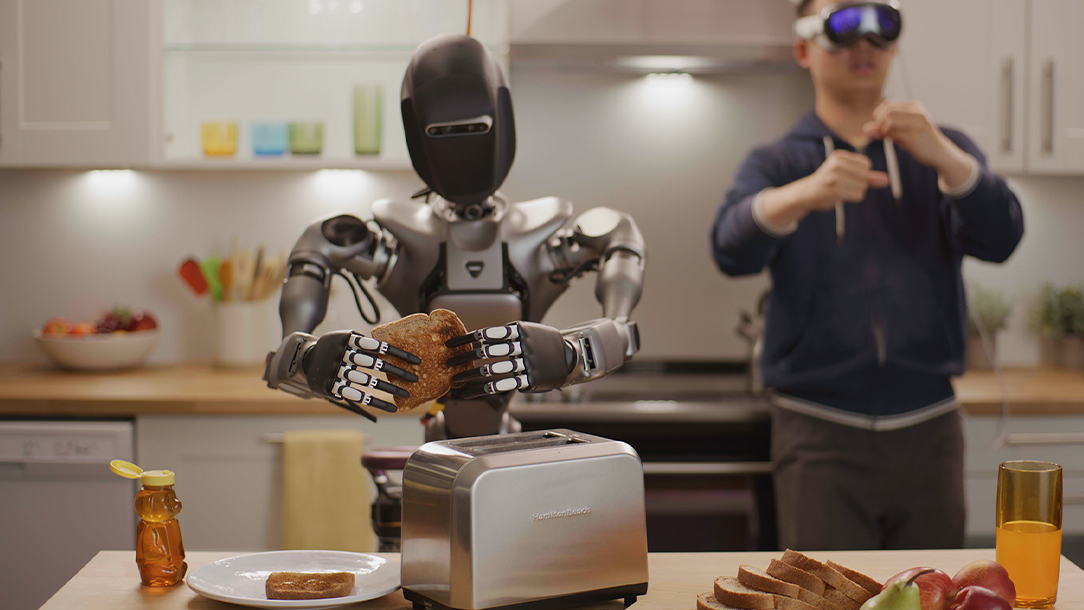
Robots are no longer confined to factory cages, research laboratories, or science fiction narratives. Over the past two decades—and especially in recent years—robots have begun to integrate deeply into everyday life and the fundamental structures of the global economy. This transformation represents more than a technological upgrade; it is a systemic shift comparable to electrification, the internet, or industrial automation.
What distinguishes the current wave of robotics is not just improved hardware or smarter algorithms, but the breadth of integration: robots now participate in production, logistics, healthcare, services, consumption, and even social interaction. They are becoming persistent actors in human environments, shaping workflows, labor markets, urban design, and economic organization.
This article provides a comprehensive, professional, and knowledge-driven analysis of how robots are融入 (integrating into) daily life and the core economic structure, examining the technological foundations, economic mechanisms, industrial pathways, societal implications, and future trajectories of this profound transition.
1. Historical Context: How Robots Entered the Economy
1.1 Early Industrial Robotics
The first generation of robots emerged in the mid-20th century, primarily in manufacturing:
- Fixed-base industrial arms
- Pre-programmed, repetitive motion
- Isolated from human workers for safety
These robots improved productivity but remained peripheral tools, limited to specific industrial processes such as welding, painting, and assembly.
1.2 Automation to Intelligence
Over time, advances in:
- Sensors
- Control theory
- Embedded computing
- Artificial intelligence
enabled robots to move beyond rigid automation. The shift from mechanical automation to intelligent systems laid the foundation for robots to operate in less structured environments and to interact with humans more safely and flexibly.
1.3 The Turning Point: Connectivity and AI
The convergence of AI, edge computing, cloud infrastructure, and low-cost hardware dramatically reduced deployment barriers. Robots began transitioning from capital-intensive industrial assets to scalable, networked economic agents.
2. Robots in Daily Life: From Novelty to Necessity
2.1 Domestic and Personal Robotics
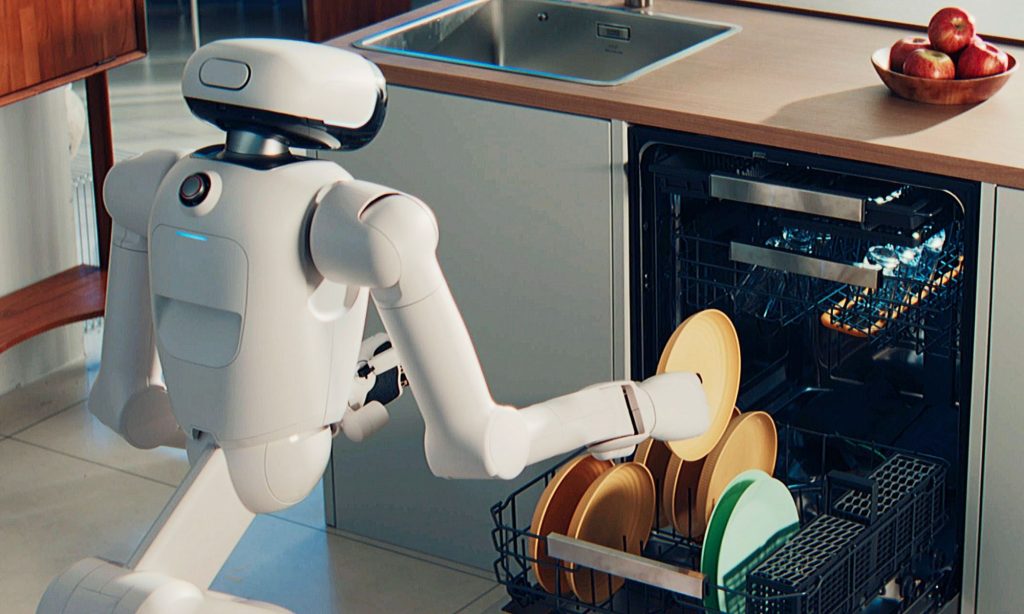
Robots are increasingly present in homes:
- Robotic vacuum cleaners and floor cleaners
- Lawn-mowing and window-cleaning robots
- Smart home assistants integrated with physical actuation
These systems emphasize:
- Reliability over sophistication
- Continuous operation in human spaces
- Seamless integration with daily routines
The key innovation is not intelligence alone, but trustworthiness, affordability, and persistence.
2.2 Service Robots in Public Spaces
Service robots now operate in:
- Hotels and restaurants (delivery, cleaning, reception)
- Shopping malls and airports (guidance, security patrol)
- Office buildings (logistics, maintenance)
Their success depends on:
- Safe human-robot interaction
- Robust perception in dynamic environments
- Socially acceptable behavior and design
Service robots are becoming invisible infrastructure, valued more for consistency than novelty.
2.3 Healthcare and Elderly Care
Demographic aging and labor shortages have accelerated adoption in healthcare:
- Medication delivery robots
- Hospital logistics robots
- Rehabilitation and assistive robots
- Monitoring and companionship systems
Robots augment—not replace—medical professionals by handling routine, physical, or high-frequency tasks, allowing humans to focus on diagnosis, empathy, and decision-making.
3. Robots as Core Economic Infrastructure
3.1 Manufacturing: From Automation to Adaptive Production
Modern factories rely on robots not just for efficiency, but for flexibility:
- Collaborative robots (cobots) work alongside humans
- AI-enabled vision allows rapid reconfiguration
- Small-batch, customized production becomes viable
Robots are now embedded in production strategy, not just execution.
3.2 Logistics and Supply Chains
Robots play a central role in global logistics:
- Autonomous mobile robots (AMRs) in warehouses
- Robotic picking and sorting systems
- Last-mile delivery robots and drones
These systems reshape supply chains by:
- Reducing dependence on manual labor
- Increasing throughput and predictability
- Enabling 24/7 operations
Logistics robots function as economic arteries, keeping goods flowing efficiently.
3.3 Agriculture and Resource Management
Agricultural robots support:
- Precision planting and harvesting
- Autonomous tractors and drones
- Crop monitoring and pest control
They improve:
- Yield predictability
- Resource efficiency (water, fertilizer, energy)
- Resilience to labor shortages and climate variability
Robotics is becoming structural to food security and rural economies.
4. Economic Mechanisms Behind Robot Integration
4.1 Productivity and Capital Substitution
Robots act as capital deepening mechanisms:
- Replacing or augmenting human labor in specific tasks
- Increasing output per worker
- Stabilizing production against labor volatility
Rather than wholesale replacement, robots often reallocate human labor toward higher-value cognitive and creative roles.
4.2 Cost Structures and Scalability
Key economic drivers include:
- Falling sensor and computing costs
- Modular hardware platforms
- Software reuse and AI model sharing
As costs decline, robots transition from luxury capital goods to standard operational expenses, accelerating adoption across sectors.
4.3 Network Effects and Data Economies
Robots generate continuous streams of data:
- Operational metrics
- Environmental observations
- Human interaction patterns
This data feeds:
- AI model improvement
- Predictive maintenance
- System-level optimization
Robots thus become participants in data-driven economic loops, similar to digital platforms.
5. Labor Markets and Human-Robot Collaboration
5.1 Task-Level Transformation, Not Job Elimination
Robots tend to automate:
- Repetitive
- Physically demanding
- Dangerous
- Highly structured tasks
This shifts job composition rather than eliminating entire professions.
5.2 New Roles and Skills
Robot integration creates demand for:
- Robot operators and supervisors
- Maintenance and systems engineers
- AI trainers and data analysts
- Human-robot interaction designers
The economy increasingly values hybrid skills combining domain expertise with technological literacy.
5.3 Human-Centered Design
Successful integration prioritizes:
- Intuitive interfaces
- Predictable robot behavior
- Clear responsibility boundaries
Robots that fit naturally into human workflows are more economically sustainable than those requiring humans to adapt excessively.
6. Urban Systems and Smart Environments
6.1 Robots in Smart Cities
Urban robotics supports:
- Automated cleaning and waste management
- Infrastructure inspection
- Traffic monitoring and control
Robots act as mobile sensors and actuators, enabling cities to operate more efficiently and responsively.
6.2 Infrastructure Adaptation
As robots become common, environments evolve:
- Robot-friendly building layouts
- Standardized charging and docking stations
- Digital maps and machine-readable signage
Cities and buildings are co-evolving with robotics, embedding them into physical-economic infrastructure.
7. Governance, Regulation, and Ethics
7.1 Safety and Accountability
Widespread robot deployment raises questions of:
- Liability in accidents
- Certification and standards
- Predictability and explainability
Robots must meet societal trust thresholds, not just technical benchmarks.
7.2 Data Privacy and Security
Robots operating in daily life collect sensitive data. Safeguards include:
- Edge computing to minimize data exposure
- Encryption and secure communication
- Clear data ownership policies
Trust is a prerequisite for economic integration.
7.3 Inequality and Access
Robotics can either:
- Reduce inequality through productivity gains
- Or exacerbate it if access is uneven
Policy choices, education systems, and business models determine the outcome.
8. Technological Enablers of Deep Integration
8.1 Edge AI and Autonomous Decision-Making
Local computation allows robots to:
- Respond in real time
- Operate without constant connectivity
- Respect privacy constraints
Edge AI is essential for daily-life integration.
8.2 Modular and Scalable Platforms
Standardized hardware and software enable:
- Faster deployment
- Lower costs
- Cross-industry reuse
This modularity mirrors how PCs and smartphones became ubiquitous.
8.3 Multi-Robot Systems and Swarms
Instead of one complex robot, many simple robots:
- Increase robustness
- Lower individual cost
- Scale economically
This model aligns well with large economic systems.
9. Long-Term Socioeconomic Implications
9.1 Redefining Productivity
Productivity will increasingly reflect:
- Human-robot collaboration efficiency
- System-level optimization
- Data-driven adaptability
Economic output becomes less tied to human labor hours alone.
9.2 Cultural Normalization of Robots
As robots become common:
- Social norms evolve
- Expectations shift from novelty to reliability
- Robots become part of everyday background activity
This normalization is critical for sustained economic integration.
9.3 Toward a Hybrid Intelligence Economy
The future economy will combine:
- Human creativity and judgment
- Robotic precision and endurance
- AI-driven coordination
Robots will not replace society’s core structures—they will become part of them.
10. Conclusion
The integration of robots into daily life and the core structure of the economy represents a structural transformation rather than a technological trend. Key conclusions include:
- Robots are shifting from isolated tools to persistent economic actors.
- Daily-life integration depends on reliability, safety, and trust—not maximal intelligence.
- Economic impact emerges through productivity gains, data generation, and system-level efficiency.
- Human-robot collaboration reshapes labor rather than eliminating it.
- Infrastructure, regulation, and culture are co-evolving with robotics.
As robots continue to permeate homes, workplaces, cities, and supply chains, they are becoming embedded components of modern civilization’s operating system. The challenge ahead is not whether robots will integrate into daily life and economic cores—but how thoughtfully, equitably, and sustainably that integration will be achieved.