









Abstract
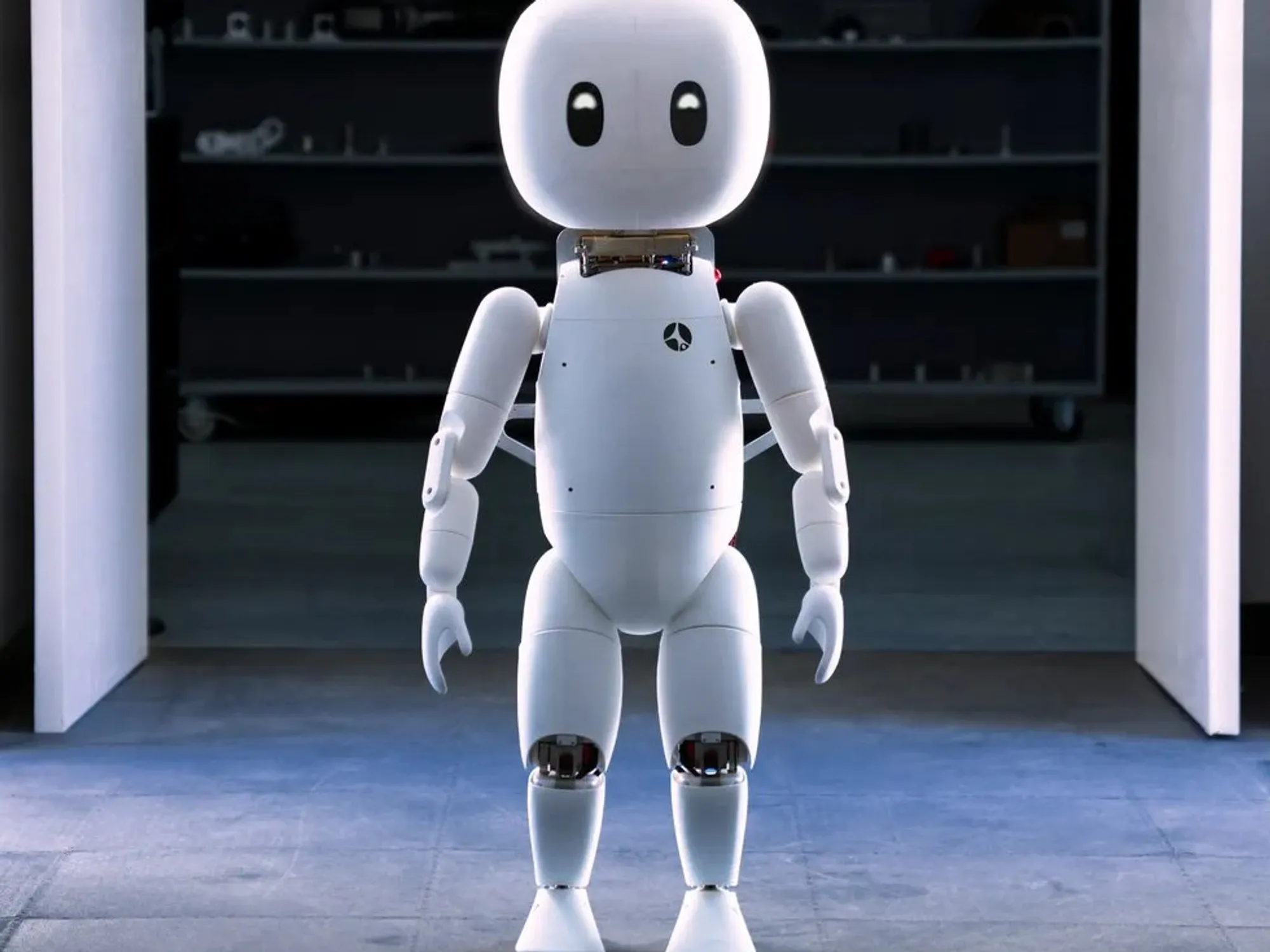
Humanoid robots—machines designed with a human-like body structure, sensory systems, and cognitive capabilities—have long captured the imagination of scientists, engineers, and the public alike. For decades, they existed primarily within research laboratories, academic demonstrations, and controlled experimental environments. Today, however, rapid advances in artificial intelligence, robotics engineering, materials science, and computing power are accelerating the transition of humanoid robots from experimental prototypes to practical tools operating in real-world scenarios.
This article provides a comprehensive and professional examination of how humanoid robots are moving from laboratories into real-world application domains. It explores the technological foundations enabling this transition, the key application scenarios emerging across industries, the challenges that remain, and the broader social, ethical, and economic implications. By analyzing both current progress and future trends, this article aims to offer a structured and in-depth understanding of the evolving role of humanoid robots in modern society.
1. Introduction
Robots have been part of industrial and scientific practice for more than half a century. Traditional industrial robots—fixed, repetitive, and highly specialized—have transformed manufacturing but remain confined to structured environments. In contrast, humanoid robots are designed to operate in human-centered environments, sharing spaces originally built for people rather than machines.
The defining feature of humanoid robots lies not only in their anthropomorphic appearance but in their functional ambition: to replicate, approximate, or complement human abilities in perception, movement, reasoning, and interaction. This makes them uniquely suited for environments such as homes, hospitals, offices, retail spaces, disaster zones, and public infrastructure.
For many years, humanoid robots struggled to move beyond laboratories due to limitations in balance, dexterity, intelligence, energy efficiency, and cost. Recent breakthroughs, however, are reshaping this reality. The question is no longer whether humanoid robots will leave the lab, but how, where, and under what conditions they will integrate into daily life.
2. Historical Evolution of Humanoid Robotics
2.1 Early Concepts and Experimental Systems
The idea of humanoid machines can be traced back centuries, but modern humanoid robotics began in the late 20th century. Early systems focused on:
- Basic bipedal locomotion
- Simple manipulation tasks
- Pre-programmed motion sequences
These robots served primarily as research platforms to study biomechanics, control theory, and human motion modeling.
2.2 From Mechanical Control to Intelligent Systems
In the early 2000s, humanoid robotics research shifted toward:
- Sensor-based feedback control
- Vision and auditory perception
- Early forms of human-robot interaction
Despite progress, these systems remained fragile, expensive, and highly dependent on structured environments.
2.3 The Turning Point: AI and Computing Power
The integration of machine learning, deep neural networks, and high-performance computing marked a turning point. Humanoid robots began to acquire adaptive behaviors rather than relying solely on scripted actions, enabling them to function in more dynamic and unpredictable settings.
3. Core Technologies Enabling Real-World Deployment
3.1 Embodied Artificial Intelligence
Embodied AI refers to intelligence that arises from the interaction between a physical body, sensors, and the environment. For humanoid robots, embodiment is crucial:
- Physical interaction provides learning feedback
- Movement and perception are tightly coupled
- Intelligence is shaped by real-world constraints
This paradigm allows robots to learn tasks through experience rather than exhaustive programming.
3.2 Advanced Perception Systems
Modern humanoid robots rely on multi-modal perception, including:
- Stereo and depth vision
- Tactile sensing in hands and skin
- Audio perception and speech recognition
Sensor fusion enables robust environmental understanding, even in noisy or partially observable conditions.
3.3 Locomotion and Balance Control
Bipedal locomotion remains one of the most complex challenges in robotics. Progress has been driven by:
- Whole-body control algorithms
- Real-time dynamic balance adjustment
- Learning-based gait optimization
These advances allow humanoid robots to walk on uneven terrain, climb stairs, and recover from disturbances.
3.4 Dexterous Manipulation
Human environments are filled with objects designed for human hands. To operate effectively, humanoid robots must master:
- Multi-fingered grasping
- Force and impedance control
- Tool usage and fine manipulation
Recent developments in tactile sensing and reinforcement learning have significantly improved manipulation performance.
3.5 Energy Systems and Hardware Integration
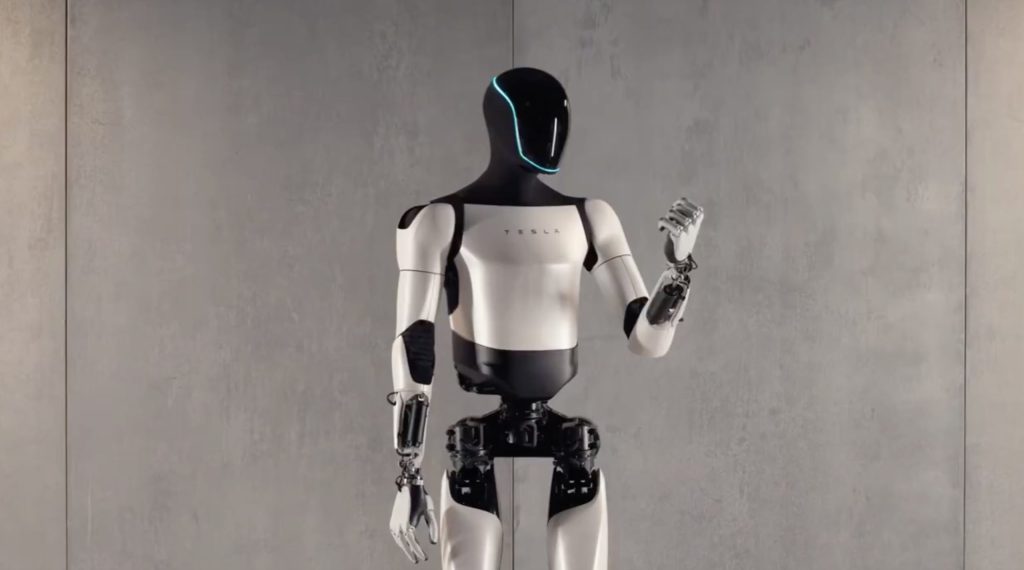
Battery technology, lightweight materials, and compact actuators are essential for real-world use. Improvements in energy efficiency and modular design are extending operational time and reducing maintenance complexity.
4. Transitioning from Laboratory to Real-World Environments
4.1 Differences Between Lab and Real-World Conditions
Laboratories provide controlled conditions:
- Stable lighting
- Predictable surfaces
- Limited interaction variability
Real-world environments, by contrast, are dynamic, uncertain, and often chaotic. The transition requires robustness rather than perfection.
4.2 Scaling from Demonstrations to Continuous Operation
In the lab, robots perform short demonstrations. In real-world settings, they must operate:
- Continuously over long periods
- With minimal human supervision
- Under variable conditions
This shift demands reliability, fault tolerance, and self-diagnosis capabilities.
4.3 Human-Centered Design Principles
Real-world deployment requires humanoid robots to be:
- Intuitive to interact with
- Safe and predictable
- Socially acceptable
Design choices increasingly emphasize behavior, communication, and transparency over purely technical performance.
5. Key Application Scenarios
5.1 Industrial and Logistics Environments
Humanoid robots are beginning to appear in factories and warehouses where they can:
- Perform tasks designed for humans
- Operate existing tools and equipment
- Adapt to changing workflows
Their flexibility makes them attractive for environments unsuitable for traditional automation.
5.2 Healthcare and Elderly Care
Healthcare represents one of the most promising application domains. Humanoid robots can assist with:
- Patient monitoring and support
- Rehabilitation exercises
- Routine caregiving tasks
In aging societies, they offer a potential response to labor shortages while supporting human caregivers rather than replacing them.
5.3 Service and Hospitality Industries
In hotels, retail spaces, and public facilities, humanoid robots can provide:
- Reception and guidance services
- Customer interaction and information delivery
- Routine operational assistance
Their human-like form enhances approachability and user engagement.
5.4 Education and Training
Humanoid robots serve as:
- Interactive teaching assistants
- Platforms for STEM education
- Training simulators in hazardous or specialized fields
They enable experiential learning and personalized instruction.
5.5 Hazardous and Extreme Environments
In disaster response, nuclear facilities, and space exploration, humanoid robots can:
- Enter environments unsafe for humans
- Use tools designed for human operators
- Perform inspection, repair, and rescue tasks
Their anthropomorphic design is particularly valuable where infrastructure is human-centric.
6. Human-Robot Interaction and Social Acceptance
6.1 Communication and Natural Interaction
Effective deployment depends on intuitive interaction through:
- Natural language dialogue
- Gestures and body language
- Emotional and contextual awareness
Advances in conversational AI and affective computing are making interactions more fluid and meaningful.
6.2 Trust, Transparency, and Predictability
Users must trust humanoid robots to behave safely and reliably. Transparency in decision-making and clear behavioral cues are essential to building long-term acceptance.
6.3 Cultural and Psychological Factors
Perceptions of humanoid robots vary across cultures. Design and deployment strategies must consider social norms, expectations, and ethical sensitivities.
7. Economic and Industrial Implications
7.1 Cost Reduction and Scalability
Early humanoid robots were prohibitively expensive. Ongoing trends include:
- Modular hardware platforms
- Mass production of components
- Software reuse across applications
These factors are gradually improving economic feasibility.
7.2 Workforce Transformation
Rather than simple replacement, humanoid robots are likely to:
- Augment human labor
- Take over repetitive or dangerous tasks
- Create new roles in robot supervision and maintenance
Managing this transition requires proactive workforce planning.
7.3 Ecosystem Development
A sustainable humanoid robotics ecosystem involves:
- Hardware manufacturers
- AI and software developers
- System integrators
- Service providers
Collaboration across these layers accelerates innovation and adoption.
8. Ethical, Legal, and Safety Considerations
8.1 Safety and Physical Interaction
Humanoid robots operate in close proximity to humans. Safety mechanisms include:
- Compliance and soft actuation
- Real-time collision detection
- Redundant control systems
Ensuring physical safety is a non-negotiable requirement.
8.2 Data Privacy and Surveillance Concerns
With advanced perception capabilities, humanoid robots raise concerns about:
- Data collection and storage
- Facial recognition and tracking
- Consent and transparency
Clear governance frameworks are essential to protect individual rights.
8.3 Ethical Use and Responsibility
Questions of accountability arise when humanoid robots make decisions or act autonomously. Ethical guidelines and legal frameworks must evolve alongside technology.
9. Evaluation, Testing, and Standardization
9.1 Performance Metrics
Assessing real-world readiness involves metrics such as:
- Task success rates
- Adaptability to new environments
- Energy efficiency
- User satisfaction
Standardized evaluation supports comparability and benchmarking.
9.2 Certification and Regulation
As humanoid robots enter public spaces, certification processes will play a crucial role in ensuring safety and reliability.
10. Challenges Limiting Widespread Adoption
Despite rapid progress, several obstacles remain:
- Limited general intelligence
- High energy consumption
- Hardware durability and maintenance
- Integration into existing workflows
Addressing these challenges requires sustained research and cross-disciplinary collaboration.
11. Future Development Trends
11.1 General-Purpose Humanoid Robots
The long-term vision is a general-purpose humanoid robot capable of performing a wide range of tasks with minimal reprogramming.
11.2 Learning Through Interaction
Future systems will increasingly learn from:
- Human demonstration
- Natural language instruction
- Continuous interaction with the environment
This will reduce deployment friction and customization costs.
11.3 Integration into Smart Environments
Humanoid robots will operate as part of larger intelligent systems, connected to smart buildings, digital twins, and urban infrastructure.
12. Conclusion
The journey of humanoid robots from laboratory experiments to real-world applications represents one of the most ambitious and transformative endeavors in modern technology. Enabled by advances in artificial intelligence, robotics engineering, and human-centered design, humanoid robots are gradually overcoming long-standing barriers to practical deployment.
While significant challenges remain, the trajectory is clear: humanoid robots are no longer confined to research labs. They are entering factories, hospitals, public spaces, and homes, reshaping how humans work, learn, and live. Their successful integration will depend not only on technical excellence but on thoughtful governance, ethical responsibility, and societal dialogue.
As humanoid robots continue their transition into everyday environments, they are poised to become a defining element of the next era of human-technology collaboration—one in which machines are not merely tools, but adaptive partners within the human world.