









Abstract
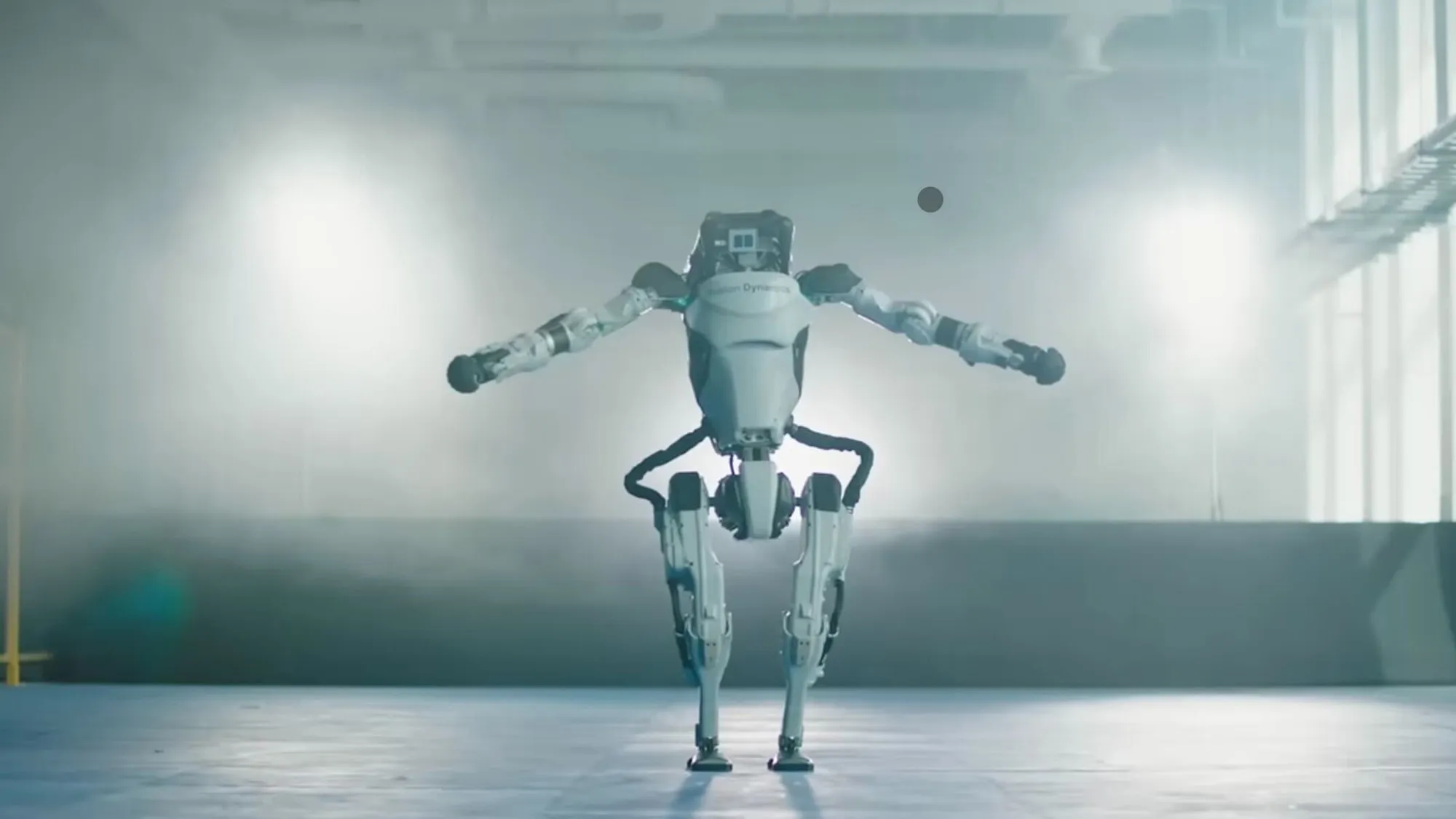
Dynamic capability is one of the most defining and challenging aspects of humanoid robotics. Unlike traditional robots that operate in structured, predictable environments, humanoid robots are designed to function in human-centered spaces characterized by uncertainty, variability, and continuous interaction. Their ability to walk, run, jump, recover from disturbances, manipulate objects while moving, and coordinate the entire body in real time depends fundamentally on dynamic performance.
This article presents a comprehensive and professional exploration of humanoid robot dynamic capabilities. It examines the theoretical foundations of robot dynamics, key enabling technologies, control and learning approaches, representative dynamic behaviors, evaluation metrics, and real-world application demands. By integrating perspectives from robotics, biomechanics, control theory, and artificial intelligence, the article aims to provide a deep understanding of how dynamic capability underpins the evolution of humanoid robots from experimental platforms to practical, real-world systems.
1. Introduction
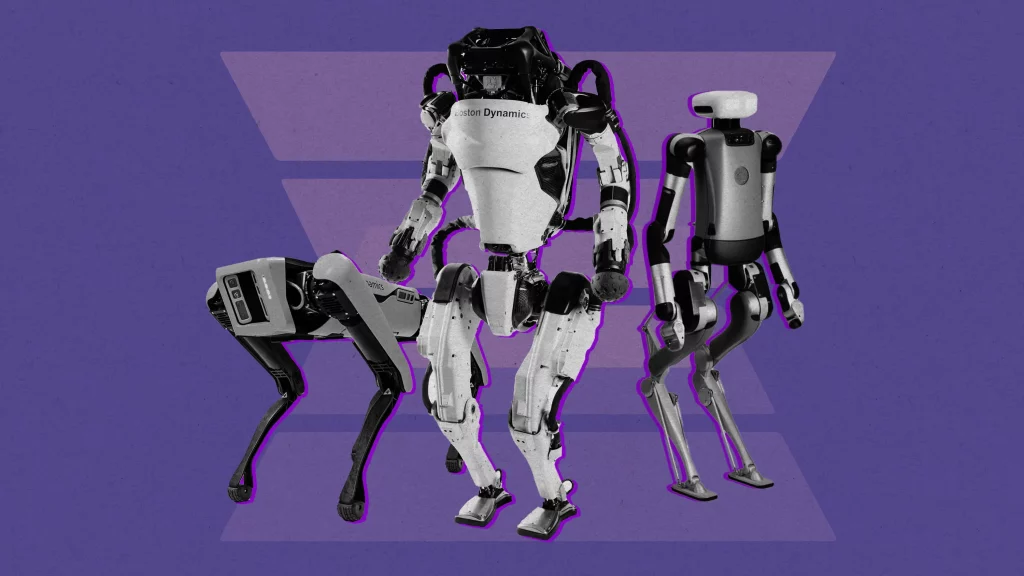
Humanoid robots are among the most ambitious creations in modern engineering. Their defining characteristic—the human-like body structure with a torso, two arms, and two legs—offers unmatched versatility in environments designed for humans. However, this same structure introduces extraordinary complexity, especially in dynamics and control.
Dynamic capability refers to a humanoid robot’s ability to generate, regulate, and adapt motion under real-world physical constraints. This includes maintaining balance on two legs, transitioning between motions, responding to disturbances, and coordinating multiple degrees of freedom across the entire body. Unlike wheeled or fixed-base robots, humanoids must constantly manage instability and underactuation.
Historically, limitations in dynamic capability confined humanoid robots to slow, cautious movements in laboratories. Today, advances in computation, sensing, actuation, and learning are pushing humanoid robots toward agile, robust, and expressive motion. Dynamic capability has therefore become a central benchmark for progress in humanoid robotics.
2. Understanding Dynamics in Humanoid Robots
2.1 What Are Dynamic Capabilities?
In robotics, dynamics describes how forces and torques produce motion over time. For humanoid robots, dynamic capability encompasses:
- Balance and stability under motion
- Whole-body coordination across many joints
- Rapid adaptation to external disturbances
- Transitions between different motion modes
- Interaction with the environment during movement
Dynamic capability is not simply about speed or strength; it is about controlled motion under uncertainty.
2.2 Why Dynamics Are Central to Humanoid Robots
Humanoid robots are inherently unstable systems. Bipedal locomotion requires constant adjustment of posture and force distribution to prevent falling. Moreover, humanoid robots are typically:
- Highly articulated (dozens of degrees of freedom)
- Underactuated (not all motion variables are directly controlled)
- Subject to nonlinear and time-varying dynamics
As a result, dynamic performance is both the greatest challenge and the greatest opportunity in humanoid robotics.
3. Biological Inspiration and Human Motion Dynamics
3.1 Human Biomechanics as a Reference
Human motion provides a powerful reference for humanoid robot dynamics. Humans demonstrate:
- Energy-efficient walking using passive dynamics
- Rapid balance recovery after disturbances
- Seamless coordination of arms, legs, and torso
- Adaptability across terrain and tasks
Understanding human biomechanics informs robot design, control strategies, and performance goals.
3.2 Passive Dynamics and Natural Motion
One of the most influential ideas in humanoid robotics is passive dynamic walking. This concept shows that:
- Stable walking can emerge from mechanical design and gravity
- Not all stability requires active control
- Proper morphology reduces control complexity
Modern humanoid robots increasingly exploit mechanical compliance and natural dynamics to improve robustness.
3.3 Neuromuscular Control Analogies
Human motor control combines reflexes, feedback, and predictive planning. Similarly, humanoid robots benefit from layered control architectures that integrate fast feedback with higher-level planning.
4. Mechanical Foundations of Dynamic Capability
4.1 Degrees of Freedom and Kinematic Structure
Humanoid robots typically feature:
- Multiple joints per leg (hip, knee, ankle)
- Multi-degree-of-freedom arms and torso
- Redundant actuation enabling flexible postures
High degrees of freedom allow expressive motion but increase dynamic complexity.
4.2 Actuation Technologies
Dynamic performance depends heavily on actuators. Key developments include:
- High-torque electric motors with low inertia
- Series elastic actuators for compliance
- Variable stiffness actuators enabling energy storage and release
Actuator performance directly affects speed, force control, and shock tolerance.
4.3 Structural Design and Materials
Lightweight yet strong materials improve dynamic capability by reducing inertia. Structural optimization balances:
- Strength and stiffness
- Weight distribution
- Shock absorption
Proper mass distribution is critical for balance and agility.
5. Dynamic Balance and Stability
5.1 Static vs. Dynamic Stability
Static stability occurs when a robot’s center of mass remains within its support polygon. Dynamic stability, by contrast, allows controlled motion outside static limits by managing momentum and contact forces.
Humanoid robots rely heavily on dynamic stability to achieve natural movement.
5.2 Zero Moment Point and Related Concepts
The Zero Moment Point (ZMP) has long been a cornerstone of humanoid balance control. It provides a criterion for ensuring that ground reaction forces do not cause tipping.
While effective, ZMP-based methods are often conservative and limit agility, motivating the development of more advanced approaches.
5.3 Momentum-Based and Whole-Body Balance Control
Modern humanoid robots increasingly use momentum-based control, which regulates:
- Linear and angular momentum of the whole body
- Contact forces at feet and hands
- Postural objectives and task priorities
This enables more dynamic and expressive behaviors.
6. Dynamic Locomotion
6.1 Walking as a Dynamic Process
Walking in humanoid robots involves continuous transitions between single-support and double-support phases. Dynamic walking requires precise coordination of:
- Center of mass motion
- Foot placement
- Ground reaction forces
Adaptive walking algorithms allow robots to adjust stride length, speed, and direction in real time.
6.2 Running and Fast Locomotion
Running introduces aerial phases where no foot contacts the ground, significantly increasing dynamic complexity. Achieving running requires:
- High power-to-weight ratios
- Accurate impact management
- Fast state estimation and control
Only recently have humanoid robots begun to demonstrate stable running behaviors.
6.3 Locomotion on Uneven Terrain
Real-world environments are rarely flat. Dynamic capability includes:
- Stair climbing
- Slope traversal
- Stepping over obstacles
Terrain-adaptive locomotion depends on perception-driven planning and compliant control.
7. Disturbance Rejection and Recovery
7.1 External Disturbances
Humanoid robots must handle disturbances such as:
- Pushes and impacts
- Uneven ground contact
- Unexpected loads during manipulation
Dynamic robustness is measured by the robot’s ability to recover without falling.
7.2 Balance Recovery Strategies
Recovery behaviors include:
- Ankle strategy (adjusting joint torques)
- Hip strategy (upper-body motion)
- Stepping strategy (repositioning the feet)
Advanced robots combine these strategies dynamically based on disturbance magnitude.
7.3 Fall Prevention and Safe Falling
Despite best efforts, falls are sometimes unavoidable. Dynamic capability also includes:
- Detecting imminent falls
- Minimizing damage during impact
- Rapid recovery after falling
Safe falling is an important but often overlooked aspect of humanoid dynamics.
8. Whole-Body Motion and Coordination
8.1 Whole-Body Control Paradigm
Humanoid robots must coordinate many joints simultaneously. Whole-body control frameworks allow multiple objectives to be achieved concurrently, such as:
- Maintaining balance
- Reaching with the arms
- Avoiding joint limits
- Regulating contact forces
Task prioritization is essential to manage conflicts.
8.2 Dynamic Manipulation While Moving
True dynamic capability includes performing manipulation tasks during locomotion, such as:
- Carrying objects while walking
- Opening doors while maintaining balance
- Using tools that exert external forces
This requires tight integration of locomotion and manipulation dynamics.
8.3 Coordinated Arm and Leg Motion
Arm motion plays a critical role in balance and momentum regulation. Coordinated swinging of arms can stabilize gait and improve energy efficiency, mirroring human behavior.
9. Sensing and State Estimation for Dynamic Control
9.1 Proprioceptive Sensing
Dynamic control relies on accurate internal sensing, including:
- Joint positions and velocities
- Torque and force measurements
- Inertial measurements (IMUs)
High-frequency feedback enables rapid response to disturbances.
9.2 Exteroceptive Sensing
Vision, depth sensors, and tactile sensors provide information about terrain, obstacles, and contact conditions, supporting predictive dynamic planning.
9.3 State Estimation and Sensor Fusion
Robust state estimation combines multiple sensor streams to estimate the robot’s full-body state. Accurate estimation is essential for stable dynamic control.
10. Control Architectures for Dynamic Capability
10.1 Model-Based Control
Model-based approaches use mathematical models of robot dynamics to compute control actions. These methods offer:
- Predictability and stability guarantees
- High precision when models are accurate
However, modeling errors and environmental uncertainty limit their effectiveness.
10.2 Optimization-Based Control
Optimization-based controllers solve constrained optimization problems in real time, balancing multiple objectives and constraints. They are widely used in modern humanoid robots.
10.3 Learning-Based and Hybrid Control
Machine learning enables robots to learn dynamic behaviors from data. Hybrid approaches combine:
- Model-based stability guarantees
- Learning-based adaptability
This combination is increasingly seen as essential for real-world dynamic performance.
11. Learning Dynamic Skills
11.1 Reinforcement Learning for Motion
Reinforcement learning allows humanoid robots to acquire dynamic skills such as walking, running, and jumping through trial and error, often in simulation.
11.2 Imitation and Motion Capture
Learning from human motion data helps robots acquire natural and efficient dynamic behaviors, accelerating development.
11.3 Sim-to-Real Transfer Challenges
Transferring learned dynamic behaviors from simulation to hardware remains challenging due to modeling inaccuracies and unmodeled dynamics.
12. Evaluation Metrics for Dynamic Capability
12.1 Stability and Robustness Metrics
Metrics include disturbance rejection thresholds, recovery success rates, and time to regain balance.
12.2 Agility and Performance Metrics
Agility is measured by speed, acceleration, maneuverability, and ability to perform dynamic transitions.
12.3 Energy Efficiency
Dynamic capability must balance performance with energy consumption, especially for mobile humanoid robots.
13. Applications Requiring Advanced Dynamic Capability
13.1 Industrial and Service Tasks
Dynamic humanoid robots can operate in factories, warehouses, and public spaces designed for humans.
13.2 Disaster Response and Rescue
In hazardous environments, dynamic capability enables robots to navigate debris, climb, and maintain balance under extreme conditions.
13.3 Healthcare and Assistive Robotics
Dynamic balance and compliant motion are essential for safe interaction with patients and users.
14. Challenges and Open Problems
Despite progress, significant challenges remain:
- Achieving human-level agility and robustness
- Ensuring long-term reliability of dynamic systems
- Balancing safety with performance
- Reducing energy consumption
- Scaling dynamic control to general-purpose behavior
These challenges define the frontier of humanoid robotics research.
15. Future Directions in Humanoid Robot Dynamics
15.1 Toward Human-Level Agility
Future research aims to narrow the gap between robotic and human dynamic performance through better hardware, learning, and control.
15.2 Co-Design of Mechanics and Control
Joint optimization of mechanical design and control strategies will unlock new levels of dynamic capability.
15.3 Collective Learning Across Robot Fleets
Sharing dynamic experience across multiple robots can accelerate learning and robustness.
16. Conclusion
Dynamic capability lies at the very core of humanoid robotics. It determines whether a robot can move naturally, interact safely, and function effectively in the real world. From balance and locomotion to whole-body coordination and disturbance recovery, dynamics shape every aspect of humanoid behavior.
Advances in actuation, sensing, control, and learning have transformed humanoid robots from fragile laboratory systems into increasingly agile and robust machines. While the gap between robotic and human dynamic ability remains significant, the trajectory is unmistakable.
As research continues to integrate biomechanics, physics, and artificial intelligence, dynamic capability will remain both the greatest challenge and the greatest promise of humanoid robots—defining their transition from experimental curiosities to capable partners in human environments.