









Abstract
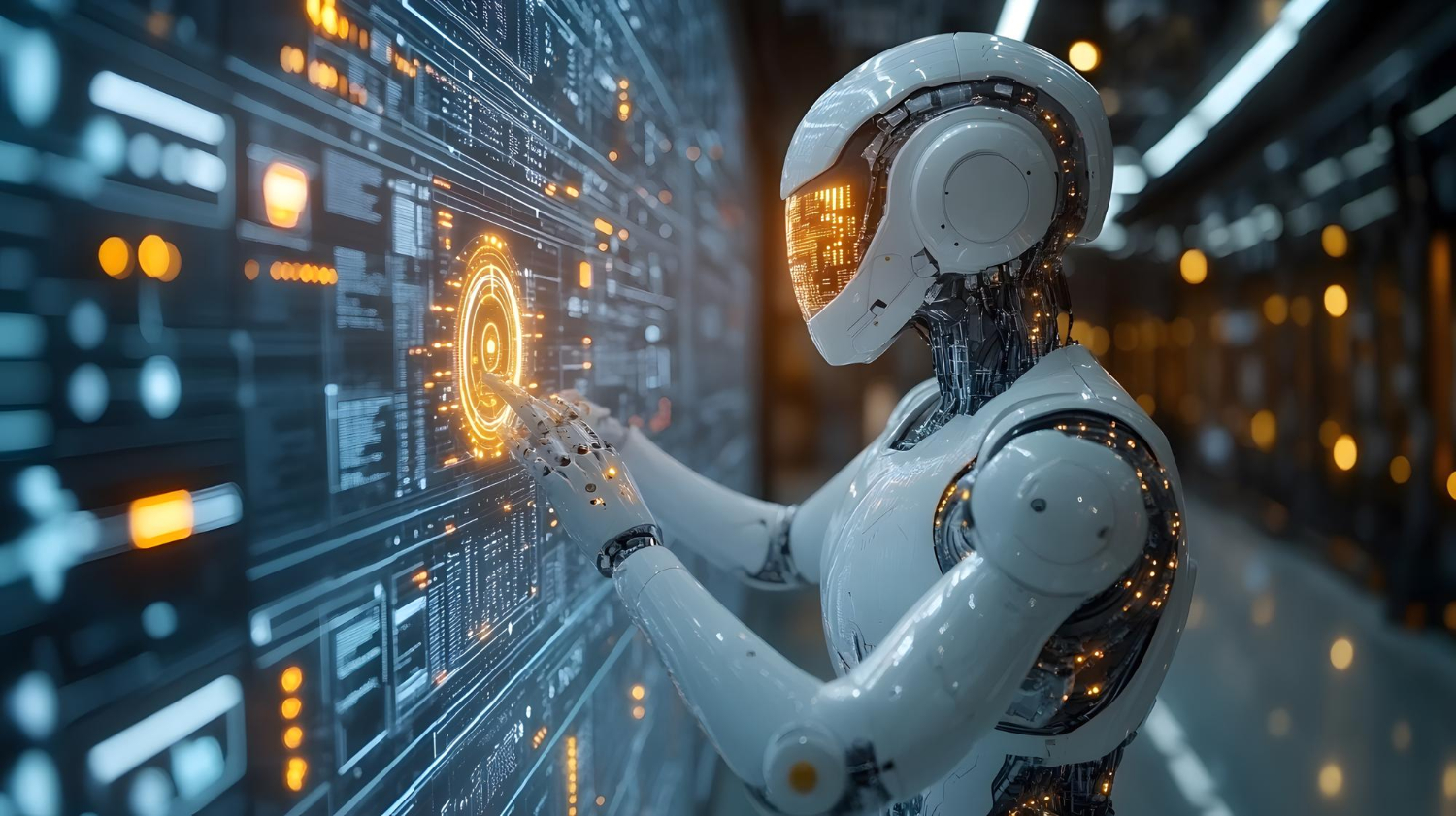
The evolution of robotics has reached a pivotal stage where intelligence, rather than mechanical design alone, defines robotic capability. Artificial Intelligence (AI) is no longer an auxiliary component; it is the core driver enabling robots to perceive, reason, learn, and adapt in complex, unstructured environments. Next-generation robots, whether industrial, service, or humanoid, rely on AI for autonomous decision-making, multi-modal sensing, adaptive control, and human-robot collaboration. This article provides a comprehensive, professional, and forward-looking analysis of the role of AI in shaping robotic intelligence, covering technological enablers, integration strategies, application domains, economic implications, and challenges. It emphasizes how AI is redefining robotic autonomy, adaptability, and interaction, establishing intelligence as the central determinant of future robotic performance.
1. Introduction
1.1 AI as the Defining Feature of Modern Robotics
Traditional robots were designed primarily for repetitive, structured tasks, relying on predefined trajectories and deterministic control. While effective in manufacturing, these approaches limit flexibility and adaptability. AI-driven robots, by contrast, are capable of:
- Understanding and responding to dynamic, unstructured environments
- Learning from experience and adapting behavior autonomously
- Integrating multi-modal sensory input (vision, tactile, auditory) for complex decision-making
- Collaborating safely and efficiently with humans
The integration of AI transforms robots from passive tools into active, cognitive agents, capable of contributing to innovation, productivity, and service in diverse sectors.
1.2 Scope and Objectives
This article covers:
- Core AI technologies enabling robotic intelligence
- Mechanisms for AI integration with sensors, actuators, and control systems
- Applications across industrial, service, and humanoid robotics
- Economic, social, and workforce implications
- Challenges, limitations, and future directions in AI-driven robotics
2. Historical Perspective
2.1 Early Robotics
- 1950s–1970s: Robots were rigid and task-specific, operating in structured industrial settings.
- 1980s–1990s: Integration of microcontrollers and programmable logic enabled basic feedback and conditional operation.
- 2000s: Emergence of collaborative robots (cobots) introduced human-robot interaction but relied on simple control algorithms.
2.2 AI Integration
- 2010s: Deep learning, computer vision, and reinforcement learning allowed robots to perceive and react to dynamic scenarios.
- Present: Autonomous navigation, grasping, manipulation, and multi-agent coordination are increasingly AI-dependent.
3. Core AI Technologies for Next-Generation Robotics
3.1 Perception and Sensing
- Computer Vision: Enables robots to recognize objects, humans, and environments with high precision.
- LiDAR and Depth Sensing: Provides spatial awareness and mapping for autonomous navigation.
- Multi-Modal Sensing: Combines visual, tactile, auditory, and proprioceptive data for holistic perception.
3.2 Learning and Adaptation
- Reinforcement Learning: Robots learn optimal policies by interacting with the environment, ideal for adaptive control.
- Imitation Learning: Enables robots to acquire skills by observing humans or other robots.
- Self-Supervised Learning: Reduces dependence on labeled datasets by leveraging raw sensory inputs.
3.3 Decision-Making and Planning
- Path Planning and Motion Optimization: AI algorithms enable efficient navigation in complex environments.
- Task Sequencing: Multi-step planning allows robots to perform intricate operations autonomously.
- Predictive Modeling: AI predicts environmental changes or human behavior for proactive adaptation.
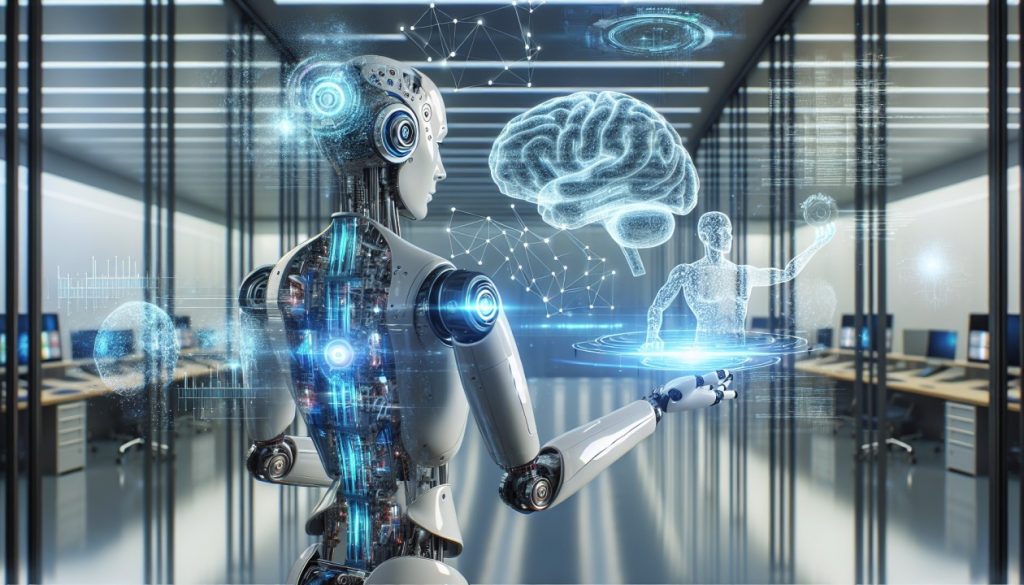
3.4 Human-Robot Interaction
- Natural Language Processing (NLP): Enables robots to understand instructions, queries, and dialogue.
- Emotion and Gesture Recognition: Improves social acceptability and collaboration in service and domestic applications.
- Adaptive Collaboration: AI enables robots to adjust force, speed, and strategy based on human actions.
4. Integration Strategies
4.1 Sensor-Actuator-Controller Loop
- AI algorithms are embedded within control loops for real-time adaptive behavior.
- Multi-modal sensors provide continuous feedback; AI interprets signals and adjusts actuation dynamically.
4.2 Edge vs. Cloud Computing
- Edge AI: Ensures low-latency decision-making for critical tasks like grasping or navigation.
- Cloud AI: Supports large-scale model training, multi-robot coordination, and system-level optimization.
4.3 Digital Twins and Simulation
- Digital twins replicate robotic systems in virtual environments for AI training, testing, and optimization.
- Simulated learning accelerates real-world deployment while reducing risk and cost.
4.4 Multi-Agent and Swarm Robotics
- AI coordinates multiple robots in logistics, manufacturing, and exploration tasks.
- Swarm intelligence enables distributed decision-making and resilience in dynamic environments.
5. Industrial Applications
5.1 Manufacturing
- AI-driven robots optimize assembly, welding, painting, and quality control.
- Predictive maintenance reduces downtime, while adaptive robots handle variable product lines.
5.2 Logistics and Warehousing
- Autonomous mobile robots (AMRs) navigate complex warehouses using AI path planning.
- AI coordinates robot fleets for efficient inventory management and order fulfillment.
5.3 Agriculture and Food Processing
- AI-enabled robots identify ripe crops, monitor plant health, and perform precise harvesting.
- Predictive AI models optimize yield, reduce waste, and improve supply chain efficiency.
6. Service Applications
6.1 Healthcare
- AI-driven surgical robots provide precision and real-time decision support.
- Rehabilitation and assistive robots adapt therapy plans based on patient progress.
- Telepresence robots with AI interpret environmental cues for remote care.
6.2 Hospitality and Retail
- Service robots engage with customers, provide guidance, and handle deliveries.
- AI enables context-aware interaction, natural language understanding, and personalized service.
6.3 Domestic Assistance
- Household robots perform chores, monitor home safety, and interact socially.
- AI allows adaptation to human behavior and unstructured home environments.
7. Economic and Societal Implications
7.1 Productivity and Efficiency
- AI robots increase output, reduce operational costs, and enable continuous, high-precision work.
- Multi-sector adoption enhances supply chain efficiency and service quality.
7.2 Workforce Transformation
- Routine manual tasks are increasingly automated, while demand rises for AI-literate operators, engineers, and supervisors.
- Reskilling programs are crucial for leveraging AI-enabled robotic productivity without social disruption.
7.3 New Business Models
- Robot-as-a-Service (RaaS): AI robots offered via subscription models reduce capital barriers.
- Intelligent logistics, predictive maintenance, and autonomous service platforms generate new revenue streams.
7.4 Global Competitiveness
- Countries investing in AI robotics gain strategic economic advantage.
- AI-driven robots facilitate industrial modernization, export competitiveness, and high-tech innovation.
8. Challenges
8.1 Technical Barriers
- Real-time perception, planning, and decision-making in dynamic and unstructured environments remain challenging.
- Sensor fusion, power efficiency, and system reliability require continuous research.
8.2 Ethical and Regulatory Concerns
- Liability in autonomous operations and AI decision-making needs clear frameworks.
- Privacy and security in human-robot interaction must be safeguarded.
8.3 Economic Disparities
- Uneven access to AI robotics may exacerbate global and regional inequalities.
- Policies are needed to ensure inclusive adoption and societal benefit.
8.4 Trust and Social Acceptance
- Human collaboration requires transparent, explainable AI behavior.
- AI must anticipate and adapt to human preferences and safety expectations.
9. Case Studies
9.1 Tesla’s AI-Enhanced Assembly Robots
- Real-time visual and force sensing integrated with AI for adaptive assembly.
- AI monitors production quality and dynamically adjusts operations.
9.2 Boston Dynamics’ Atlas and Spot
- Autonomous navigation, object manipulation, and terrain adaptation enabled by reinforcement learning and perception AI.
- Robots operate in unstructured outdoor and industrial environments.
9.3 Intuitive Surgical da Vinci Systems
- AI-enhanced surgical guidance improves precision and minimizes error.
- Integration of vision, haptics, and control AI enables complex minimally invasive procedures.
10. Future Outlook
10.1 Fully Autonomous, Cognitive Robots
- AI will enable robots to plan, reason, and act independently across industrial, service, and domestic domains.
- Integration with cloud and edge computing will allow multi-robot collaboration and system-level optimization.
10.2 Human-Centered AI Robotics
- Emphasis on safe, adaptive, and socially intelligent robots for human-robot collaboration.
- AI models will predict human intent and adapt behavior dynamically.
10.3 Cross-Sector Integration
- AI robotics will drive synergies between manufacturing, logistics, healthcare, and services.
- Robots will act as core infrastructure for future smart cities and intelligent industries.
10.4 AI-Driven Economic Impact
- Robotics with advanced AI will increase productivity, enhance competitiveness, and reshape global economic structures.
- Intelligent robots will catalyze innovation ecosystems, creating new jobs, services, and market opportunities.
11. Policy and Strategic Considerations
11.1 Workforce Development
- Education and reskilling for AI, robotics, and data science are critical.
- Multi-disciplinary training programs will support human-robot collaborative work.
11.2 Regulatory Frameworks
- Standardization for safety, interoperability, and explainable AI behavior.
- Policies to ensure ethical, transparent, and socially beneficial AI deployment.
11.3 Global Competitiveness and Innovation
- Investment in AI-driven robotics aligns with national economic strategies.
- Public-private partnerships accelerate innovation and commercialization.
12. Conclusion
AI is the central determinant of next-generation robotic capabilities, transforming robots from mechanical tools into intelligent, adaptive, and autonomous agents. Key takeaways include:
- AI enables perception, learning, decision-making, and human-robot collaboration.
- Industrial, service, and humanoid robots increasingly rely on AI for autonomy and flexibility.
- AI-driven robotics enhances productivity, resilience, and global economic competitiveness.
- Workforce adaptation, regulation, and ethical frameworks are critical for responsible deployment.
As intelligence becomes the core of robotic capability, AI-enabled robots will emerge as foundational infrastructure for future economies, redefining productivity, services, and societal interaction.