









Introduction
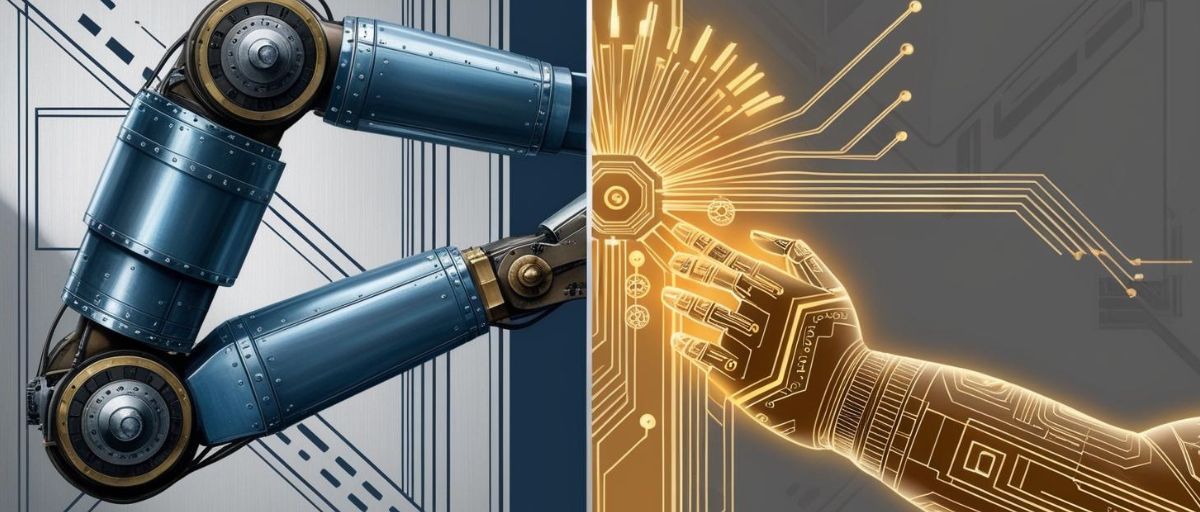
As artificial intelligence continues its transition from purely digital environments into the physical world, the limitations of traditional computing architectures are becoming increasingly apparent. Robots, autonomous machines, and intelligent systems operating in real-world environments face challenges that differ fundamentally from those of cloud-based AI or consumer software. They must perceive complex surroundings, reason under uncertainty, make decisions in real time, and act safely and efficiently—all while operating under strict power, latency, and reliability constraints.
Against this backdrop, Arm’s introduction of the Physical AI Unit (PAIU) represents a significant milestone in the evolution of AI computing. Rather than treating robotics and physical intelligence as an extension of conventional AI workloads, Arm proposes a purpose-built architectural approach—one that recognizes physical AI as a distinct and foundational computing paradigm.
The Physical AI Unit is designed to address the unique computational demands of embodied intelligence, where perception, cognition, and action are tightly coupled. By integrating AI acceleration, real-time control, safety mechanisms, and energy-efficient processing, Arm aims to provide a scalable and standardized computing foundation for the next generation of robots and autonomous systems.
This article offers a comprehensive and professional analysis of Arm’s Physical AI Unit. We explore the concept of physical AI, the limitations of existing architectures, the design philosophy behind Arm’s approach, the technical characteristics and system-level implications of the Physical AI Unit, and its potential impact on robotics, autonomous machines, industrial automation, and the broader AI ecosystem. We also examine strategic, economic, and long-term implications for developers, enterprises, and global technology competition.
1. Understanding Physical AI: From Digital Intelligence to Embodied Systems
1.1 Defining Physical AI
Physical AI refers to artificial intelligence systems that are embodied in physical agents—such as robots, autonomous vehicles, drones, and intelligent machines—and capable of interacting directly with the real world. Unlike digital AI systems that operate on static data or virtual environments, physical AI must:
- Process continuous streams of sensor data
- Understand spatial and temporal context
- Make decisions under uncertainty
- Execute actions governed by the laws of physics
- Operate safely alongside humans
In physical AI, intelligence is not an abstract computation layer; it is inseparable from perception, motion, and control.
1.2 Why Physical AI Requires a New Computing Paradigm
Traditional AI computing architectures were largely optimized for data centers and cloud workloads, where power consumption, latency, and real-time constraints are secondary concerns. Physical AI systems, by contrast, must balance:
- Low latency: Decisions often need to be made in milliseconds
- Energy efficiency: Many systems operate on batteries or constrained power budgets
- Deterministic behavior: Safety-critical tasks require predictable timing
- Heterogeneous workloads: AI inference, sensor fusion, control loops, and communication must coexist
These requirements expose the inadequacy of repurposing general-purpose processors or cloud-optimized accelerators for physical intelligence.
2. The Limitations of Traditional AI and Robotics Computing
2.1 Fragmented Compute Architectures
Conventional robotic systems often rely on fragmented computing stacks:
- CPUs for control and system logic
- GPUs or NPUs for AI inference
- Microcontrollers for real-time tasks
- Dedicated safety processors
While functional, this fragmentation increases system complexity, power consumption, integration cost, and latency.
2.2 Inefficiency at the Edge
Cloud-centric AI architectures struggle at the edge, where bandwidth, latency, and reliability constraints limit connectivity. Physical AI systems must function autonomously, even in disconnected or degraded network conditions.
2.3 Safety and Certification Challenges
Robots and autonomous machines increasingly operate in safety-critical environments. Existing AI accelerators are not always designed with functional safety, deterministic execution, or certification requirements in mind, complicating deployment in regulated industries.
3. Arm’s Vision: A Purpose-Built Computing Foundation for Physical AI
3.1 Arm’s Strategic Position in the Computing Ecosystem
Arm occupies a unique position in the global computing landscape. Its architectures power the vast majority of mobile devices and an expanding share of edge, embedded, and automotive systems. Key strengths include:
- Energy-efficient processor designs
- Scalable architectures across performance tiers
- A broad ecosystem of partners and developers
- Proven experience in safety-critical domains
These strengths make Arm a natural candidate to define a standardized computing platform for physical AI.
3.2 From IP Provider to System-Level Vision
With the introduction of the Physical AI Unit, Arm moves beyond individual CPU or accelerator IP blocks toward a more integrated, system-level vision. The goal is not merely faster AI inference, but a holistic architecture optimized for embodied intelligence.
4. The Physical AI Unit: Concept and Design Philosophy
4.1 What Is the Physical AI Unit?
The Physical AI Unit is a modular, scalable computing subsystem designed specifically for physical AI workloads. It integrates multiple functional components into a coherent architecture optimized for real-time perception, decision-making, and control.
Rather than acting as a standalone accelerator, the PAIU is designed to operate as the computational core of intelligent machines.
4.2 Design Principles
The Physical AI Unit is built around several core principles:
- Energy Efficiency First: Optimized for edge deployment and continuous operation
- Real-Time Performance: Deterministic execution for control and safety tasks
- Heterogeneous Integration: Seamless coordination between AI, control, and system logic
- Scalability: Applicable to devices ranging from small robots to complex autonomous systems
- Ecosystem Compatibility: Designed to integrate with existing Arm-based software and hardware ecosystems
These principles reflect a deep understanding of physical AI’s unique constraints.
5. Architectural Components of the Physical AI Unit
5.1 AI Acceleration for Perception and Cognition
At the heart of the Physical AI Unit is dedicated AI acceleration optimized for:
- Computer vision
- Sensor fusion
- Object recognition and tracking
- Decision-making models
Unlike cloud-oriented accelerators, these AI engines prioritize low latency, energy efficiency, and predictable performance.
5.2 Real-Time Control and Deterministic Execution
Physical AI systems rely on tight control loops for motion, manipulation, and interaction. The PAIU integrates real-time processing capabilities that ensure:
- Deterministic task scheduling
- Precise timing for motor control
- Reliable execution of safety-critical functions
This integration reduces reliance on separate microcontrollers and simplifies system design.
5.3 Sensor Integration and Data Movement
Physical intelligence depends on high-bandwidth, low-latency sensor data. The PAIU architecture emphasizes:
- Efficient data pathways from sensors to AI engines
- Minimal memory movement
- Optimized interconnects for heterogeneous workloads
Reducing data movement is critical for both performance and energy efficiency.
5.4 Safety and Security Foundations
Safety and security are foundational to physical AI. The Physical AI Unit incorporates:
- Hardware-level isolation
- Secure boot and trusted execution environments
- Support for functional safety standards
- Fault detection and recovery mechanisms
These features enable deployment in regulated and mission-critical environments.
6. Software Enablement and Ecosystem Integration
6.1 Compatibility with Existing Arm Software Stacks
One of Arm’s key advantages is its mature software ecosystem. The Physical AI Unit is designed to integrate seamlessly with:
- Embedded and real-time operating systems
- Linux-based robotics platforms
- AI frameworks and middleware
This compatibility lowers adoption barriers and accelerates development.
6.2 Supporting Robotics Frameworks and Middleware
Physical AI development increasingly relies on standardized frameworks for perception, planning, and control. The PAIU supports integration with:
- Robotics middleware
- Simulation and digital twin platforms
- AI training and deployment pipelines
This enables end-to-end workflows from simulation to real-world deployment.
6.3 Developer Productivity and Abstraction
By abstracting hardware complexity and providing standardized interfaces, the Physical AI Unit improves developer productivity. Engineers can focus on intelligence and behavior rather than low-level optimization.
7. Impact on Robotics Development
7.1 Accelerating R&D Cycles
A unified physical AI computing platform reduces integration overhead and enables faster iteration. Robotics developers can prototype, test, and deploy more rapidly.
7.2 Enabling General-Purpose and Humanoid Robots
Humanoid and general-purpose robots require tightly integrated perception, cognition, and control. The Physical AI Unit’s architecture is particularly well-suited to these complex systems.
7.3 Reducing Cost and Power Barriers
Energy-efficient, integrated computing reduces bill-of-materials cost and power consumption, making advanced robots more economically viable.
8. Applications Beyond Robotics
8.1 Autonomous Vehicles and Mobile Machines
Autonomous vehicles, agricultural machinery, and construction equipment face similar physical AI challenges. The PAIU’s real-time and safety-focused design aligns well with these domains.
8.2 Industrial Automation and Smart Factories
In industrial settings, physical AI enables adaptive automation, predictive maintenance, and human–machine collaboration. Arm’s architecture supports scalable deployment across factory environments.
8.3 Drones and Edge Intelligence
Drones and other mobile platforms benefit from compact, energy-efficient physical AI computing capable of operating autonomously in dynamic environments.
9. Strategic Implications for the AI and Semiconductor Industry
9.1 Redefining Edge AI Competition
By focusing on physical AI rather than generic edge inference, Arm differentiates itself from traditional GPU and accelerator vendors. This shifts competition toward system-level optimization.
9.2 Strengthening Arm’s Ecosystem Lock-In
A standardized physical AI architecture encourages developers, OEMs, and silicon partners to align around Arm-based solutions, reinforcing ecosystem cohesion.
9.3 Enabling Industry-Wide Standardization
The Physical AI Unit could serve as a reference architecture for physical AI, reducing fragmentation and accelerating industry-wide adoption.
10. Economic and Market Impact
10.1 Lowering Barriers to Entry
Smaller companies and startups gain access to advanced physical AI capabilities without building custom hardware stacks, democratizing innovation.
10.2 Accelerating Commercialization
Shorter development cycles and reduced integration risk improve time-to-market, increasing return on investment for robotics and AI projects.
10.3 Supporting Long-Term Scalability
As demand for physical AI grows across industries, scalable architectures like the PAIU provide a sustainable foundation for long-term growth.
11. Challenges and Considerations
11.1 Software Maturity and Tooling
While hardware integration is critical, success depends on robust software tools, compilers, and debugging environments tailored to physical AI workloads.
11.2 Ecosystem Coordination
Realizing the full potential of the Physical AI Unit requires close collaboration among silicon partners, OEMs, and software providers.
11.3 Balancing Generality and Optimization
Designing a platform that is both general-purpose and highly optimized for physical AI remains a complex challenge.
12. Long-Term Outlook: Physical AI as a New Computing Era
12.1 From Digital to Physical Intelligence Economies
As AI systems increasingly act in the physical world, computing architectures must evolve accordingly. Physical AI represents a new phase in the AI revolution.
12.2 Arm’s Role in Shaping the Future
With the Physical AI Unit, Arm positions itself not just as an IP supplier, but as an architect of the physical intelligence era—defining how machines perceive, decide, and act.
12.3 Toward Ubiquitous Intelligent Machines
In the long term, standardized physical AI computing could enable intelligent machines to become as ubiquitous as smartphones—embedded seamlessly into everyday life and industry.
Conclusion
Arm’s introduction of the Physical AI Unit marks a significant turning point in the evolution of artificial intelligence and robotics computing. By recognizing physical AI as a distinct and foundational paradigm, Arm addresses the core limitations of traditional AI architectures and provides a purpose-built solution for embodied intelligence.
Through energy-efficient design, real-time performance, safety integration, and ecosystem compatibility, the Physical AI Unit offers a scalable and standardized computing foundation for robots, autonomous machines, and intelligent systems. Its impact extends beyond technical performance—reshaping development workflows, lowering barriers to entry, accelerating commercialization, and influencing global competitive dynamics.
As AI continues its journey from the digital realm into the physical world, architectures like Arm’s Physical AI Unit will play a defining role. They will determine not only how intelligent machines are built, but how seamlessly and safely they integrate into human environments—ushering in a new era where physical intelligence becomes a core pillar of technological and economic progress.