








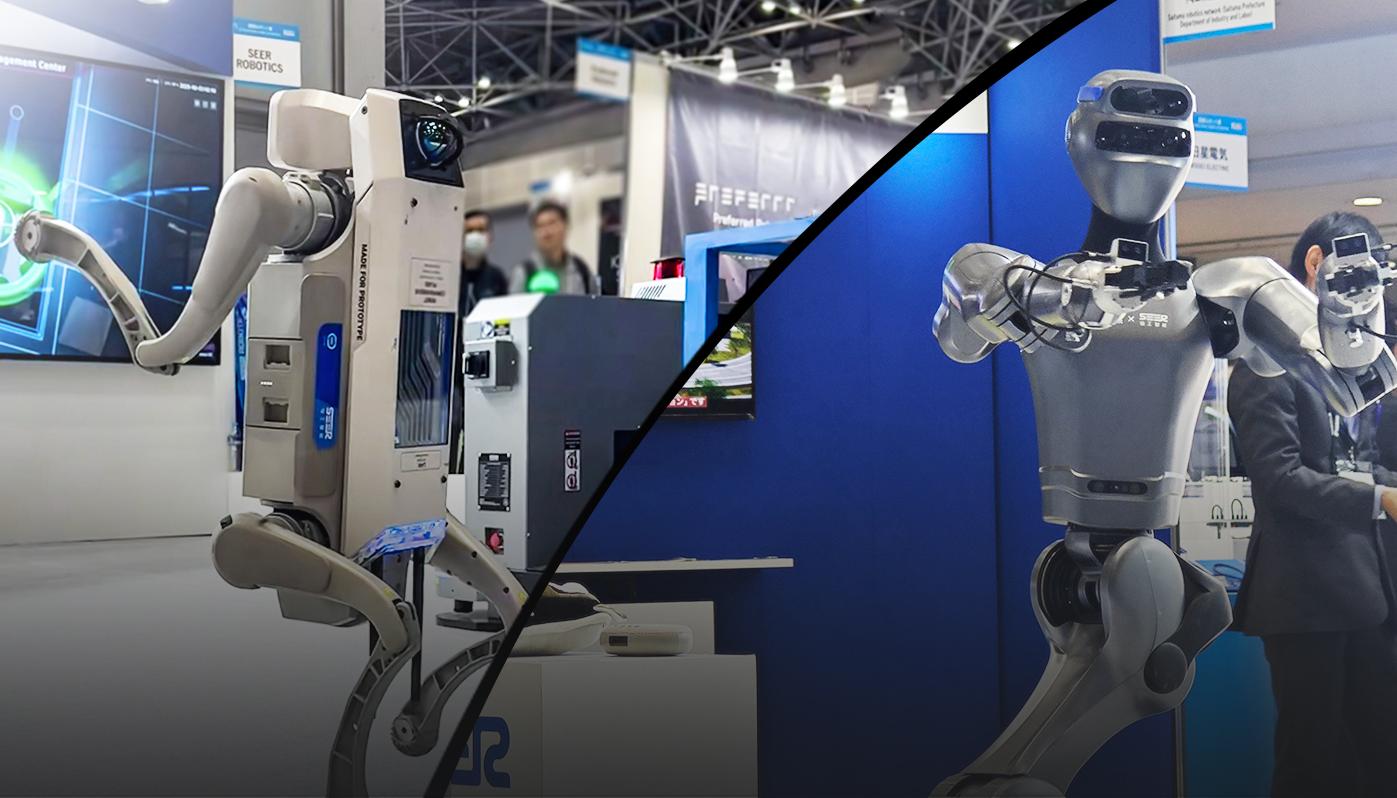

Introduction: A Global Robotics Innovation Hub
The 2025 World Robot Conference (WRC) — held August 8–12 in Beijing — has cemented its role not just as a gathering of researchers and enthusiasts, but as a global stage for new robotics hardware and integrated innovation solutions. Under the central theme “Making Robots Smarter, Making Embodied Agents More Intelligent”, more than 1,500 cutting‑edge technologies and products were displayed by over 200 domestic and international robotics companies — nearly double the number of product debuts compared with the previous year.
The scale and diversity of innovations at WRC 2025 reflected a transition point in the robotics industry, where prototypes once confined to labs are rapidly transforming into practical, commercially viable platforms across industrial, service, consumer, and embodied intelligence domains. This comprehensive review synthesizes the most significant new products, highlights key technological trends, and analyzes the implications of this year’s WRC for the future of robotics worldwide.
1. The WRC 2025 Landscape: Scope, Scale, and Participation
The 2025 WRC marked its 10th anniversary with record participation and product diversity. Attendance figures, media interest, and investment momentum all set new benchmarks:
- Over 1,500 exhibits from 200+ companies — nearly double the debut products from the previous conference.
- 50+ exhibitors focused on humanoid robotics, the highest number of such participants in any comparable global robotics event.
- A mix of domestic firms and global players spanning startups to established industrial automation leaders.
The conference’s structure — spanning robot innovation, application, and technology pavilions — highlighted not only hardware but also integrated solutions for deployment environments such as factories, hospitals, and retail spaces.
2. Humanoid Robotics: From Concept to Commercial Platforms
2.1 A Proliferation of Humanoid Innovations
Humanoid robots were unambiguously the show’s centerpiece, representing both hardware and embodied intelligence software advancements. With over 50 humanoid robotics exhibitors and more than 100 product debuts, WRC 2025 showcased an unprecedented breadth of platforms.
Key humanoid products launched or highlighted include:
- GalBot Galaxy Space Pod: The world’s first fully autonomous humanoid robot–operated retail kiosk, designed to serve thousands of users daily and form part of a scalable intelligent retail network.
- Fourier Intelligence GR‑3 Care‑bot: A full‑sized humanoid designed for interactive companionship, featuring soft‑skin interaction and emotional recognition capabilities that blurred the line between robotics and social interface.
- Magic Lab Robots (Xiaomai, MagicBot Z1, MagicDog Series): A suite of general‑purpose bipedal and quadruped robots designed for automation transformation in sectors such as healthcare, retail, tourism, education, and manufacturing.
- EngineAI T800 and ZQ PMO1: Heavy‑duty general‑purpose humanoid platforms with force‑controlled dexterous hands, aimed at research, industrial manipulation, and advanced motion tasks.
- Robotera Stardust Series: Featuring dynamic performances (spins, dancing) and practical applications in warehousing and logistics.
- LimX Dynamics LimX Oli: A 165 cm humanoid with 31 degrees of freedom available in Lite, EDU, and Super variants to support AI research and application development.
This diversity demonstrates that humanoid robots are no longer narrow prototypes but instead span a spectrum from commercial interactive platforms to industrial research systems.
2.2 Market Accessibility and Price Innovation
A notable trend at WRC 2025 was the downward pricing movement for humanoid robotics hardware, signaling broader market accessibility:
- Unitree Robotics’ R1 was exhibited at a price around ¥39,900 (approx. USD 5,600), positioning a dynamic yet capable humanoid at an accessible price point.
- Competing products such as SA02 lightweight companion robots were similarly priced in the low‑to‑mid five‑figure RMB range.
- Larger, research and industrial‑oriented platforms like LimX Oli were priced significantly higher but offered modular flexibility and SDK integration for developers.
Multiple robotics firms highlighted research‑to‑commercial pathways with pricing strategies intended to expand user adoption while catering to application‑specific segments such as eldercare, R&D, and industrial assistance.
3. Industrial and Automation Innovations
WRC 2025 was also notable for its industrial robotics innovations, with hardware optimized for factory automation, logistics, and collaborative workflows.
3.1 UBTECH Walker S2: Autonomous Industrial Execution
UBTECH unveiled the Walker S2, a humanoid robot featuring autonomous battery swapping — a breakthrough for continuous operation in industrial environments. The robot completes battery swaps in around three minutes, enabling 24/7 deployment without manual intervention.
The Walker S2 also showcased:
- Advanced cargo stacking capabilities
- 1.8 m manipulation range
- 162° waist rotation with millimeter‑scale dexterity
These capabilities suggest that industrial humanoids may soon bridge the gap between traditional industrial robots and adaptive general‑purpose platforms.
3.2 AEON Humanoid and Smart Factory Solutions
Hexagon’s AEON humanoid robot was introduced as a smart factory automation inspector, capable of:
- Reach and scan complex geometries
- Replace manual inspection at high speed and precision
This product exemplifies how humanoid hardware can augment factory workflows rather than displace specialized machines.
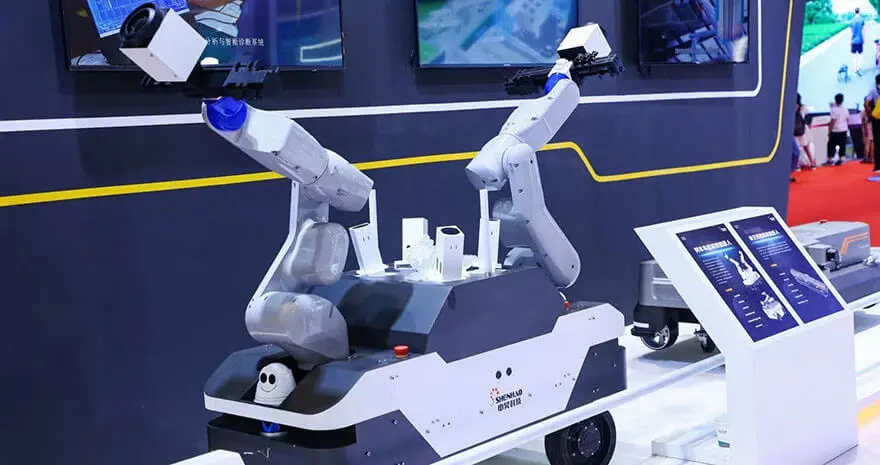
4. Sensory and Perception Hardware Breakthroughs
Beyond entire robots, core hardware innovations — especially in perception technology — were prominent at WRC 2025.
4.1 RoboSense Active Camera Systems
RoboSense presented its Active Camera series, a multi‑sensor fusion perception platform that combines color, depth, and motion data in a single hardware unit. This system significantly improves:
- 3D spatial understanding
- Real‑time environmental perception
- Robust response to lighting and dynamic scenes
These capabilities address traditional limitations in robot vision and are essential for robotics that operate outdoors or in complex real environments.
5. Service Robots and Novel Application Domains
5.1 Autonomous Retail and Service Pods
The GalBot Galaxy Space Pod represented a new class of humanoid‑operated retail hardware, operating autonomously in real‑world environments. This concept extends robotics from static kiosks to intelligent retail infrastructure, capable of serving thousands of customers daily.
5.2 Companion and Educational Robots
Service robots at WRC 2025 also included:
- AI chess‑playing robots with multi‑game interaction and cognitive engagement, demonstrating AI plus physical interface integration.
- Lightweight companionship platforms aimed at family interaction and problem solving.
These products suggest a trend where robotics hardware converges with human entertainment, education, and companionship scenarios.
6. Ecosystem and Industry Support for Robotics Deployment
6.1 Strategic Partnerships and Ecosystem Growth
Robotics ecosystem development was highlighted through strategic partnerships — for example, JD.com’s announced commitment to invest over RMB 10 billion to scale robotics brands and achieve broad deployment across millions of user scenarios within three years.
Additionally, the Robot Mall — the world’s first embodied intelligence 4S store — was opened in Beijing, shifting robotics exhibitions toward interactive consumption and real‑world trials.
7. Technological Trends Emerging from WRC 2025
7.1 Embodied Intelligence and Large Model Integration
A critical theme at WRC 2025 was the deep fusion of large AI models and embodied hardware systems, enabling:
- Natural language interaction
- Complex task generalization
- Context‑aware autonomy
These trends suggest that hardware alone is not enough; AI‑driven interpretation and decision‑making are becoming equally foundational.
7.2 From Spectacle to Deployment
Unlike past shows dominated by demonstrations, WRC 2025 highlighted robots designed for real deployment — whether in factories, retail, or public environments — signaling an industry shift from experimental prototypes to commercially viable platforms.
8. Challenges and Future Directions
Despite substantial progress, robotics hardware continues to face challenges around:
- Cost and accessibility, especially for high‑end humanoids
- Safety and regulation, particularly for robots operating around humans
- Interoperability and standards for cross‑platform integration
Yet the scale and scope of innovations at WRC 2025 strongly indicate that these challenges are being actively addressed through industry collaboration and technological refinement.
Conclusion: WRC 2025 as a Turning Point for Robotics Hardware
The WRC 2025 World Robot Conference was more than a showcase — it was a reflection of an industry accelerating toward mainstream adoption. With an explosion of new products across humanoids, perception hardware, industrial automation, and service robots, WRC 2025 demonstrated that robotics is rapidly progressing from concept to commercial reality.
From accessible humanoid platforms and industrial automation solutions to innovative perception hardware and AI‑integrated service robots, the breadth of innovation at WRC 2025 charts a bold trajectory for robotics technology over the next decade. As these products move from exhibition halls to real‑world deployment, the coming years will likely see robots integrated into more facets of everyday life and industry than ever before.