









Introduction: Robotics Enters a New Era of Hardware Diversity and Capability
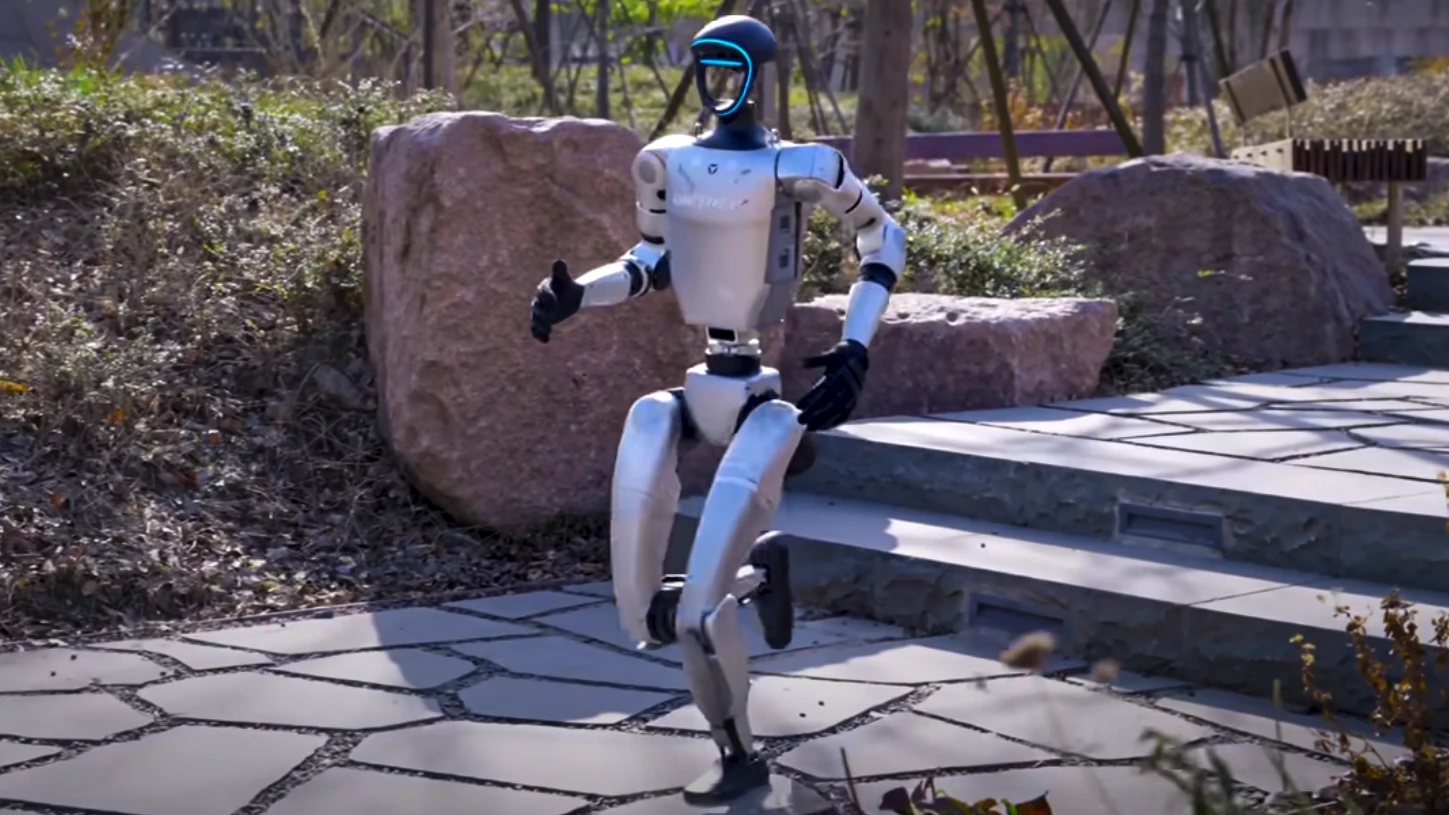
In recent years, robotics has breached the boundaries of laboratory curiosities and demonstration units to become a vibrant ecosystem of commercial and near‑commercial platforms. This evolution was most prominently illustrated by the wave of up to 20 new humanoid and quadruped robots released across events like CES 2025, WRC 2025, and other global showcases. These robots—built by a broad array of manufacturers from startups to industrial leaders—span industrial automation, logistics, public service, consumer assistance, agriculture, healthcare, and research platforms.
This article provides a rich, structured, and professional analysis of this new generation of robots. We examine each platform’s design philosophy, hardware innovations, software and AI integration, use‑case suitability, and technological significance. We place particular emphasis on how these robots are pushing the frontier of autonomy, perception, human‑robot interaction, and practical deployment.
1. Market Context: Why This Surge Matters
The surge in humanoid and quadruped robot introductions isn’t random—it reflects several converging trends:
- Advances in AI and embodied intelligence: models that integrate perception, reasoning, and action are becoming deployable on edge hardware.
- Improved sensor and actuation technology: LiDAR, high‑resolution cameras, tactile sensors, and compliant actuators offer richer data and safer interaction.
- Cost reductions and modular hardware: component standardization and scalable platforms lower barriers to hardware innovation.
- Industrial and commercial demand: sectors such as logistics, manufacturing, and eldercare increasingly require robots that can operate outside rigid automation cells.
Reports from major robotics conferences show that manufacturers are no longer focusing exclusively on proof‑of‑concept machines; instead, they are showcasing robots engineered for deployment and real‑world integration.
2. Humanoid Robots: New Platforms and Paradigms
2.1 Atlas Series (Boston Dynamics / Hyundai)
Category: Industrial and advanced robotics
Focus: Dynamic locomotion and task sequencing in unstructured environments
Boston Dynamics’ Atlas, now backed by Hyundai Motor Group, represents one of the highest‑profile humanoid platforms emerging from the latest product wave. Key hardware and innovation highlights include:
- High degrees of freedom (DoF) with robust joint articulation enabling human‑like balance and locomotion.
- AI‑driven perception for real‑time adaptive planning.
- Industrial reliability hardware suited for factory and logistics tasks.
The hardware roadmap articulates a transition from academic and research units to field‑ready robots capable of industrial utility—marking a departure from static scripted demos toward dynamic real‑world tasks.
2.2 CLOiD (LG Electronics)
Category: Consumer and home assistance robots
Focus: Household interaction and multi‑task execution
The CLOiD robot integrates:
- Multi‑joint manipulator arms
- Five‑fingered dexterous hands
- Integrated sensory suite (RGB‑D cameras, microphones)
Hardware is designed for daily chores such as object relocation, simple kitchen tasks, and home monitoring. Its architecture bridges commercial robotics and consumer automation—a significant expansion of humanoid hardware into everyday environments.
Although the current generation performs tasks at a modest pace, CLOiD’s hardware sets a foundation for more capable future home robots.
2.3 Onero H1 (SwitchBot)
Category: Consumer robotics
Focus: Everyday task assistance
The Onero H1 represents a wheeled humanoid machine with articulated arms and multiple degrees of freedom. Hardware highlights include:
- 22 DoF for nuanced manipulation
- Integrated navigation and AI perception stack
- Smart home ecosystem integration
This platform illustrates how hardware modularity and software integration can make robotics approachable to mainstream consumers.
2.4 LimX Oli (LimX Dynamics)
Category: Research and industrial‑leaning humanoid
Focus: Developer ecosystem and modular design
LimX Oli features a 165 cm humanoid platform with 31 DoF. It is offered in Lite, Edu, and Super variants:
- Lite: Entry‑level research platform
- Edu: Designed for education and labs
- Super: Fully capable with advanced sensors and motion hardware
LimX Oli’s hardware balance between modularity and capability makes it a versatile choice for research institutions, universities, and early adopters seeking a flexible physical testbed.
2.5 EngineAI T800
Category: Industrial flexibility
Focus: General‑purpose task execution
This humanoid robot focuses on force‑controlled manipulation, precision drive systems, and adaptable hardware suited for collaborative industrial environments.
While not the fastest humanoid, T800’s strength lies in hardware stability and motion accuracy, making it suitable for inspection, pick‑and‑place tasks, and integrative automation scenarios.
2.6 Xiaomai and MagicBot Z1 (Magic Lab Robotics)
Category: Multi‑Purpose Robotics
Focus: Diverse environments including retail, education, and service
These robots embody a strategy of hardware versatility, integrated with adaptable AI stacks that can be trained for multiple environments with minimal reconfiguration.
Robust locomotion bases, perceptive sensors, and modular payload attachments define their hardware flexibility.
3. Quadruped Robots: Robust Mobility and Task Versatility
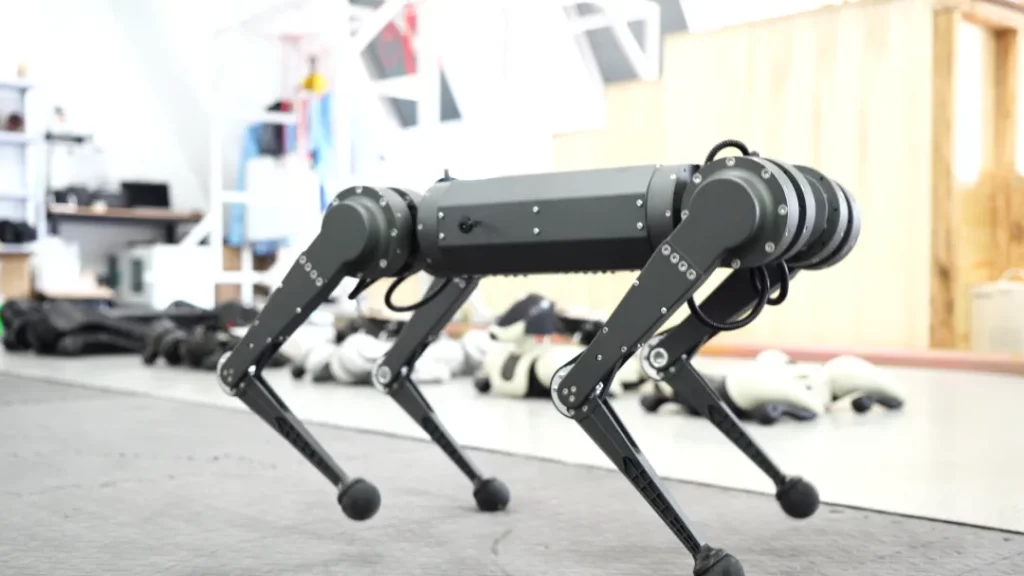
Quadruped robots represent a hardware class distinct from humanoids—prioritizing high stability, dynamic mobility, and robustness in unstructured environments.
3.1 Unitree G1 Series
Category: General‑purpose quadruped
Focus: Agility and affordability
Unitree’s G1 series has been one of the most widely observed robot families in the quadruped resurgence. Key hardware characteristics:
- Compact, lightweight actuators
- Dynamic motion control systems capable of rapid gait changes
- AI‑assisted perception for terrain negotiation
The G1 lineup demonstrates that mobility and adaptability can be delivered at lower cost, broadening accessibility.
3.2 Boston Dynamics Spot Lineage
Category: High‑performance quadruped
Focus: Survey and enterprise utility
Boston Dynamics’ Spot continues to evolve with updated powertrain modules, advanced sensors, and configurable payloads. While not a “new” product per se, the latest iterations emphasize:
- Extended battery life
- Enhanced SLAM and mapping hardware
- Industrial‑grade communication modules
This positions Spot as a de facto enterprise platform, with hardware stability and ecosystem integrations that remain industry benchmarks.
3.3 Ghost Robotics Vision Series
Category: Enterprise surveillance and inspection
Focus: Rugged external environments
Ghost Robotics continues to refine its quadruped platforms with rugged hardware tailored to:
- Outdoor inspection
- Extreme weather tolerance
- Payload versatility for cameras and sensors
Their hardware architecture prioritizes durability and modular payload support, enabling diverse applications from perimeter surveillance to hazardous inspection.
3.4 ANYbotics ANYmal Evolution
Category: Industrial inspection
Focus: Autonomous inspection with modular sensor rigs
ANYmal combines:
- Precision chassis kinematics
- Lidar, radar, and multi‑modal sensing
- High‑pressure environmental resilience
It is designed for industrial plant inspection, where the robot must withstand variable terrains, dust, and moisture—highlighting the importance of robust hardware and environmental sealing.
3.5 Overseas Robotics Platforms
Numerous quadruped robots from Asia, Europe, and the Americas emphasize domain specificity:
- Agricultural quadrupeds with payload modes for monitoring crops
- Hospital logistics quadrupeds optimized for indoor autonomy
- Consumer quadrupeds combining pet‑like interaction with simple home tasks
Hardware innovations in this cohort focus on sensor fusion, power management for long missions, and adaptive locomotion for diverse terrains.
4. Hardware Innovations Driving Next‑Gen Robot Capabilities
4.1 Perception Hardware and Sensor Fusion
Across both humanoid and quadruped platforms, next‑generation perception systems have become a cornerstone:
- 3D LiDAR systems for detailed mapping
- Stereo vision arrays for depth and object recognition
- Force/Torque sensors in manipulators for tactile feedback
- IMU arrays for balancing and gait adaptation
These hardware stacks work in concert to enable robots to operate safely, reliably, and adaptively in unstructured environments.
4.2 Actuation and Powertrain Advances
Robotics hardware has seen notable advances in:
- High‑efficiency brushless motors
- Advanced harmonic or cycloidal gearing
- Series elastic actuators for safe interaction
- Regenerative power systems for longer missions
Such innovations reduce weight, increase energy efficiency, and improve force control—essential for both manipulation and locomotion.
4.3 Onboard AI Compute and Edge AI
Modern robots increasingly rely on onboard compute hardware to perform real‑time perception and motion planning:
- Jetson Thor and variants power advanced AI inference
- ASIC/FPGA accelerators optimized for sensor data pipelines
- Hybrid architectures that balance high throughput with low latency
This allows robots to execute vision‑language‑action (VLA) and embodied AI models without cloud dependency—critical for safety and autonomy.
5. Software and Integration Trends Complementing Hardware
Building on hardware innovation, software frameworks such as ROS2, Omniverse Isaac, and custom hybrid stacks have emerged to unify perception, planning, and control across platforms. These frameworks enable:
- Cross‑platform abstraction layers
- Simulation‑to‑real deployment pipelines
- Reinforcement and imitation learning integration
The result is a more cohesive ecosystem where hardware and software co‑evolve.
6. Use‑Case Analysis: Applications Beyond Demonstrations
6.1 Industrial Automation and Cobotics
Humanoid and quadruped robots are increasingly envisioned as:
- Factory assistants
- Inventory inspectors
- Collaborative safety monitors
Their hardware—especially secure sensing and compliant joints—makes them suitable for human‑centric sandboxes.
6.2 Healthcare and Elder Care
Certain humanoid robots are being developed to assist with:
- Patient mobility support
- Medication reminders and monitoring
- Social engagement care tools
Hardware in these robots balances dexterity with safety and human interaction design.
6.3 Service and Hospitality Roles
Several humanoid platforms showcase:
- Reception and greeting tasks
- Wayfinding assistance in public spaces
- Retail support and demonstration units
These applications require robust perception hardware and socially aware behavior.
6.4 Research and Education
Modular humanoid platforms designed with:
- SDK support
- Modular hardware expansion
- Research‑grade sensing
serve as testbeds for advanced robotics research.
6.5 Consumer and Home Assistance Quadrupeds
Emergent quadrupeds with:
- Simple interaction modes
- Pet‑like social behaviors
- Lightweight mobility
indicate a trend toward consumer‑oriented platforms for companionship or simple tasks.
7. Commercialization and Deployment Challenges
Despite remarkable progress, several challenges remain:
- Cost vs. value: Hardware costs remain high for general‑purpose robots.
- Power efficiency: Battery limitations constrain mission duration and autonomy.
- Safety and regulations: Ensuring safe operation around humans is nontrivial.
- Standards and interoperability: Hardware diversity creates integration challenges.
Addressing these challenges requires cross‑sector collaboration, open standards, and ongoing investment in both hardware and software.
Conclusion: A New Era of Robotic Capability
The release of up to 20 humanoid and quadruped robots across multiple manufacturers in 2025 signals a fundamental shift in robotics—from controlled lab experiments to practical, adaptable, and increasingly autonomous platforms. These robots reflect innovations across:
- Sensory hardware and perception
- Actuation and dynamic motion systems
- Embedded AI compute and edge intelligence
- Modularity and cross‑platform integration
- Use‑case‑focused design for industry, service, and every day
As deployments scale and ecosystems mature, these robots will increasingly contribute to productivity, safety, and human augmentation across sectors. The landscape mapped here offers both breadth and depth into the state of robotics innovation, and forecasts a near future where humans and robots collaborate more seamlessly than ever before.