








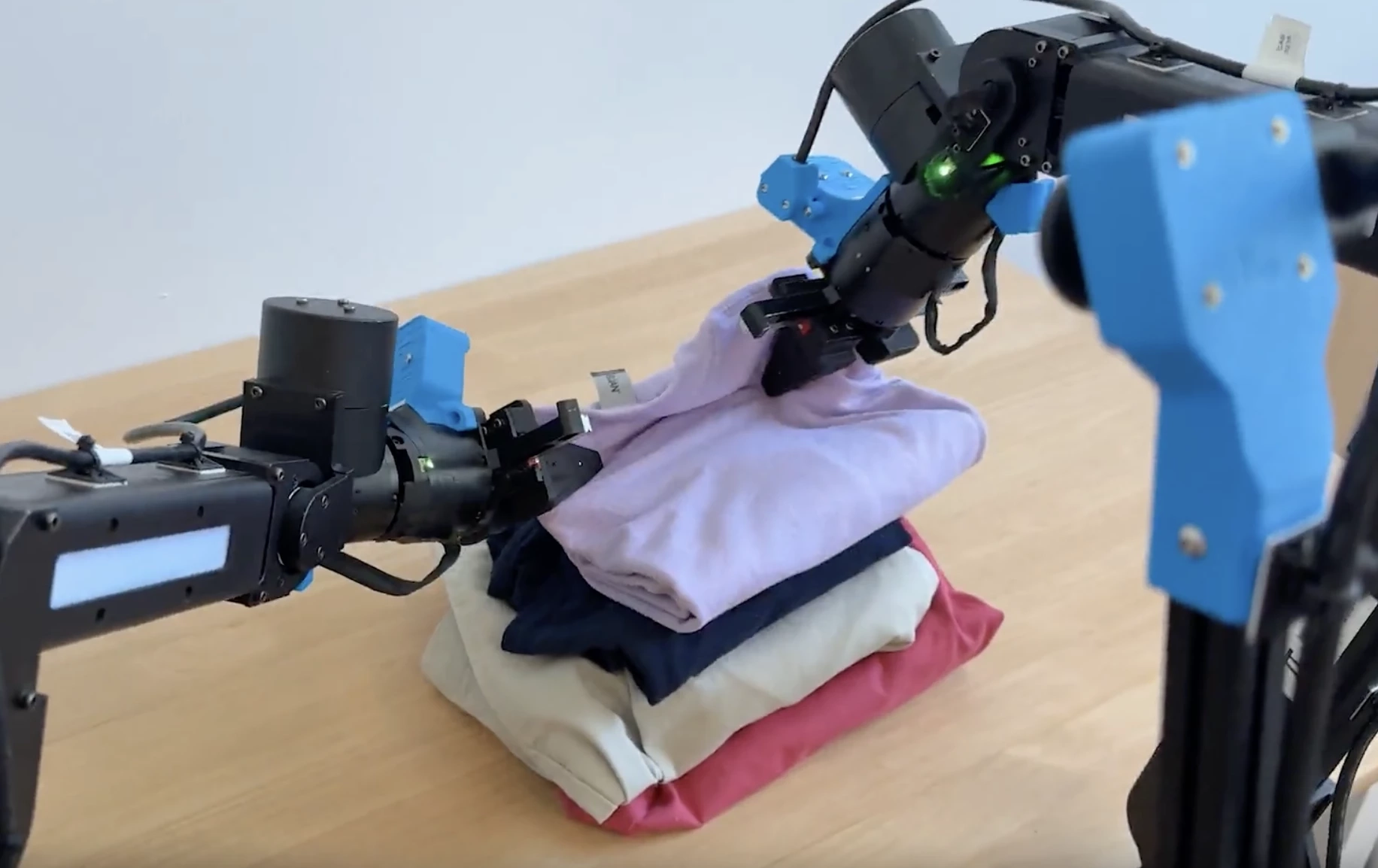

Introduction: From Perception to Purpose — The Rise of VLA Models in Robotics
In the rapidly evolving field of robotics, a new class of models — Vision–Language–Action (VLA) models — has emerged as a foundational technology for next‑generation robotic autonomy. These models unify three essential capabilities:
- Vision: understanding the visual environment;
- Language: interpreting and generating natural language instructions;
- Action: planning and executing physical movements in the real world.
Together, these components enable robots to perceive, reason, plan, and act in dynamic, unstructured environments with human‑level intuition and adaptability. Unlike traditional pipelines in robotics — where perception, planning, and control remain disjointed modules — VLA models are trained or designed to integrate multimodal sensory input with semantic understanding and action prediction in a single, cohesive framework.
This article presents a comprehensive, professional examination of how VLA models are transforming robotic intelligence. We detail the architecture and principles of VLA systems, survey technical advances, analyze real‑world robotic applications, explore challenges and limitations, and look ahead to future research directions.
1. Why Vision–Language–Action (VLA) Is a Core Technology Trend
1.1 From Task‑Specific Robotics to Generalist Robotic Intelligence
Robots historically operate with task‑specific logic: a conveyor robot cleans with a fixed script; a factory arm paints using prescribed input sequences; an autonomous vehicle navigates with a specialized perception stack. These systems lack the ability to:
- Interpret novel natural language instructions;
- Generalize across tasks and contexts;
- Integrate semantic understanding with real‑time physical action.
In contrast, VLA models enable robots to connect what they see, what they are told, and what they do — a leap toward generalist embodied intelligence that resembles human cognitive processes. This trend aligns with broader developments in AI (e.g., multimodal foundation models, LLMs) and contributes to robotics systems that are contextual, adaptive, and instruction‑driven.
2. Architectural Foundations of VLA Models
2.1 Multimodal Encoders: Bridging Vision and Language
At the core of VLA models are deep neural networks capable of encoding visual and linguistic information into a shared embedding space:
- Vision encoders (e.g., CNNs, Transformers) convert images or video frames into spatial and semantic representations of objects, relationships, and dynamics.
- Language encoders (e.g., transformer‑based models from NLP) model semantic meaning from instructions, descriptions, or dialogue.
A multimodal backbone allows the robot to align visual context with language cues — for example, understanding that “pick up the red mug on the left of the plate” corresponds to specific features in the robot’s camera view.
2.2 Action Decoders and Policy Models
Once visual and linguistic features are aligned, an action decoder or policy module translates these representations into executable motor commands:
- Action prediction networks produce high‑level behaviors (e.g., ‘approach object’, ‘grasp handle’).
- Motion planners and controllers convert high‑level directives into low‑level joint torques, trajectories, or end‑effector commands.
Some VLA frameworks incorporate reinforcement learning (RL) or imitation learning to align predicted actions with successful task outcomes.
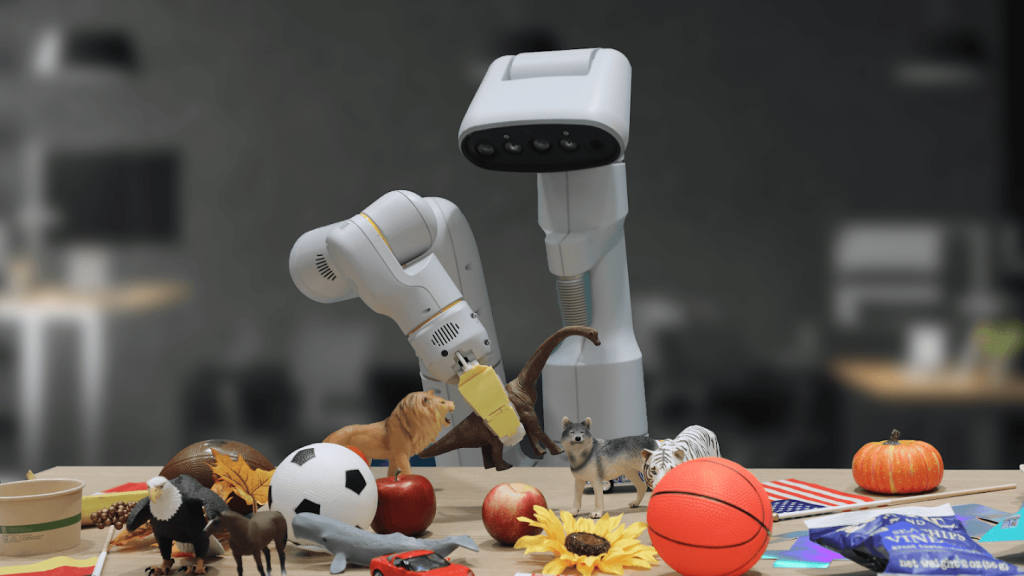
3. Core Functional Capabilities Enabled by VLA Models
3.1 Natural Language Instruction Following
One of the most transformational capabilities of VLA robots is their ability to understand and act on natural language commands:
- Instructions can be given conversationally rather than through rigid programming;
- Robots can ask follow‑up questions when ambiguity arises;
- Instruction interpretation is grounded in the robot’s perception of its environment.
This capability drastically lowers the barrier for human–robot interaction.
3.2 Contextual Understanding and World Modeling
Robots equipped with VLA models can form contextual world representations, allowing them to:
- Maintain a memory or map of the environment;
- Understand object relationships and affordances;
- Predict plausible action outcomes based on combined sensory and semantic cues.
This depth of understanding is essential for robust performance in unstructured or dynamic settings.
3.3 Action Planning and Physical Execution
VLA models provide a direct link from perception and understanding to action. Depending on system architecture, planning and execution may occur through:
- Imitation learning, where the robot mimics demonstrated behavior;
- Reinforcement learning, where the robot optimizes a policy through reward‑based experience;
- Hybrid planning, combining classic robotic motion planning with learned policies for adaptability.
These approaches allow robots to carry out complex tasks — such as multi‑step object manipulation, navigation with semantic goals, or collaborative tasks with humans — in ways that prior systems cannot.
4. Exemplary VLA Model Architectures and Systems
4.1 Embodied Multimodal Models (EMMs)
EMMs extend multimodal representation learning to physical agents. They embed visual, audio, language, and proprioceptive signals into a unified latent space, then use this joint representation to generate action sequences.
These models often combine transformer‑based encoders with embodied policy networks trained through RL or imitation learning on real or simulated environments.
4.2 Vision‑Language Action Transformers
Building on the success of transformer models in NLP and vision, some VLA systems use vision‑language transformers to process temporal visual streams and language input, producing action logits directly as outputs.
Such models are often trained on datasets that pair human task descriptions, video demonstrations, and action labels, bridging instruction with demonstration.
5. Real‑World Applications of VLA‑Enabled Robotics
5.1 Service and Domestic Robotics
VLA robots in homes and service contexts can:
- Interpret spoken instructions like “clean the dishes in the sink after finishing the floor”;
- Reason about object categories and their typical use;
- Navigate human environments safely and collaboratively.
This shifts service robotics from task‑specific machines to contextual partners in daily living.
5.2 Industrial and Warehouse Automation
In factories and logistics centers, VLA robots can:
- Read and interpret labels or spoken directives;
- Adjust tasks based on real‑time sensory inputs (e.g., traffic, obstacles, inventory changes);
- Reallocate tasks dynamically across multiple robots for optimized throughput.
This adaptability is critical for flexible manufacturing and mixed‑product fulfillment.
5.3 Healthcare and Assistive Robotics
In clinical and care environments, VLA capabilities empower robots to interact naturally with caregivers and patients, adapt to dynamic routines, and comprehend semantically rich instructions (e.g., “bring the patient’s medication from the cabinet after lunch”).
5.4 Field Robotics and Exploration
Robots deployed in unstructured outdoor or remote environments (e.g., disaster zones, planetary rovers) benefit from VLA models that interpret textual mission commands in the context of visual surroundings and formulate robust action plans under uncertainty.
6. Technical Challenges and Research Frontiers
6.1 Grounding Language in Perception and Action
One of the most fundamental challenges is semantic grounding — connecting abstract linguistic concepts to perceptual features and physical actions in the real world. This requires:
- Deep alignment between language tokens and visual representations;
- Action policies grounded in sensorimotor contingencies;
- Continual learning to handle novel instructions, objects, or contexts.
6.2 Scalability and Data Efficiency
Training VLA models requires large multimodal datasets that capture paired vision, language, and action examples. Collecting such data in physical environments is costly. Simulation, sim‑to‑real transfer, and self‑supervised learning are critical tools to address this bottleneck.
6.3 Safety, Robustness, and Explainability
Robots executing VLA policies must be:
- Safe and fail‑safe in physical interactions;
- Predictable and interpretable when integrating language directives with physical actions;
- Robust to ambiguous or conflicting instructions.
This demands advances in verification, interpretability, and human‑robot interaction protocols.
7. Evaluation and Benchmarking in VLA Robotics
To assess the performance of VLA systems, the community leverages:
- Task generalization benchmarks across multiple instruction types and environmental configurations;
- Ground truth comparisons where demonstrated actions are evaluated against robotic execution;
- Human evaluation of instruction comprehension and task success.
Organizations and consortia are emerging to standardize evaluation protocols for VLA‑capable robotics.
8. Integration Pathways: From Foundation Models to Embodied Agents
8.1 Foundation Models as Backbones
Large multimodal models like GPT variants adapted for vision–language tasks can be fine‑tuned or adapted to embodied agents. Such models provide rich semantic knowledge that can inform robotic reasoning.
8.2 Modular vs End‑to‑End Integration
Researchers are debating the merits of:
- Modular pipelines, where vision, language, and action components are distinct but interfaced;
- End‑to‑end architectures, where a unified model learns direct mapping from input modalities to actions.
Each approach has trade‑offs in interpretability, data requirements, and generalization.
9. Industry Impact and Ecosystem Development
9.1 Commercial Adoption Trends
Leading robotics firms and research labs are integrating VLA paradigms:
- Consumer robotics platforms with language interface and semantic planning;
- Industrial automation suites with natural‑language task definition;
- Service robots with contextual dialogue and adaptive behavior.
Such adoption reflects recognition that VLA capabilities unlock new value propositions for autonomous systems.
9.2 Open‑Source and Collaborative Research
Academic and industry collaborations are pushing VLA research forward through shared datasets, benchmark environments, and open‑source frameworks that lower barriers to innovation.
10. Future Prospects: Toward Generalist Robotic Intelligence
The ultimate vision of VLA research is to enable generalist robots — machines that:
- Understand arbitrary visual environments;
- Interpret and generate nuanced language;
- Formulate high‑level goals from dialogue and achieve them through adaptive action;
- Reuse skills and knowledge across tasks and domains.
Such robots will be capable of learning new skills from natural language descriptions, demonstration, or instruction alone — a revolutionary step toward autonomous embodied intelligence.
Conclusion: Vision–Language–Action Models at the Core of Robotic Evolution
Vision–Language–Action models represent a paradigm shift in how robots perceive, interpret, and interact with the world. By unifying multimodal perception with semantic understanding and action planning, VLA systems transcend the limitations of traditional robotic pipelines and enable adaptive, context‑aware, and instruction‑driven behavior.
As research accelerates and technologies mature, VLA‑enabled robots will increasingly operate alongside humans in complex environments — from homes and hospitals to factories, warehouses, and exploration sites — embodying a new era of intelligent, interactive, and versatile robotic agents.
The integration of vision, language, and action stands not only as a technological milestone but as a guiding framework for the future of robotic intelligence in the real world.