









Introduction
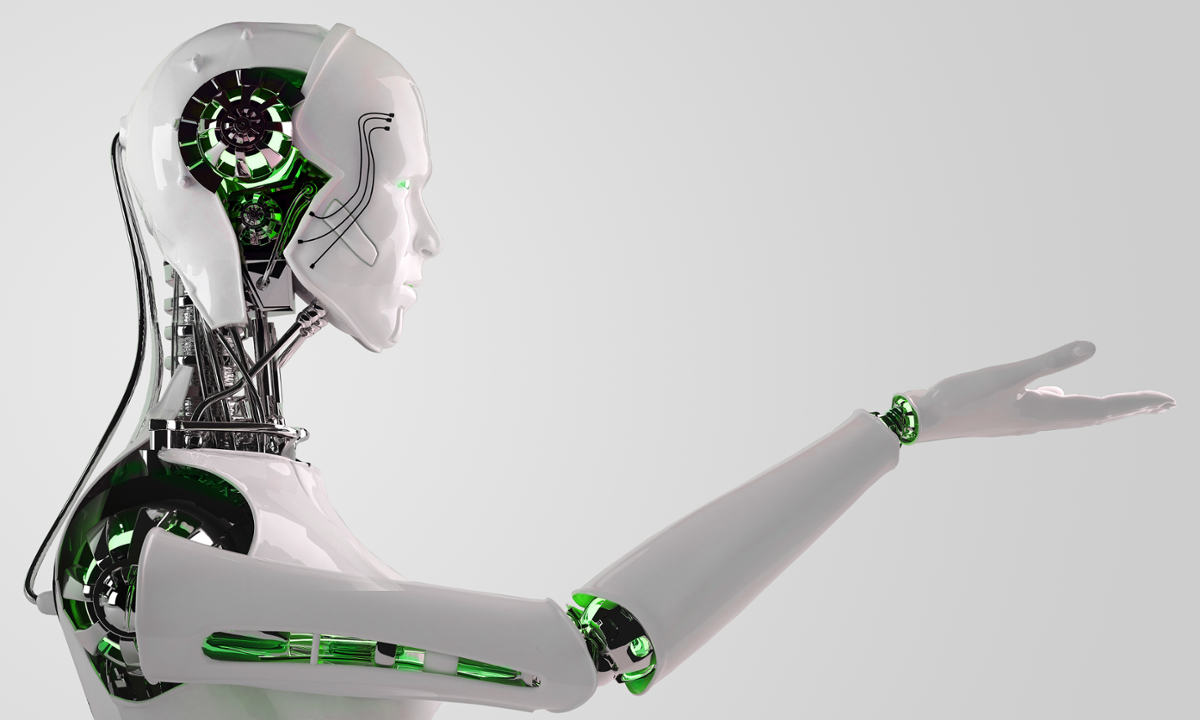
In recent years, the field of artificial intelligence (AI) has experienced unprecedented growth, permeating multiple sectors, from natural language processing to autonomous systems. Among the emerging paradigms, embodied intelligence (EI) has emerged as a critical frontier for both theoretical advancement and practical applications. Unlike traditional AI models, which primarily operate in abstract computational spaces, embodied intelligence emphasizes the integration of physical presence, sensorimotor capabilities, and cognitive processes. This approach is rooted in the recognition that intelligence is not solely an abstract computational function but a phenomenon deeply intertwined with the body, environment, and interaction dynamics.
The concept of embodied intelligence draws heavily from cognitive science, neuroscience, and robotics. Pioneering research suggests that physical embodiment provides an agent with essential feedback loops for learning, adaptation, and reasoning. Embodiment facilitates situated cognition, allowing agents to understand context, adapt to unpredictable environments, and achieve goals with higher efficiency. Consequently, embodied intelligence is not merely a technological trend but a paradigm shift, promising to redefine AI’s interaction with the real world.
Theoretical Foundations of Embodied Intelligence
1. Cognitive Foundations
Embodied intelligence challenges the traditional, disembodied view of cognition, which treats intelligence as abstract symbol manipulation, as epitomized by classical AI approaches. Theories from cognitive science, particularly enactivism and embodied cognition, suggest that cognitive processes emerge from the continuous interaction between an agent’s body and its environment. This perspective highlights that perception, action, and reasoning are inseparable:
- Perception as Action-Oriented: Agents perceive their environment not merely to gather information but to guide potential actions.
- Sensorimotor Contingencies: Intelligence relies on understanding the causal relationships between actions and sensory feedback.
- Situated Learning: Learning is enhanced when agents experience real-world contexts, enabling adaptive behavior beyond pre-programmed responses.
2. Neuroscientific Insights
Neuroscience reinforces the importance of embodiment. Research in motor cortex functionality, proprioception, and the sensorimotor integration of humans demonstrates that cognitive processing is deeply linked to bodily states. For example:
- Mirror neurons reveal that observing an action activates similar neural circuits as performing the action.
- Sensorimotor coordination is essential for problem-solving, as evidenced by studies in motor learning and adaptive behavior.
These findings suggest that AI systems might achieve higher robustness and generalization by mimicking biological embodiment principles.
3. Robotics and Control Theory
Robotics provides a natural platform for implementing embodied intelligence. Unlike virtual AI models, robots operate in uncertain, dynamic environments, requiring adaptive control, real-time perception, and physical interaction. Key concepts include:
- Feedback Loops: Continuous interaction with the environment allows agents to correct errors and refine strategies.
- Morphological Computation: The body itself can perform computational functions, such as passive dynamics in walking robots.
- Multi-Modal Sensing: Combining vision, touch, proprioception, and auditory cues enables more sophisticated decision-making.
Embodied intelligence research in robotics not only advances machine autonomy but also informs human-robot interaction, assistive technologies, and cognitive modeling.
Core Components of Embodied Intelligence Systems
1. Physical Embodiment
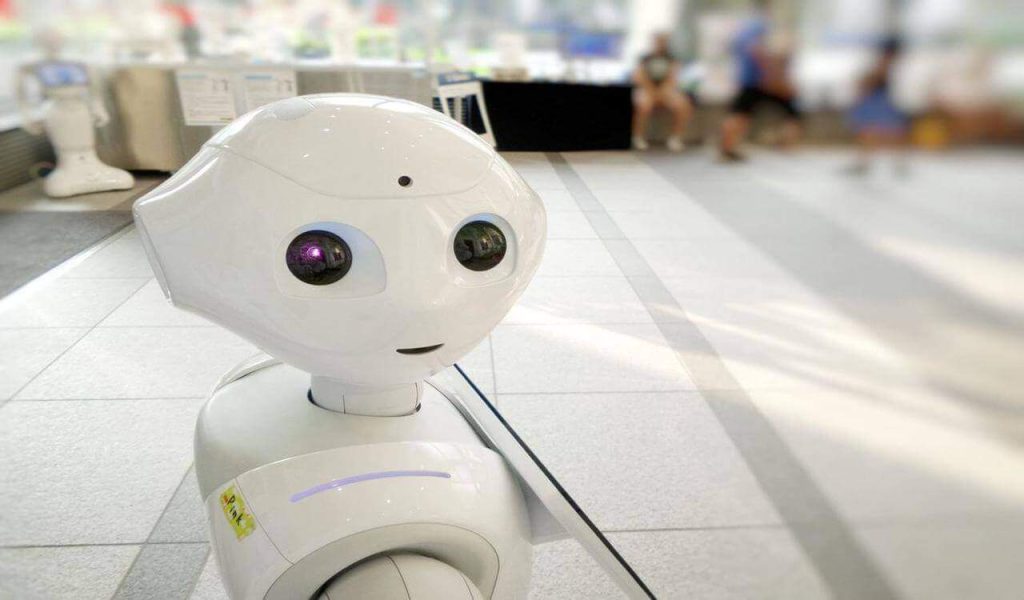
The most defining characteristic of EI is physical presence. Unlike purely software-based AI, embodied agents leverage bodies to interact meaningfully with their environment. Physical embodiment involves:
- Actuators and Mobility: Robots must navigate, manipulate objects, and exert force accurately.
- Sensor Networks: High-resolution perception (vision, tactile sensing, proprioception) enables environmental awareness.
- Energy Management: Physical systems require efficient energy utilization for sustainable operation.
2. Sensorimotor Integration
Embodied intelligence relies on the tight coupling between perception and action. Sensorimotor integration allows agents to:
- Anticipate consequences of actions.
- Learn from trial-and-error experiences.
- Adapt behaviors dynamically in response to environmental changes.
For instance, autonomous drones employ real-time visual and inertial feedback to stabilize flight and avoid obstacles, embodying intelligence through continuous interaction with their surroundings.
3. Learning and Adaptation
Learning in embodied systems goes beyond traditional supervised learning. It encompasses:
- Reinforcement Learning (RL): Agents learn optimal policies through interaction with their environment.
- Self-Supervised Learning: Sensory feedback serves as internal labels for continuous improvement.
- Developmental Robotics: Inspired by human cognitive development, robots progressively acquire skills in a staged, adaptive manner.
By embedding learning in physical experiences, EI systems achieve generalization and robustness unattainable by disembodied algorithms.
4. Social and Environmental Interaction
Advanced embodied intelligence systems engage in social cognition, understanding and responding to humans and other agents. This requires:
- Theory of Mind Modeling: Predicting intentions of others based on observed behavior.
- Natural Interaction: Gestures, speech, and expressions for collaborative tasks.
- Context Awareness: Adjusting behavior according to environmental and social contexts.
Such capabilities are crucial for assistive robots, autonomous vehicles, and collaborative AI agents.
Research Challenges and Breakthrough Opportunities
While the promise of embodied intelligence is profound, it also poses significant research challenges:
1. Physical Complexity
Real-world environments are unpredictable. Embodied agents must cope with:
- Variable terrains and obstacles.
- Sensor noise and actuator imperfections.
- Dynamic objects and unstructured environments.
Designing robust, adaptive physical systems remains a primary challenge for EI research.
2. Learning Efficiency
Learning in high-dimensional physical spaces is computationally demanding. Current approaches face issues such as:
- Sparse Reward Signals: Reinforcement learning often struggles with delayed or infrequent feedback.
- Sample Inefficiency: Physical trials are slow and costly compared to simulations.
- Transfer Learning: Bridging the gap between simulated training and real-world deployment.
Advances in sim-to-real transfer, meta-learning, and hierarchical RL are actively addressing these challenges.
3. Multi-Modal Integration
Effectively combining visual, tactile, auditory, and proprioceptive inputs requires sophisticated models. Challenges include:
- Aligning disparate sensory modalities in real time.
- Handling conflicting or ambiguous signals.
- Developing architectures capable of long-term memory and reasoning.
Deep learning architectures, such as transformer-based multi-modal models, are increasingly applied to EI research, but scalability and interpretability remain critical concerns.
4. Ethical and Societal Implications
As embodied AI systems integrate more deeply into human environments, ethical considerations become paramount:
- Safety: Ensuring robots act safely around humans.
- Privacy: Managing sensitive sensory data responsibly.
- Trust: Designing transparent and predictable behavior to foster societal acceptance.
Addressing these concerns is essential for responsible and widespread adoption of embodied intelligence technologies.
Emerging Applications
The practical impact of embodied intelligence spans multiple domains:
1. Healthcare and Assistive Robotics
Embodied AI enables robots to assist the elderly, disabled, or patients with mobility challenges. Applications include:
- Robotic exoskeletons for rehabilitation.
- Assistive robots for household tasks.
- Telepresence robots facilitating remote care.
These systems rely on real-time sensorimotor adaptation, safe human interaction, and context-aware behavior.
2. Autonomous Vehicles
Self-driving cars are quintessential examples of EI:
- Continuous environment perception through LIDAR, cameras, and radar.
- Dynamic decision-making in unpredictable traffic conditions.
- Learning from real-world interactions to improve safety and efficiency.
3. Industrial Automation
Embodied intelligence enhances robotic manipulation and factory automation:
- Flexible robotic arms that adapt to varied parts and tasks.
- Collaborative robots (cobots) that work alongside humans.
- Adaptive supply chain systems responding to environmental changes.
4. Cognitive Research and AI Understanding
Embodied AI provides a platform to study human-like cognition:
- Investigating how physical interaction shapes learning.
- Modeling developmental stages similar to human infants.
- Exploring collective intelligence in multi-agent embodied systems.
Future Directions
The future of embodied intelligence will likely involve synergistic integration of multiple disciplines:
- Neuromorphic Computing: Hardware that mimics neural and sensorimotor processing for real-time adaptation.
- Bio-Inspired Robotics: Leveraging evolutionary strategies and animal biomechanics to improve efficiency.
- Hybrid AI Systems: Combining symbolic reasoning with sensorimotor learning to achieve more general intelligence.
- Human-AI Collaboration: Deepening social intelligence and emotional understanding in embodied agents.
Furthermore, standardization of benchmarks, datasets, and evaluation protocols for embodied intelligence will accelerate progress and foster reproducibility.
Conclusion
Embodied intelligence represents a breakthrough research focus at the intersection of AI, robotics, cognitive science, and neuroscience. By grounding intelligence in physical interaction and sensorimotor experience, EI offers unparalleled potential for adaptive, context-aware, and socially intelligent systems. While technical, computational, and ethical challenges remain, the convergence of multi-disciplinary research, advanced robotics, and learning algorithms positions embodied intelligence as a transformative paradigm for the next generation of AI technologies.
The continued development of embodied intelligence will redefine the boundaries of artificial intelligence, moving from abstract problem-solving toward agents capable of meaningful interaction in the real world, fundamentally altering human-technology relationships and opening new horizons for both scientific exploration and practical applications.