









Introduction
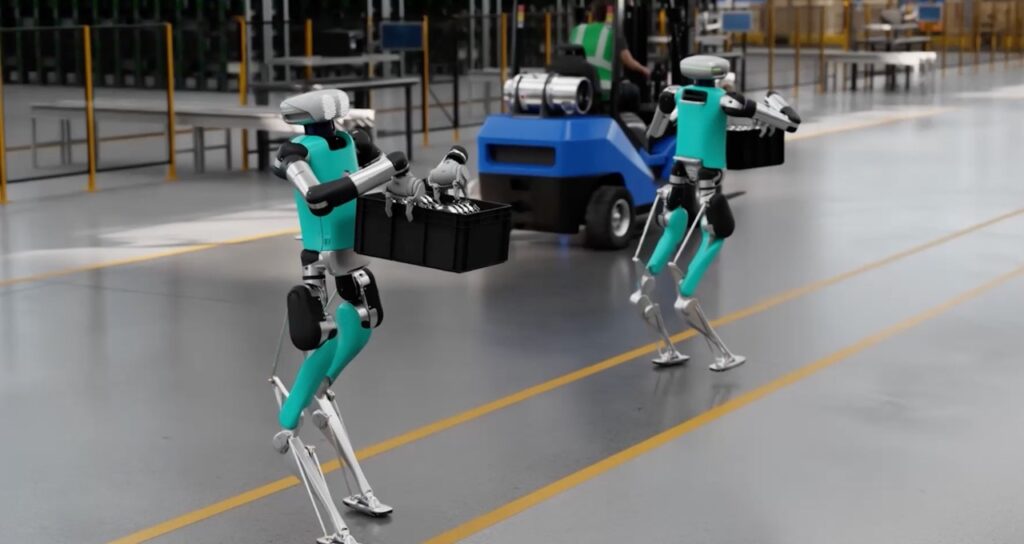
Artificial intelligence (AI) has traditionally been associated with virtual systems: algorithms that operate in abstract computational spaces, performing tasks such as image recognition, language translation, or predictive modeling. However, the next frontier of AI involves physical interaction with the real world, giving rise to the concept of Physical AI. Physical AI represents a paradigm shift where intelligence is no longer confined to software but embodied in robotic systems, capable of perceiving, reasoning, and acting within real environments.
Unlike traditional AI, Physical AI integrates sensorimotor capabilities, real-time learning, and adaptive control to interact with complex, dynamic, and often unpredictable environments. This integration enables robots to perform tasks with precision, flexibility, and autonomy previously thought to be exclusive to biological systems. As industries and societies increasingly demand intelligent machines that can safely and effectively operate in human-centric environments, Physical AI emerges as a central research and development focus.
This article explores the core concepts, technological foundations, trends, applications, and future directions of Physical AI, emphasizing how robots can truly embody intelligence in the real world.
1. Conceptual Foundations of Physical AI
1.1 From Virtual to Physical Intelligence
Traditional AI operates primarily in digital environments, relying on structured data and pre-defined rules. Physical AI, in contrast, embodies intelligence through interaction with the physical world:
- Perception-Action Loops: Intelligence emerges from the continuous cycle of sensing the environment, making decisions, and acting upon it.
- Contextual Adaptation: Robots adjust their behavior based on real-time feedback from their surroundings.
- Embodiment: The physical body—its sensors, actuators, and morphology—contributes to cognitive processing.
This concept is deeply rooted in embodied cognition, which suggests that intelligence arises not only from computational reasoning but also from the sensorimotor experiences of an agent.
1.2 Principles of Physical AI
Physical AI relies on several key principles:
- Integration of Sensing and Acting: The robot must perceive the environment accurately and convert this information into adaptive actions.
- Learning through Interaction: Robots improve performance through trial-and-error, reinforcement learning, and self-supervised learning.
- Robustness to Uncertainty: Physical environments are dynamic and noisy; systems must tolerate uncertainty and incomplete information.
- Human-Centric Design: Interaction with humans requires safety, predictability, and social awareness.
By embedding intelligence into physical systems, Physical AI bridges the gap between abstract algorithms and real-world effectiveness.
2. Sensorimotor Intelligence
2.1 Multi-Modal Perception
Physical AI relies on multi-modal sensing to perceive the environment:
- Vision Systems: Cameras, depth sensors, and LIDAR provide spatial understanding, object recognition, and environmental mapping.
- Tactile and Force Sensors: Enable manipulation of delicate objects and safe interaction with humans.
- Auditory Sensors: Facilitate voice-based commands and environmental sound detection.
- Proprioception: Monitors the robot’s internal state, allowing fine-tuned control of limbs and actuators.
The integration of these sensory inputs allows robots to form rich representations of their surroundings, critical for adaptive behavior.
2.2 Sensor Fusion and Real-Time Processing
Robots must combine data from multiple sensors to make coherent decisions. Sensor fusion algorithms, often powered by deep learning and probabilistic models, enable:
- Noise reduction and signal enhancement.
- Real-time obstacle detection and avoidance.
- Accurate localization in complex environments.
This multi-modal perception is foundational to tasks such as autonomous navigation, robotic manipulation, and human-robot collaboration.
3. Cognitive and Learning Systems in Physical AI
3.1 Reinforcement Learning and Adaptive Control
Reinforcement learning (RL) allows robots to learn optimal behaviors through interaction:
- The robot receives rewards or penalties based on actions.
- Over time, it adapts to maximize performance in dynamic environments.
- Examples include robotic grasping, autonomous navigation, and warehouse automation.
Physical AI often combines RL with model-based control, enabling predictive adjustments to actions based on anticipated outcomes.
3.2 Self-Supervised and Imitation Learning
Robots can learn without extensive human-labeled datasets:
- Self-Supervised Learning: Robots use intrinsic feedback, such as proprioceptive signals or tactile responses, as training signals.
- Imitation Learning: Robots observe humans performing tasks and replicate behaviors, enhancing learning efficiency in complex tasks like assembly or caregiving.
3.3 Cognitive Architectures
Advanced Physical AI systems integrate memory, reasoning, and planning:
- Hierarchical Control: Separates high-level planning from low-level motor control.
- Predictive Models: Anticipate the results of actions before execution.
- Contextual Awareness: Enables adaptation to environment changes, human behavior, and unexpected obstacles.
4. Actuation and Mobility
4.1 Advanced Actuation
Actuators are central to translating intelligence into action:
- Electric Motors: High-precision movement for industrial and service robots.
- Hydraulic Systems: Provide high-force outputs for heavy lifting and construction robots.
- Soft Actuators and Artificial Muscles: Enable safe human interaction and dexterous manipulation.
4.2 Locomotion and Adaptation
Physical AI demands mobility in diverse environments:
- Legged Robots: Navigate uneven terrain, inspired by biological locomotion.
- Aerial Drones: Enable rapid inspection, delivery, and surveillance.
- Hybrid Systems: Combine wheels, legs, or propellers for multi-terrain adaptability.
Energy efficiency and durability are essential considerations in actuator and locomotion design.
5. Human-Robot Interaction in Physical AI
5.1 Collaborative Robotics (Cobots)
Cobots operate safely alongside humans, enhancing productivity in factories, healthcare, and service industries. They rely on:
- Force-sensing for safe interaction.
- Predictive modeling of human motion.
- Adaptive control for shared tasks.
5.2 Socially Intelligent Robots
Physical AI robots increasingly understand and respond to social cues:
- Speech and gesture recognition for intuitive communication.
- Emotion recognition to enhance interaction in caregiving or education.
- Adaptive behavior based on contextual and cultural norms.
5.3 Safety and Ethics
Human-centric robots require stringent safety protocols:
- Collision avoidance and compliance systems.
- Transparent decision-making for trust and accountability.
- Ethical frameworks guiding behavior in sensitive environments.
6. Autonomous Systems and Real-World Deployment
6.1 Navigation and Localization
Physical AI systems employ techniques such as SLAM (Simultaneous Localization and Mapping) to navigate unknown environments. This enables:
- Accurate mapping of dynamic spaces.
- Real-time position tracking and obstacle avoidance.
- Autonomous operation in warehouses, hospitals, or urban areas.
6.2 Multi-Agent Coordination
In environments with multiple robots, Physical AI enables:
- Task allocation and resource optimization.
- Swarm robotics behavior for collective problem-solving.
- Cooperative learning for shared experiences and knowledge.
7. Materials and Robotics Hardware Innovations
7.1 Soft Robotics
Soft robotics allows robots to interact safely and adaptively with humans and objects:
- Flexible materials mimic biological tissue.
- Compliance reduces the risk of injury or damage.
- Soft actuators enable dexterous manipulation.
7.2 Smart Materials and Morphology
Emerging materials enhance physical intelligence:
- Shape-memory alloys for adaptive structures.
- Self-healing materials for resilience in harsh environments.
- Lightweight composites for mobility and energy efficiency.
7.3 Fabrication and Rapid Prototyping
- 3D printing enables rapid customization and iterative design.
- Modular components enhance scalability and maintenance.
- Integration with AI-driven design tools accelerates innovation.
8. Cloud and Edge Computing Integration
8.1 Cloud Robotics
Physical AI benefits from cloud computing for:
- Complex AI model training.
- Large-scale data storage and sharing.
- Collaborative learning across multiple robots.
8.2 Edge Computing
Edge computing supports real-time decision-making:
- Low-latency processing for navigation and manipulation.
- Safety-critical operations in industrial or medical environments.
- Reduced dependency on constant network connectivity.
The combination of cloud and edge computing enhances scalability, responsiveness, and intelligence in deployed robots.
9. Applications of Physical AI
9.1 Healthcare
- Surgical robots performing minimally invasive procedures.
- Rehabilitation robots assisting patients in recovery.
- Assistive robots supporting elderly or disabled individuals.
9.2 Industrial Automation
- Collaborative robots in flexible manufacturing lines.
- Autonomous material handling and warehouse logistics.
- Predictive maintenance and adaptive control for improved productivity.
9.3 Agriculture
- Autonomous tractors, drones, and harvesters.
- Precision farming using multi-modal sensing.
- Environmental monitoring and adaptive resource allocation.
9.4 Disaster Response and Exploration
- Search and rescue robots in hazardous environments.
- Autonomous drones for surveying disaster zones.
- Underwater and space exploration robots equipped with AI-driven sensing and adaptability.
10. Future Directions
10.1 Neuromorphic and Bio-Inspired Robotics
- Neuromorphic processors mimic brain computation for efficient, real-time decision-making.
- Bio-inspired designs improve mobility, adaptability, and resilience.
10.2 Quantum AI in Physical Systems
Quantum algorithms may enhance optimization, control, and real-time decision-making in complex robotic systems.
10.3 Human-Robot Symbiosis
Future Physical AI aims for deep collaboration with humans, augmenting cognitive, physical, and social capabilities:
- Exoskeletons for enhanced mobility.
- Cognitive assistance in knowledge work.
- Emotional intelligence for healthcare and education.
10.4 Ethical and Regulatory Frameworks
- Standardization of safety, privacy, and accountability.
- Governance for autonomous decision-making.
- Social acceptance and trust-building strategies.
Conclusion
Physical AI represents a transformative approach to robotics, embedding intelligence directly into the physical world. By integrating advanced sensing, learning, actuation, and human interaction, robots evolve from pre-programmed machines into autonomous, adaptive, and socially aware agents.
This convergence of AI, robotics, materials science, and human-centered design positions Physical AI as a central paradigm for the future of intelligent systems. As research progresses, Physical AI promises to reshape industries, enhance human capabilities, and redefine how machines interact with the real world.