









Introduction
The global workforce landscape is experiencing unprecedented challenges. Aging populations, declining birth rates, and shifting labor market dynamics have created significant labor shortages in multiple industries. From warehousing and last-mile delivery to construction and heavy manufacturing, companies are struggling to find skilled and unskilled workers to meet rising demand. In this context, robotics has emerged as a transformative solution, bridging the gap between labor availability and operational requirements.
Robotics, once considered a futuristic concept limited to manufacturing lines, now spans logistics, healthcare, agriculture, and construction. Modern robots are not only capable of performing repetitive tasks but are also increasingly autonomous, adaptive, and collaborative. This evolution allows businesses to maintain productivity, enhance safety, and address labor scarcity in sectors traditionally dependent on human effort.
This article explores the critical role of robots in mitigating labor shortages across industries, with a focus on logistics and construction. It examines technological advancements, operational benefits, workforce implications, and the strategic considerations necessary to implement robotic solutions effectively.
1. The Labor Shortage Crisis: Scope and Implications
Labor shortages are driven by multiple macroeconomic and demographic factors. In developed countries, aging populations are reducing the proportion of working-age individuals, while migration constraints limit the inflow of younger workers. In emerging economies, rapid industrialization and urbanization have increased demand for skilled labor faster than the supply can grow.
For logistics and construction, these shortages have profound operational consequences:
- Delayed deliveries and supply chain bottlenecks in logistics.
- Extended project timelines and increased costs in construction.
- Safety risks arising from overworked employees or insufficient staffing.
In sectors with physically demanding tasks, labor shortages are not merely an economic concern but a safety and quality issue. For instance, improperly lifted heavy materials in construction can lead to workplace injuries, while insufficiently staffed warehouses increase the likelihood of operational errors. Robotics offers a scalable and reliable solution to these challenges.
2. Robotics in Logistics: Revolutionizing Supply Chains
2.1 Warehouse Automation
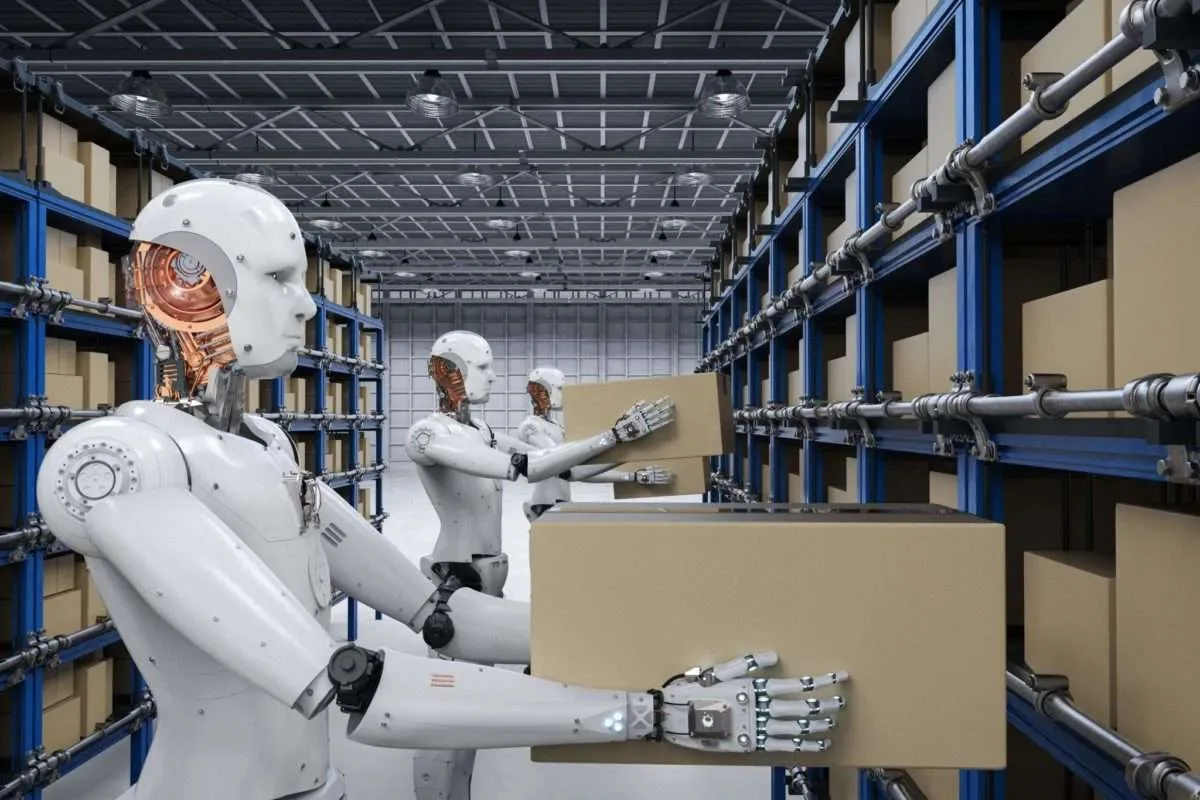
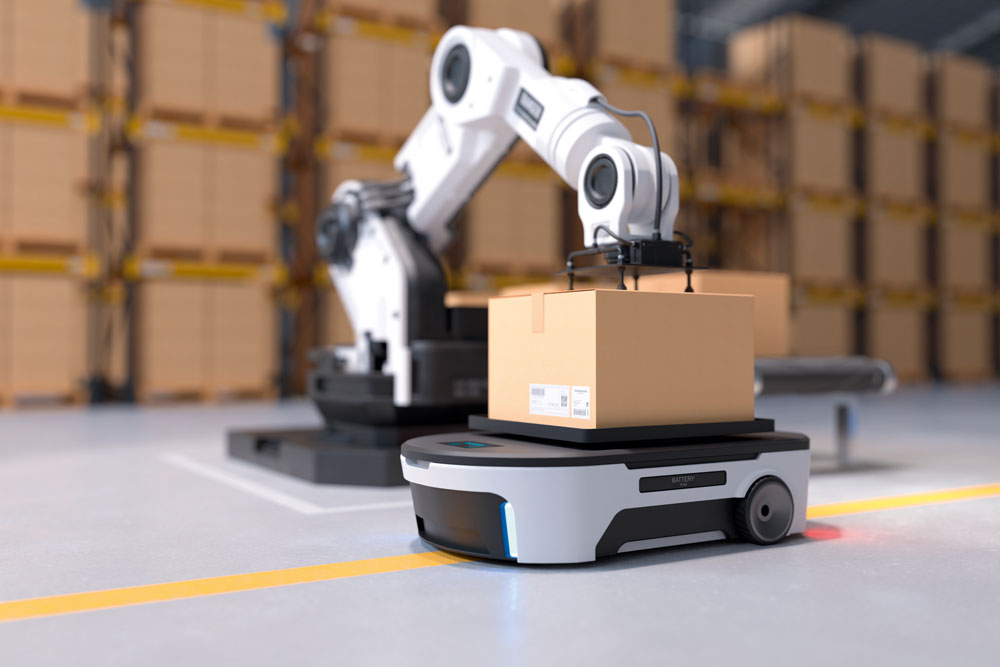
Warehouses have been at the forefront of robotic adoption. Automated Guided Vehicles (AGVs) and Autonomous Mobile Robots (AMRs) now navigate complex warehouse environments, transporting goods between storage areas, packing stations, and loading docks. Unlike traditional conveyor systems, modern robots are flexible and capable of dynamic path planning, reducing the need for manual intervention.
Key advantages include:
- Increased throughput: Robots can operate 24/7 without fatigue.
- Reduced labor dependency: Fewer human operators are needed for repetitive, low-value tasks.
- Improved accuracy: Robotic picking and sorting reduce errors in inventory management.
2.2 Last-Mile Delivery
The rise of e-commerce has put enormous pressure on last-mile delivery systems. Delivery robots and drones are increasingly deployed to overcome labor constraints and reduce operational costs. For example:
- Ground-based delivery robots navigate sidewalks and urban pathways autonomously.
- Drone deliveries offer rapid transportation for small parcels in areas with limited human resources.
By automating last-mile delivery, companies can maintain service levels during labor shortages while optimizing route efficiency and reducing environmental impact.
2.3 Collaborative Robotics
Collaborative robots, or cobots, work alongside human employees in logistics environments. Unlike traditional industrial robots that require isolation for safety, cobots can handle heavy lifting, sorting, and repetitive tasks while humans manage quality control and decision-making. This hybrid approach maximizes productivity without displacing workers entirely, offering a practical solution to immediate labor gaps.
3. Robotics in Construction: Meeting Workforce Gaps on Site
Construction is historically labor-intensive, with chronic shortages in skilled trades such as masonry, welding, and heavy equipment operation. Robotics has emerged as a critical tool to fill these gaps and improve both efficiency and safety.
3.1 Autonomous Construction Equipment
Modern construction sites deploy robotic machinery for excavation, concrete pouring, bricklaying, and road construction. Autonomous bulldozers, cranes, and earth movers can operate continuously, following precise digital plans derived from Building Information Modeling (BIM). This reduces reliance on human operators for high-risk, repetitive tasks.
3.2 Bricklaying and 3D Printing
Robotic bricklaying systems and 3D concrete printers exemplify innovation in the construction domain. These systems can construct walls, partitions, or entire building modules with consistent quality and speed unattainable by manual labor. Benefits include:
- Time efficiency: Projects progress faster without depending on fluctuating workforce availability.
- Cost control: Reduced labor costs and material wastage.
- Precision and safety: Lower risk of structural errors or site accidents.
3.3 Robotics for Site Safety and Monitoring
Robots equipped with sensors, drones, and AI-powered vision systems monitor construction sites for safety compliance, equipment usage, and project progress. This reduces the need for large human inspection teams and ensures adherence to safety protocols, even with limited labor availability.
4. Technological Drivers Enabling Robotics
Several technological advances have accelerated the adoption of robotics in logistics and construction:
4.1 Artificial Intelligence and Machine Learning
AI algorithms enable robots to perceive their environment, optimize movement paths, and adapt to unexpected obstacles. In logistics, machine learning improves order-picking efficiency, while in construction, AI guides robotic arms for precision tasks.
4.2 Sensor and Vision Systems
Advanced LiDAR, infrared cameras, and ultrasonic sensors allow robots to detect objects, humans, and environmental changes. This capability is essential for safe collaboration on dynamic construction sites and crowded warehouse floors.
4.3 Connectivity and IoT Integration
Internet of Things (IoT) connectivity allows robots to operate as part of a broader smart ecosystem. Sensors, machinery, and central control systems exchange real-time data to optimize workflows, manage inventory, and coordinate construction sequences.
4.4 Human-Robot Interaction (HRI)
Developments in HRI technology ensure that robots can work safely and efficiently alongside humans, interpreting gestures, voice commands, and proximity cues. This enables a flexible workforce where robots supplement rather than replace human labor.
5. Economic and Operational Benefits
The integration of robots to mitigate labor shortages generates measurable benefits:
5.1 Productivity Gains
Robots operate continuously without fatigue, delivering predictable output and reducing bottlenecks caused by human resource limitations.
5.2 Cost Efficiency
Although initial investments can be high, long-term savings arise from reduced labor costs, lower error rates, and improved resource utilization.
5.3 Enhanced Safety
Robotic automation decreases workplace injuries by assuming high-risk tasks in logistics and construction, reducing both downtime and compensation costs.
5.4 Scalability and Flexibility
Robots can be redeployed across sites or facilities depending on demand fluctuations, offering a scalable solution to temporary labor shortages.
6. Workforce Implications
The rise of robotics does not eliminate the human workforce but reshapes its composition and skill requirements. Key implications include:
- Upskilling and Reskilling: Workers must develop skills in robot operation, programming, maintenance, and supervision.
- Job Transformation: Manual, repetitive roles decline while supervisory, analytical, and technical roles grow.
- Hybrid Workforces: Collaborative systems combine human intelligence with robotic efficiency to maximize productivity.
Organizations that invest in workforce development alongside robotics adoption can achieve long-term operational resilience while mitigating social disruption.
7. Challenges and Considerations
Despite the advantages, robotics adoption faces challenges:
- High Capital Expenditure: Robots, software, and supporting infrastructure require substantial investment.
- Integration Complexity: Existing systems may need significant redesign to accommodate robotic workflows.
- Regulatory and Safety Compliance: Autonomous operations must adhere to strict safety standards.
- Cultural Resistance: Workers and management may resist change due to fear of displacement or unfamiliarity with technology.
Successful deployment requires careful planning, phased implementation, and continuous training.
8. Case Studies
8.1 Amazon Robotics in Warehousing
Amazon’s warehouses utilize thousands of mobile robots for sorting, picking, and transporting goods. This has significantly reduced dependency on human labor while increasing throughput and reducing operational costs.
8.2 Fastbrick Robotics in Construction
Fastbrick Robotics developed a bricklaying robot capable of building walls at a pace surpassing human masons. The system addresses skilled labor shortages while improving construction quality and efficiency.
8.3 Drones for Construction Site Inspection
Companies deploy drones equipped with LiDAR and high-resolution cameras to monitor construction sites. These drones reduce the need for large inspection teams and enhance safety compliance in labor-scarce environments.
9. Future Outlook
The future of robotics in labor-intensive industries is promising:
- Autonomous multi-robot systems will coordinate logistics and construction tasks seamlessly.
- AI-driven predictive maintenance will minimize downtime and extend robotic lifecycle.
- Swarm robotics may allow small robots to perform complex tasks collectively, further reducing dependency on human labor.
As technology continues to advance, robotics will not only complement labor shortages but may redefine workforce models across industries.
Conclusion
Labor shortages present significant challenges in logistics, construction, and other critical industries. Robots provide a strategic solution, offering productivity gains, operational efficiency, enhanced safety, and flexibility. While the adoption of robotics requires investment, workforce training, and careful integration, the benefits far outweigh the challenges.
By embracing robotics, companies can ensure operational continuity, mitigate labor scarcity, and enhance competitiveness in a global economy characterized by workforce constraints. From warehouse automation to autonomous construction machinery, robotics represents not just a technological innovation but a key strategic tool for addressing labor shortages.
The integration of robots into human-centric industries heralds a new era of productivity, safety, and resilience. Organizations that adopt these technologies thoughtfully and strategically will emerge stronger, more efficient, and better equipped to navigate the labor challenges of the 21st century.