









Introduction
The convergence of Artificial Intelligence (AI) and robotics is poised to define the next era of industrial, commercial, and societal transformation. While robotics has traditionally focused on automation and physical task execution, the integration of AI introduces cognitive capabilities, enabling machines to perceive, learn, and make autonomous decisions. This deep integration is not just an incremental improvement—it represents a paradigm shift that is set to redefine productivity, operational efficiency, and human-machine collaboration.
From manufacturing floors and logistics centers to healthcare, construction, and defense, AI-empowered robots are evolving from programmed machines into autonomous intelligent systems capable of adapting to dynamic environments, optimizing processes in real time, and interacting with humans safely and efficiently.
Despite the enormous potential, realizing this integration presents technical, operational, ethical, and financial challenges. This article provides a comprehensive examination of the technological underpinnings, practical applications, key challenges, and projected future trends of AI-driven robotic autonomy.
1. Understanding AI-Robotics Integration
1.1 Defining Robotic Autonomy
Robotic autonomy refers to the ability of a machine to operate without direct human intervention, often by sensing its environment, processing data, and executing actions independently. Levels of autonomy range from basic automation, where tasks are strictly programmed, to full autonomy, where robots make context-driven decisions and adapt to unforeseen circumstances.
1.2 The Role of Artificial Intelligence
AI brings cognitive capabilities to robotics, enabling:
- Perception: Robots can interpret sensory input through computer vision, LiDAR, radar, and other sensors.
- Reasoning: AI algorithms evaluate environmental data, infer relationships, and predict outcomes.
- Learning: Machine learning models allow robots to adapt behaviors over time, improving efficiency and accuracy.
- Decision-making: Intelligent robots determine optimal actions in real-time, balancing competing objectives such as speed, safety, and resource efficiency.
This integration transforms robots from tools executing pre-programmed instructions into autonomous agents capable of independent problem-solving.
1.3 Levels of AI-Robotics Integration
- Task-Level Intelligence: AI optimizes specific robotic tasks such as picking, assembly, or inspection.
- System-Level Intelligence: AI coordinates multiple robots, dynamically allocating tasks and optimizing workflow.
- Collaborative Intelligence: AI enables robots to interact and collaborate with humans in complex and unpredictable environments.
2. Technological Foundations
2.1 Advanced Sensor Networks
Robots rely on a variety of sensors to perceive their surroundings:
- Vision sensors and cameras for object detection and recognition
- LiDAR and radar for distance measurement and navigation
- Force and tactile sensors for manipulation tasks
- Environmental sensors to monitor conditions such as temperature, humidity, and hazardous materials
Integration with AI allows these sensors to feed data into learning algorithms, enabling context-aware decision-making and adaptive responses.
2.2 Machine Learning and Deep Learning
Machine learning, particularly deep learning, is central to AI-robot integration:
- Computer vision algorithms enable defect detection, obstacle avoidance, and facial recognition.
- Reinforcement learning allows robots to optimize their actions through trial-and-error feedback.
- Natural language processing (NLP) enables human-robot interaction, including voice commands and collaborative dialogue.
2.3 Edge Computing and Real-Time Processing
AI-driven robots require low-latency, high-speed data processing to operate autonomously. Edge computing allows robots to process sensor inputs locally, reducing delays and ensuring immediate responses in dynamic environments.
2.4 Multi-Robot Coordination
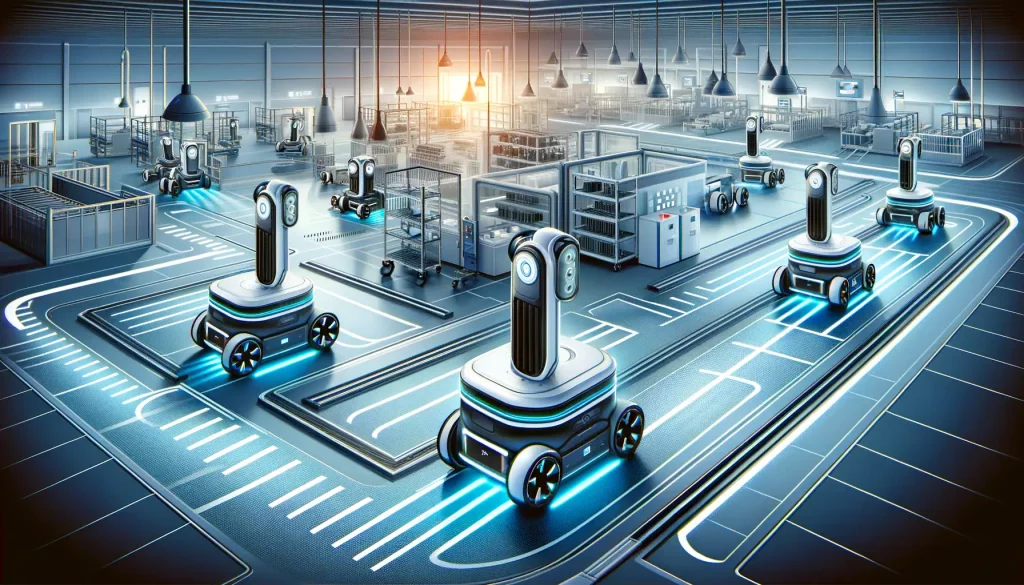
Integration of AI enables fleet intelligence, where multiple autonomous robots communicate and collaborate. Examples include warehouse robots coordinating transport routes, drones forming aerial networks for surveying, and industrial robots working in synchronized assembly lines.
3. Practical Applications
3.1 Manufacturing and Industrial Automation
AI-enabled robots are revolutionizing production lines by performing tasks such as:
- Dynamic assembly: Robots adjust to variable parts and assembly configurations in real time.
- Predictive maintenance: AI predicts equipment failures, reducing downtime.
- Quality control: Vision systems detect defects with higher precision than human operators.
The deep integration of AI and robotic autonomy allows for flexible, reconfigurable factories capable of adapting to new product designs with minimal downtime.
3.2 Logistics and Supply Chain
Autonomous robots streamline warehouse operations:
- Automated picking and sorting: AI determines the most efficient retrieval paths.
- Real-time inventory tracking: Sensor-equipped robots update inventory data continuously.
- Autonomous delivery vehicles: AI-driven drones and ground robots optimize last-mile delivery, reducing cost and increasing speed.
3.3 Healthcare
Robotics combined with AI is transforming medical services:
- Surgical robots: AI assists in precision operations and intraoperative decision-making.
- Rehabilitation robots: Adaptive systems respond to patient progress, enhancing recovery outcomes.
- Autonomous diagnostic systems: AI-powered robots analyze imaging data and lab results for faster, more accurate diagnoses.
3.4 Construction and Infrastructure
AI-robotics integration accelerates construction processes:
- 3D printing robots: Autonomous machines lay complex concrete structures with minimal human input.
- Inspection drones: AI analyzes site conditions, detecting safety hazards and structural anomalies.
- Autonomous machinery: Excavators, loaders, and cranes adjust operations dynamically based on site conditions.
3.5 Defense and Security
AI-driven robotic systems enhance security and defense:
- Unmanned ground and aerial vehicles: Conduct reconnaissance, surveillance, and tactical missions.
- Predictive threat analysis: AI assesses patterns and alerts operators to potential dangers.
- Collaborative multi-agent systems: Coordinated autonomous fleets execute complex missions with minimal human control.
4. Key Advantages
4.1 Enhanced Efficiency
Autonomous AI robots increase operational throughput while reducing errors and rework. Multi-robot systems optimize task allocation dynamically, maximizing productivity.
4.2 Safety Improvement
Robots can perform high-risk tasks—working in hazardous environments, handling dangerous materials, or performing surgeries—reducing human exposure to risk.
4.3 Adaptability and Learning
AI-driven autonomy allows robots to adjust to changing conditions:
- Dynamic path planning in warehouses or factories
- Adapting manipulation strategies in variable assembly environments
- Learning from human interaction to improve task execution
4.4 Cost Optimization
Despite high initial investments, autonomous AI systems reduce long-term costs:
- Decreased downtime through predictive maintenance
- Improved resource utilization
- Reduced labor costs for repetitive or dangerous tasks
5. Challenges and Limitations
5.1 Technical Challenges
- Complexity of sensor fusion and real-time processing
- Robustness of AI algorithms in unpredictable environments
- Integration with existing legacy systems
5.2 Financial and Resource Constraints
- High upfront cost of AI-driven robotic systems
- Ongoing expenses for maintenance, software updates, and energy
- Workforce training for operation and management
5.3 Ethical and Legal Concerns
- Accountability in autonomous decision-making
- Safety standards and liability in industrial or public applications
- Ethical implications of replacing human labor
5.4 Workforce and Societal Impact
- Potential job displacement in repetitive or manual roles
- Need for upskilling to manage AI-integrated systems
- Public acceptance and trust in autonomous robots
6. Strategies for Successful Deployment
6.1 Phased and Incremental Adoption
- Start with pilot programs in controlled environments
- Expand autonomy gradually while monitoring performance and safety
6.2 Human-Robot Collaboration
- Cobots (collaborative robots) combine human intuition with robotic precision
- Hybrid workflows ensure reliability while maximizing efficiency
6.3 Continuous Learning and Optimization
- Reinforcement learning and adaptive algorithms enable ongoing improvement
- Data feedback loops enhance decision-making and operational outcomes
6.4 Risk Management and Compliance
- Implement robust cybersecurity measures
- Establish clear ethical and operational guidelines
- Ensure adherence to local and international regulatory frameworks
7. Case Studies
7.1 Tesla’s AI-Enhanced Autonomous Vehicles
Tesla integrates AI with robotic autonomy to enable self-driving capabilities, combining sensor data fusion, real-time decision-making, and adaptive learning from fleet-wide data to continuously improve driving performance.
7.2 Amazon Robotics in Fulfillment Centers
AI-driven robotic fleets manage inventory, route optimization, and automated picking. The system dynamically adapts to changing warehouse conditions and reduces human error while increasing throughput.
7.3 Surgical Robotics
The da Vinci Surgical System combines AI with robotic manipulation, assisting surgeons in precision procedures. AI algorithms provide predictive guidance, reducing operation time and improving patient outcomes.
7.4 Defense Drones and Autonomous Systems
AI-powered unmanned drones perform surveillance and reconnaissance missions. Multi-agent coordination enables autonomous decision-making and mission planning, reducing risk to human operators in hazardous environments.
8. Future Trends
8.1 Cognitive and Generalized Autonomy
Robots will evolve from task-specific autonomy to generalized intelligence, capable of operating across multiple domains with minimal human oversight.
8.2 Enhanced Human-Robot Symbiosis
Collaborative robots will increasingly function as teammates, leveraging AI to anticipate human intentions and adjust actions in real time.
8.3 AI and Edge Robotics Convergence
Edge computing, AI acceleration chips, and high-bandwidth networks will enable real-time intelligence in decentralized autonomous systems, enhancing responsiveness and reliability.
8.4 Ethical and Societal Frameworks
Future deployment will require robust frameworks addressing safety, accountability, privacy, and ethical considerations, ensuring public trust in AI-driven autonomous systems.
Conclusion
The deep integration of AI and robotic autonomy is one of the defining technological trends of the coming years. By combining perception, reasoning, learning, and decision-making with physical execution capabilities, autonomous AI robots are transforming industries, enhancing operational efficiency, and redefining human-robot collaboration.
While technical, financial, ethical, and societal challenges remain, strategic deployment, hybrid human-robot workflows, and continuous learning mechanisms can mitigate risks. Organizations that embrace this integration thoughtfully will gain competitive advantages, enhanced productivity, and safer, more adaptable operations.
AI-driven robotic autonomy is not merely a future possibility—it is an imminent reality shaping the next generation of intelligent, autonomous systems across industries.