









Introduction
In recent years, robot vision and sensing hardware have become focal points of innovation across the robotics industry. As robots transition from controlled industrial settings to increasingly complex, dynamic real‑world environments, the ability to perceive and interpret the physical world has become as crucial as locomotion, manipulation, and decision‑making. Vision and sensing systems — encompassing cameras, depth sensors, LiDAR, IMUs (Inertial Measurement Units), tactile and radar sensors — are the “eyes and sensory nervous system” of modern robots, underpinning key capabilities such as environment mapping, object recognition, motion planning, and safe human–robot interaction.
This article provides an in‑depth professional exploration of recent new product launches and emerging hardware platforms in the robot vision and sensing domain. It examines the technical advancements, key players, application scenarios, and strategic significance of these innovations. The discussion draws on widely reported announcements from exhibitions, industry conferences, and corporate releases, and it situates these developments within broader trends in embodied AI, flexible perception, and multi‑modal sensing.
1. The Rising Importance of Vision and Sensing in Robotics
1.1 From Basic Cameras to Integrated Perception Systems
Robot vision systems have evolved rapidly from simple 2D cameras used for barcode reading or basic object detection into multi‑modal sensory platforms capable of capturing rich spatial and temporal data. Modern robotic perception systems combine:
- High‑resolution RGB cameras
- Depth sensors (stereo vision, ToF)
- LiDAR systems
- Inertial Measurement Units (IMUs)
- Sensor fusion architectures
Such integration enables robots to perform real‑time environment understanding, dynamic obstacle avoidance, and precise localization — capabilities essential for autonomous navigation and manipulation.
1.2 Sensing as a Core Value Driver
In the robotics value chain, perception hardware is a high‑value component. In humanoid robots, for example, visual and inertial sensors can collectively account for more than 20% of the total system value, emphasizing their strategic importance in next‑generation robotic systems.
2. Recent New Products and Breakthrough Hardware
2.1 RoboSense “Active Camera 2” — Multi‑Modal Vision System
One of the most anticipated vision hardware announcements comes from RoboSense, which debuted the Active Camera 2 (AC2) at IROS 2025. This platform builds on their “Real Eye of Robots” strategy and represents a breakthrough in integrated perception hardware:
- Combines dToF (direct time‑of‑flight) depth sensing, RGB image capture, and IMU motion tracking.
- Hardware‑level synchronization ensures spatial and temporal alignment between depth and image data, with precisions on the order of milliseconds.
- Capable of millimeter‑level depth accuracy in mid‑range perception tasks — a critical requirement for manipulation, navigation, and interaction in unstructured environments.
- Designed from the ground up for robotics use cases, addressing long‑standing challenges in consistent 3D perception and data alignment across sensors.
The AC2 platform exemplifies the trend toward unified perception modules that reduce development complexity and enhance robustness, enabling robots to build more accurate world models.
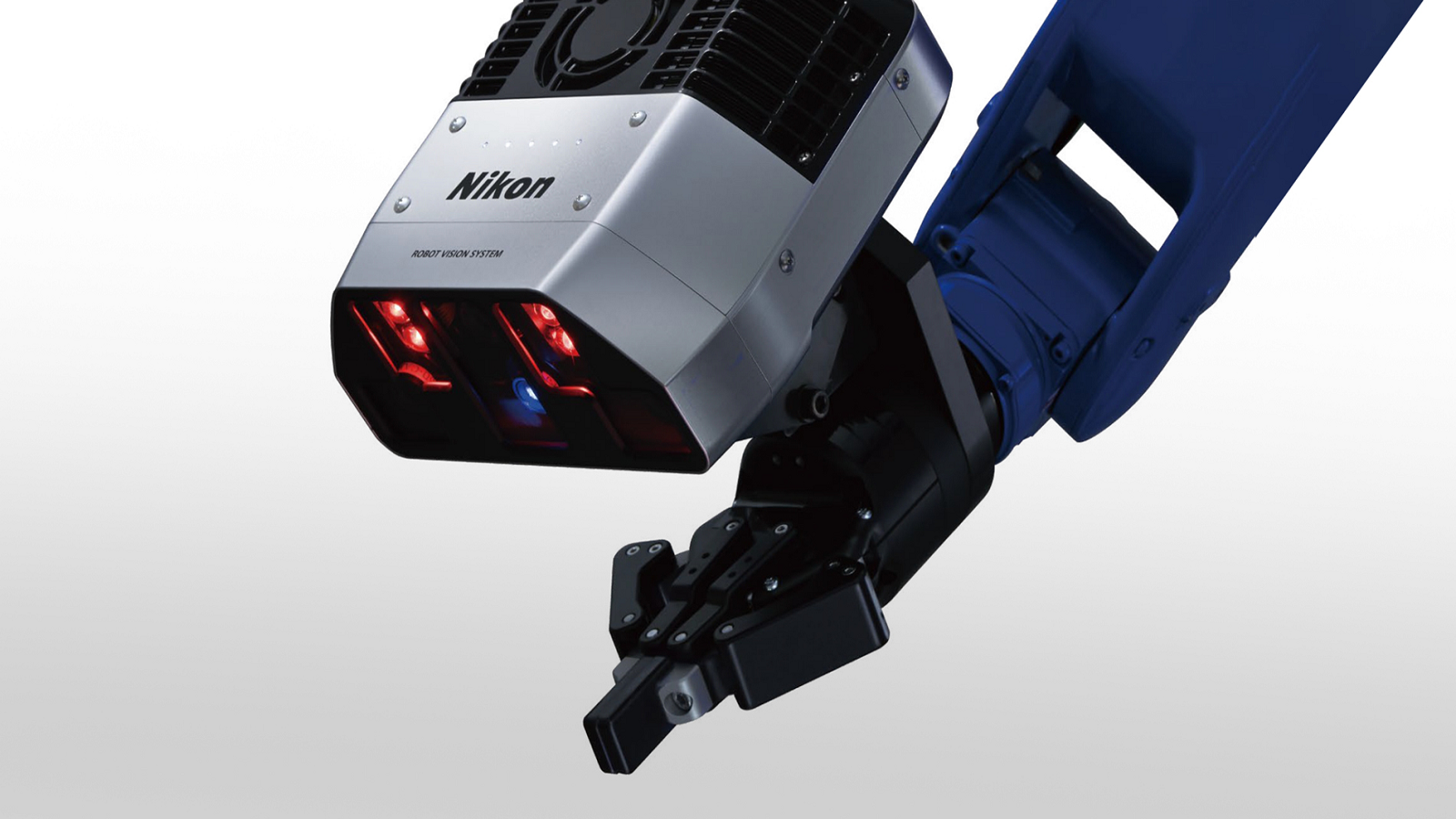
2.2 Nikon’s Lightweight Compact Robot Vision System
Nikon Corporation has introduced a new lightweight and compact 2D vision tracking system aimed specifically at robotics applications. While Nikon is traditionally known for camera optics, this release illustrates broader industry recognition of the importance of high‑precision imaging systems in robots. Accurate visual tracking is key for:
- Object recognition and motion estimation
- Precise positioning in robotic manipulation
- Surface inspection and quality control in industrial applications
This lightweight vision system expands the deployment of camera‑based perception into contexts where size, weight, and power constraints are critical — such as mobile robots and compact manipulators.
2.3 Bosch Sensortec’s Advanced IMU Platform
At CES 2026, Bosch Sensortec unveiled a new generation of inertial sensors — the BMI5 series, including BMI560, BMI563, and BMI570 — designed for robotics, wearables, and XR applications. These MEMS (Micro‑Electro‑Mechanical Systems) sensors offer:
- Ultra‑low noise and increased robustness in motion measurement
- Latency below 0.5 ms, supporting real‑time motion tracking in dynamic environments
- On‑sensor edge AI processing that classifies motion patterns locally, reducing system power consumption
Edge AI capabilities embedded within IMUs represent a significant shift: sensors are no longer passive data sources but active pre‑processors that can improve responsiveness while lowering the bandwidth and power needs of the perception stack.
2.4 Industrial Vision Products from Hikrobot
At its 2025 Machine Vision Product Forum, Hikrobot showcased a broad portfolio of vision hardware geared toward industrial robots and automation. Key highlights include:
- 2.5D and 3D vision systems for high‑precision measurement and defect detection
- Industrial cameras and AI‑enabled smart cameras with embedded vision processing
- Vision‑to‑control integration platforms that help robots coordinate “eye–hand–foot” movements for complex tasks
Such industrial vision systems are tailored to quality inspection, bin‑picking applications, and assembly line coordination, and they leverage advanced algorithms to interpret visual inputs in real time.
2.5 Infineon and HTEC Humanoid Robotic Head
In a demonstration at Infineon’s OktoberTech Silicon Valley 2025, Infineon and HTEC unveiled a humanoid robotic head prototype loaded with advanced sensing technologies:
- 60 GHz radar for precise spatial awareness
- Time‑of‑Flight depth sensors for real‑time 3D environment understanding
- High‑performance digital MEMS microphones for sound localization
This multi‑modal sensor integration illustrates how robotics increasingly combines vision with radar and audio sensing to build richer semantic understanding of environments — a powerful enabler of adaptive and interactive autonomous robots.
3. Emerging Trends and Market Dynamics
3.1 Multi‑Modal Sensor Fusion
The integration of heterogeneous sensors — RGB cameras, LiDAR, radars, IMU, and even microphones — into a single cohesive perception stack is now an industry norm for high‑end robotic systems. Multi‑modal fusion improves environment understanding by:
- Complementing each sensor’s strengths (e.g., LiDAR depth with camera texture)
- Mitigating weaknesses in individual modalities (e.g., poor lighting for cameras, weather effects for LiDAR)
- Providing redundancy and resilience in perception pipelines
These fused systems help robots navigate, manipulate, and collaborate safely and efficiently in changing scenarios.
3.2 Solid‑State LiDAR for Robotics
While LiDAR was once expensive and bulky, recent innovations — particularly fully solid‑state LiDAR — are rapidly making these sensors suitable for robotics. As highlighted in a recent overview of CES 2026 LiDAR progress:
- Solid‑state units with wide fields of view and high point cloud generation rates are being optimized for small platforms.
- Compact FMCW radar variants have emerged that provide both range and velocity data, enabling robots to detect moving obstacles in real time.
- Partnerships with lawn mower and autonomous delivery robot developers show LiDAR moving beyond automotive use cases into everyday robotic platforms.
Solid‑state LiDAR’s commercial viability marks a significant shift in how robots perceive complex environments.
4. Technological Challenges and R&D Directions
4.1 Real‑Time Data Fusion and Latency
Integrating multiple sensor modalities requires precise time synchronization and low‑latency data processing. Hardware solutions such as synchronized camera–LiDAR modules (e.g., AC2) and edge‑AI‑enabled IMUs help, but effective sensor fusion architectures remain a core R&D challenge.
4.2 Robustness in Unstructured Environments
Robots operating outside controlled settings must handle:
- Varying lighting conditions
- Dynamic obstacles (humans, animals, moving objects)
- Cluttered or reflective surfaces
Advanced perception hardware combined with deep learning and physical models is critical for tackling these challenges.
4.3 Power, Size, and Cost Optimization
Balancing high performance with practical constraints — power consumption, weight, and cost — is especially crucial for mobile and service robots. Lightweight, low‑power sensing hardware, and on‑sensor inference engines contribute significantly to operational viability.
5. Impact Across Robotics Applications
5.1 Industrial Automation
High‑precision vision systems enable industrial robots to perform:
- Quality assurance and inspection at high speeds
- Adaptive bin picking and part manipulation
- Real‑time coordination between multiple robotic arms
Smart cameras and integrated 3D vision hardware help industrial robots tackle tasks previously limited to human workers.
5.2 Autonomous Navigation and Local Mapping
Mobile robots — from warehouse AMRs to outdoor delivery units — rely on advanced perception systems for:
- Simultaneous Localization and Mapping (SLAM)
- Collision avoidance with dynamic obstacles
- Path planning in complex environments
LiDAR, RGB‑D cameras, and IMU integration together form the backbone of autonomous navigation stacks.
5.3 Human–Robot Interaction
Vision and sensing hardware also play a central role in robots’ ability to interact safely and intuitively with humans. Depth‑aware vision systems support:
- Gesture recognition
- Proximal safety bounding
- Facial and emotion detection in service robots
Multi‑modal sensing enhances machines’ understanding of social contexts and human intent.
6. Industrial and Research Ecosystem
6.1 Sensor Manufacturers and Startups
The perception hardware ecosystem includes:
- Leading semiconductor and sensor firms developing advanced CMOS and depth sensors
- LiDAR and radar specialists pushing solid‑state perception technologies
- Robotics startups integrating multi‑modal hardware with AI software stacks
This ecosystem reflects both vertical specialization and growing horizontal integration among hardware and AI solution providers.
6.2 Standardization and Interoperability
As robotic systems become more complex, the need for standardized sensor interfaces and data formats increases. Interoperability enables modular system design and broader reuse of hardware components.
Conclusion
The rapid emergence of robot vision and sensing hardware products reflects a deeper shift in the robotics industry toward complete, perception‑driven autonomy. From solid‑state LiDAR units and synchronized multi‑modal camera systems to advanced IMUs with built‑in edge AI, the latest offerings demonstrate that robotics perception hardware is becoming more powerful, compact, and integrated than ever before.
These innovations are not just incremental upgrades; they represent a fundamental restructuring of how robots sense, interpret, and interact with the world — enabling real‑time adaptive behavior in environments that were previously out of reach for autonomous machines. As robotics continues to expand into logistics, manufacturing, healthcare, service sectors, and beyond, vision and sensing hardware will remain central to unlocking the full potential of intelligent machines.
In the near future, continued progress in sensor fusion, low‑latency processing, and robust perception algorithms will further accelerate the commercial deployment of robotics — driving an era where machines can see and understand the world with unprecedented depth and reliability.