









Introduction
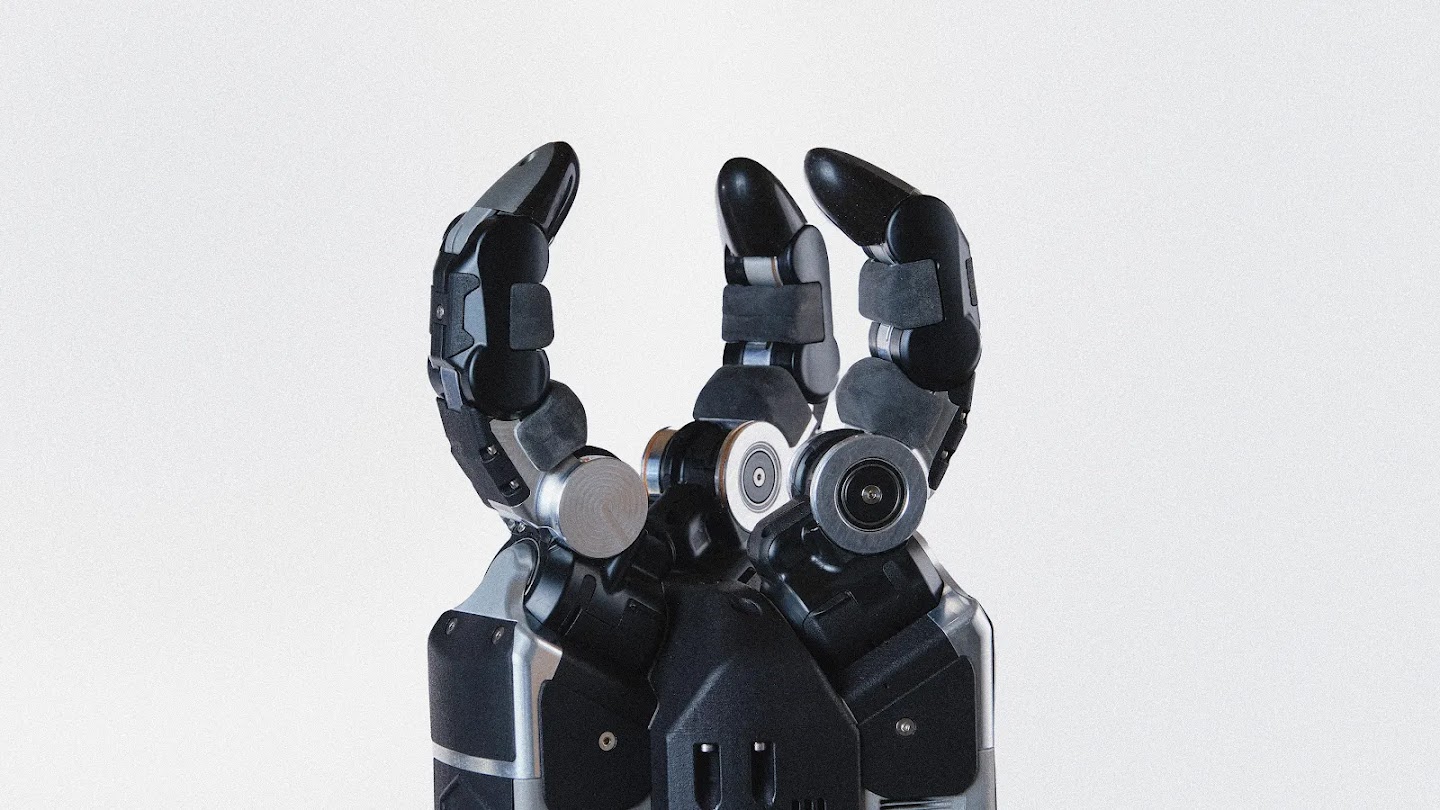
In the evolving landscape of robotics, manipulative capabilities—specifically dexterous hands, mechanical hands, and modular end‑effector tools—are rapidly becoming core enablers for flexible operation across industrial, service, and research domains. Unlike traditional fixed parallel jaw grippers, these advanced hardware platforms deliver human‑like manipulation, multi‑modal grasping, tool use, and robust interaction with unstructured environments. This article examines the recent wave of new dexterous hardware platforms and modular grasping solutions, exploring their design principles, technological innovations, application scenarios, and strategic significance in advancing robotic autonomy and utility.
As robots are tasked with increasingly complex tasks—such as assembly, inspection, maintenance, and dynamic interaction with objects—the demands on end‑effector hardware have shifted from simple pick‑and‑place operations to rich manipulation behaviors that approach or even exceed human hand capabilities. These capabilities are driven by advancements in actuation, sensing, control, and modular design, supported by rapidly maturing AI and machine perception systems.
The following sections provide a comprehensive, professional overview of the state of dexterous robotic hardware, including representative products, underlying technologies, integration frameworks, industrial applications, and future directions.
1. The Rising Importance of Dexterous Manipulation
1.1 Why Dexterous Hands Matter
In robotics, end‑effectors serve as the interface between a robot and its environment. For decades, basic grippers with two or three fingers sufficed for structured industrial tasks—e.g., repetitive pick‑and‑place in factory automation. However, when robots move into unstructured environments—such as homes, hospitals, construction sites, logistics centers, and research labs—they must handle objects of varying shape, size, texture, and orientation.
Dexterous hands and modular grasping tools enable:
- Multi‑form grasping: power grips, precision pinches, extended contact surface holds
- Tool use and dynamic interactions: screwing, turning, tool manipulation that would traditionally require human hands
- Adaptive control: force/torque modulation, compliance in grasping, tactile feedback integration
- Complex object manipulation: handing off between grippers, in‑hand re‑orientation of objects
Market studies underscore this trend, with reports highlighting dexterous hands as critical enablers for robot commercialization and real‑world productivity gains. A key industry analysis describes the dexterous hand as a core executive unit whose precision and flexibility directly define task performance and completion quality in complex operations.
1.2 Market Trends and Growth
Growth projections position dexterous end‑effector technologies as a major contributor to the broader robotics market:
- Dexterous hands are gaining renewed focus as autonomous systems expand beyond fixed production lines into variable contexts where adaptability is essential.
- Analysts estimate high compound annual growth rates for dexterous robot hand components as robots become integrated into daily services and industrial automation.
The convergence of robotics, AI, tactile sensing, and modular hardware design suggests that the coming years will be transformative for robotic manipulation capabilities.
2. Key Hardware Platforms and Innovation in Dexterous Hands
This section highlights representative dexterous hand platforms and modular grasping tools that have gained attention for their high flexibility, expansion capability, and operational performance.
2.1 Paxini DexH5: Multi‑Dimensional Tactile Dexterous Hand
The Paxini DexH5 is a state‑of‑the‑art robotic hand designed for tactile manipulation and stable grasping:
- Multi‑joint bionic structure designed to replicate key human hand movements such as grasping, rotation, and pressing.
- Embedded tactile sensing array of nearly 396 multi‑dimensional units, enabling context‑aware contact feedback that improves gripping reliability and slip detection.
- Payload capacity up to 4 kg and precise force control at 0.1 N, supporting a range of tasks from logistics handling to nuanced part manipulation.
- Industrial communication compatibility (EtherCAT/Modbus), enabling integration with automation controllers and real‑time systems.
Designed as both a research platform and industrial end‑effector, the Paxini DexH5 stands out for its combined tactile feedback and bionic motion, which significantly enhances adaptability in dynamic environments.
2.2 Realhand L6: High‑Precision Bionic Manipulator
The Realhand L6 exemplifies next‑generation robotic hand design with human‑like dynamics:
- Six active and five passive degrees of freedom (DoF) for fluid, human‑comparable articulation.
- High grip force and load capacity (up to 5 kg) across diverse grasp configurations.
- Ultra‑fast gesture execution (~1.1 s for full motion sequences), improving responsiveness in complex manipulation tasks.
- Industrial‑grade interfaces (CAN FD/EtherCAT) for seamless connection to robotic arms, mobile platforms, and ROS2 systems.
The Realhand L6 combines speed, precision, and payload handling in a compact form factor, making it suitable for research and deployment in automation, human‑robot collaboration, and interactive robotics.
2.3 Tesollo’s DELTO Gripper Series: Modular Multi‑Finger Manipulators
Tesollo Inc. has been active in the gripper space with its DELTO Gripper series, designed for humanoid robots and automation systems:
- Includes 3‑finger (DG‑3F) and 5‑finger (DG‑5F) configurations optimized for human‑like manipulation.
- The DG‑5F offers 20 DoF, enabling nuanced control over individual finger joints, closely mimicking the biomechanics of the human hand.
- Built‑in gripping algorithms enhance adaptability across material types and geometric complexities.
- Support for industrial communication protocols simplifies integration with existing automation controllers and field devices.
The broad DELTO lineup underlines the trend toward scalable, modular grippers that can be matched to specific robot platforms and use cases—from high‑precision assembly to flexible handling tasks.
2.4 DexRobot: Integrated Dexterous End‑Effector Systems
DexRobot platforms emphasize a system‑level approach, combining:
- High‑DoF actuators and mechanical infrastructures
- Force and tactile sensing arrays
- Embedded control pipelines and perception loops
- Tool‑aware motion planning and interactive manipulation
Unlike simple grippers, these platforms function as intelligent end‑effectors that can coordinate with visual and tactile feedback to perform interactive tasks like tool usage, collaborative assembly, and environment‑interactive manipulation.
2.5 Experimental and Research Platforms
Academic and research communities continue to push manipulation capabilities:
- The Krysalis Hand integrates lightweight biotic design with high payload support and multiple DoFs, confirming the feasibility of dexterous manipulation with compact end‑effectors.
- Hybrid end‑effectors combining suction and mechanical gripping, such as the VacuumVLA concept, expand task feasibility by enabling both adhesion and contact grasping without frequent reconfiguration.
- Advanced wrists like DexWrist focus on improving manipulator reach and agility in cluttered environments, complementing end‑effector performance.
Together, these research platforms reveal the multi‑directional innovation paths being explored in the dexterous manipulation domain.
3. Modular Grasping: The New Paradigm in End‑Effector Design
3.1 What Is Modular Grasping?
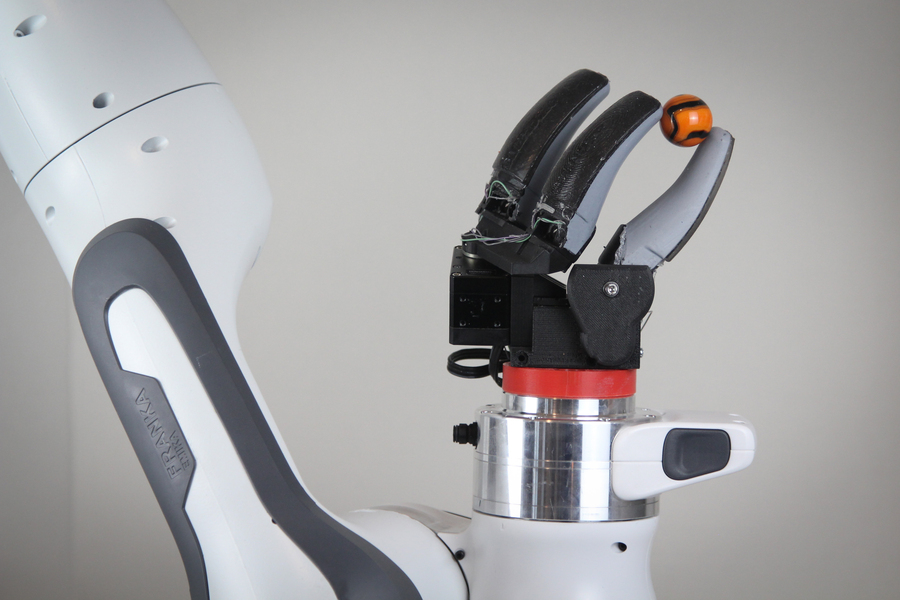
Modular grasping tools represent a design philosophy wherein multiple grasping mechanisms can be reconfigured or interchanged on a robotic arm or mobile platform without extensive system redesign. Rather than a fixed two‑finger gripper or a one‑size‑fits‑all end‑effector, modular systems provide flexible, adaptable solutions tailored to diverse tasks.
Key capabilities include:
- Tool swapping (e.g., from a gripper to a suction cup or hybrid module)
- Reusable dexterous hand units across multiple robot platforms
- Integrated sensing modules that unify feedback from whichever grasping configuration is engaged
Modularity enhances cost‑effectiveness, reduces development overhead, and accelerates deployment in multi‑task scenarios.
3.2 Modular Grasping Tools in Practice
Examples of modular strategies include:
- Combined mechanical and suction end‑effectors that address multiple manipulation modes without changing tools.
- Dexterous hands that are plug‑and‑play with standard robot wrist mounts and communication interfaces, enabling rapid reconfiguration across robotic platforms.
Modular grasping approaches are increasingly prevalent in industrial automation lines, logistics, service robots, and embodied AI research efforts.
4. Technical Innovations Underlying Flexibility
4.1 Multi‑DoF Actuation and Control
A central technical driver of manipulation flexibility is the increase in degrees of freedom (DoF) within end‑effector hardware. Higher DoF allows:
- Independent finger actuation
- Complex manipulation trajectories
- Natural motion patterns that support diverse grasp types
High DoF also demands advanced control algorithms for real‑time trajectory planning, feedback integration, and force regulation.
4.2 Tactile and Force Sensing Integration
Tactile sensing transforms an end‑effector from a simple gripper into an interactive manipulation system:
- Surface contact detection
- Force/torque modulation
- Slip prediction and compensation
These capabilities are essential for delicate tasks such as assembling intricate components or handling fragile materials.
4.3 Embedded Perception and Local Decision Making
Modern dexterous hands and modular tools increasingly incorporate on‑board perception and microcontrollers that:
- Process sensor feedback locally
- Make rapid adjustments during grasp execution
- Reduce reliance on central processing loops
This trend enhances responsiveness and robustness, especially in dynamic environments.
5. Application Scenarios and Industry Use Cases
5.1 Industrial Automation and Flexible Assembly
Advanced hands are transforming traditional automation by enabling robots to:
- Perform assembly with variable parts
- Handle non‑standard objects without tooling changeovers
- Conduct quality inspection with fine contact sensing
These capabilities reduce the need for bespoke mechanical fixtures and improve production agility.
5.2 Logistics and Warehouse Handling
In logistics, manipulators with dexterous hands and modular tools support:
- Handling packages of varied shapes and weights
- Sorting, stacking, and dynamic re‑routing of goods
- Cooperative tasks in shared human‑robot workflows
Tactile and visual feedback enhances performance in cluttered or unstructured storage environments.
5.3 Service Robotics and Human Interaction
Service robots equipped with dexterous end‑effectors can:
- Assist with household tasks
- Handle delicate objects such as dishes or tools
- Provide support to elderly or disabled individuals
The combination of perception and manipulation extends robot utility beyond fixed automation.
5.4 Research and Development Platforms
Research labs leverage dexterous hands to:
- Study embodied intelligence
- Benchmark manipulation algorithms
- Prototype new applications in interaction‑rich tasks
These systems play a pivotal role in advancing the theoretical and practical foundations of robotic manipulation.
6. Future Directions and Challenges
6.1 Balancing Dexterity and Robustness
Designing hardware that can replicate human dexterity while maintaining industrial robustness and durability remains a challenge. Continued advances in actuation, materials, and control are necessary.
6.2 Standardization and Modular Ecosystems
As modular grasping tools proliferate, developing standardized mounts, communication protocols, and software interfaces will be essential to enable plug‑and‑play interoperability across robots and end‑effectors.
6.3 Integration with AI and Perception Stacks
Efficient manipulation requires close coupling between hardware and AI systems that enable vision‑guided grasp planning, tactile interpretation, and task‑aware control.
Conclusion
The latest wave of dexterous hands, mechanical manipulators, and modular grasping tools demonstrates that robotic manipulation is no longer a static, isolated capability segment. Instead, it is becoming a dynamic, flexible, and highly integrated domain that enables robots to perform complex tasks in diverse environments, from factories and warehouses to service and research settings.
Platforms like Paxini DexH5, Realhand L6, and Tesollo’s DELTO series exemplify how modern hardware innovation pushes the boundaries of human‑like dexterity, precision, and adaptability. Combined with modular design philosophies and multi‑modal sensing, these advancements promise to expand robotics beyond rigid repetition and open the door to genuinely flexible machine capability.
As integration with AI, perception, and control continues to deepen, the future of robot manipulation will likely see even higher degrees of autonomy, tactile awareness, and tool‑use intelligence—paving the way for robots that can manipulate the world with a finesse once thought exclusive to biological hands.