









Introduction
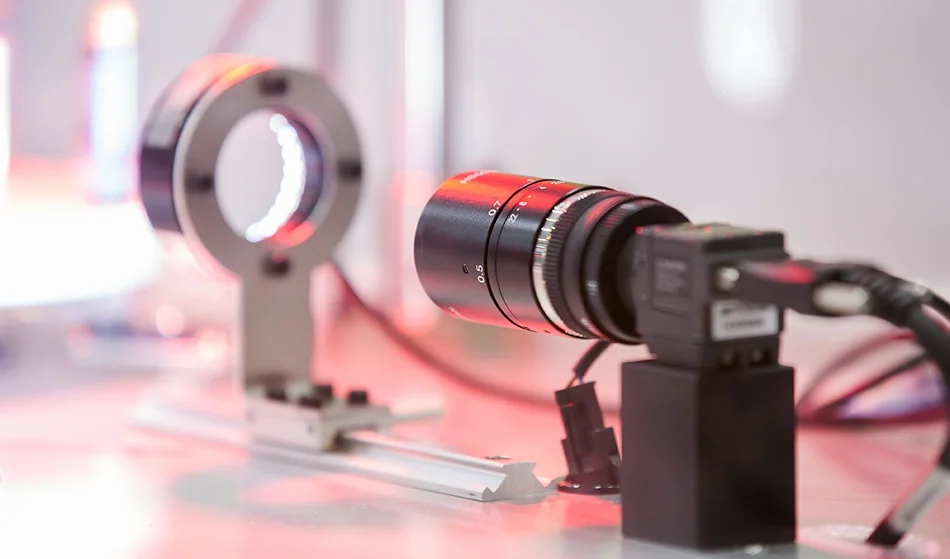
The robotics industry is entering a phase of accelerated innovation, driven by advances in vision sensing and robot body design. These two domains are tightly coupled: sensors enable robots to perceive and interpret their environment, while structural innovations optimize mobility, stability, and task execution. Modern robotics applications—from autonomous navigation and industrial automation to service robots and humanoids—rely on integrated perception and mechanical design to achieve higher autonomy, precision, and adaptability.
This article provides a comprehensive and professional analysis of innovations in vision sensing technologies and robotic body components. It covers sensor modalities, integration with actuation and computation, structural design strategies, performance optimization, and the synergistic effects of combining advanced perception with innovative mechanical architectures.
1. Vision Sensing in Modern Robotics
1.1 Overview of Robotic Vision
Vision sensing allows robots to interpret the spatial and semantic properties of their environment. It is critical for:
- Autonomous navigation: Mapping and obstacle avoidance
- Object manipulation: Precise grasping and tool use
- Human-robot interaction: Gesture recognition and safety
- Inspection and monitoring: Quality assurance and surveillance
Vision systems have evolved from simple 2D cameras to multi-modal sensing platforms that combine depth perception, motion analysis, and AI-driven interpretation.
1.2 Key Vision Sensor Technologies
- 2D RGB Cameras
- Standard visual input
- Low cost, high resolution
- Limited depth perception
- Depth Cameras (Time-of-Flight, Structured Light)
- Capture 3D geometry of objects
- Essential for grasping, obstacle avoidance, and environment mapping
- LiDAR (Light Detection and Ranging)
- High-precision distance measurement
- Effective for navigation and large-scale mapping
- Often combined with SLAM (Simultaneous Localization and Mapping) algorithms
- Stereo Vision Systems
- Mimic human binocular vision
- Provide depth perception with standard cameras
- Event Cameras
- Capture high-speed motion and dynamic scenes
- Low latency, energy-efficient
- Tactile and Proximity Sensors Integration
- Combine with vision to enhance manipulation and collision avoidance
2. Innovations in Robotic Body Components
2.1 Mechanical Structures
The design of robot bodies significantly impacts mobility, payload capacity, and energy efficiency. Innovations include:
- Lightweight composite materials: Reduce energy consumption and increase maneuverability
- Articulated modular segments: Enable customization for specific tasks
- Exoskeletal designs: Improve load distribution and structural strength
- Compliant joints and flexible actuators: Enhance safety in human-robot interaction
2.2 Locomotion Systems
Robotic body design innovations have expanded locomotion capabilities:
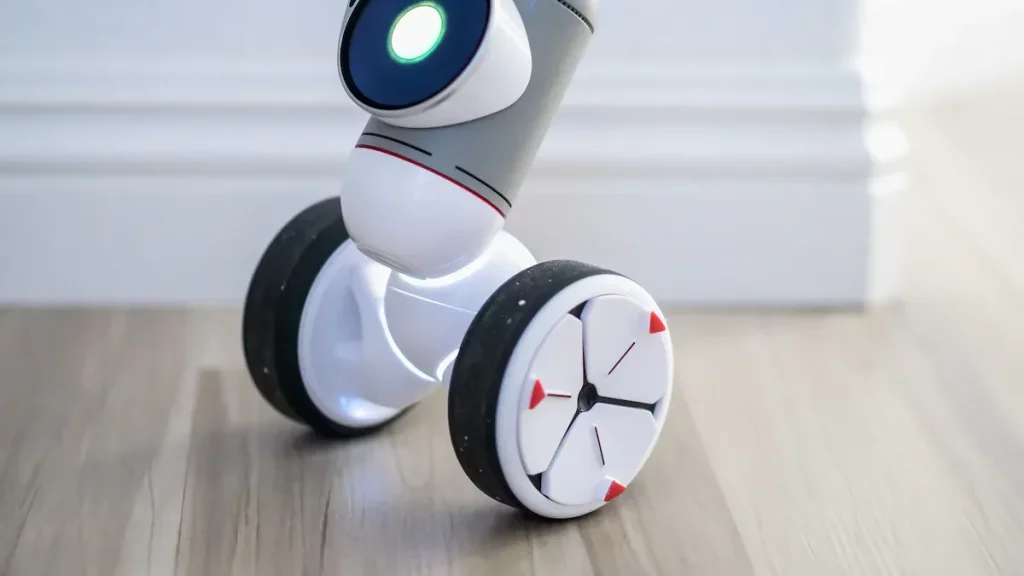
- Wheeled and tracked robots: High-speed mobility on flat surfaces
- Legged robots: Navigate uneven or dynamic terrain
- Hybrid systems: Combine wheels and legs for adaptability
- Aerial and swimming platforms: For exploration and inspection tasks
2.3 Actuation and Power Distribution
- High-torque, compact motors optimize weight and efficiency
- Distributed power systems reduce localized overheating and improve endurance
- Energy recovery mechanisms enhance operational time in mobile robots
3. Integrating Vision Sensing with Mechanical Design
3.1 Sensor Placement and Field of View
Optimal placement of cameras, LiDAR, and other sensors is crucial:
- Avoid occlusions caused by moving parts
- Maximize coverage for navigation and obstacle detection
- Align sensor orientation with task requirements (e.g., grippers, inspection cameras)
3.2 Structural Support for Precision
- Rigid mounts for high-accuracy sensors
- Vibration damping for cameras and LiDAR
- Modular sensor holders for quick reconfiguration
3.3 Real-Time Data Processing
- Sensor data must be integrated with motion planning and control
- AI and edge computing allow real-time interpretation of complex scenes
- Advanced fusion of vision and tactile feedback enables adaptive grasping and locomotion
4. Advanced Perception for Complex Tasks
4.1 Object Recognition and Manipulation
- AI algorithms interpret sensor data for object identification
- 3D vision enables precise grasping of irregular or delicate objects
- Multi-modal sensing (vision + force feedback) enhances reliability
4.2 Navigation and Mapping
- LiDAR and depth cameras allow dynamic environment mapping
- SLAM algorithms are enhanced by robust mechanical platforms with stable sensor mounts
- Vision-driven predictive control improves autonomous movement in unstructured environments
4.3 Human-Robot Interaction
- Gesture recognition using RGB-D cameras
- Real-time adjustment of movements based on visual feedback
- Safety-critical applications rely on high-fidelity perception combined with compliant body components
5. Design Strategies for Vision-Enabled Robotic Bodies
5.1 Co-Design Principles
- Mechanical and sensory co-design ensures that sensors operate optimally within the physical structure
- Example: Flexible necks for humanoids or rotating mounts for drones allow wide field-of-view coverage
5.2 Modularity and Extensibility
- Swappable vision modules and end-effectors
- Enables rapid adaptation to new tasks without redesigning the robot
- Supports incremental upgrades as sensor technology evolves
5.3 Material and Structural Optimization
- Lightweight frames improve energy efficiency without compromising strength
- Anti-vibration structures enhance vision accuracy
- Structural redundancy ensures robustness under dynamic conditions
6. Applications Across Industries
6.1 Manufacturing and Logistics
- Automated inspection and quality control
- Vision-guided pick-and-place with modular manipulators
- Warehouse navigation with combined LiDAR and RGB-D perception
6.2 Healthcare and Service Robotics
- Patient assistance robots with compliant arms and vision sensors
- Disinfection or delivery robots navigating dynamic hospital environments
6.3 Field Robotics and Exploration
- Legged robots with vision perception for uneven terrain
- Drones with LiDAR and RGB-D cameras for inspection, mapping, and surveillance
6.4 Research and Prototyping
- Vision and body modularity accelerate development cycles
- Rapid reconfiguration of sensors and structural modules supports experimental studies
7. Emerging Trends
7.1 AI-Enhanced Sensor Fusion
- Combines multiple sensor inputs for robust perception
- Enables predictive motion planning and adaptive task execution
7.2 Soft Robotics Integration
- Flexible, compliant structures combined with embedded vision
- Improved interaction with humans and fragile objects
7.3 Energy-Efficient Sensing
- Low-power depth cameras, event-based sensors
- Structural design that reduces energy loss while maintaining mobility
7.4 Standardized Interfaces
- Modular mounts for vision sensors
- Standard electrical and data interfaces for rapid integration
8. Challenges and Solutions
8.1 Mechanical Constraints
- Balancing rigidity and flexibility for both mobility and vision accuracy
- Weight and size constraints limit sensor payloads
8.2 Environmental Robustness
- Dust, moisture, and vibration affect sensor reliability
- Solutions include protective housings, active calibration, and sensor redundancy
8.3 Data and Computational Load
- High-resolution sensors generate large data streams
- Edge computing and optimized AI algorithms reduce latency and enhance real-time responsiveness
9. Future Directions
- Self-reconfigurable robotic bodies adapting to different tasks or terrains
- Smart vision modules with onboard AI for autonomous perception
- Integration of tactile and visual sensing for complex manipulation
- Collaborative modular systems that can share perception data in multi-robot environments
Conclusion
Vision sensing and robotic structural innovation are mutually reinforcing drivers of next-generation robotics. Advanced perception systems enable robots to interact intelligently with their environment, while innovative body designs optimize mobility, stability, and operational efficiency.
Key insights include:
- Integrated design of sensors and mechanical components is essential for high-performance robotics
- Modularity in vision systems and structural components enhances adaptability and future-proofing
- Emerging trends in AI, soft robotics, and energy-efficient sensors will expand capabilities in complex, dynamic environments
By combining cutting-edge vision sensing with innovative body structures, robots are becoming more autonomous, versatile, and capable across industrial, service, and exploratory domains.