









Introduction
The robotics industry is undergoing a rapid transformation, with open data platforms and collaborative communities playing an increasingly central role. Traditionally, robotics research and development were confined to corporate labs and academic institutions. However, the emergence of open-source datasets, simulation environments, and developer communities has dramatically accelerated innovation, enabling rapid experimentation, benchmarking, and knowledge sharing.
Open data platforms and robotics communities serve as catalysts for democratizing robotics research, providing access to high-quality sensor data, software frameworks, and collaboration opportunities. By leveraging these resources, developers, researchers, and startups can develop, test, and deploy robotics solutions faster, bridging the gap between experimental prototypes and commercial applications.
This article explores the intersection of open data platforms, robotics communities, and innovation, including:
- The evolution of open robotics initiatives
- Benefits of shared data and collaborative development
- Community-driven software and hardware ecosystems
- Applications across industries
- Challenges, standards, and future trends
1. The Rise of Open Data Platforms in Robotics
1.1 Historical Context
Robotics development has traditionally been siloed due to:
- Proprietary datasets and software frameworks
- Expensive hardware and infrastructure requirements
- Limited collaboration between institutions
The creation of open datasets, simulation platforms, and benchmarking tools has shifted the paradigm, enabling:
- Transparent performance evaluation of algorithms
- Reproducibility of experiments
- Rapid prototyping for new applications
1.2 Key Open Robotics Platforms
Some notable platforms and initiatives include:
- OpenAI Gym and Robotics Environments
- Standardized environments for reinforcement learning experiments
- Provides simulated manipulation, locomotion, and navigation tasks
- Robot Operating System (ROS)
- Modular, open-source software framework for robot control
- Supports diverse hardware platforms and sensor integrations
- KITTI and nuScenes Datasets
- Publicly available datasets for autonomous driving perception research
- Includes LiDAR, camera, GPS, and IMU data
- Open Robotics Hardware Projects
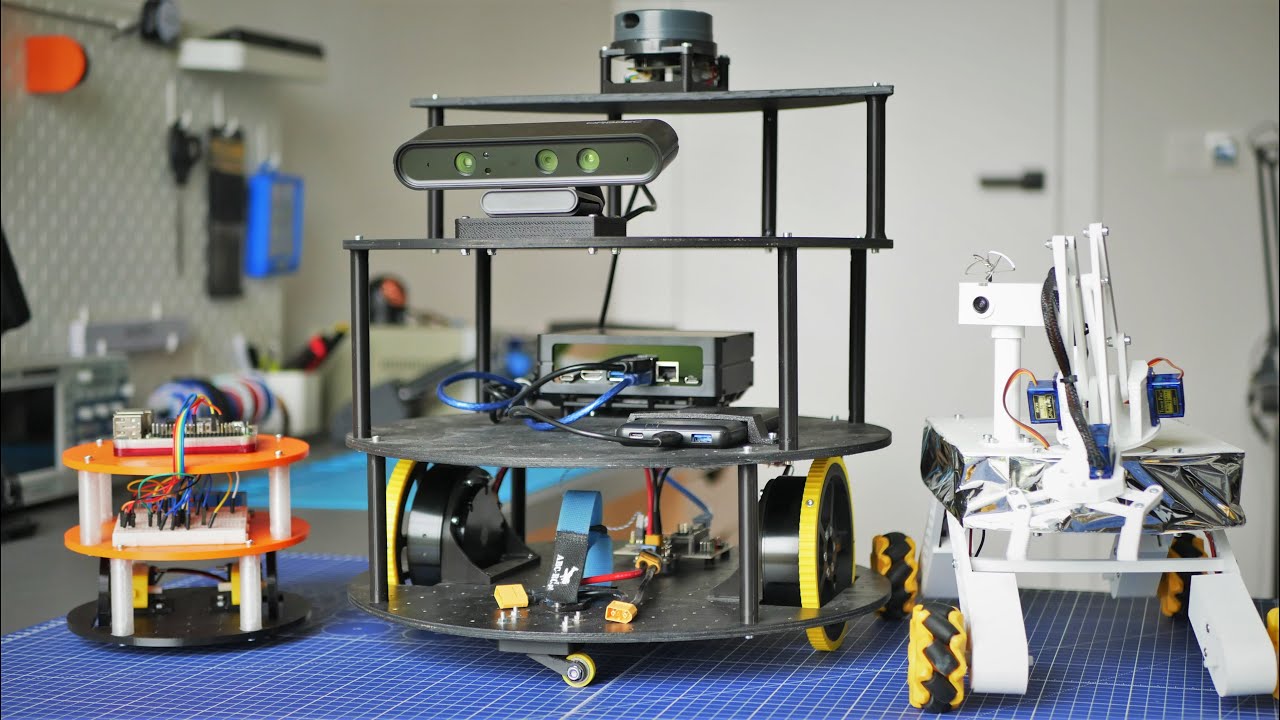
- Platforms like TurtleBot and OpenManipulator
- Enable low-cost experimentation with real robots
2. Benefits of Open Data Platforms
2.1 Accelerating Innovation
- Developers can reuse and build upon existing datasets, avoiding redundant data collection
- Benchmarks enable rapid evaluation of new algorithms
- Shared simulation environments reduce reliance on expensive physical prototypes
2.2 Democratizing Access
- Researchers, startups, and hobbyists gain access to high-quality resources
- Lower barrier to entry encourages diverse participation in robotics innovation
2.3 Enabling Reproducibility and Standardization
- Standard datasets and APIs allow consistent evaluation across algorithms
- Facilitates comparison of methods and replication of results, which is crucial for scientific progress
2.4 Fostering Collaborative Development
- Developers can share code, models, and tools in community repositories
- Collaborative debugging and feature development accelerate software maturity
3. Robotics Communities as Innovation Catalysts
3.1 Community Structures and Roles
- Online forums and repositories: GitHub, ROS Discourse, Reddit, and Stack Overflow
- Academic-industry collaborations: Joint datasets, open challenges, and workshops
- Hackathons and competitions: Encourage rapid experimentation and prototype development
3.2 Collective Knowledge and Skill Sharing
- Experienced developers mentor newcomers through tutorials and documentation
- Open communities crowdsource solutions to complex problems, from manipulation to perception
3.3 Encouraging Interdisciplinary Collaboration
- Robotics involves AI, computer vision, control theory, and mechanical design
- Communities bring together experts from multiple fields to solve integrated robotics challenges

4. Open Data and Community-Driven Innovation in Practice
4.1 Autonomous Vehicles
- Open driving datasets like KITTI, nuScenes, and Waymo Open Dataset accelerate research in:
- Object detection and tracking
- Sensor fusion
- Motion planning
- Community-driven benchmarks standardize performance evaluation and reporting
4.2 Manipulation and Industrial Robotics
- Open-source robot arms and simulation platforms enable:
- Learning-based grasping and pick-and-place experiments
- Collaborative algorithm development across institutions
- Example: OpenAI’s robotic hand manipulation research relied heavily on shared simulation frameworks
4.3 Service and Assistive Robotics
- Open datasets of household environments allow robots to learn navigation, object interaction, and human behavior prediction
- Communities contribute shared task definitions, success metrics, and evaluation protocols
4.4 Swarm and Multi-Robot Systems
- Open simulation platforms allow testing of cooperative strategies without expensive multi-robot setups
- Communities share control algorithms and communication protocols for swarm coordination
5. Integration of AI and Open Robotics
5.1 Deep Learning on Open Datasets
- Publicly available LiDAR, RGB-D, and tactile datasets enable data-driven perception and control
- AI models trained on open datasets generalize faster due to diverse real-world scenarios
5.2 Reinforcement Learning and Simulation
- Platforms like OpenAI Gym and PyBullet support sim-to-real transfer for robotic tasks
- Community-developed environments reduce development time and increase research reproducibility
5.3 Benchmarking and Leaderboards
- Leaderboards in autonomous navigation, object manipulation, and robot learning foster competitive innovation
- Encourage continuous improvement and standardization
6. Challenges and Limitations
6.1 Data Quality and Diversity
- Open datasets may lack coverage for edge cases or unusual scenarios
- Risk of biases affecting AI model performance
6.2 Hardware Constraints
- Simulation environments cannot perfectly replicate real-world physics
- Transfer from simulated to physical robots requires careful domain adaptation
6.3 Intellectual Property and Licensing
- Open platforms must balance innovation sharing with protection of proprietary work
- Clear licensing policies are critical for community trust and collaboration
6.4 Community Management
- Ensuring constructive contributions and avoiding fragmentation requires active moderation and governance
- Maintaining high-quality documentation and tutorials is essential
7. Future Trends in Open Robotics Platforms
7.1 Cloud-Based Open Platforms
- Integration of cloud computing with open datasets for scalable simulation and distributed learning
- Enables real-time collaboration across geographies
7.2 Standardized APIs and Protocols
- Improved interoperability across hardware and software
- Simplifies integration of new sensors, actuators, and AI models
7.3 Multi-Modal Open Datasets
- Inclusion of vision, LiDAR, tactile, and audio data for richer robot learning
- Supports complex tasks like human-robot interaction and multi-agent coordination
7.4 Collaborative Benchmarking
- Community-driven competitions to evaluate safety, efficiency, and adaptability of robots
- Promotes open innovation in real-world scenarios
8. The Societal and Industrial Impact
- Democratized access accelerates robotic workforce augmentation
- Lowers R&D costs for startups and academic labs
- Encourages inclusive innovation, allowing global participation in robotics research
- Promotes ethical and safe AI integration through shared standards and open feedback
Conclusion
Open data platforms and robotics communities are catalysts for innovation, providing:
- Accessible, high-quality datasets for AI-driven perception, control, and learning
- Collaborative development frameworks that reduce redundancy and accelerate prototyping
- Community knowledge sharing that spans hardware, software, and interdisciplinary expertise
- Standardized benchmarking for reproducible and transparent evaluation
By combining open data, shared platforms, and vibrant developer communities, the robotics industry is democratizing innovation, enabling rapid advancement from research to deployment, and fostering safer, smarter, and more adaptable robotic systems.
The next era of robotics will rely heavily on open collaboration, where innovation is driven not just by individual labs or companies, but by global communities working together.