









Introduction
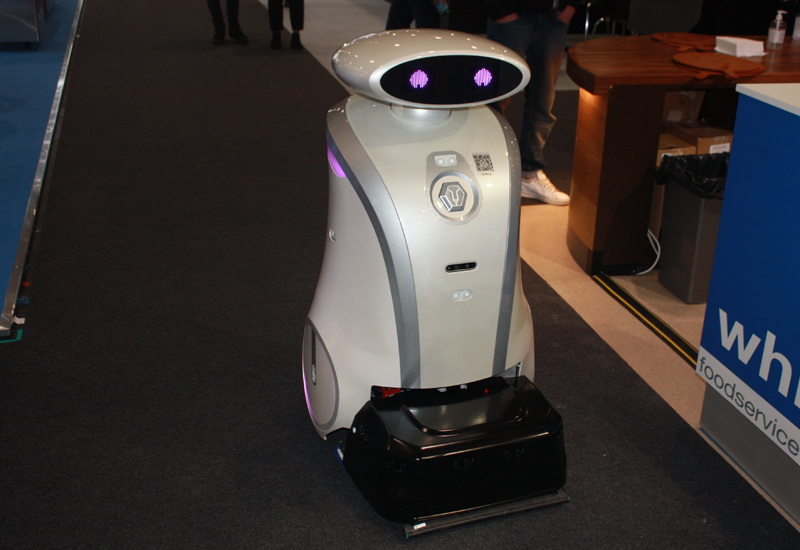
Service robots—autonomous or semi-autonomous machines designed to assist humans in non-industrial tasks—are rapidly transitioning from experimental prototypes to commercially deployed solutions in sectors such as healthcare, hospitality, logistics, and retail. Unlike industrial robots, which primarily operate in structured environments, service robots must navigate complex, dynamic, and human-centric spaces.
Despite significant technological advancements, the commercialization of service robots in emerging economic scenarios faces multifaceted challenges. These include technological limitations, market adoption barriers, regulatory constraints, financial and operational risks, and socio-cultural acceptance. Understanding these challenges is critical for stakeholders—including investors, policymakers, enterprises, and developers—to design effective strategies that ensure sustainable growth and profitable deployment of service robotics.
This article provides a comprehensive analysis of the commercialization challenges faced by service robots, examines emerging economic scenarios that influence adoption, and explores strategies to overcome barriers while maximizing economic and social value.
1. Technological Challenges in Service Robot Commercialization
1.1 Perception and Navigation in Dynamic Environments
Service robots operate in environments populated by unpredictable human behaviors, varying layouts, and dynamic obstacles. Key technological challenges include:
- Object Recognition and Context Awareness: Robots must detect and categorize objects in cluttered and constantly changing environments.
- Real-Time Navigation and Path Planning: Autonomous navigation requires algorithms capable of adapting to unpredictable obstacles and moving humans.
- Multi-Sensor Integration: Fusion of vision, LiDAR, ultrasonic, and tactile sensors is essential for accurate perception but increases system complexity and cost.
1.2 Manipulation and Task Execution
Unlike industrial robots handling uniform components, service robots must manipulate diverse objects with precision:
- Gripping Variability: Objects vary in shape, size, fragility, and texture, requiring adaptable end-effectors and sophisticated force control.
- Dexterity Limitations: Robotic hands and arms often cannot fully replicate human dexterity, limiting the range of tasks.
- Safety and Human-Robot Interaction: Force and motion control must ensure safe operation around humans without compromising performance.
1.3 Software and AI Integration
- Complex Decision-Making: Robots must make context-sensitive decisions, requiring advanced AI models and reinforcement learning frameworks.
- Real-Time Processing: Processing large streams of sensor data in real-time demands high-performance onboard computing or reliable cloud connectivity.
- System Reliability: Software robustness is critical to prevent failures in unpredictable scenarios, but ensuring this across varied environments is challenging.
2. Market and Economic Challenges
2.1 Market Readiness and Adoption Barriers
- High Upfront Costs: Service robots often involve significant capital investment, which may deter small and medium-sized enterprises (SMEs).
- Perceived Value vs. ROI: Businesses may struggle to quantify the economic benefits of service robot deployment, especially for tasks traditionally performed by humans.
- Slow Adoption in Certain Sectors: Cultural resistance, employee pushback, and customer acceptance can slow integration.
2.2 Competitive Dynamics
- Fragmented market with multiple startups and established robotics companies creates uncertainty.
- Proprietary platforms reduce interoperability, limiting scalability and cross-sector application.
- Rapid technological evolution may render early deployments obsolete, increasing financial risk.
2.3 Infrastructure and Ecosystem Constraints
- Reliable connectivity (5G, cloud) and smart environment integration are often prerequisites for advanced service robots.
- Lack of standardized docking stations, charging infrastructure, or modular components can impede deployment.
3. Regulatory and Safety Challenges
3.1 Safety and Liability
- Robots interacting with humans in dynamic spaces present liability concerns in case of accidents.
- Ensuring compliance with safety standards such as ISO 13482 (personal care robots) requires rigorous testing and certification.
3.2 Data Privacy and Cybersecurity
- Service robots collect and process large amounts of personal and operational data.
- Regulatory compliance with privacy laws (e.g., GDPR) is complex, particularly in healthcare or public-facing applications.
- Vulnerabilities in software or connectivity could expose sensitive data or compromise safety.
3.3 Cross-Border Regulations
- Exporting service robots requires navigating diverse national standards and certifications.
- Differences in safety, operational, and privacy regulations can complicate international commercialization.

4. Financial and Business Model Challenges
4.1 High Capital Expenditure and Uncertain ROI
- Service robot platforms are costly to acquire and maintain.
- ROI depends on operational efficiency, utilization rates, and task complexity, which are often difficult to predict.
4.2 Maintenance and Operational Costs
- Robots require ongoing calibration, software updates, sensor replacement, and repairs.
- Downtime can affect business continuity and profitability.
4.3 Scalability and Service-as-a-Product Models
- Robots deployed as part of Robot-as-a-Service (RaaS) models reduce upfront cost but require robust subscription management, remote monitoring, and customer support.
- Scalability is hindered by heterogeneous operating environments, requiring custom adaptation per deployment.
4.4 Investment and Funding Challenges
- Securing capital is competitive; investors demand clear monetization pathways.
- Market uncertainty and regulatory risk make long-term projections challenging.
5. Socio-Cultural and Human-Centric Challenges
5.1 User Acceptance and Trust
- Humans may be resistant to interacting with robots for tasks involving personal care, hospitality, or sensitive information.
- Trust is influenced by robot reliability, communication ability, and transparency in decision-making.
5.2 Workforce Dynamics
- Service robots can displace routine jobs but also create high-skilled positions, requiring targeted workforce planning.
- Employee concerns about replacement may slow adoption unless clear integration strategies are in place.
5.3 Ethical Considerations
- Robots performing tasks with social, medical, or legal implications must follow ethical guidelines.
- Decisions made autonomously by robots in healthcare, finance, or customer service require accountability mechanisms.
6. Emerging Economic Scenarios and Their Implications
6.1 Post-Pandemic Service Economy
- COVID-19 accelerated the need for contactless service, healthcare automation, and remote assistance.
- Service robots in delivery, cleaning, and customer service are increasingly adopted to ensure safety and operational continuity.
6.2 Smart Cities and Public Services
- Urban infrastructure integrated with service robots enables intelligent traffic management, surveillance, sanitation, and information services.
- Complex urban scenarios pose navigation, safety, and regulatory challenges but offer high commercial potential.
6.3 E-Commerce and Logistics
- Growth in e-commerce drives demand for autonomous warehouse robots, last-mile delivery robots, and sorting systems.
- Highly dynamic logistics environments require adaptable robots capable of handling diverse packages and real-time routing.
6.4 Healthcare Automation
- Aging populations and labor shortages increase demand for medical, rehabilitation, and caregiving robots.
- Hospitals and nursing homes face regulatory, ethical, and financial challenges when integrating service robots.
7. Strategies to Overcome Commercialization Challenges
7.1 Technological Innovation
- Develop modular, adaptable robots to reduce customization costs per deployment.
- Integrate AI for perception, decision-making, and human-robot interaction to improve efficiency and user trust.
- Enhance sensor fusion and navigation algorithms to operate safely in dynamic, human-centric environments.
7.2 Business Model Innovation
- Implement RaaS and subscription-based models to lower adoption barriers.
- Offer maintenance, software updates, and remote monitoring as value-added services.
- Create interoperable ecosystems to allow multi-purpose use across industries.
7.3 Policy and Regulatory Alignment
- Collaborate with regulators to ensure safety and data privacy compliance.
- Engage in standardization initiatives for service robot safety, interoperability, and operational protocols.
- Develop certification programs to increase end-user confidence.
7.4 Market Education and Trust-Building
- Conduct pilot programs to demonstrate ROI and operational effectiveness.
- Engage end-users with training and support programs to build confidence in robot-assisted services.
- Communicate ethical guidelines and transparent decision-making processes to enhance social acceptance.
8. Future Outlook
8.1 Technological Trends
- AI-driven autonomous adaptation will reduce human intervention and increase efficiency.
- Cloud robotics and IoT integration enable real-time fleet coordination and predictive maintenance.
- Human-centric design improves interaction, safety, and adoption rates.
8.2 Economic and Market Trends
- Growth in smart cities, healthcare automation, logistics, and hospitality will drive market expansion.
- Cost reductions in hardware, AI processors, and sensors will make service robots more accessible.
- Collaboration between startups, established corporations, and governments will accelerate commercialization.
8.3 Long-Term Implications
- Service robots will become integral components of economic infrastructure, reshaping labor, productivity, and urban life.
- Early adopters that navigate technological, financial, and regulatory challenges will gain competitive advantages.
- Standardization, interoperability, and modular design will be critical for scalable deployment.
Conclusion
Service robots hold tremendous potential in emerging economic scenarios, promising increased productivity, safety, and efficiency across healthcare, logistics, hospitality, and urban services. However, commercialization faces multifaceted challenges—technological, financial, regulatory, and socio-cultural.
Addressing these challenges requires a holistic approach: modular and adaptable designs, AI-driven perception and decision-making, innovative business models, regulatory alignment, and user trust-building. Investors, policymakers, and enterprises that proactively address these factors will unlock the economic, social, and strategic value of service robotics, positioning themselves at the forefront of the next wave of technological and economic transformation.