









Introduction
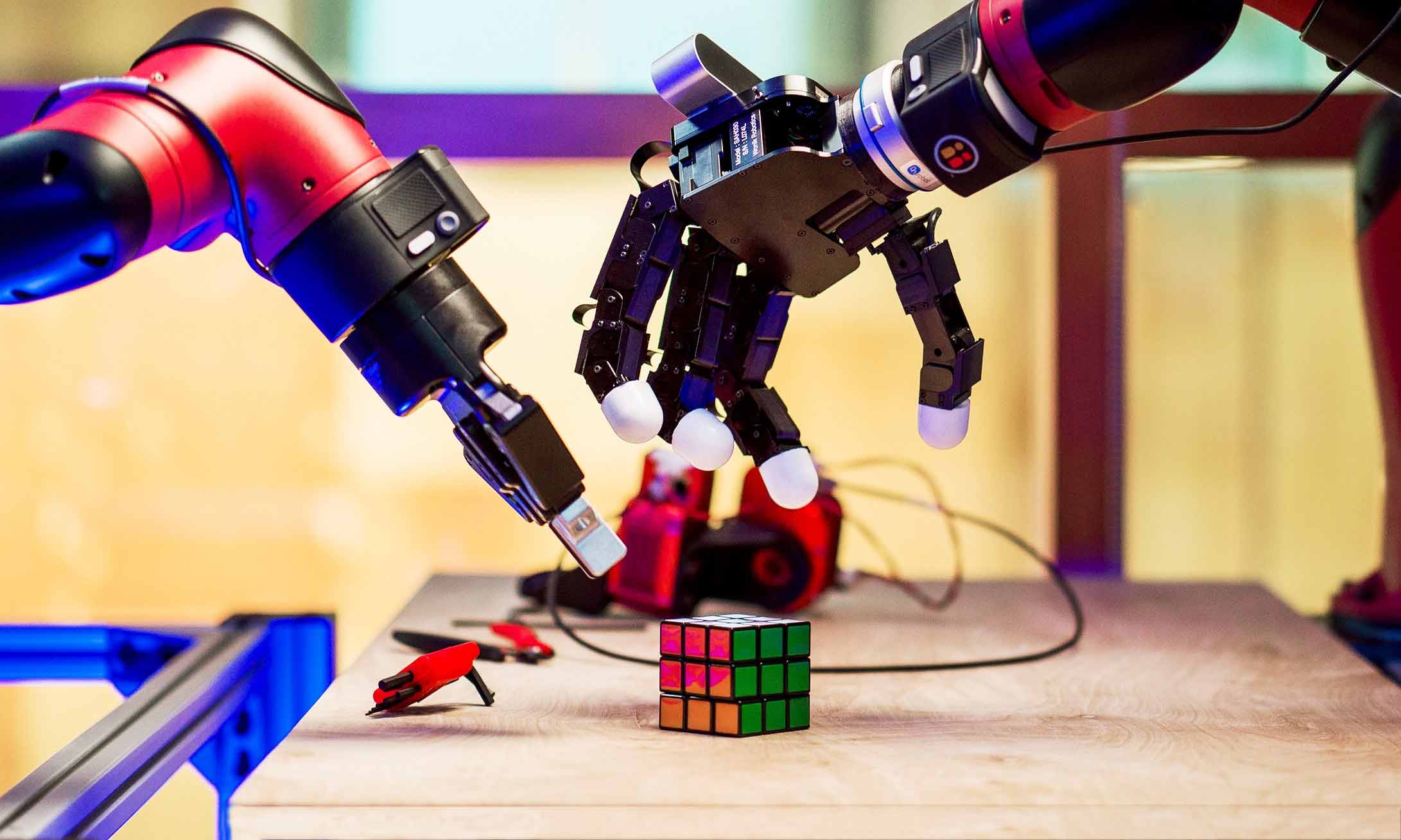
The robotics landscape is increasingly defined by the integration of human-robot collaboration, artificial intelligence (AI) reasoning, and adaptive dynamic motion capabilities. Unlike traditional industrial robots, which operate in structured and isolated environments, modern robots are evolving into intelligent partners capable of safe, efficient, and context-aware interaction with humans.
At the core of this transformation are three interrelated technological pillars:
- Human-Robot Collaboration (HRC): Robots that can coexist and work safely with humans, adapting to their behaviors and intentions.
- AI Reasoning: Cognitive capabilities that allow robots to understand tasks, plan complex actions, and make decisions in dynamic environments.
- Adaptive Dynamic Motion: Advanced control systems enabling robots to execute fluid, responsive, and agile movements in real time.
This article explores these technologies in depth, examining their principles, applications, development challenges, and future potential in reshaping robotics across industries.
1. Human-Robot Collaboration: Principles and Implementation
1.1 Concept and Importance
Human-Robot Collaboration (HRC) refers to systems where humans and robots work side by side safely and effectively, sharing tasks without physical barriers. Unlike isolated robots, collaborative robots, or cobots, enhance productivity by complementing human capabilities with precision, strength, and endurance.
The main goals of HRC include:
- Safety: Prevent injuries during close interaction.
- Efficiency: Combine human intuition and robot precision.
- Flexibility: Enable dynamic allocation of tasks based on real-time conditions.
1.2 Core Technologies in HRC
1.2.1 Sensing and Perception
Human-aware perception is critical:
- Vision Sensors: Detect human posture, gestures, and movement trajectories.
- Proximity Sensors: Monitor distance between humans and robot links in real time.
- Force/Torque Sensors: Detect contact and allow compliant interactions.
1.2.2 Safety Mechanisms
- ISO/TS 15066 Compliance: Provides guidelines for safe collaborative operation.
- Real-Time Collision Avoidance: Algorithms predict potential contact and adjust motion proactively.
- Compliant Actuators: Allow safe human touch by limiting forces and torques.
1.2.3 Communication Interfaces
- Intuitive Controls: Gesture recognition, voice commands, and haptic feedback.
- Shared Task Planning: Humans can modify robot goals dynamically through interactive interfaces.
1.3 Applications of HRC
- Manufacturing: Assembly, inspection, and material handling.
- Healthcare: Rehabilitation, surgery assistance, and patient handling.
- Logistics: Picking, packing, and co-navigation in warehouses.
- Construction: Joint manipulation of tools, heavy lifting, and precise alignment tasks.
2. AI Reasoning in Robotics
2.1 Definition and Scope
AI reasoning equips robots with cognitive decision-making capabilities, allowing them to:
- Interpret sensor data.
- Generate task-level plans.
- Anticipate human actions.
- Adapt strategies in real time.
AI reasoning extends robotics beyond pre-programmed behavior into intelligent autonomy, enabling robots to operate in unstructured and dynamic environments.
2.2 Core AI Methods
2.2.1 Symbolic Reasoning
- Uses knowledge representation and logic-based systems.
- Enables task planning and high-level decision-making.
- Example: STRIPS-based planning for assembly or logistics.
2.2.2 Probabilistic Reasoning
- Handles uncertainty and incomplete information using Bayesian networks or Markov decision processes.
- Crucial for perception in dynamic or noisy environments.
2.2.3 Machine Learning and Reinforcement Learning
- Supervised Learning: Maps sensory input to specific actions.
- Reinforcement Learning (RL): Robots learn optimal policies by trial-and-error in simulations or controlled environments.
- Imitation Learning: Robots mimic human demonstrations to accelerate skill acquisition.
2.2.4 Hybrid Approaches
- Combine symbolic reasoning with learning-based approaches for robust and explainable decision-making.
- Enable task adaptation and context awareness in multi-step workflows.
2.3 Applications of AI Reasoning
- Collaborative Assembly: Robots adjust sequences based on human interventions.
- Dynamic Path Planning: Navigation in unpredictable spaces, avoiding humans and obstacles.
- Healthcare Robotics: Adjust therapy routines based on patient response and progress.
- Disaster Response: Make autonomous decisions in hazardous environments with limited human guidance.
3. Adaptive Dynamic Motion Capabilities
3.1 Concept
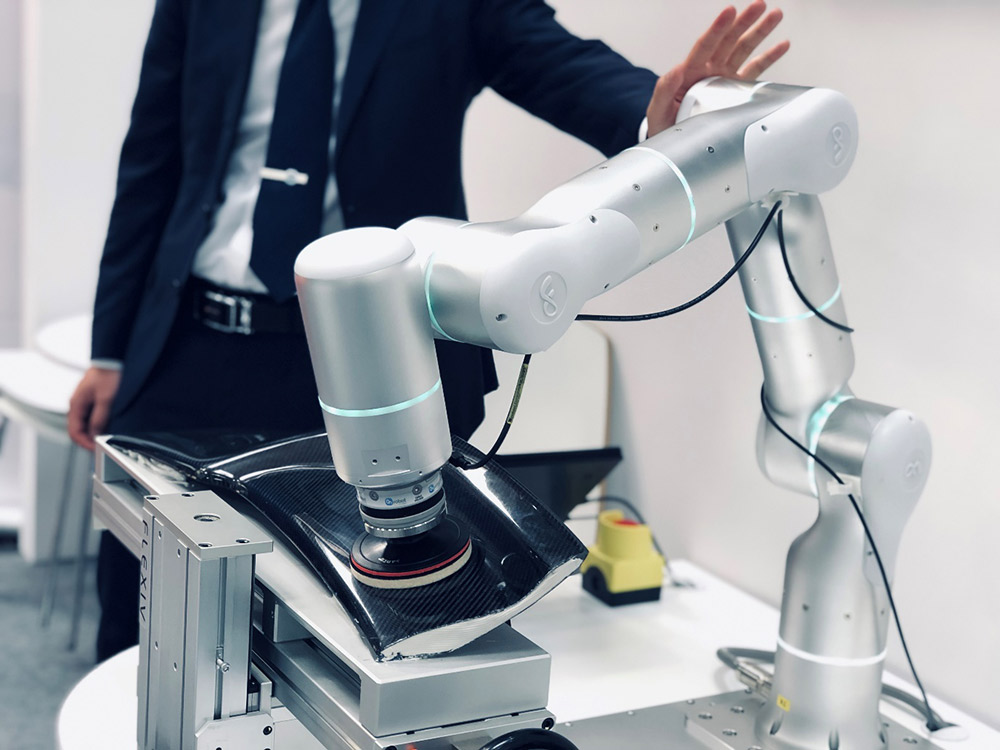
Adaptive dynamic motion refers to the ability of robots to execute fluid, responsive movements while interacting with humans or unpredictable environments. Unlike traditional position-controlled robots, adaptive robots adjust trajectory, force, and velocity in real-time to achieve task goals safely and efficiently.
3.2 Control Architectures
3.2.1 Impedance and Admittance Control
- Impedance Control: Adjusts robot motion according to external forces; ideal for co-manipulation tasks.
- Admittance Control: Robot motion responds proportionally to applied forces; suitable for compliant interactions.
3.2.2 Model Predictive Control (MPC)
- Predicts future states based on dynamic models and optimizes control inputs over time.
- Handles constraints on joint limits, forces, and workspace boundaries.
3.2.3 Learning-Based Motion Control
- Reinforcement learning enables robots to discover efficient and adaptive motion strategies.
- Neural network controllers allow complex trajectory generation in real-time, even in unstructured environments.
3.3 Motion Planning Techniques
- Trajectory Optimization: Generates smooth, collision-free paths considering robot dynamics and human motion.
- Real-Time Replanning: Adjusts robot paths in response to human movement or environmental changes.
- Multi-Robot Coordination: Enables collaborative tasks involving humans and multiple robots sharing space.
3.4 Applications
- Human-Robot Co-Manipulation: Collaborative lifting, assembly, or precision alignment.
- Dynamic Industrial Tasks: High-speed pick-and-place, welding, or painting with human presence.
- Service Robotics: Adaptive motion for home assistance or eldercare.
- Exoskeletons: Assistive robots providing real-time adaptive support based on user motion.
4. Integration of HRC, AI Reasoning, and Adaptive Motion
4.1 System Architecture
A typical intelligent collaborative robot integrates:
- Sensing Module: LIDAR, vision, tactile, and force sensors.
- Perception and Reasoning: AI algorithms for understanding environment, human behavior, and task objectives.
- Control Module: Adaptive dynamic controllers for compliant, agile motion.
- Human Interaction Layer: Interfaces for communication, task guidance, and feedback.
4.2 Key Challenges
- Real-Time Decision Making: AI reasoning must be synchronized with adaptive motion control.
- Safety Assurance: Collision detection and human intention prediction are crucial.
- Computational Complexity: High-dimensional planning and perception require optimized algorithms and edge computing.
4.3 Successful Deployment Examples
- Collaborative Manufacturing Lines: Cobots adjust motion dynamically based on human actions while AI plans task allocation.
- Rehabilitation Robotics: Exoskeletons interpret patient motion and adapt support dynamically, improving therapy outcomes.
- Logistics Automation: Mobile robots navigate warehouses with human co-workers, adjusting speed and trajectory based on real-time feedback.
5. Economic and Operational Implications
5.1 Productivity Gains
- Adaptive dynamic robots reduce idle time and increase throughput in mixed human-robot workflows.
- Intelligent task allocation minimizes errors and improves workflow efficiency.
5.2 Workforce Enhancement
- Humans focus on decision-making and complex problem-solving while robots handle repetitive or precision-intensive tasks.
- Cobots reduce physical strain and workplace injuries.
5.3 Investment Considerations
- Early adoption requires investment in AI infrastructure, sensor suites, and training.
- ROI is accelerated by efficiency gains, reduced errors, and enhanced safety compliance.
6. Challenges and Future Directions
6.1 Technical Challenges
- Sensor Fusion: Integrating multi-modal sensory data for accurate perception.
- Adaptive Learning: Ensuring reliable real-time learning without compromising safety.
- Scalability: Multi-robot and human-robot coordination in large-scale operations.
6.2 Ethical and Human Factors
- Trust in robots depends on predictability and transparency of AI reasoning.
- User-friendly interfaces and ergonomics are essential for adoption.
6.3 Future Trends
- Multi-Agent Collaboration: Teams of humans and robots with shared AI reasoning.
- Explainable AI: Providing interpretable reasoning for human oversight.
- Soft Robotics and Compliant Materials: Improving safety and adaptability.
- Digital Twin Integration: Virtual simulation for planning, testing, and optimizing human-robot workflows.
Conclusion
The convergence of human-robot collaboration, AI reasoning, and adaptive dynamic motion capabilities represents the technological core of next-generation robotics. These capabilities enable robots to:
- Operate safely alongside humans.
- Make intelligent, context-aware decisions.
- Execute agile, compliant, and dynamic motions in real-time.
As these technologies mature, industries ranging from manufacturing and logistics to healthcare and construction will benefit from enhanced productivity, safety, and human-robot synergy. The evolution from isolated automation to intelligent collaborative systems is not just a technological milestone—it is a paradigm shift that redefines human-robot interaction, enabling a future where robots are true partners in complex and dynamic environments.