









Introduction: Advancing Robotic Dexterity Beyond Fixed Manipulators
Robotic manipulators have long been the backbone of automation, executing tasks from welding and painting to precision assembly in factories worldwide. However, traditional robotic arms—whether fixed industrial models or mobile manipulators—typically operate under constrained assumptions: structured environments, predetermined paths, and static object locations. These constraints limit their adaptability and the breadth of tasks they can perform autonomously.
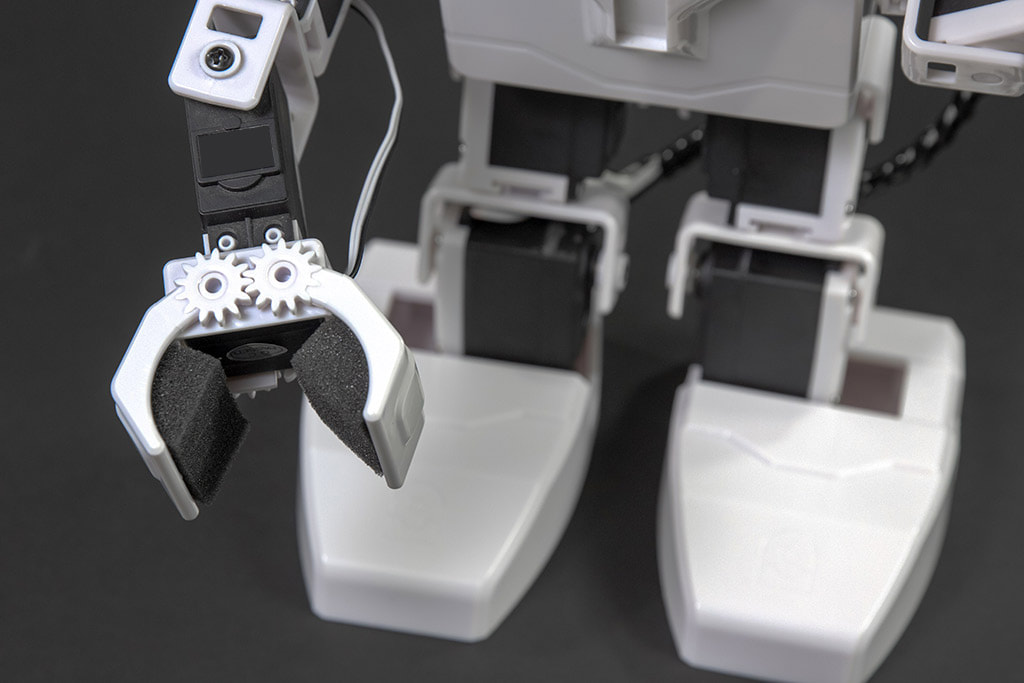
Enter the crawling robotic gripper arm—an innovative manipulation system that combines locomotion and dexterous grasping in a single, unified design. Unlike conventional robotic arms that are fixed or mounted on wheeled platforms, this novel gripper can crawl along surfaces or structures and adapt its grip strategy in real time, opening new possibilities for robot autonomy in unstructured and dynamic environments.
In this deep and professional analysis, we explore the emergence of this groundbreaking robotic technology: its conceptual roots, engineering design, enabling technologies, practical applications, challenges, and future prospects. We also contextualize its significance within the broader robotics landscape and discuss how it could accelerate the deployment of next‑generation autonomous systems in industry, infrastructure inspection, disaster response, and beyond.
1. The Limitations of Conventional Robotic Manipulation
1.1 Fixed Mounts and Static Workspaces
Traditional industrial robots are typically mounted in fixed positions or on gantries. While such configurations deliver accuracy and repeatability for high‑volume manufacturing, they suffer from several limitations:
- Limited reach and mobility—they can only operate within predefined work envelopes.
- Dependence on structured environments—objects must be positioned precisely for reliable operation.
- High installation and changeover costs—retooling or reconfiguring cells is expensive and time‑consuming.
These constraints make it difficult to apply traditional robots to tasks involving complex geometries, confined spaces, or dispersed objects.
1.2 Mobile Manipulators: A Step Forward, But Not Enough
Mobile manipulators—robotic arms mounted on mobile bases—offer greater workspace flexibility than fixed arms. However:
- Their mobility is often limited to planar ground surfaces.
- They struggle with tasks requiring vertical traversal or structure following.
- The arm and base often operate independently, complicating coordination and accessibility.
While mobile robots expand the potential workspace, they still cannot operate along complex curved surfaces or structures without additional mechanisms.
2. The Need for Integrated Crawling and Grasping
2.1 Unstructured Environments Demand Greater Robot Capability
Many real‑world tasks today occur in environments that are:
- Cluttered and unpredictable
- Vertically oriented (e.g., walls, pipes, industrial frameworks)
- Confined (e.g., interiors of machinery or aircraft)
To handle these challenges, robots need manipulation systems capable of three key capabilities simultaneously:
- Mobility—to traverse non‑planar surfaces and structures.
- Dexterous manipulation—to grasp, reposition, or interact with objects of varied sizes and shapes.
- Adaptive control—to adjust grip and motion strategies in real time based on sensory input.
The new crawling robotic gripper arm represents a convergence of these capabilities.
3. Conceptual Foundations of the Crawling Robotic Gripper
3.1 The Combination of Locomotion and Manipulation
At its core, the crawling robotic gripper is a hybrid system that unifies two traditionally separate functions:
- Crawling—the ability to traverse surfaces by gripping, releasing, and advancing along a path.
- Gripping—the ability to grasp and manipulate objects with variable shapes and compliance.
This hybridization allows the robot to navigate along a structure (a beam, pipe, or frame) and perform manipulation tasks without external mobility support.
3.2 Inspiration from Biological Systems
The concept draws inspiration from biological organisms such as:
- Insects, which crawl and grip complex surfaces with adaptive appendages
- Octopuses, which combine fine manipulation with surface traversal
- Geckos, which maintain adhesion and control on vertical and inverted planes
These biological paradigms inform design principles that combine compliance, multi‑degree‑of‑freedom manipulation, and adaptive contact mechanics.
4. Engineering Design: Anatomy of a Crawling Robotic Gripper
4.1 Modular Architecture
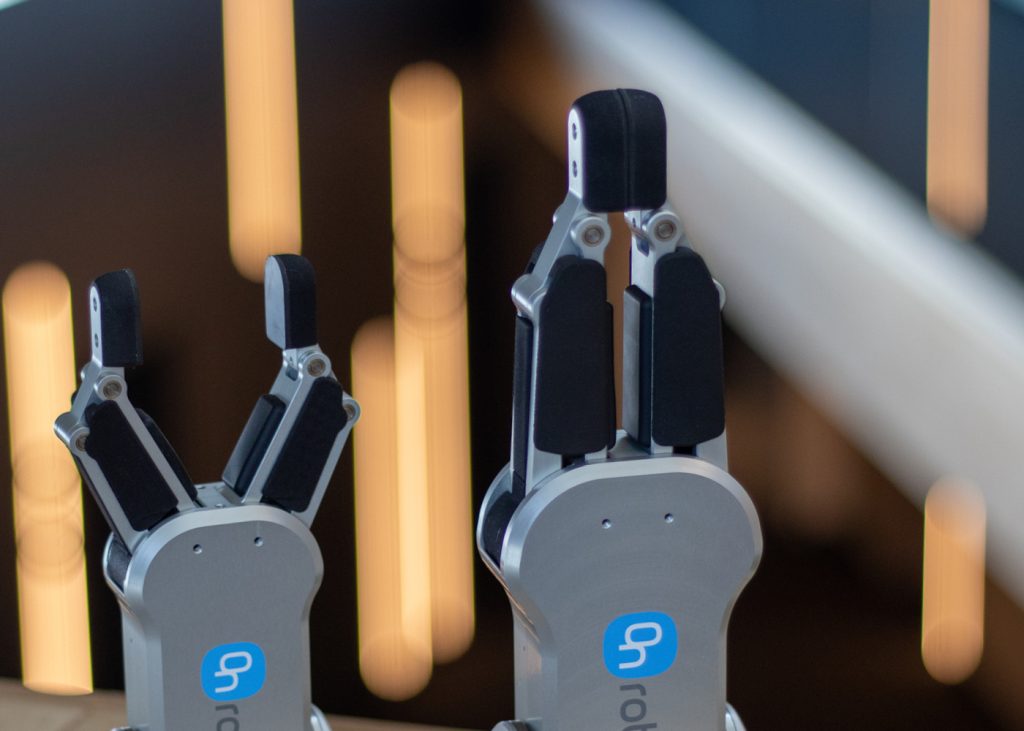
A typical crawling robotic gripper consists of the following key subsystems:
- Hybrid Crawling Mechanism:
- Designed to “walk” along surfaces by alternating grip points.
- Can traverse horizontal, vertical, or irregular surfaces.
- Dexterous Manipulator:
- Provides multi‑degree‑of‑freedom motion to manipulate objects once positioned.
- Often equipped with compliant or tactile‑sensing fingertips.
- Sensor Suite:
- Combines vision (RGB‑D cameras), proximity sensors, and force/torque sensors.
- Enables real‑time perception and adaptive grip control.
- Control System:
- Integrates locomotion and manipulation planning.
- Uses AI and adaptive control to adjust behavior based on sensor feedback.
4.2 Degrees of Freedom and Mechanical Complexity
The design typically features:
- Multiple articulating joints for crawling (e.g., shoulder, elbow, wrist equivalents)
- Grippers or end‑effectors capable of adaptive closure and compliance
- Actuators optimized for torque control, enabling safe interaction with environments and objects
These mechanical choices allow the gripper to perform both fine manipulation and robust surface traversal.
5. Enabling Technologies Behind the Innovation
5.1 Sensor‑Driven Perception
Robust perception is essential for adaptive crawling and grasping. Sensors include:
- 3D depth cameras for spatial mapping
- Force/torque sensors for contact awareness
- Tactile sensors for texture and slip detection
- Proximity and IMU sensors for stable locomotion
Together, these sensors enable real‑time environmental understanding and dynamic adjustment of motion strategies.
5.2 AI and Adaptive Control Algorithms
The crawler’s behavior is governed by control systems that combine:
- Machine learning for perception and decision making
- Model predictive control (MPC) for real‑time motion planning
- Reinforcement learning for adaptive gripping strategies
These algorithms allow the robot to learn from experience and adjust motion and grip parameters dynamically.
5.3 Real‑Time Coordination Between Locomotion and Manipulation
Planning locomotion and manipulation simultaneously is computationally challenging. To address this, systems use:
- Hierarchical control frameworks that decompose complex tasks
- Fast predictive planners that optimize trajectories in real time
- Feedback loops that ensure robustness under uncertainty
This integration is essential for tasks that require adjusting both pose and grip in real time.
6. Practical Applications and Use Cases
6.1 Industrial Inspection and Maintenance
The crawling robotic gripper is well suited to:
- Large‑scale infrastructure inspection (bridges, beams, trusses)
- Aircraft interior or fuselage assembly tasks
- Power plant or factory equipment maintenance
Its ability to traverse vertical and complex structures without a separate mobility base reduces setup time and increases flexibility.
6.2 Construction and Assembly
In construction settings, the crawler can:
- Scale scaffolding and structural frames
- Assist with positioning and fastening components
- Navigate tight or elevated spaces that are hazardous for humans
This enhances safety and operational efficiency.
6.3 Logistics and Warehousing
Unstructured warehouse environments—with varying shelf heights and irregular arrangements—pose challenges to traditional automation. The crawling gripper can:
- Climb storage racks
- Retrieve or place items in complex configurations
- Operate independently of floor‑based vehicles
6.4 Disaster Response and Search
In disaster sites, environments are chaotic and unpredictable. Here, the crawler can:
- Navigate among rubble
- Manipulate debris or delicate objects
- Support rescue operations in confined spaces
Such capabilities expand the reach of search and rescue teams.
7. Technical Evaluation: Performance Metrics and Benchmarks
7.1 Locomotion Efficiency
Key metrics for crawling performance include:
- Traversal speed on various surfaces
- Grip stability under different load conditions
- Energy consumption per meter traveled
These benchmarks assess the practicality of the system in real deployments.
7.2 Manipulation Accuracy
Manipulation performance is evaluated by:
- Object grasping success rate
- Precision of object placement
- Adaptability to variable shapes and textures
Advanced tactile sensing and AI feedback improve these metrics.
7.3 Integrated Coordination Performance
The most challenging metric is the system’s ability to coordinate crawling and manipulation without human intervention, measured by:
- Task completion time
- Robustness under environmental variability
- Failure recovery effectiveness
These measures determine real‑world applicability.
8. Challenges and Limitations
8.1 Mechanical Complexity and Cost
The mechanical intricacy required to enable both crawling and manipulation increases:
- Manufacturing costs
- Maintenance complexity
- Reliability risks
Engineering robust systems that can withstand industrial use remains a challenge.
8.2 Real‑World Robustness
Unstructured environments introduce:
- Surface irregularities
- Variable friction conditions
- Unexpected obstacles
Ensuring stable and reliable locomotion under such variability is non‑trivial.
8.3 Power and Energy Constraints
Continuous crawling and manipulation demand significant power, especially for:
- Actuators with high torque
- Sensors and onboard computation
Battery‑powered operation in the field remains a design challenge.
9. Comparisons with Other Manipulation Paradigms
9.1 Mobile Manipulators
Mobile bases offer extended reach but cannot access vertical surfaces without additional mechanisms. The crawling gripper’s advantage lies in structural traversal without external bases.
9.2 Fixed Robotic Arms
Fixed arms deliver high precision but lack workspace flexibility. They are best suited for structured environments, while crawling grippers excel in unstructured or large‑scale scenarios.
9.3 Snake Robots and Continuum Robots
Snake robots can traverse confined spaces but typically lack significant manipulation capabilities. The crawling gripper bridges the gap between locomotion and dexterous interaction.
10. Integration with Broader Robotic Systems
10.1 Collaborative Operation with Drones and Ground Robots
In complex missions, crawling grippers can team with:
- Aerial drones for scouting
- Ground robots for transport and mapping
- Human operators for strategic oversight
This multi‑agent coordination enhances overall mission effectiveness.
10.2 Edge AI and Cloud Connectivity
Onboard AI enables real‑time decision making, while cloud connectivity supports:
- Model updates
- Collective learning across deployments
- Remote monitoring and diagnostics
This hybrid architecture balances autonomy and centralized intelligence.
11. Ethical, Safety, and Regulatory Considerations
11.1 Safe Operation in Human Environments
When operating around humans, systems must ensure:
- Collision avoidance
- Predictable behaviors
- Graceful failure modes
Safety frameworks similar to those used for collaborative robots (cobots) are essential.
11.2 Data Privacy and AI Ethics
Sensor data captured by these systems—especially vision and proximity data—must be handled responsibly to protect privacy and comply with regulations.
12. Future Directions and Research Frontiers
12.1 Advances in Soft Robotics Integration
Incorporating soft robotic elements could enhance compliance and safety, enabling more delicate manipulation and safer human interaction.
12.2 Learning‑Based Adaptation
Reinforcement learning and simulation‑to‑reality transfer will improve:
- Locomotion strategies on varied surfaces
- Grip adaptation for new objects
- Failure recovery mechanisms
These advancements will make the crawler increasingly autonomous and capable.
12.3 Miniaturization and Modular Deployment
Smaller, modular versions could:
- Swarm across large structures
- Enable distributed robotics applications
- Reduce dependency on large, expensive robots
Such scalability extends utility across industries.
13. Strategic Impact and Market Potential
13.1 Infrastructure Maintenance and Inspection Markets
The global infrastructure sector—including bridges, offshore platforms, and industrial facilities—is ripe for robotic augmentation, with crawling grippers delivering high value in inspection and maintenance roles.
13.2 Aerospace and Complex Assembly
Aircraft assembly and maintenance involve complex geometries, confined spaces, and stringent safety requirements—an ideal test bed for crawling gripper systems.
13.3 Emergency Response and Defense Applications
Government and defense sectors are increasingly investing in robots capable of operating in hazardous environments, providing significant opportunities for crawling gripper technologies.
Conclusion: Toward a New Era of Robotic Manipulation
The emergence of crawling robotic gripper arms represents a significant leap in robotic capability. By merging locomotion and manipulation into an integrated system, these robots can operate in environments that challenge traditional automation. They offer new possibilities for industrial inspection, complex assembly, construction, and beyond.
While challenges remain—particularly in mechanical robustness, energy efficiency, and real‑world reliability—the conceptual and technological foundations have been laid for a transformative class of robots. As research progresses, and as enabling technologies such as AI, soft robotics, and advanced sensing continue to advance, the crawling robotic gripper may become a cornerstone of next‑generation autonomous systems.
In a future where robots increasingly complement human workers in challenging and unstructured environments, the crawling robotic gripper stands as a symbol of innovation and a testament to the power of integrated mobility and manipulation.