








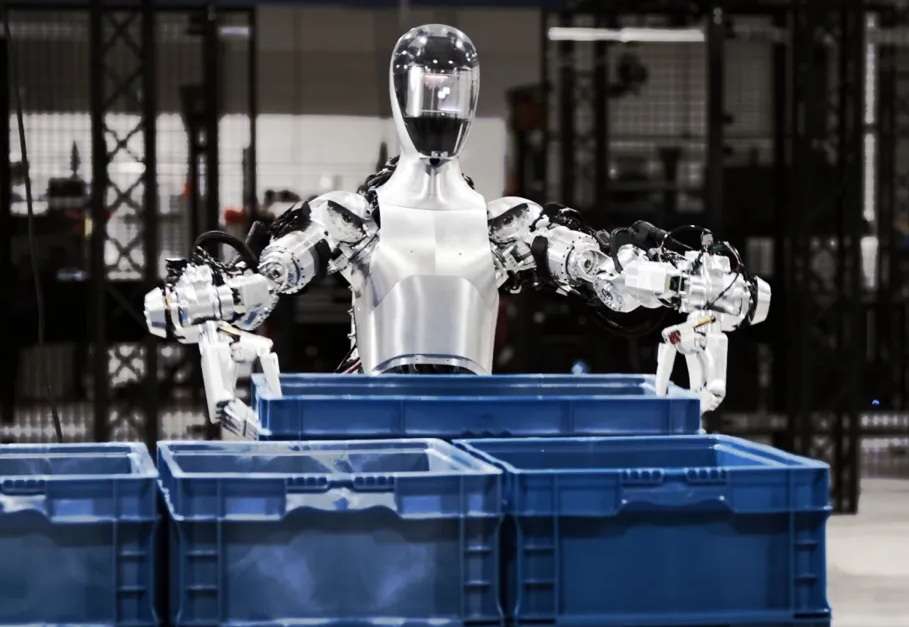

Introduction: Defining the Efficiency Gap in Humanoid Robotics
Humanoid robots—robots designed to resemble and function similarly to the human body—have long captured the imagination of engineers, researchers, and futurists. From science fiction dreams to cutting‑edge AI laboratories to early factory deployments, these machines promise a future where robots can assist, augment, and even replace humans in a variety of physical tasks.
Yet despite decades of progress, a central question remains: Can humanoid robots truly match human efficiency in real‑world tasks? Recent industry insights and research show significant advances, but also underline a stark reality: humanoid robots currently operate at a fraction of human performance levels, especially in dynamic and unpredictable environments.
This article provides a comprehensive examination of the current state of humanoid robot efficiency, the technological progress driving improvements, the inherent challenges that limit performance, and the future prospects for narrowing—or ultimately closing—the efficiency gap between robots and humans.
1. The Current State of Humanoid Robot Efficiency
1.1 Industry Reports and First‑Hand Metrics
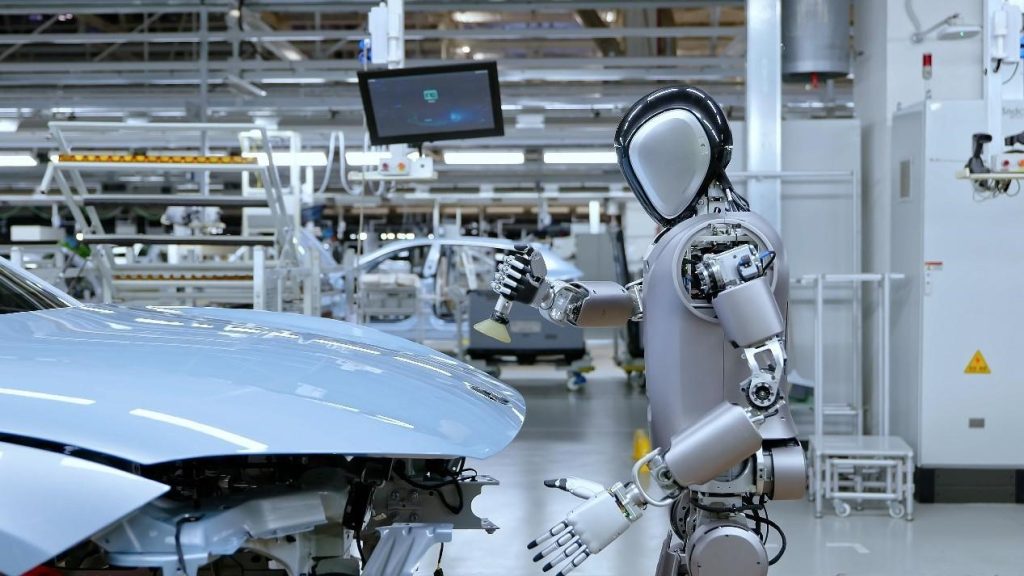
Recent statements from leading robotics manufacturers illustrate the existing efficiency disparity between humanoid robots and human workers. For example, industry leader UBTech has publicly acknowledged that its Walker S2 humanoid robot achieves only 30–50% of human worker productivity in selected tasks such as stacking and quality control in manufacturing settings.
This efficiency metric captures productivity—not just the ability to complete tasks, but the rate and reliability at which they are performed under realistic conditions. While 30–50% efficiency represents a remarkable achievement for general‑purpose robots operating outside highly controlled environments, it remains well below the benchmark needed for large‑scale industrial adoption.
1.2 Transition from Lab to Factory
Unlike research prototypes confined to laboratory conditions, current humanoid robots are being tested and sometimes deployed in real environments—such as warehouses, pilot manufacturing lines, and logistics facilities—where ambient noise, varied object shapes, and dynamic human activity challenge autonomous systems.
These real‑world trials reveal that while robots can perform specific functions well in controlled scenarios, their ability to generalize across tasks, adapt on‑the‑fly, and maintain consistent performance over time is still limited.
2. Core Factors Influencing Humanoid Robot Efficiency
Humanoid robot efficiency is shaped by the interplay of several foundational technical elements:
2.1 Mechanical Design and Actuation
Humanoid robots attempt to mimic the human body’s structure, including bi‑pedal locomotion, multi‑joint arms, and fine‑finger manipulation. Replicating these capabilities mechanically presents immense challenges:
- Degrees of freedom complexity: Each additional joint increases control complexity. Balancing stability with dexterity is a non‑trivial optimization problem.
- Actuator performance: Motors and actuators that provide both high torque and fine precision are still evolving, limiting dynamic and delicate motion.
- Energy efficiency: Powering multi‑joint motion while maintaining battery life remains a significant engineering constraint.
In comparison, human muscles and neural systems manage to balance pose, strength, and precision with remarkable efficiency—something that current robotic designs have yet to fully emulate.
2.2 Perception and Sensor Fusion
A humanoid robot’s perception system must interpret complex environments to make decisions. This typically involves:
- 3D vision and depth sensing
- Force and torque feedback for manipulation
- Real‑time fusion of multi‑modal data
While these sensors provide rich information, combining and interpreting this data in real time—especially with noisy inputs—remains a performance bottleneck.
2.3 Autonomous Control and Decision‑Making
Advanced AI and control algorithms are necessary for efficient task planning, motion coordination, and adaptation. However:
- Dynamic environments introduce uncertainty that is hard for current inference systems to handle reliably.
- Real‑time responsiveness is limited by computational load and sensor latency.
- Generalization across tasks remains difficult; many robots excel in narrow use cases but struggle when conditions change.
These software limitations directly impact operational efficiency.
3. Benchmarks of Efficiency: How Robots Compare to Humans
3.1 Time‑on‑Task and Productivity Metrics
Efficiency is often measured by how quickly and reliably a robot can complete a task compared to a human worker:
- Humans excel at flexible manipulation, contextual decision‑making, and pattern recognition without explicit programming.
- Robots, even highly advanced ones, perform best when tasks are structured and repeatable.
As a result, robots that perform well in constrained settings still lose ground when tasks involve variability—adapting grip, perception under different lighting, or interpreting ambiguous instructions.
The Walker S2’s current efficiency of about 30–50% underscores this gap.
3.2 Cost‑Effectiveness and Cycle Time
Beyond direct productivity, efficiency is tied to economic performance:
- A humanoid robot that operates at half human productivity may still be cost‑effective if it reduces labor risk, operates continuously, or performs tasks that humans cannot or will not do.
- However, for tasks where speed and adaptability are essential—such as precision assembly—robots have not yet matched the nuanced performance of human workers.
4. Technological Advancements Driving Efficiency Improvements
Despite the current efficiency gap, significant progress is underway.
4.1 Modular and Adaptive Hardware
Innovative mechanical designs aim to improve energy efficiency and movement quality:
- Bio‑inspired joints and lightweight structures reduce energy consumption.
- Modular components allow easier maintenance and task‑specific attachments.
- Improved actuation systems deliver better balance between power and precision.
These innovations make robots more capable of both coarse tasks (e.g., transporting objects) and fine manipulation—key to improving overall efficiency in diverse operations.
4.2 AI and Learning‑Based Control
Advances in machine learning and adaptive control are helping robots better understand and respond to their environment:
- Reinforcement learning algorithms allow robots to refine motion strategies through simulation and real‑world experience.
- Vision‑language‑action models enable contextual understanding, so robots can interpret complex instructions without bespoke programming.
Such learning‑based systems are essential for moving beyond rigid task scripting and toward flexible, efficient autonomous behavior.
4.3 Simulation and Digital Twins
Digital twin technologies allow engineers to prototype and optimize robot performance in virtual environments before physical deployment. This accelerates development cycles and improves performance outcomes.
5. Key Challenges to Improving Humanoid Robot Efficiency
While progress is real, challenges remain:
5.1 Complexity of Human‑like Tasks
Humanoid robots must navigate:
- Unstructured environments
- Variable object geometries
- Human interactions
Humans perform such tasks seamlessly due to innate sensorimotor coordination shaped by evolution—something robots attempt to approximate through complex, resource‑intensive computation.
5.2 Scaling from Prototype to Mass Deployment
Mass production of humanoid robots still faces hurdles:
- Cost barriers remain high due to sophisticated sensors and processors.
- Component standardization is lacking, making large‑scale manufacturing difficult.
- Maintenance complexity adds ongoing operational costs.
Without significant improvements in manufacturing efficiency, robots will remain expensive compared to conventional automation.
5.3 Energy and Power Constraints
Humanoid robots often trade off power for mobility, yet:
- Batteries add weight and heat management complexity.
- Limited power affects continuous operation and peak performance.
Human beings, by contrast, achieve high energy efficiency through biological mechanisms that robots cannot currently replicate.
5.4 Safety and Human‑Robot Collaboration
In settings where robots work alongside humans:
- Safety systems can constrain operational speed.
- Real‑time reaction to human movement requires careful computing and control.
These constraints reduce what robots can do to prioritize safety, thus impacting measured efficiency.
6. Societal and Strategic Implications of Efficiency Gaps
6.1 Economic Considerations
Real‑world robot deployments, such as those planned by major industrial players, reflect strategic efforts to address labor shortages and maintain competitiveness. However, efficiency gaps mean that full automation is not yet practical for all tasks.
Companies must therefore balance the cost of humanoid robots against:
- Human labor costs and availability
- Productivity expectations
- Long‑term maintenance and training investments
6.2 Labor Markets and Worker Roles
Robots that are less efficient than humans can still complement human labor by:
- Handling physically demanding tasks
- Performing hazardous work environments
- Operating continuously without fatigue
Thus, the role of humanoid robots today is often augmentation rather than replacement.
6.3 Public Perception and Adoption
Public and worker perceptions also shape efficiency narratives:
- Enthusiasm for humanoid robots is tempered by skepticism about practical capabilities.
- High‑profile projects and announcements—like Tesla’s Optimus timelines—highlight both optimism and the reality of comparatively slow production scaling.
7. Prospects for Closing the Efficiency Gap
7.1 Target Performance Milestones
Industry efforts to improve humanoid robot efficiency focus on benchmarks, such as raising performance levels from 50% to 80% of human productivity in targeted task categories—an ambitious but strategic goal set by some developers.
Reaching such milestones requires coordinated progress across sensing, control, hardware, and integrated AI.
7.2 Collaborative Human‑Robot Workflows
Rather than replacing humans entirely, future robotic systems are likely to collaborate closely with human workers, combining the strengths of both:
- Humans provide judgment, adaptability, and problem‑solving.
- Robots provide endurance, precision for repetitive work, and strength.
Such workflows can enhance overall operational efficiency even if robots alone are not yet as efficient as humans.
7.3 Innovation in Material Science and Biomechanics
Advances in materials—such as lighter structures and compliant actuators—will make robots stronger and more energy efficient. Moreover, insights from biomechanics and neuroscience could inform robot control strategies that mimic human movement efficiency more closely.
8. Broader Industry and Market Trends
Market research suggests the humanoid robot sector is poised for growth, with global market forecasts showing substantial expansion over the next decade, even as challenges persist.
This expansion reflects not just improved efficiency, but declining costs, evolving AI capabilities, and diversified applications—from logistics and manufacturing to healthcare and eldercare.
Conclusion: Efficiency Improvements Are Ongoing, but Challenges Persist
Humanoid robots have made remarkable strides—from academic curiosities to machines capable of operating in real environments. Yet, efficiency remains a central challenge. Current performance levels, often measured at 30–50% of human productivity in practical tasks, illustrate how far technologies must advance to match human versatility and adaptability.
While some industry players target performance improvements to 80% or higher within the next few years, reaching such goals will require breakthroughs across hardware design, AI perception, real‑time control, and integrated learning systems.
Nevertheless, humanoid robots already deliver value by augmenting human labor, tackling unsafe or monotonous tasks, and opening doors to future automation paradigms that combine human intuition with robotic endurance. As robotics technology continues to evolve, narrowing the efficiency gap remains one of the most important engineering and economic frontiers—one that will help define how and where humanoid robots deliver transformative impact in the decades ahead.