








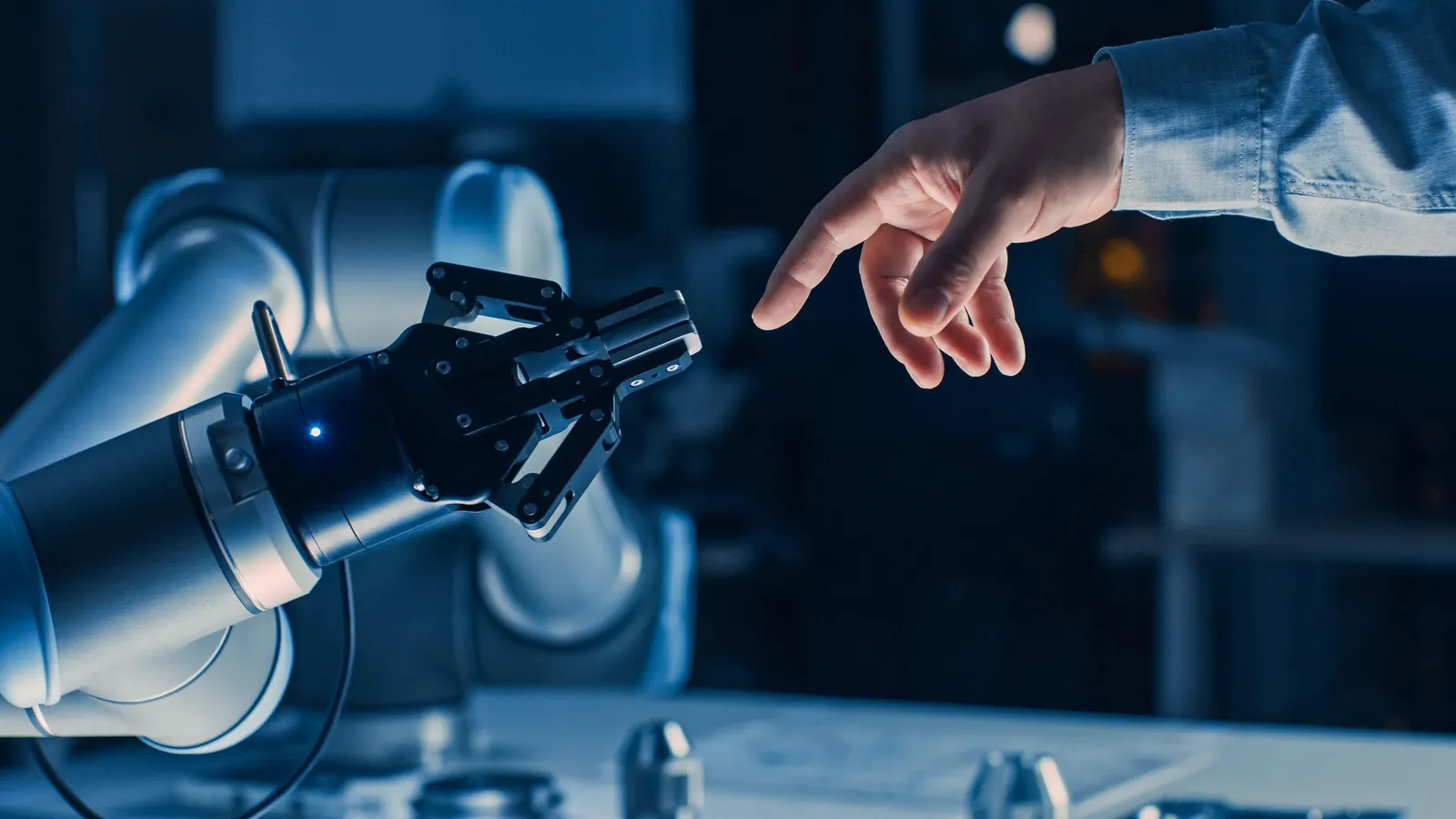

Introduction: The Rise of Human–Robot Interactive Operations in Challenging Domains
In recent decades, robotics has steadily transformed industrial automation, supply chains, and service sectors. Classical automation focused on repetitive tasks in controlled environments—manufacturing lines with rigid structures, predefined motions, and safety cages separating humans from robots. However, the advent of multi‑human–robot interactive operations marks a fundamental shift in how humans and robots collaborate. Rather than replacing human workers entirely or relegating robots to simplistic roles, this emerging paradigm emphasizes synergistic collaboration: humans and robots operating together, dynamically sharing perception, decision‑making, and physical actions, especially in industrial maintenance and complex environment exploration.
This article offers a comprehensive, professional, and forward‑looking exploration of multi‑human–robot interactive operations, focusing on:
- Why collaborative human–robot interaction is a critical evolution in robotics
- The technological foundations that enable safe, effective interaction
- Application domains where this paradigm delivers strategic value
- Challenges and limitations in real‑world adoption
- Future research directions and long‑term visions
Throughout, emphasis is placed on operational efficiency, safety, and adaptability—the core metrics by which this new form of collaboration is measured.
1. Conceptual Foundations: What Is Multi‑Human–Robot Interactive Operation?
1.1 From Isolation to Interaction
Traditional industrial robots operate in isolation. They execute preprogrammed tasks, often behind physical barriers, disconnected from real‑time human input. In contrast, multi‑human–robot interactive operations (MHRO) involve:
- Multiple human operators collaborating with one or more robots
- Bi‑directional information flow between humans and robots
- Real‑time adaptation of robot behavior in response to human guidance, contextual cues, and shared goals
- Safety‑centric coordination to prevent accidents while enabling close physical proximity
The core idea is shared autonomy—robots acting autonomously when appropriate, but continuously informed and guided by human insight and intent.
1.2 Why Interaction Matters
Humans excel at situational awareness, pattern recognition, and strategic reasoning, particularly in unstructured or unpredictable environments. Robots excel at repetition, endurance, and precision. Combining these strengths yields capabilities neither can achieve alone. For industrial maintenance and complex environment exploration—domains characterized by uncertainty, variability, and risk—this synergy is not merely beneficial; it is transformative.
2. The Technological Pillars of Collaborative Interaction
Multi‑human–robot interaction rests on several core technological domains. Each plays a crucial role in enabling real‑time, safe, and efficient collaboration.
2.1 Perception Systems: Seeing the World Together
Interactive operations require both robots and humans to share a coherent understanding of the physical environment. Perception systems support this shared situational awareness through:
- Multi‑modal sensing: LiDAR, stereo cameras, RGB‑D vision, thermal imaging, and tactile sensors
- Semantic segmentation and 3D reconstruction: Robots map environments in real time, identifying objects, surfaces, and human positions
- Human pose and intent recognition: Algorithms discern human posture, gestures, and gaze, enabling robots to anticipate actions and respond appropriately
These systems enable robots to adapt to dynamic conditions—moving machinery, shifting objects, and human movement—without losing spatial accuracy.
2.2 Communication Frameworks: Human–Robot Dialogue at Scale
Interaction requires communication that is:
- Intuitive: Voice commands, gestures, and visual cues
- Robust: Operating under noise, occlusion, and environmental constraints
- Multi‑modal: Combining natural language, haptics, and heads‑up displays
Emerging solutions include:
- Augmented reality (AR) interfaces that overlay robot intentions and environmental data into human operators’ visual fields
- Wearable haptics and gesture interfaces that enable nonverbal control
- Contextual natural‑language interfaces tailored to task domains (e.g., maintenance terminology)
These communication modalities ensure that humans can guide robot behavior fluidly while the robot provides status, predictions, and alerts in human‑understandable formats.
2.3 Shared Control and Hybrid Autonomy
Shared control architectures allocate tasks between human and robot based on:
- Task complexity
- Environmental uncertainty
- Operator workload
- Safety constraints
Robots may handle routine actions autonomously—such as positioning tools or stabilizing components—while humans supervise, make strategic decisions, and intervene when exceptional conditions arise. Hybrid autonomy frameworks use:
- Behavior arbitration layers to switch control modes
- Predictive models to anticipate human intent and adjust robot motion
- Reinforcement learning algorithms to improve shared behaviors over time
This layered approach reduces cognitive load and improves overall operational throughput.
2.4 Safety and Compliance Systems
Maintaining safety in shared physical spaces is paramount. Interactive systems use:
- Dynamic collision avoidance with real‑time motion re‑planning
- Force and impedance control in robotic joints to soften interaction
- Redundant verification for actions near humans
Standards such as ISO 10218 (for industrial robots) and ISO/TS 15066 (for collaborative robot safety) provide frameworks, but interactive operations often exceed historical scenarios, requiring context‑aware safety algorithms and predictive human movement modeling.

3. Application Domain: Industrial Maintenance
Industrial maintenance—spanning energy, manufacturing, aerospace, and infrastructure—presents numerous challenges that traditional automation cannot address without high costs and extensive customization.
3.1 The Maintenance Challenge
Maintenance tasks typically involve:
- Complex tooling
- Variable environments
- Manual inspection and decision‑making
- Unstructured contexts
- Accessibility challenges (e.g., confined spaces, elevated structures)
Examples include:
- Turbine inspection and overhaul in power plants
- Aerostructure maintenance in aviation
- Facility diagnostics in manufacturing plants
- Pipeline inspection and repair
These tasks require dexterity, perception, and adaptability—areas where robots historically struggle without human involvement.
3.2 Transformative Potential of MHRO
Interactive systems transform maintenance in several ways:
3.2.1 Real‑Time Remote Collaboration
Human experts can operate from safe locations while robots act as extensions of their senses and limbs. Field technicians may guide robots via AR interfaces, delegating physically demanding or dangerous subtasks while retaining high‑level control.
3.2.2 Contextual Inspection and Decision Support
Robots equipped with multi‑modal sensors (visual, thermal, ultrasonic) can scan equipment, detect anomalies, and present findings to human operators with semantic annotations. Instead of merely collecting data, robots interpret and prioritize anomalies based on operator feedback loops.
3.2.3 Augmented Repair and Support
Robots can assist in repair tasks by holding components, positioning tools, or stabilizing structures while human experts perform precision manipulations. This reduces fatigue and injury risk and allows humans to focus on high‑value tasks.
3.3 Case Example: Collaborative Turbine Inspection
In a typical industrial turbine maintenance scenario:
- A mobile robot equipped with LiDAR and visual sensors enters the turbine chamber.
- Through AR goggles, a human specialist sees annotated lift and torque values for blades needing inspection.
- The robot positions inspection tools while the human directs fine adjustments.
- Interactive voice and haptic feedback cues guide both robot and human toward safe, coordinated action.
This collaborative workflow accelerates maintenance, improves accuracy, and significantly reduces human exposure to confined‑space hazards.
4. Application Domain: Complex Environment Exploration
Beyond industrial settings, complex environment exploration—such as disaster zones, underground mines, ecological research, and space missions—poses extreme challenges for autonomous operation.
4.1 Unique Challenges in Complex Terrains
These environments are characterized by:
- Unstructured and unpredictable terrain
- Dynamic obstacles
- Harsh conditions (temperature, dust, water)
- Communication constraints
- Limited power availability
In such contexts, robots often operate with limited autonomy due to incomplete models and unpredictable physical conditions. Human intuition and adaptability become indispensable.
4.2 The Role of Multi‑Human–Robot Interaction
Interactive operations enable:
4.2.1 Distributed Collaborative Mapping
Multiple human operators and robotic agents can simultaneously build shared environmental maps, with robots scouting and humans supervising precision areas. This reduces the cognitive burden on any single agent and increases coverage.
4.2.2 Human‑Guided Navigation and Decision Making
In ambiguous terrains—such as collapsed buildings or cave systems—robots can seek human input when encountering ambiguous situations (e.g., unclear paths, uncertain sensor readings). Humans can prioritize exploration paths based on higher‑level goals.
4.2.3 Coordinated Multi‑Agent Exploration
Teams of robots can specialize: some focus on scanning, others on debris manipulation, and others on communications relay. Human supervisors dynamically reassign roles based on unfolding conditions.
4.3 Case Example: Disaster Zone Reconnaissance
In the aftermath of an earthquake:
- A fleet of ground robots enters a collapsed urban area.
- Wearable sensors on human responders track activity and priorities.
- Robots explore zones too risky for humans, streaming data back to integrated command interfaces.
- Human experts annotate points of interest, directing robots to refine searches or assist trapped individuals.
This interactive deployment drastically enhances survivability and situational awareness.
5. Metrics of Success: What Defines Efficiency and Effectiveness
Evaluating multi‑human–robot interactive operations requires moving beyond traditional robot performance metrics. Key success metrics include:
5.1 Operational Throughput
Measured by:
- Task completion time
- Number of successful operations per unit time
- Reduction in human idle time
Interactive operations should outperform solo human or solo robotic methods in aggregate efficiency.
5.2 Safety Performance
Safety metrics include:
- Frequency of near‑miss events
- Force and proximity violations
- Effectiveness of emergency stop and constraint enforcement
Interactive operations must not compromise worker safety despite closer physical collaboration.
5.3 Adaptability
Adaptability measures how quickly the system adjusts to:
- Environmental changes
- Task variation
- Human intent updates
High adaptability is a hallmark of effective human–robot interaction.
5.4 Cognitive Load
Human operators should experience manageable cognitive demands. Systems should minimize:
- Excessive information streams
- Complex controls without feedback
- Conflicting cues
User experience directly impacts real‑world adoption.
6. Technological Challenges and Current Limitations
Despite promise, several obstacles hinder widespread adoption of multi‑human–robot interactive operations.
6.1 Real‑Time Sensemaking and Perception Under Uncertainty
Robots must accurately interpret sensor data in real time while reconciling contradictions, noise, and occlusions. Perception failures can lead to misinterpretations of human cues or environmental hazards.
6.2 Human Intent Recognition
Distinguishing between intentional gestures and incidental human movement or ambiguous commands is nontrivial. Misclassification can cause operational errors or safety risks.
6.3 Communication Bottlenecks
In complex environments, especially where radio communications are degraded (e.g., underground, disaster zones), maintaining reliable human–robot dialogue is challenging.
6.4 Energy Management and Physical Endurance
Robots operating in harsh environments need efficient power systems. High‑performance perception, locomotion, and actuation require significant energy, which is often scarce in field operations.
6.5 Standardization and Interoperability
Diverse hardware platforms, software ecosystems, and communication protocols complicate full integration. Standards are emerging but still need refinement to ensure seamless interoperability.
7. Human Factors: Trust, Training, and Organizational Culture
Human acceptance and proficiency are critical determinants of success.
7.1 Trust in Robot Behavior
Operators must trust robot predictions, safeguards, and intentions. Trust is built through:
- Predictable behavior
- Transparent decision logic
- Reliable feedback mechanisms
Opaque AI decisions can erode confidence and impede adoption.
**7.2 Training and Skill Development
Effective collaboration demands training in:
- Robot interfaces
- Interpretation of multi‑modal feedback
- Emergency procedures
Training protocols must evolve alongside technology to ensure readiness.
7.3 Organizational Integration
Deploying interactive systems affects workflow, responsibilities, and hierarchical structures. Organizations must address:
- Job redesign
- Performance evaluation adjustments
- Cultural acceptance of human–robot teamwork
8. Future Directions and Research Frontiers
8.1 Explainable AI in Human–Robot Interaction
As AI drives more autonomous robot behaviors, explainability becomes essential. When robots can articulate reasoning, uncertainties, and predictions in human‑understandable terms, collaboration becomes more efficient and trustworthy.
8.2 Multi‑Agent Cooperative AI
Interactive operations will increasingly involve teams of robots and humans. Research into multi‑agent cooperation, task allocation, and shared intent modeling will unlock higher levels of efficiency.
8.3 Adaptive Learning from Shared Experience
Machines that learn from combined human feedback across tasks and environments will improve over time. Federated learning approaches and shared experience models will accelerate adaptation without compromising privacy.
8.4 Social and Ethical Frameworks
As robots operate closer to humans, ethical concerns—privacy, autonomy, accountability—will shape system design. Establishing socially aligned interaction protocols will be as important as technical performance.
9. Strategic Implications for Industry and Society
9.1 Competitive Advantage in High‑Risk Sectors
Industries such as energy, aerospace, chemical processing, and defense stand to gain significant competitive advantage by deploying interactive systems that reduce downtime, improve safety, and enhance operational readiness.
**9.2 Empowering Workforce Capabilities
Instead of displacing workers, interactive systems can augment human capability, enabling employees to focus on higher‑value tasks while leaving hazardous or physically demanding work to robotic counterparts.
**9.3 Broader Impact on Human–Machine Systems
The principles developed in MHRO extend beyond industrial domains to healthcare (surgical assistance), logistics (warehouse collaboration), and urban services (maintenance of infrastructure). This cross‑domain applicability amplifies long‑term impact.
Conclusion: Toward a New Era of Collaborative Intelligence
Multi‑human–robot interactive operations represent a paradigm shift in the evolution of robotics—from automation as constraint to automation as collaborative augmentation. By combining human insight with robotic precision, teams can address tasks that were once difficult, dangerous, or impossible for either entity alone.
In industrial maintenance and complex environment exploration—the domains central to this article—interactive operations elevate both safety and efficiency. They enable real‑time adaptation, dynamic decision‑making, and integrated action across human and machine agents.
Yet realizing this vision requires continued advances in perception, communication, shared autonomy, and human‑centric design. It also demands organizational commitment to training, ethical standards, and cultural acceptance.
Ultimately, the potential of multi‑human–robot interaction extends beyond task performance. It challenges us to rethink the nature of work, the role of intelligent machines, and how humans and robots co‑evolve toward shared goals. As research and deployment scale, this collaboration will not only enhance industrial capability but also redefine what is possible in exploration, resilience, and human‑machine coexistence.