









Introduction: Why AI–Robotics Integration Is the Defining Trend of the 2020s and Beyond
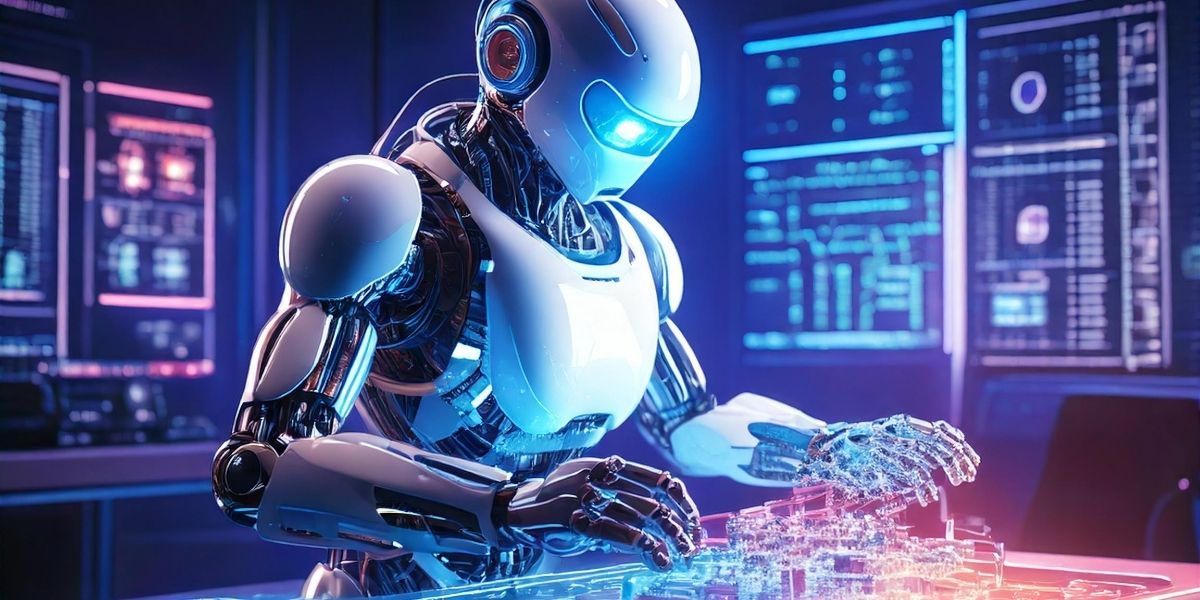
Over the past decade, the boundaries between artificial intelligence (AI) and robotics have blurred, giving rise to a new paradigm in which robots are no longer mere mechanical executors of pre‑programmed routines, but adaptive, intelligent agents capable of perception, reasoning, planning, and autonomous action in real‑world environments. This deep integration—where AI acts as the “brain” and robotics as the “body”—has rapidly become a core trend in robotics research, industrial automation, and advanced service systems. Robots augmented with AI are now poised to transcend traditional limitations of deterministic automation and operate with context awareness, autonomy, and generalization across tasks and environments.
In this article, we explore this core technology trend in depth: the motivations behind AI–robotics fusion, the key enabling technologies, industry implementations, application domains, core challenges, and the impact on future robotics ecosystems.
1. The Evolution of Robotics: From Automation to Intelligence
1.1 Traditional Robotics vs AI‑Enabled Robotics
Historically, robots have been deployed as repeatable, deterministic systems operating in structured environments, such as automotive assembly lines. These systems followed fixed sequences of motions, highly optimized for precision but limited in adaptability. Their capabilities were bounded by pre‑defined models and rigid control logic.
By contrast, AI‑enhanced robotics combines:
- Machine perception (computer vision, sensor fusion)
- Cognitive reasoning (decision making, planning, learning)
- Adaptive control (reinforcement learning, feedback adjustment)
This shift enables meaningful autonomy—robots can respond to unexpected changes, interpret complex environments, and execute tasks beyond simple rule‑based logic.
1.2 Embodied Intelligence: The Theoretical Foundation
The concept of embodied intelligence has emerged as a theoretical backbone for AI–robotics integration. It suggests that intelligence is not merely a function of computation but arises from the interaction between cognition, sensory inputs, and physical embodiment. In robots, this means tightly coupling perception, learning, motor control, and environmental feedback to achieve task generalization and robust behavior.
2. Core Technologies Driving Deep AI–Robotics Fusion
2.1 Deep Learning and Multimodal Perception
Modern robotics relies on deep learning models to make sense of high‑dimensional sensory inputs. Multimodal perception systems integrate:
- Vision (RGB, depth, stereo cameras)
- Lidar and range sensors
- Tactile and force sensing
- Auditory signals and human interaction cues
These inputs are processed by neural networks that provide semantic understanding, object recognition, spatial reasoning, and even natural language comprehension, enabling robots to operate in unstructured environments.
2.2 Large Language Models and High‑Level Reasoning
Large Language Models (LLMs) and multimodal AI models are being adapted to interpret instructions, generate plans, and adjust behavior based on goals and constraints. This capability allows:
- Natural language task specification
- Adaptive planning and execution
- Human–robot dialogue and collaboration
For example, foundational models are being developed to support robots across platforms—from industrial arms to humanoids—allowing generalized reasoning and task planning beyond fixed scripts.
2.3 Learning and Adaptation Frameworks
Robots increasingly use sophisticated learning paradigms such as:
- Reinforcement learning for policy optimization and team coordination
- Imitation learning from human demonstrations
- Sim‑to‑real learning using virtual environments to pre‑train behaviors and transfer them to physical robots
Projects like RoboBallet demonstrate how AI can orchestrate multiple robots collaboratively to maximize efficiency in industrial workflows—beyond rigid motion planning.
3. Implementation Domains: Where AI–Robotics Fusion Matters Most
3.1 Industrial Automation and Smart Manufacturing
Industrial robotics has been transformed by AI:
- Autonomous inspection and anomaly detection
- Predictive maintenance and self‑optimization
- Adaptive control for flexible production lines
AI‑powered robots can now handle variations in parts, adapt to fluctuating workloads, and optimize coordination among multiple arms and mobile units to increase throughput and reduce downtime.
3.2 Service and Autonomous Robots
AI integration is critical for service robots operating in human environments—homes, retail, hospitality, and healthcare:
- Robotic assistants with natural language interaction
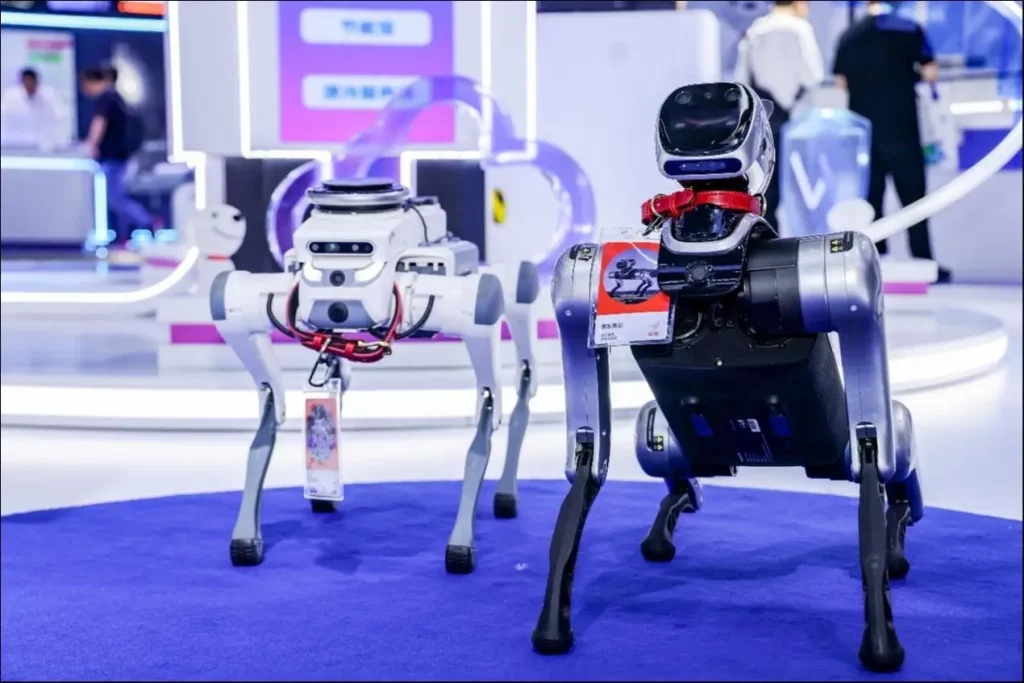
- Perception‑based navigation in dynamic environments
- Adaptive task planning in everyday human contexts
Human–robot collaboration requires robots that can interpret nuanced social cues and adjust behavior on the fly.
3.3 Humanoid Robotics and Embodied Systems
By combining large AI models with humanoid platforms, developers aim to create robots capable of general physical interaction tasks, not just scripted motions. AI provides planning, perception, and adaptation, while the robot’s physical embodiment executes complex sequences in the real world.
4. Benefits of Deep AI Integration in Robotics
4.1 Enhanced Autonomy and Flexibility
AI makes robots less dependent on human intervention:
- Robots can handle novel situations and environmental uncertainty.
- Task planning becomes dynamic, not pre‑set.
- Robots can learn new tasks through demonstration or simulation.
4.2 Human–Robot Collaboration
With AI, robots become collaborative partners rather than isolated machines:
- Shared task planning with humans
- Adaptation to human behavior and preferences
- Safety‑aware interaction in shared workspaces
4.3 Optimization and Efficiency Gains
AI enables data‑driven optimization across the lifecycle of robotic systems:
- Operational efficiency improvements
- Predictive maintenance reducing uptime loss
- Self‑learning for performance improvement
5. Challenges and Limitations in AI–Robotics Fusion
5.1 Real‑Time Multimodal Fusion and Decision Making
Integrating diverse sensory data (vision, motion, force) into unified decision systems remains a key technical bottleneck, especially under uncertainty and noise.
5.2 Generalization and Transfer Learning
Despite advances, robots still struggle to generalize across tasks and environments without extensive retraining or simulation adaptation pipelines.
5.3 Safety, Ethics, and Robustness
Deploying AI‑driven robots in the physical world raises safety and ethical questions:
- How to ensure behavior is safe under all possible conditions?
- How to handle model errors or adversarial inputs?
- What are societal impacts regarding labor and autonomy?
Industry vigilance is critical to address these issues proactively.
6. Policy, Ecosystem, and Industrial Impacts
6.1 Policy and Strategic Support
Governments worldwide are recognizing the strategic importance of AI–robotics fusion. Policies and funding initiatives are accelerating research, commercialization, and ecosystem development, particularly in advanced manufacturing and robotics infrastructure.
6.2 Economic and Market Trends
The fusion trend has attracted massive investment and industrial focus, with sovereign wealth funds and major corporations targeting AI robotics as future growth areas.
Markets are evolving rapidly as AI becomes central to robotic competitiveness, with new business models emerging around autonomous mobile robots, intelligent digital workers, and AI‑assisted services.
7. Future Directions and Research Frontiers
7.1 Robotic Generalists and Foundation Models
Further progress in foundation models specialized for embodied robotics will be crucial to achieving generalist robots capable of diverse real‑world tasks across domains.
7.2 Human‑Centric AI for Social and Assistive Robotics
AI is likely to advance robots that excel in empathetic interaction and cognitive support, particularly in aging societies and healthcare.
7.3 Hybrid AI Architectures
Combining symbolic reasoning, learning‑based approaches, and physics‑informed models may yield robust, explainable autonomous behavior required for complex environments.
Conclusion: Integration as the Core Trend
The deep integration of AI and robotics represents a fundamental shift from static automation to adaptive, intelligent, embodied agents capable of perceiving, reasoning, and acting in the physical world. This trend encompasses breakthroughs in perception, planning, learning, collaboration, and control—not just incremental improvements but a qualitative leap in what robots can do.
Across industry sectors—from manufacturing to services—this fusion is reshaping productivity, enabling new capabilities, and redefining the boundaries of automation. While significant challenges in generalization, safety, and robustness remain, the trajectory of AI‑empowered robotics points toward a future where intelligent machines are integrated seamlessly with human activities and economic systems.
Whether in factories choreographed by AI planners, service robots that understand natural language, or humanoids that embody cognitive and physical intelligence, AI is no longer merely a tool for robots—it is the very foundation of next‑generation robotic capabilities.